Windows are more than mere apertures to the outside world—they are critical interfaces between interior and exterior environments. In coastal, urban, and suburban settings, windows are constantly challenged by salt spray, dust, pollen, pollution, bird droppings, and weather-driven grime. Over time, dirt accumulates, films develop and micro-contaminants settle.
While many people think of window cleaning as a cosmetic or aesthetic task, the implications are deeper: regular window cleaning helps sustain healthier indoor air, prolongs the lifespan of windows and building facades, and supports occupant comfort and energy efficiency.
Understanding Different Common Commercial Window Types
Residential Windows:
Often double-glazed or tinted, these windows require gentle cleaning solutions to protect coatings and prevent scratches. Soft water or distilled water helps reduce streaking and spotting.
Commercial Windows:
Office towers and retail spaces use large glass panels that accumulate airborne grime and pollution. These often require water-fed poles, harness systems, or rope access cleaning for exterior maintenance.
Skylights and Roof Windows:
Exposed to sunlight, dust, and bird droppings, skylights need specialized non-abrasive cleaning tools to maintain light diffusion and prevent damage to seals.
Tinted or Coated Glass:
These surfaces require pH-neutral solutions to avoid degrading the tint film or anti-glare coating.
Architectural Glass:
Includes frosted, etched, or decorative panes that require microfiber or soft bristle brushes for precise cleaning.
Understanding these materials and structural differences ensures the correct choice of equipment, detergents, and safety procedures, preserving clarity and integrity over time.
To clean windows effectively, it’s important to know the main methods and their advantages / drawbacks. These methods are widely used by professionals and savvy DIYers alike.
Commercial Window Cleaning Methods Traditional to Modern
Traditional Manual Cleaning (Squeegee + Detergent)
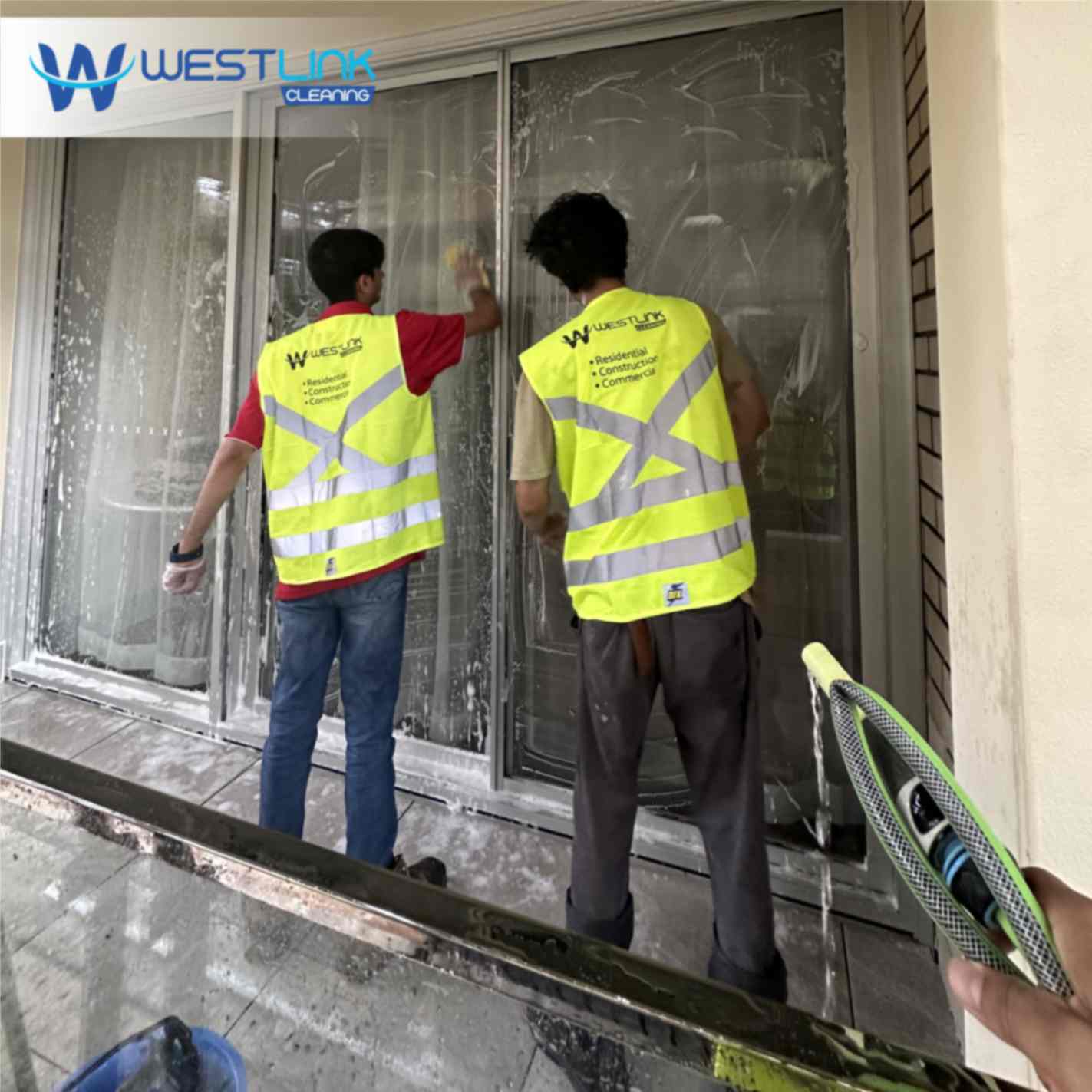
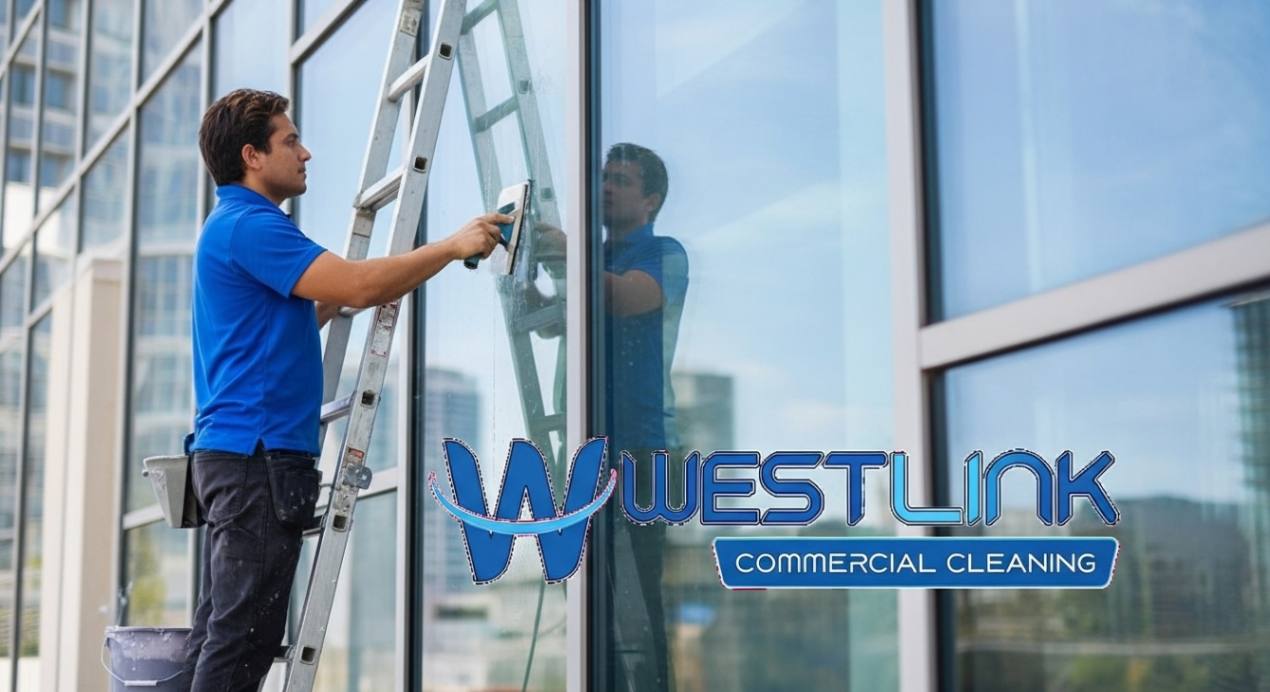
This is the classic method: you apply a cleaning solution, scrub with a soft brush or sponge, then squeegee off, wiping edges and corners. The tools include rubber squeegees, lint-free cloths, scrubbing pads, scrubbers, buckets, and cleaning fluid. This works effectively for ground floor, low-rise, or interior windows. simple, low-cost, widely accessible
and labor-intensive, harder to do streak-free on high windows, may require ladders or scaffolding
Water-Fed Pole & Pure/Deionized Water Systems
Increasingly popular, window cleaning companies use water-fed poles that pump deionized or purified water through a brush head. After scrubbing, the pure water leaves no mineral residue, so the windows dry spot-free without squeegeeing. This is especially useful for multi-storey homes or low-to-medium rise buildings. safer (no ladders), efficient, streak-free, minimal chemical use initial equipment cost, limited reach (for very tall buildings)
Rope Access / Abseiling Cleaning
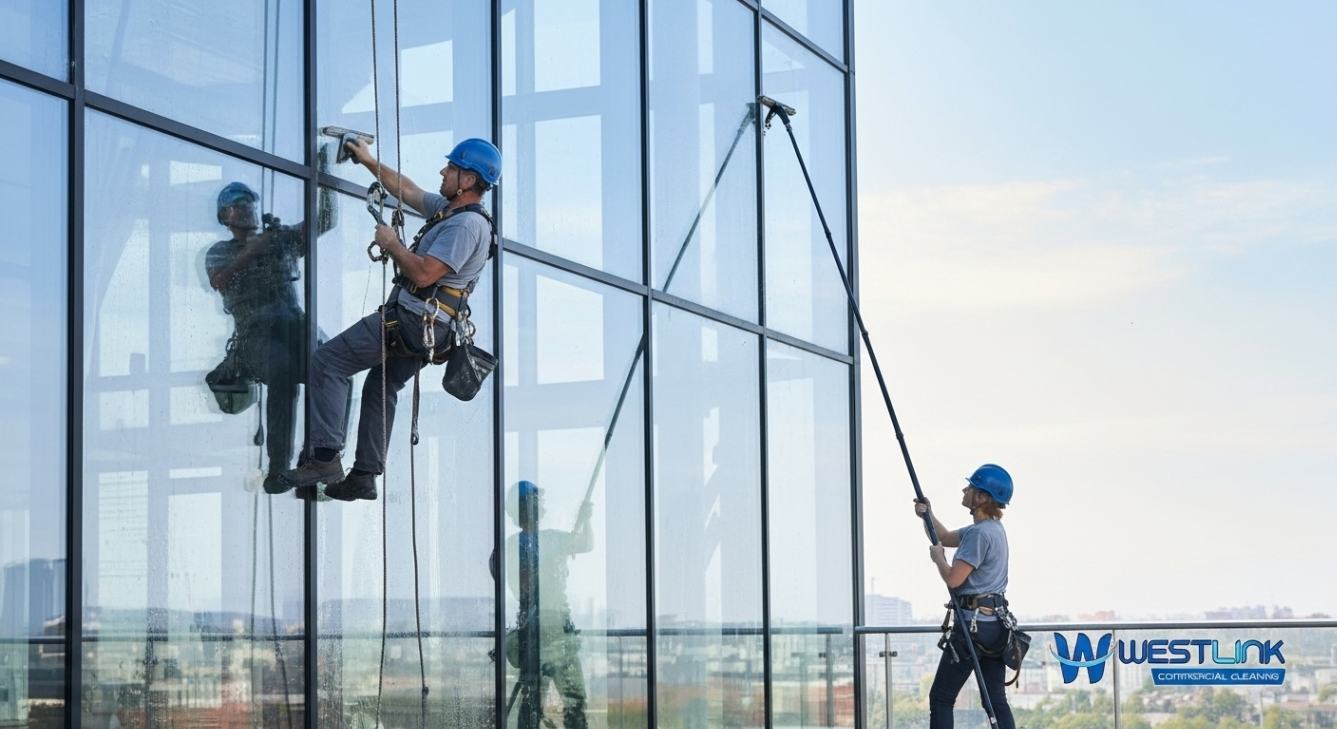
For high-rise windows, glass façade systems, or complex architectural surfaces, rope-access (also called abseiling) methods are employed: technicians descend with ropes, harnesses, and carry their cleaning tools. This is common for towers and strata complexes.
Pros: access to very tall or awkward surfaces, minimal scaffolding, flexible
Cons: safety risk, requires certified technicians, more expensive
Aerial Platforms, Cherry Pickers, or Mobile Elevating Work Platforms (MEWPs)
Particularly for commercial or large buildings with window banks, some services use lifts, cherry pickers, scissor lifts, or boom lifts to access windows. This is commonly used when rope access is less feasible, or for façade cleaning beyond glass itself (e.g. building cladding). Safe platform, faster for wide panels and cost access constraints, ground space needed
Pressure / Soft Washing Integration
In some cases, exterior surfaces around windows (walls, ledges, frames) may be cleaned using soft washing (gentle pressure + detergents) or mild pressure washing. But direct pressure on glass is seldom used in window cleaning, as it can damage seals, framing, or cause water intrusion.
Daily Window Cleaning Reduces Pathogen Load
One of the lesser-known but powerful benefits of frequent window and frame cleaning is pathogen and particulate reduction. Here’s how and why.
Dust, Pollen, Allergen Accumulation
Windows accumulate dust, pollen, spores, and fine particulates from the outdoor environment (especially in varied microclimates). Over time, these settle on the glass surfaces, frames, sills, and around the seals. When indoor ventilation natural or HVAC systems circulate air, some of these particulates resuspend and infiltrate indoor air.
By regularly cleaning window surfaces and adjacent frames, you remove a reservoir of that dust/pollen, reducing the load that might reenter the indoor air volume.
Mold, Mildew & Microbial Growth
In humid climates or during condensation events (e.g. early mornings), moisture may linger on window frames, sills and crevices. This moisture plus dust creates favorable micro-habitats for mold, mildew, and bacteria. These organisms can release spores or volatile compounds that degrade indoor air quality.
Frequent cleaning (drying, wiping, disinfecting non-corrosive safe agents) interrupts these microbial growth cycles, thereby minimizing microbial VOCs or spore release into indoor air.
Viral and Bacterial Fomites
Though windows are not the primary surfaces for viral transmission, windows, frames, and sills do sometimes get touched (e.g. when opening or servicing). Frequent cleaning reduces the presence of bacteria, viruses, and their residues on those surfaces, lowering cross-contamination risk, especially in commercial offices or healthcare-adjacent spaces.
Health Impacts & Indoor Air Quality
Indoor air quality (IAQ) is strongly affected by particulate matter (PM₂.₅, PM₁₀), volatile organic compounds (VOCs), biological pollutants, and microbial emissions. PMC Dirty windows act as “holding zones” for some of these pollutants. By cleaning them regularly, you reduce one source of indoor particulates or allergens.
Empirical articles affirm that regular cleaning helps maintain healthier indoor environments.
So, daily or frequent window cleaning—where practical—directly contributes to lower airborne contaminant levels and safer indoor environments.
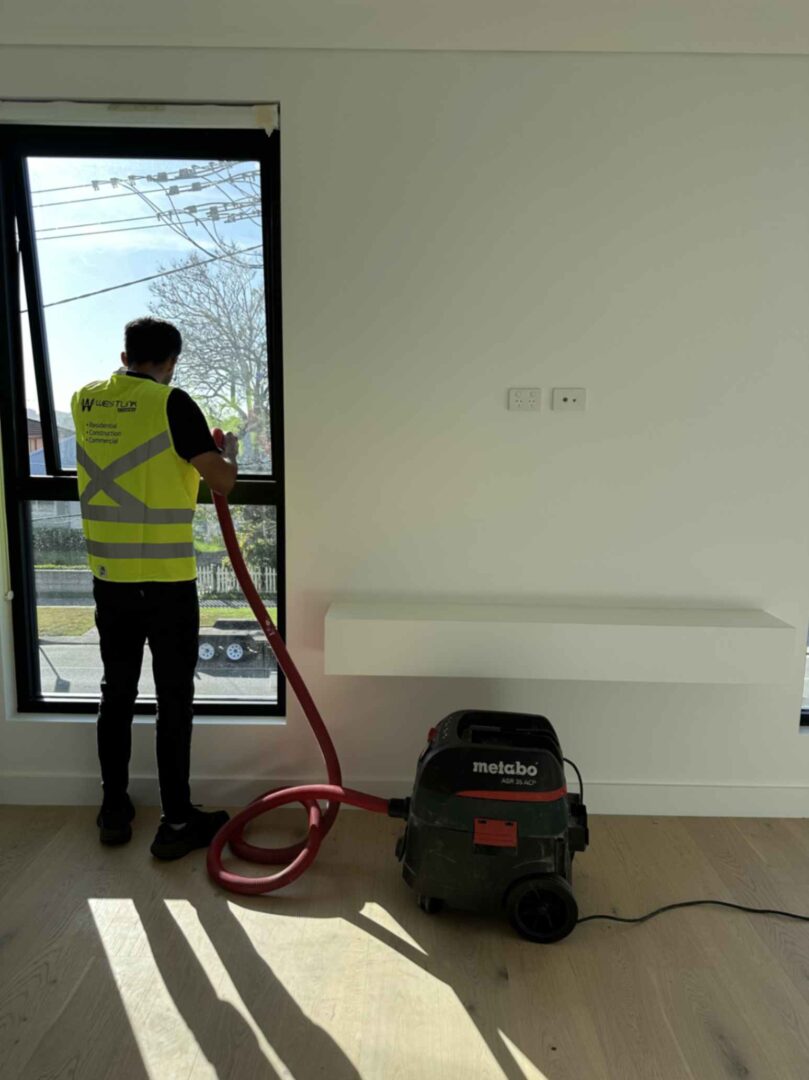
Hiring the Right Company for Commercial Window Cleaning
Choosing the right window cleaning company is key to ensuring safety, quality, and lasting results. Westlink Commercial Cleaning stands out as the right choice for professional window cleaning services. The company adheres to strict safety standards and holds ISO 9001 (Quality Management), ISO 14001 (Environmental Management), and ISO 45001 (Occupational Health & Safety) certifications — ensuring every cleaning project meets international standards of excellence. Their trained staff use eco-friendly products, advanced cleaning techniques, and follow proper safety protocols for both residential and commercial properties. With Westlink, you’re not just getting clean windows — you’re choosing a certified, trusted, and quality-driven cleaning partner.
Commercial Window Cleaning Solutions and Chemicals
Selecting the right cleaning solution is crucial: you want effective dirt removal without damage or long-term residue that attracts dirt or off-gasses VOCs.
Key Criteria for Good Cleaning Solutions
- Low- or No-Ammonia Formulas: Ammonia is a potent cleanser but can be harsh to window seals, coatings, and cause fumes.
- Biodegradable / Eco-Safe Components: Safer for occupants and downstream stormwater runoff.
- pH-Balanced: Slightly alkaline or neutral formulas, usually pH 7–9, avoid etching or damage.
- Residue-Free / Quick-Rinsing: Minimizes streaking and prevents re-attraction of dust.
- Non-corrosive to Frames & Seals: Safe for aluminum, uPVC, wood, fiberglass.
- Optional Disinfectants / Mildewcides: In some settings (e.g. clinics or sensitive indoor spaces), small amounts of safe disinfectants may be included, but must be compatible with glazing chemistry.
Common Ingredients & Considerations
- Surfactants (non-ionic or mild anionic)
- Wetting agents (to lower surface tension)
- Water conditioners (to soften hard water)
- Chelating agents (to bind minerals)
- Mild solvents or degreasers (for oils)
- Disinfectant additives (only when needed)
- Deionized or purified water as base
Local Water Quality Influence
Municipal water is of relatively good quality, but it contains dissolved minerals (hardness) and salts (especially in coastal suburbs). If used without treatment, these minerals can leave spots or streaks on glass surfaces after evaporation. That is why many window cleaners use deionized / purified water systems—so the rinse leaves no mineral residue.
Safe Use & Handling
- Always follow manufacturer dilution rates.
- Avoid mixing incompatible chemicals (e.g. acids with bleach).
- Use gloves and eye protection.
- Ensure ventilation during cleaning in enclosed spaces.
- Dispose of leftover wash water responsibly, especially in strata or commercial settings.
- Test solutions on small, inconspicuous glass edges or frames before full use.
Step-by-Step Commercial Window Cleaning Process
Here is a robust, sequential, best-practice protocol for cleaning windows (residential or light commercial). Adapt for larger jobs or high-rise work with rope access etc.
Preparation & Safety
- Survey & Assess: Check for cracked glass, loose seals, damaged frames, or fragile edges.
- Protect Surroundings: Cover sills, furniture, window ledges, and flooring with drop sheets or absorbent mats.
- Gather Tools:
- Squeegees of appropriate sizes
- Scrub brushes or “mops”
- Buckets (double bucket or rinse and wash buckets)
- Lint-free cloths or microfiber towels
- Extension poles if needed
- Safety gear (gloves, goggles, harnesses if at height)
- Cleaning solution + deionized water (if available)
- Loosen Dust / Cobwebs: Use a dry dusting or brush to remove loose particles, cobwebs, insect detritus along frames, corners, edges.
Wetting & Soaking
- Apply Cleaning Solution: Wet the entire glass surface (top-down) with the diluted chemical solution; use a brush or mop to saturate. Allow gentle dwell time (but don’t let it dry) to loosen grime, grease, bird droppings, salt films.=
Scrub / Brush
- Gentle Scrub: Using a soft-bristle brush or pad, scrub in overlapping strokes. Pay extra attention to corners, edges, stubborn spots (like insect droppings).
Squeegee / Drain Off
- Squeegee Technique: Starting at top left (or top right, depending on hand preference), pull the squeegee across in even strokes. After each pass, wipe the blade with a cloth, then overlap the next pass slightly to avoid lines.
Edge & Detail Wipe
- Edge Clean: Using a lint-free cloth or corner sponge, wipe away residual water or droplets from edges, frames, and corners.
- Detail Clean: For any stubborn spots, reapply solution locally and gently rub off. Pay attention to window tracks, seals, and frame surfaces.
Rinse (if needed) & Final Dry
- Rinse (Optional): If especially soiled or where chemical residue is a concern, use deionized water to rinse glass after cleaning, and squeegee again.
- Dry Surroundings: Wipe sills, frames, and surrounding areas completely dry to prevent dripping or residual moisture.
Final Inspection
- Inspect from Different Angles: Walk around, change light direction (e.g. midday sun), and look for micro-streaks or missed spots. Touch them up.
Clean-Up
- Clean Tools: Rinse and dry brushes, cloths, buckets.
- Dispose Waste: Pour leftover wash water into drains (per local regulations).
- Document & Log: For commercial or strata jobs, maintain a record of date, condition, anomalies (e.g. seal failures, scratches).
Common Commercial Window Cleaning Mistakes
Although the article’s main focus is windows, many window cleaning jobs also involve cleaning ledges, sills, and frame areas adjacent to windows. Common errors include:
- Neglecting profiles and crevices: Dirt tends to accumulate in grooves, drainage channels, frame joints skipping these leads to re-soiling.
- Using harsh scrubbers: Abrasive pads or wire brushes can scratch frames or glass edges.
- Letting water pool: Standing water damages seals, frames, and may drip.
- Wrong direction wiping: Wiping vertical glass top-to-bottom vs bottom-to-top can reintroduce drips.
- Over-wetting: Too much solution floods frames and seals, leading to leakage or moisture ingress.
- Ignoring debris removal before wet cleaning: Starting wet without brushing off grit leads to scratching.
- Using unclean cloths: Dirty towels reintroduce particles.
- Failing to maintain drainage channels: Blocked weep holes in frames can trap moisture.
Avoiding these mistakes leads to cleaner results and longer-lasting windows.
Maintenance and Long-Term Care Tips for Commercial Window Cleaning
Frequent full cleans might not be practical, but intermediate care can prolong window life and make full cleans easier.
- Monthly dusting / dry brushing of surfaces, ledges, and edges.
- Check and clear frame drainage / weep holes so condensation doesn’t pool.
- Wipe sills after condensation events (e.g. morning dew) to prevent microbial growth.
- Lubricate sliding tracks or hardware with silicone spray (non-greasy).
- Inspect seals, caulking, weather strips annually to repair before leaks or drafts occur.
- Apply glass-protective coatings (hydrophobic / self-cleaning films) in high-exposure zones (e.g. facing the ocean).
- Spot-clean high-use or high-visibility windows more often (e.g. entry doors, display windows).
- Maintain a cleaning schedule and log (date, observations).
- For strata / commercial buildings, integrate window cleaning into the building’s preventive maintenance plan.
These practices reduce wear-and-tear, inhibit corrosion, prevent leaks, and maintain clarity and functionality over time.
Eco-Friendly and Sustainable Window Cleaning Practices
Given growing sustainability awareness, environmentally-conscious window cleaning is increasingly demanded and feasible.
Use of Deionized / Pure Water Systems
As noted earlier, using deionized water reduces the need for detergents and ensures spot-free rinses. It also reduces chemical load into stormwater systems.
Biodegradable, Low-Toxicity Cleaners
Choose formulations that are phosphate-free, ammonia-free, low-VOC, and biodegradable, minimizing ecological harm and indoor pollutant emissions. Window cleaning services often market “non-toxic” and “eco-safe” solutions.
Microfiber Towels & Reusable Tools
High-quality microfiber cloths reduce the need for disposable paper towels, lowering waste. Use brushes and tools that last and can be cleaned repeatedly.
Controlled Water Use & Drainage Management
Implement water-saving methods, like double-bucket systems, reclaimed rinse water, or minimizing excessive wetting. For multi-level jobs, capture runoff from higher levels when possible.
Green Certifications & Compliance
Select service providers with ISO 14001-style or eco-certifications. Some cleaning companies advertise eco-standards or certification as a differentiator.
Scheduling to Minimize Waste
Plan cleaning on mild, non-windy days to reduce overspray and wind-driven chemical drift. Use scheduling that avoids repeat work or wasted effort.
By adopting sustainable methods, window cleaning becomes a responsible part of building maintenance, not an environmental burden.
Commercial Window Cleaning Pricing Overview Table
The following table provides a hypothetical pricing guide for residential and commercial window cleaning, based on general market data and government-registered service standards available online. These prices are indicative only and may vary depending on building size, height, accessibility, and the complexity of the cleaning requirements.
| Property Type / Scale | Service Scope | Typical Price Range (AUD) | Notes / Variables |
| Single-story home, standard windows | Int + Ext clean, frames & sills | $120 – $250 | Dependent on window count, access |
| Two-storey suburban house | Int + Ext, water-fed pole use | $250 – $450 | Extra for tricky angles, gutters |
| Low-rise unit / townhouse (3–4 floors) | Exterior & interior | $400 – $800 | Bulk discount for multiple units |
| Commercial storefront (shop front) | Clean glass, frames, signage | $250 – $600 | Larger frontage increases cost |
| Mid-rise commercial / strata building (5–10 storeys) | Scheduled cleaning | $1,500 – $5,000+ | Access type, façade complexity matter |
| High-rise tower (rope access) | Full façade and glass cleaning | $5,000 – $20,000+ | Based on height, glass area, safety conditions |
Notes / caveats:
- Pricing often includes interior and exterior cleaning for “normal” windows, but special coatings, skylights, or screens may attract surcharges.
- Add-ons like insect screen cleaning, frame painting, resealing, glass film application will cost extra.
- Contracts (annual or quarterly) often reduce per-clean cost.
- Some providers offer package deals (e.g. “Window Care” plans) with scheduled maintenance.
- Accessibility, site complexity, need for lifts or rope work, and safety compliance (e.g. WHS) can drive substantial cost variations.
These figures give you a ballpark. Always obtain an on-site quote for accuracy.
Professional vs DIY Window Cleaning
Choosing between hiring professionals and doing it yourself depends on many factors: building height, safety risk, complexity, time, quality expectations, and costs.
Professional Window Cleaning:
Professional window cleaning involves hiring trained experts who use specialized equipment, eco-friendly cleaning solutions, and safety techniques to achieve streak-free, long-lasting results especially for high or hard-to-reach windows.
DIY Window Cleaning:
DIY window cleaning is a hands-on approach where homeowners use basic tools and household cleaners to maintain their windows. It’s cost-effective but often less efficient and may not deliver the same clarity or safety as professional cleaning.
Advantages of Professional Cleaning
- Safety & Compliance: Professionals carry insurance, follow WHS standards, and have certified training for high-reach tasks.
- Equipment & Technology: Professionals use water-fed systems, rope access, lifts, pure-water equipment that most homeowners can’t access.
- Speed & Efficiency: They complete jobs faster, especially for large window areas or complex facades.
- Quality & Warranty: They deliver higher quality (less streaking, damage) and often guarantee results or offer maintenance plans.
- Long-Term Maintenance: Professionals can spot early issues (seal failures, frame wear) that non-experts might miss.
- Consistent Schedule: Contracts or service plans keep your windows maintained without you having to remember scheduling.
Advantages of DIY Window Cleaning
- Cost Savings:
Ideal for smaller homes or budgets, DIY cleaning avoids professional service fees. - Flexible Timing:
You can clean at your convenience and set your own schedule without waiting for appointments. - Full Control:
Choose your preferred cleaning products, tools, and methods for a personalized approach. - Quick Touch-Ups:
Perfect for spot cleaning or maintaining windows between professional visits.
When DIY Becomes Risky or Inefficient
When DIY Becomes Risky or Inefficient” highlights situations where tackling cleaning tasks yourself can lead to safety hazards, poor results, or wasted time making professional help the smarter choice.
- On multi-storey homes where a ladder is required
- When façade geometry or accessibility is complex
- If the job demands rope, scaffold or lift
- If you lack experience or confidence with cleaning techniques
- For commercial or strata buildings with performance expectations
Hybrid Approach
Many property owners adopt a hybrid model: professionals do major cleans quarterly or bi-annually, while the owner or caretaker does light cleaning and spot maintenance between professional visits. This approach balances cost and performance.
Window Cleaning for Commercial and Industrial Spaces
Though primarily a window-focused article, in commercial and industrial settings, window cleaning often ties into overall surface cleaning, including floors near windows or glass walls. Some practices to consider:
- Dust control sequencing: Clean windows first, then vacuum or mop floors to catch dust knocked loose.
- Use of HEPA-filter vacuums: Reduces re-suspension of fine particulates.
- Wet mopping with mild cleaners: Avoids splashing aggressive solutions onto windows.
- Protective mats / walk-off zones: Placing mats near glass entries reduces tracked-in soil.
- Sealing floor joints near frames: Prevents infiltration of dirt into threshold joints.
- Regular sweeping and debris removal: Prevents grit accumulation which can scratch adjacent glass.
- Cleaning timing coordination: In large facilities, schedule floor and window cleaning during low-occupancy hours to minimize risks.
These practices ensure that window cleaning and floor cleaning support each other rather than working against one another.
Seasonal Window and Weather Considerations
Climate, coastal proximity, and seasonal patterns significantly influence window cleaning strategies. Tailoring scheduling and techniques to weather is key.
Summer
- Potential for rapid dust / salt build-up from coastal winds
- Higher UV and heat can dry cleaning solution too fast—leading to streaks
- Best to clean early morning or late afternoon when glass is cooler
- Use shady sides of buildings when possible
Autumn / Spring
- Ideal cleaning conditions—moderate temperature, less direct sun
- Good time for deep / double cleans
- Pollen levels can spike—so more frequent cleaning may be needed
Winter
- More humidity, condensation, and dew
- More challenges with wetness retention near sills and frames
- Clean sunny days are best; avoid cleaning just before a heavy rain
- Watch for algae or micro-growth in shaded areas
Rain & Storms
- Light rain after cleaning may still be acceptable (if rain is clean)
- Avoid scheduling a clean just before severe storms
- In coastal zones, salt-laden rain can leave deposits on glass—consider post-rain “touch-up” rinses.
- Windy days risk overspray, safety hazards, or water drift
Marine / Coastal Exposure
In suburbs exposed to salt spray (e.g. Northern Beaches, Eastern suburbs), windows corrode faster, deposits accumulate, and seal degradation is more common. More frequent cleaning (e.g. quarterly) helps mitigate these stresses.
Air Quality / Pollution Episodes
During dust storms, bushfire smoke events, or construction nearby, windows collect more particulates. After such episodes, schedule cleans quickly to prevent particle embedment or etching.
By aligning cleaning schedules with seasonal and weather patterns, you optimize results, minimize rework, and extend glass life.
Technology Used for Commercial Window Cleaning
Window cleaning is not a static domain—emerging trends and technologies are reshaping how we maintain glass surfaces. Here’s a look ahead.
Robotic & Autonomous Window Cleaners
Robotic window cleaning devices (for façades, curtain walls, and smart glass) are evolving. These robots use suction, magnets, or climbing mechanisms to traverse glass surfaces. In tall buildings, autonomous drones may assist in façade maintenance in the future.
Nanocoatings & Self-Cleaning Glass
Research continues into hydrophobic, photocatalytic, and self-cleaning glass coatings that repel dust, break down organic dirt, or shed rainwater. Over time, such surfaces reduce cleaning frequency.
Smart Glass with Embedded Cleaning Functions
Some advanced future glass designs could embed micro-vibration, electrospray, or self-washing surfaces, allowing windows to self-clean or repel grime autonomously.
IoT & Sensor-Driven Maintenance
Sensors embedded in window frames or a building’s facility management system (BMS) could detect particulate deposition, humidity, or film thickness, triggering alerts for cleaning before visible soiling appears.
Water Recycling & Closed-Loop Systems
Future cleaning rigs may include onboard water purification and recycling systems, reducing water usage and environmental impact.
Integration with Building Automation & Sustainability Goals
Window cleaning will increasingly integrate with building certification systems (e.g. Green Star, WELL) to contribute to indoor air quality, occupant health, and sustainability KPIs.
As these technologies mature, they will reshape the economics, frequency, and sustainability of window maintenance.
Conclusion
In summary, regular window cleaning offers far more than an aesthetic refresh. It is a vital contributor to indoor air quality, pathogen and particulate reduction, building longevity, energy efficiency, and occupant well-being. In the unique environment—with coastal exposure, urban pollution, and variable weather—tailored cleaning regimes, sustainable practices, and advanced methods (water-fed poles, rope access) are essential for optimal performance.
If you manage a home, strata, or commercial building and want to enjoy clearer views, cleaner air, and longer-lasting windows, let us help. Contact us today to schedule a free consultation, receive a customized cleaning plan, or request a quote. Your building—and those who live or work inside it—will reap the benefits.
Frequently Asked Questions
How often should I clean my windows to maintain good indoor air quality?
It depends on local exposure, building orientation, and indoor sensitivity, but generally quarterly (every 3 months) is a good baseline. In coastal or high-particle zones, every 1–2 months is better.
Will cleaning windows really reduce allergens and dust indoors?
Yes—windows trap dust, pollen, and particulates that can be resuspended into indoor air. Regular cleaning removes this reservoir, helping reduce interior airborne loads.
Can I use regular household cleaner and newspaper?
You can for small jobs, but this method often leaves residue, streaks, or micro-scratches. For sustained clarity and indoor air benefits, better tools and solutions (microfiber, squeegees, eco formulas) are recommended.
Isn’t window cleaning mostly aesthetic?
No. Beyond appearance, clean windows allow more light (less energy use), prevent seal damage, reduce microbial growth, and maintain structural integrity.
For a multi-storey home, can I safely do it myself?
Only if you have proper training, safety gear, and equipment. Otherwise, professional methods like a water-fed pole or rope access are safer and more effective.
Do I need to clean interior and exterior sides of windows?
Yes. Exterior surfaces collect environmental grime, while interiors accumulate dust and residue. Cleaning both ensures full benefit to air quality and longevity.
Are eco or “green” cleaning solutions as effective?
Modern biodegradable, low-VOC products are quite effective when properly formulated and used in the right concentrations. They avoid harmful fumes and residue.
How do I choose a good professional window cleaner?
Look for: certifications (WHS, rope access), insurance coverage, use of deionized systems, eco credentials, references or case studies, and detailed written quotes.
Will my cleaned windows stay clean longer with hydrophobic coatings?
Yes—hydrophobic or self-cleaning coatings can prolong the time between cleans by repelling water and dirt. But they still need occasional maintenance.
Does window cleaning help with building longevity?
Absolutely. By preventing corrosion, seal deterioration, etching, microbial damage, and moisture ingress, regular cleaning extends the functional life of windows and adjacent façade elements.