A well-maintained commercial office breakroom cleaning is a vital part of workplace hygiene, supporting employee health, comfort, and overall productivity through effective cleaning. Shared appliances such as microwaves, fridges, coffee machines, kettles, toasters, and dishwashers are used by multiple staff members daily, making them prime areas for bacteria buildup, spills, and unpleasant odors. Professional commercial cleaning of breakroom appliances ensures these high-touch surfaces remain sanitary, safe, and welcoming for all employees.
At Westlink Commercial Cleaning, we specialize in maintaining office breakrooms that meet SafeWork NSW hygiene standards and FSANZ guidelines. Our professional approach ensures appliances are safe, sanitary, and eco-friendly, promoting staff wellbeing and compliance with workplace safety laws.
What is the Need for Commercial Breakroom Cleaning
Maintaining a clean and hygienic breakroom is not just about appearances — it is essential for the health, safety, and productivity of employees. Shared office spaces and appliances like microwaves, fridges, coffee machines, and kettles can become breeding grounds for bacteria, mould, and unpleasant odors if not regularly cleaned.
Key reasons why breakroom cleaning is needed
- Protect Employee Health: Reduces the risk of foodborne illnesses and the spread of germs among staff.
- Maintain Hygiene Standards: Ensures compliance with SafeWork NSW and FSANZ guidelines for workplace safety and food hygiene.
- Improve Productivity: A clean and well-maintained breakroom creates a more pleasant environment, boosting staff morale and efficiency.
- Preserve Appliance Longevity: Regular cleaning prevents damage caused by grease, limescale, and residue buildup in shared appliances.
- Professional Image: A tidy, hygienic breakroom reflects positively on the company’s culture and attention to workplace safety.
- Environmental Responsibility: Proper cleaning, especially with eco-friendly products, supports sustainable practices in the workplace.
The Importance of Commercial Office Breakrooms Cleaning
Maintaining a clean and hygienic commercial office breakroom is crucial for the health, safety, and wellbeing of employees. Shared breakrooms can quickly become hotspots for germs if not cleaned regularly. Even small food spills, moisture buildup, or leftover crumbs can create unpleasant odors and promote bacterial growth.
Key Benefits of a Clean Breakroom
- Health Protection: Regular cleaning reduces the risk of foodborne illnesses and limits the spread of bacteria among staff.
- Odour Control: Prevents lingering smells caused by leftover food or damp surfaces.
- Enhanced Staff Morale: A tidy and hygienic environment improves employee satisfaction, comfort, and productivity.
- Professional Image: Demonstrates the company’s commitment to workplace safety and hygiene standards.
- Compliance: Aligns with SafeWork NSW guidelines, ensuring a safe and healthy workplace for all staff.
What Are Appliances and Commercial Breakroom Cleaning
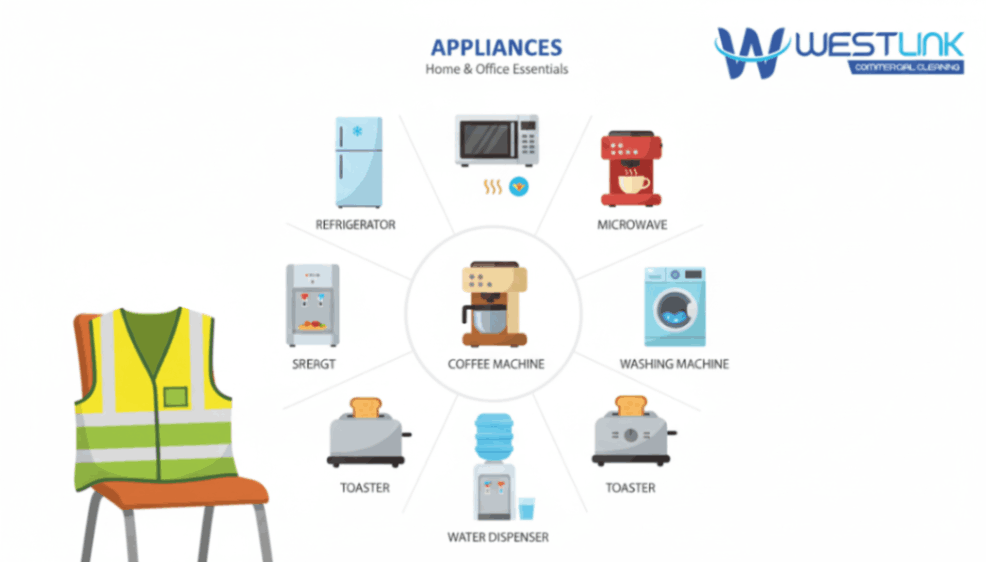
Appliances are devices or machines designed to perform specific tasks, usually related to household or office functions, such as cooking, heating, or cleaning.
In the context of an office breakroom, common appliances include
- Microwaves – for heating or cooking food quickly
- Fridges and freezers – for storing perishable items
- Coffee machines and kettles – for preparing beverages
- Toasters and sandwich makers – for heating or toasting food
- Dishwashers – for cleaning dishes and utensils efficiently
Why Regular Commercial Breakroom Appliance Cleaning Matters
Health and Safety Risks
Microwaves, fridges, and coffee machines are prime breeding grounds for bacteria if not cleaned regularly. Leftover food, spills, and condensation can quickly create unsanitary conditions.
Compliance with WHS and Food Safety Standards
Regular appliance cleaning aligns with SafeWork NSW, WorkSafe QLD, and FSANZ guidelines for workplace hygiene. This ensures your office meets safety obligations.
Employee Wellbeing and Productivity
A hygienic breakroom promotes confidence among staff, reduces absenteeism due to illness, and creates a professional, inviting environment.
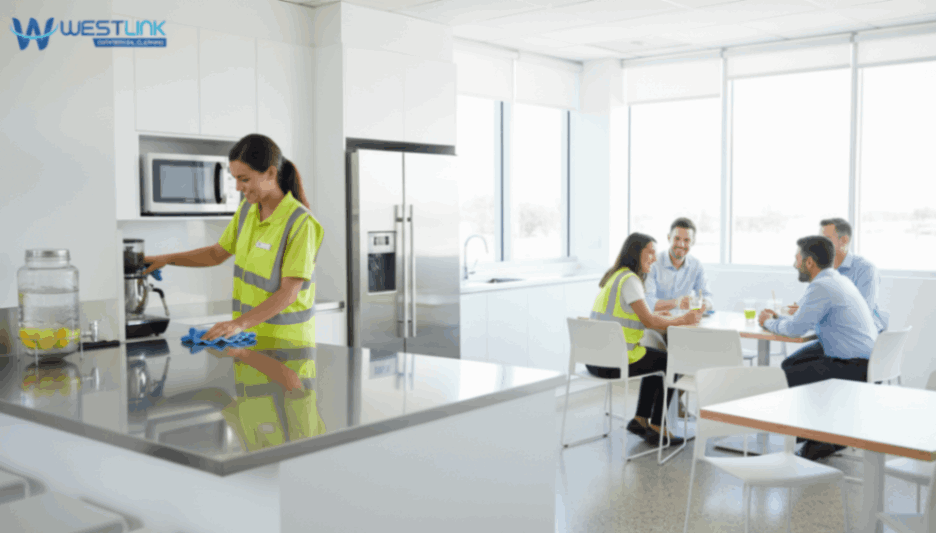
Advantages of Commercial Breakroom Cleaning
Advantage: A positive outcome or benefit resulting from an action or process.
Key Advantages:
- Better Staff Health: Reduces the spread of germs and food-borne bacteria.
- Odour Control: Prevents unpleasant smells from building up.
- Increased Productivity: Staff enjoy clean, comfortable spaces.
- Appliance Longevity: Prevents damage from grease, mould, and mineral build-up.
- Professional Image: Demonstrates care for employees and clients.
- WHS Compliance: Meets safety and hygiene standards outlined by SafeWork NSW.
Disadvantages
Disadvantage: A negative outcome or risk resulting from an action or lack of action.
Key Disadvantages:
- Health Risks: Bacteria and cross-contamination can cause illness among staff.
- Unpleasant Odours: Persistent food smells reduce workplace comfort.
- Appliance Malfunction: Dirt, spills, and limescale shorten appliance lifespan.
- Pest Infestations: Food residue attracts ants, cockroaches, and rodents.
- Negative Workplace Perception: Poor hygiene reflects badly on management and the company’s professional image.
How Often Should Commercial Office Breakroom Appliances Be Cleaned
Breakroom appliances should be cleaned according to usage frequency and staff numbers. A structured schedule ensures hygiene, safety, and appliance longevity.
Breakroom Appliance Cleaning Frequency
| Appliance | Daily | Weekly | Monthly |
| Microwave | Wipe spills | Deep clean | — |
| Fridge | Check spills | Wipe shelves | Full disinfect & declutter |
| Coffee machine | Rinse & clean exterior | Descale if needed | Deep clean internal parts |
| Toaster | Empty crumb tray | Wipe exterior | — |
| Dishwasher | Rinse filters | Clean seals & trays | Vinegar hot cycle |
Shared responsibility: Staff should wipe minor spills immediately, while cleaning teams handle deep sanitisation tasks. SafeWork NSW recommends clear cleaning protocols in shared office areas.
Eco-Friendly Cleaning Tips for Commercial Office Breakrooms
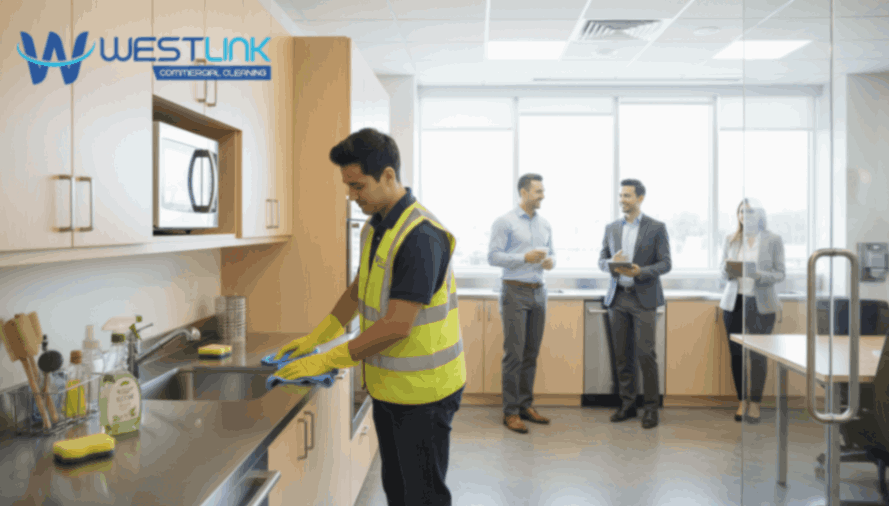
Modern workplaces adopt green cleaning practices to minimise environmental impact while maintaining hygiene.
Recommended Eco-Friendly Practices
- White vinegar: Disinfects and removes grease naturally.
- Baking soda: Neutralises odours and gently scrubs surfaces.
- Lemon juice: Natural deodoriser and cleaning agent.
- Reusable microfibre cloths: Reduce paper waste.
Westlink Commercial Cleaning follows DCCEEW sustainability principles, offering NSW offices safe, eco-conscious breakroom cleaning.
What We Need for Breakroom Cleaning
Effective breakroom cleaning requires the right tools and supplies. Essential items include:
- Multi-surface disinfectant sprays (for benches, tables, and appliance exteriors)
- Glass and stainless-steel cleaner (for fridges, microwaves, and coffee machines)
- Descalers (for kettles and coffee machines)
- Sponges, microfibre cloths, and scrubbing brushes
- Disposable gloves for hygiene and safety
- Garbage bags and bin liners
- Baking soda and white vinegar (eco-friendly alternatives)
- Paper towels for quick spill cleanups
Having these products readily available ensures cleaning is efficient, thorough, and compliant with health standards.
Common Appliance Cleaning Mistakes to Avoid
Proper cleaning of breakroom appliances is essential for hygiene, safety, and appliance longevity. However, certain mistakes can reduce effectiveness or even cause damage. Avoid these common errors
- Using Excess Water Near Electrical Controls: Water can cause short circuits or damage sensitive components. Always use a damp cloth rather than pouring water directly.
- Mixing Bleach with Ammonia: This creates toxic fumes that are hazardous to health. Use cleaning products according to manufacturer instructions.
- Neglecting Trays, Vents, and Seals: Bacteria and mould often accumulate in hidden areas such as appliance trays, vents, and rubber seals. These areas must be cleaned regularly.
- Spraying Cleaners Directly onto Electronics or Buttons: Direct spraying can damage controls or internal parts. Apply cleaners to a cloth first, then wipe the surface.
Recommended Cleaning Products Used in Breakroom Appliances
Westlink Commercial Cleaning typically uses the following products for safe and effective office breakroom hygiene:
- Multi-surface disinfectant sprays: Kills bacteria on benches, microwaves, and tables
- Eco-friendly descalers: For kettles and coffee machines
- Stainless steel cleaner: For fridge doors, microwaves, and appliance surfaces
- White vinegar & baking soda: Natural, non-toxic cleaning agents
- Microfibre cloths & sponges: For gentle but effective scrubbing
- Gloves, garbage bags, and liners: Ensure hygienic handling of waste
These products maintain hygiene while protecting staff health and the environment.
When to Hire a Professional Cleaning Service
Maintaining a clean and hygienic office breakroom can be challenging, especially in high-traffic environments. Hiring a professional cleaning service is recommended in the following situations:
- Persistent Odours or Mould Issues: If smells or mould continue despite regular cleaning, professionals can address underlying problems safely.
- High-Traffic Kitchens: Offices with 20+ staff require more frequent and thorough cleaning than what daily staff maintenance can provide.

Cleaning staff professionally maintaining a modern office space, ensuring hygiene and efficiency. - Compliance Audits: Ensure your workplace meets SafeWork NSW or other health and WHS standards.
- Limited Staff Resources: When staff cannot dedicate time or expertise to regular deep cleaning, professionals ensure consistent hygiene.
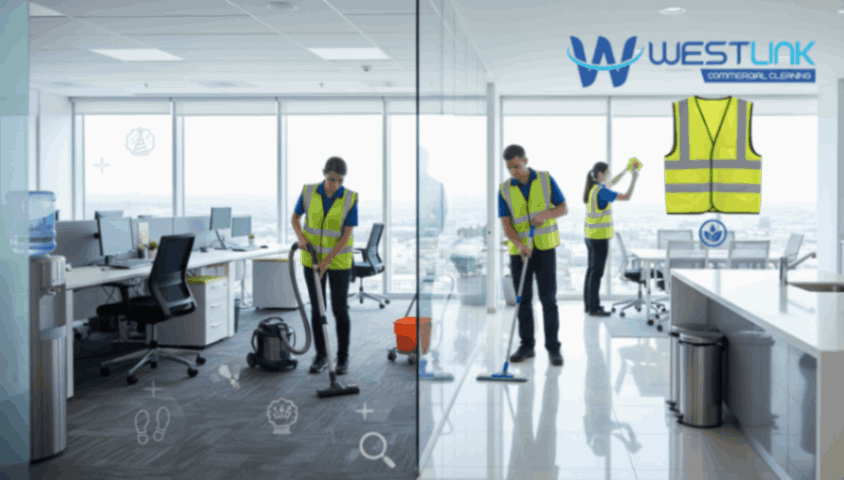
Benefits of Hiring Professional Cleaners
- WHS-Approved Methods and Products: Professionals use safe, compliant cleaning techniques.
- Consistent Results and Accountability: Cleaning is thorough and documented for compliance and quality assurance.
- Advanced Equipment and Eco-Safe Solutions: Professional tools and environmentally friendly products enhance effectiveness.
- Improved Indoor Air Quality and Hygiene Assurance: Regular professional cleaning helps maintain a healthier workspace for employees.
Westlink Commercial Cleaning uses SafeWork NSW-approved practices and eco-safe solutions for all appliance sanitation tasks.
Conclusion
Clean breakroom appliances go far beyond appearances — they safeguard your team’s health, uphold WHS compliance, and promote pride in the workplace. A tidy, fresh kitchen encourages staff to respect shared spaces and contributes to a positive, professional image.
For Sydney and Greater NSW businesses, Westlink Commercial Cleaning offers reliable, WHS-compliant cleaning programs tailored to office breakrooms of all sizes. Our eco-friendly cleaning standards meet recommendations from DCCEEW and SafeWork NSW, helping organizations stay safe, sustainable, and productive.
FAQs: Commercial Office Breakroom Cleaning
- How do I remove tough microwave stains?
Steam a mixture of vinegar and water for three minutes, then wipe away loosened residue with a damp cloth.
- What’s the safest cleaner for stainless-steel appliances?
Use diluted vinegar or a specialised stainless-steel cleaner, always wiping along the grain to avoid streaks and scratches.
- How often should the fridge be disinfected?
Wipe surfaces weekly, and perform a full disinfect and declutter monthly for shared fridges.
- Can vinegar damage appliance interiors?
No, vinegar is generally safe. Rinse thoroughly after cleaning and avoid prolonged contact with rubber seals.
- Does SafeWork NSW regulate kitchen hygiene?
Yes, SafeWork NSW provides hygiene and WHS guidance for workplace facilities, including shared kitchens.
- How can I remove coffee machine residue?
Run a descaling solution through the machine following manufacturer instructions, then rinse with fresh water to remove buildup.
- What cleaning products are safe for microwaves?
Mild dish soap, vinegar, baking soda, or a multi-surface disinfectant are safe for microwave interiors and exteriors.
- How often should office breakroom appliances be deep cleaned?
Appliances should undergo deep cleaning monthly, with high-use items like coffee machines and microwaves cleaned more frequently if needed.
- Can improper cleaning damage appliances?
Yes, using excess water, harsh chemicals, or spraying directly onto electronics can damage controls, wiring, or sensitive components.