When was the last time you truly your Commercial Fridge and Freezer Cleaning? Not just a quick wipe, but a deep clean of every corner, drain hole, and drip tray. Hidden spots can harbor bacteria, mold, and odors, affecting food safety, causing bad smells, and shortening your appliance’s lifespan.
This guide uncovers the fridge areas often overlooked and explains why deep cleaning matters for hygiene, health, and efficiency. You’ll get a step-by-step process, the best tools and cleaners, tips to eliminate odors, and a preventive maintenance plan to keep your fridge running smoothly for years.
Why Refrigerator and Freezer Cleaning Matters ?
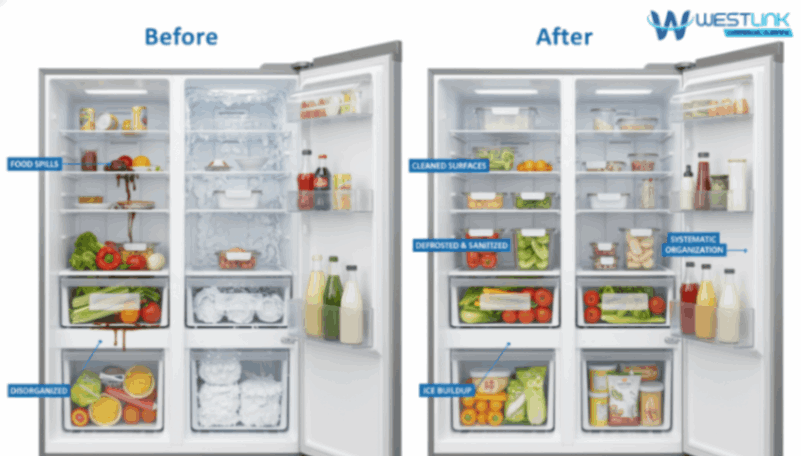
Refrigerators and freezers aren’t just storage boxes they are like living ecosystems. Moisture, leftover food bits, temperature fluctuations, and hidden nooks (such as door gaskets, drain holes, and drip trays) create ideal conditions for bacteria, mold, and yeast to grow. Without regular, deep cleaning, these microbes can multiply, potentially contaminating your food.
Food‑safety standards emphasize the importance of cleaning storage equipment to prevent pathogen buildup. According to the FDA Food Code, refrigeration equipment should be cleaned at a frequency that prevents accumulation of soil or microbial residues.
Ignoring this can lead to cross‑contamination especially when dealing with raw meats or dairy and raises the risk of foodborne illness.
Microbial growth also contributes to bad odors, sticky surfaces, and degraded seals. Therefore, deep cleaning is not just about aesthetics: it’s vital for health, food safety, and maintaining the performance of your appliance.
What Tools & Supplies are Required For Commercial Fridge and Freezer Cleaning Full Checklist
Before you start cleaning, having all the right tools and supplies ready makes the process safer, faster, and more effective. Here’s what you’ll need and why:
1. Cleaning Agents
- Baking soda – A gentle, food-safe cleaner that removes stains, grease, and odors without scratching surfaces.
- White vinegar – Excellent for dissolving mineral deposits, disinfecting, and neutralizing odors.
- Mild dish soap – For general cleaning of shelves, drawers, and removable parts.
- Diluted unscented bleach or food-grade sanitizer – For sanitizing areas where bacteria may hide, especially in drains, gaskets, and drip trays.
2. Water Solution
- Mix 2 tablespoons of baking soda per quart (1 L) of warm water.
- This solution is safe for most refrigerators and helps loosen grime while neutralizing odors.
3. Tools
- Microfiber cloths – Soft, non-abrasive, and absorbent for wiping surfaces.
- Soft-bristle brush or old toothbrush – Perfect for scrubbing cracks, corners, and gaskets without damaging surfaces.
- Spray bottle & bucket – Helps apply cleaning solutions efficiently.
- Rubber gloves – Protects your hands from cleaning agents and grime.
- Straw or pipe-cleaner – Ideal for unclogging defrost drains.
- Coil brush or vacuum with soft attachment – To clean condenser coils behind or beneath the fridge, improving efficiency.
4. Odor Absorbers
- Baking soda (open box) – Absorbs lingering odors inside the fridge.
- Activated charcoal pouches – Powerful at neutralizing odors naturally.
- Coffee grounds (small bowl) – Optional, also helps absorb smells and leave a neutral scent.
5. Maintenance Extras
- Fridge thermometer – Ensures your appliance stays at safe temperatures.
- Petroleum jelly – Applied to door gaskets to keep them flexible and airtight.
- Replacement gasket – If the current gasket is damaged or worn, replacing it helps prevent energy loss and bacterial growth.
This detailed setup ensures you can clean every corner safely, remove odors, and maintain your fridge’s performance.
Full Refrigerator and Freezer Deep-Clean Process
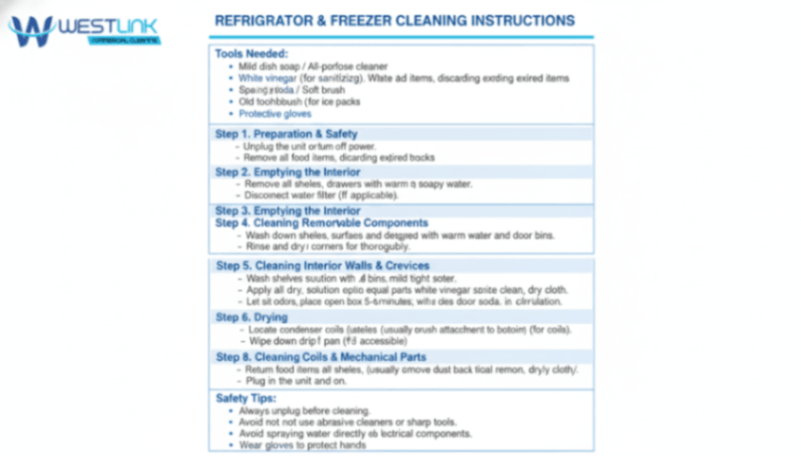
Here’s a detailed, stepwise process to deep-clean your fridge and freezer including hidden parts many guides skip. Below explain it in 8 steps.
Step1. Preparation & Safety
- Unplug the refrigerator / freezer, or turn it off if the plug is not accessible. Safety first you’ll be working with water and possibly removing parts.
- Remove all food. Use coolers or insulated bags to temporarily store perishables.
- Put on gloves and make sure the area is well-ventilated (open a window if possible).
Step2. Emptying the Interior
- Take out all removable parts: shelves, drawers, bins.
- Let glass shelves come to room temperature before washing; cold glass + hot water can crack. (Many manufacturers warn of this.)
- Check food: discard anything expired or spoiled.
Step3. Cleaning Removable Components
- Wash the shelves, drawers, and bins in the sink using warm water + mild detergent or your baking-soda solution.
- For persistent grime, soak for 10–15 minutes then scrub with a soft brush.
- Rinse well, then dry thoroughly on a clean towel or let air dry.
Step4. Cleaning Interior Walls & Crevices
- Prepare your cleaning solution (baking soda + water or vinegar mix).
- Starting from the top and working downward, spray or wipe all interior surfaces — that way, any dirt or loosened grime drips down, and you catch it all.
- Pay special attention to door gaskets (seals). These grooves trap crumbs and moisture. Use a toothbrush or a small brush to get into the seal folds.
- Clean the defrost drain hole (or drain tube): insert a straw or pipe cleaner and gently clear any sludge or slime. This is often a hidden source of bacteria and odors.
Step5. Sanitizing
- Use a food-safe sanitizer: either a very dilute bleach solution (if manufacturer allows), or a commercial food-contact-safe sanitizer. Ensure the concentration is safe and follow dwell-time instructions.
- Let the sanitizer sit on all interior surfaces, especially high-risk areas like gaskets, corners, and drawers.
- Rinse thoroughly afterward with clean, warm water to remove all chemical residues.
Step6. Drying
- Dry all surfaces with microfiber cloths. Make sure no moisture remains in cracks, gasket grooves, or the drain area.
- Leave the doors open for a while if possible, so the interior air dries out — this helps prevent microbial regrowth.
Step7. Cleaning Coils & Mechanical Parts
- Unplug the fridge (again, if not already done) and pull it away from the wall.
- Use a vacuum + soft-bristle coil brush to clean the condenser coils. Dust accumulation slows cooling and forces the compressor to work harder.
- Locate and clean the drip pan or drain tray (if accessible). Some drip pans collect condensation and can develop sludge or mold. Use warm water + mild soap, rinse, and dry thoroughly.
- Clean ventilation grilles or fans if present (depending on your fridge model).
Step8. Reassembly & Restocking
- Once everything is completely dry, reinsert shelves, drawers, and bins.
- Place odor absorbers inside: open a box of baking soda, or put a pouch of activated charcoal or coffee grounds in a small bowl
- Plug the fridge back in, reset your thermostat (if necessary), and allow it to cool back to its operating temperature.
How to Prevent Bad Smells in Your Fridge or Freezer
1. Use Multiple Odor Absorbers
- Baking soda: Keep an open box in the fridge and freezer; replace every 2–3 months.
- Activated charcoal: Stronger absorption; some types can be “recharged” in sunlight.
- Mild scent options: Dry coffee grounds or cotton balls with a drop of vanilla.
2. Strategic Placement
- Place odor absorbers where air circulates, like corner shelves or near vents.
- Avoid burying them behind food, or their effectiveness is reduced.
3. Avoid Spoilage
- Regularly check for expired or spoiled items and discard them promptly.
- Wipe or wash containers with sticky residues; rinse jars and bottles before storing.
4. Manage Moisture
- Keep the defrost drain clear to prevent water pooling.
- After cleaning, leave doors open briefly to allow internal gaps to dry.
Maintenance Schedule For Refrigerator & Freezer Cleaning
Cleaning once deeply is great but maintaining that cleanliness is what really matters. Here’s a realistic schedule plus preventive tips to keep your refrigerator and freezer in top form.
| Frequency | Task | How-To Do & Pro Tips | Why It Matters |
| Weekly | Wipe spills immediately | Use a microfiber cloth + 1:1 vinegar-water spray. Blot, don’t rub. | Prevents sticky buildup and bacterial growth. |
| Quick “sniff + scan” | Open door, sniff shelves, check crisper drawers for dampness. | Catches spoilage early, reduces food waste. | |
| Toss expired/off items | Check dates; follow “FIFO” (First In, First Out). | Prevents cross-contamination and bad odors. | |
| Monthly | Clean door gaskets | Wipe with damp cloth + mild dish soap. Dry thoroughly. | Maintains airtight seal → saves energy. |
| Refresh odor absorbers | Replace baking soda box or activated charcoal pod. | Neutralizes odors before they spread. | |
| Quarterly | Partial deep clean | Wipe interior walls, shelves, and gaskets with vinegar solution. | Removes hidden grime and prevents mold. |
| Clear defrost drain | Use a turkey baster with warm water + pinch of baking soda. | Stops slime, leaks, and foul odors. | |
| Check temperature | Use a digital fridge thermometer. Ideal: 37–40°F (fridge), 0°F (freezer). | Prevents food spoilage and improves energy efficiency. | |
| Every 6 Months | Clean condenser coils | Unplug → vacuum with coil brush or crevice tool. | Dusty coils increase energy use; cleaning saves money. |
| Inspect drip pan | Pull out (if accessible) → empty and clean with vinegar. | Prevents mold growth and pest attraction. | |
| Annually | Full deep clean | Follow a full step-by-step deep-clean routine. | Resets hygiene, efficiency, and organization. |
| Inspect door gasket | Look for cracks, tears, or stiffness. Replace if needed. | Leaky seals waste energy and harbor microbes. | |
| Apply petroleum jelly | Thin layer on hinge side of gasket. | Keeps rubber flexible → better seal, less wear. |
How to Troubleshoot Common Issues and Apply Effective Fixes
Even with the best cleaning, things can sometimes go wrong. Here’s how to tackle common issues.
Persistent Odors: If bad smells linger after cleaning, start by checking the defrost drain, which often harbors slime or mold. Replace or refresh odor absorbers like baking soda or activated charcoal, and inspect the drip pan. If it’s dirty or malodorous, remove, clean, dry, and reassemble it correctly to prevent odors from returning.
Mold or Dark Spots on Gaskets: Gasket grooves can trap moisture, causing mold or discoloration. Gently scrub affected areas with your cleaning solution and a soft brush. For stubborn mold, use a food-safe sanitizer. After cleaning, dry thoroughly and apply a thin layer of petroleum jelly to keep the gasket flexible and resistant to cracks or microbial growth.
Ice or Frost Buildup in the Freezer: Rapid frost accumulation often indicates a weak door seal. Test by closing a piece of paper in the door; if it slides out easily, the seal may need attention. Manually defrost the freezer if auto-defrost isn’t functioning and clean the interior afterward.
Water Pooling Inside or Under the Fridge: This is typically caused by a clogged drain hole. Clear it with a straw or pipe cleaner and ensure the drip pan is emptied, cleaned, and correctly positioned to prevent leaks.
By following these troubleshooting steps, you can quickly address issues before they impact food safety or appliance performance.
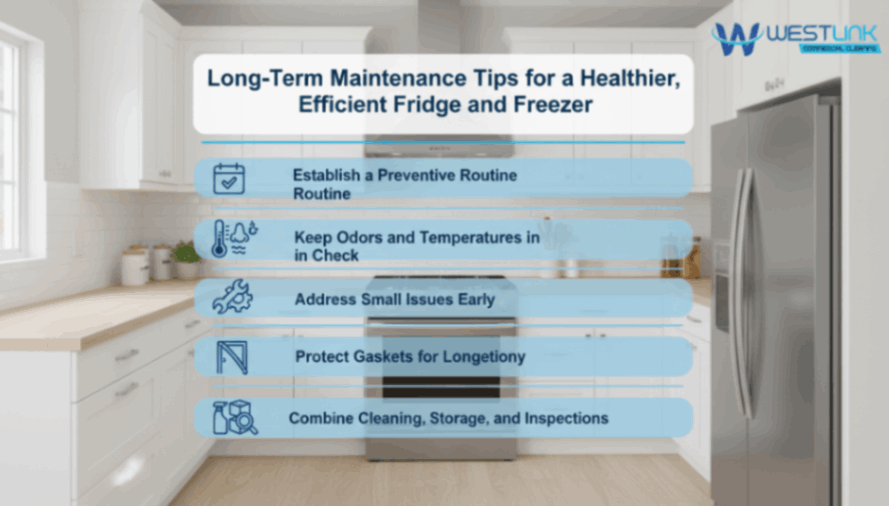
Long-Term Maintenance Tips for a Healthier, Efficient Fridge and Freezer
Establish a Preventive Routine
Keeping your refrigerator and freezer in top condition requires more than occasional deep cleaning. Wipe spills immediately, check for expired items weekly, clean door gaskets monthly, and inspect condenser coils every six months.
Keep Odors and Temperatures in Check
Refresh odor absorbers regularly, monitor temperatures with a fridge thermometer, and ensure door seals remain airtight to maintain hygiene and energy efficiency.
Address Small Issues Early
Tackle frost buildup, clogged drains, or leaks promptly to prevent costly repairs and microbial growth.
Protect Gaskets for Longevity
Apply a thin layer of petroleum jelly to gaskets after cleaning to keep them flexible, airtight, and durable.
Combine Cleaning, Storage, and Inspections
By maintaining a routine of regular cleaning, proper storage, and timely inspections, you ensure food safety, prolong appliance life, and save energy over the long term.
Conclusion
Cleaning your fridge and freezer isn’t just a choreit protects your food, health, and appliances. A deep clean that targets hidden spots like drain holes, drip pans, and gaskets removes dirt and microbial risks. Combine this with a regular maintenance schedule, proper odor control, and temperature checks, and you keep your appliance efficient and hygienic. Always use food-safe cleaners, unplug when possible, wear gloves, and dry thoroughly. With consistent care do that, and you’ll enjoy a cleaner, fresher, safer kitchen every single day.
Frequently Asked Questions
When is the best time to clean a refrigerator thoroughly?
Perform a deep clean every 3–6 months depending on usage and how dirty it gets. Do lighter maintenance (wipe, odor absorber) more regularly.
Is it safe to use bleach inside my refrigerator?
Yes, but only if diluted properly and fully rinsed off afterward. Use a food-safe, unscented bleach or a commercial food-grade sanitizer.
Can I clean the fridge while it’s plugged in?
It’s safer to unplug it, especially when water is involved. If you can’t unplug, be very careful around the base and avoid contact with electrical parts.
How do I clean the drain hole in my Refrigerator?
Use a straw, pipe cleaner, or a small flexible brush. Insert gently into the drain and clear out any sludge or debris.
What is the best natural odor absorber for a fridge?
Baking soda is the classic option; activated charcoal pouches are more powerful and reusable; coffee grounds work too.
How do I remove black mold from the door seals?
Scrub with a mild solution (baking soda/water), then sanitize using a food-safe product. Rinse and dry thoroughly, then condition the gasket with petroleum jelly.
Should I manually defrost my freezer?
If frost builds up faster than the auto-defrost system can handle, manual defrosting may be needed. Always clean thoroughly afterward.
How do I clean the condenser coils safely?
Unplug the fridge, vacuum the coils gently, or use a coil brush. Avoid bending the coils.
My fridge still smells after cleaning what did I miss?
Check the drain hole, drip pan, and door gaskets. These hidden areas often harbor odor-causing buildup.
How do I maintain the door gasket (seal)?
Clean monthly with warm soapy water, dry thoroughly, and apply a thin layer of petroleum jelly to keep it pliable.
What temperature should I set in my fridge and freezer for safety and efficiency?
Ideal fridge temperature: ~37–40°F (3–4°C); freezer: ~0°F (–18°C).
Are commercial cleaners safe for fridge interiors?
Commercial cleaners can be safe for fridge interiors, but it depends on the type and ingredients. Only use products that are labeled food-safe or suitable for surfaces that contact food.