Imagine walking into a clean, bright mall; it instantly feels welcoming. That level of cleanliness doesn’t happen by chance; it comes from careful planning, regular maintenance, and smart safety practices. Keeping a mall clean isn’t just about looks; it protects visitors’ health, enhances their experience, and maintains the mall’s reputation.
For professional commercial mall cleaning in Sydney, Westlink Commercial Cleaning provides tailored solutions that keep your mall spotless, safe, and welcoming.
In busy malls, dirt, spills, germs, and wear accumulate fast. Without a proper cleaning plan, this can lead to accidents, bad odours, and even health risks. In this guide, we explain how to keep a mall clean, safe, and welcoming. You’ll learn practical tips on cleaning schedules, tools, eco-friendly products, safety protocols, cost management, and handling high-traffic areas. Whether it’s daily maintenance, deep cleaning, or special events, this guide gives clear, easy-to-follow steps to maintain a spotless and inviting shopping environment.
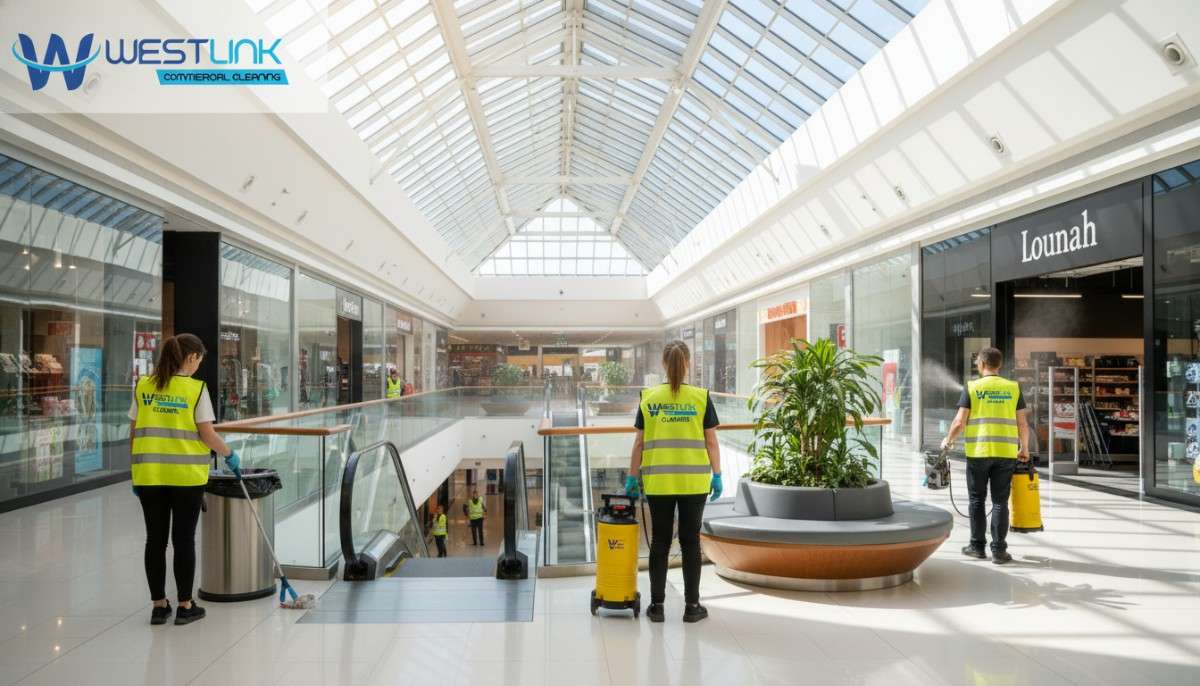
Why Commercial Mall Cleaning Matters
Before diving into tactics, it’s important to understand why mall cleaning deserves serious attention. Here are a few reasons.
- Health and Hygiene: High-footfall areas with crowded walkways, escalators, food courts, and restrooms are hotspots for germs. Regular disinfection helps reduce the spread of viruses and bacteria, protecting visitors and staff alike.
- Safety: Spills, clutter, or poorly maintained surfaces can lead to accidents. A clean mall mitigates risks of slips, trips, or falls, keeping everyone safer.
- Customer Experience: Shoppers notice clean spaces. A well-maintained mall projects professionalism, builds brand reputation, and gives visitors confidence in their environment.
- Longevity of Infrastructure: Surfaces, flooring, escalators, and other amenities fare better when regularly cleaned, preserving their value and reducing long-term repair costs.
- Sustainability and Compliance: With growing demand for eco-conscious operations, using green cleaning products and responsible waste management can reduce environmental footprint and align with regulations and public expectations.
Given all these stakes, it’s clear that mall cleaning is not only about aesthetics; it’s about trust, safety, and the bottom line. A case study by the CDC shows regular, systematic cleaning and disinfection, especially of high‑touch surfaces, is critical for reducing the risk of disease transmission in malls, protecting both public health and the reputation of the facility.
How to Create a Comprehensive Mall Cleaning Strategy: Key Steps
1. Cleaning Schedule & Structure
An effective mall cleaning programme starts with a clear schedule. Tasks can be divided into three main categories:
- Daily Cleaning: Focus on high-touch surfaces like handrails, elevator buttons, and door handles. Empty trash bins, pick up litter, and quickly clean spills. Daily attention prevents dirt build-up and reduces germs.
- Intermediate Cleaning: Between deep cleans, mop floors, use scrubbers in busy areas, and clean sections that don’t require closing the mall.
- Deep Cleaning: Conduct thorough cleaning weekly or nightly. This includes steam-cleaning carpets, pressure-washing pavements, and disinfecting air vents, ceilings, and other hard-to-reach areas.
A well-organised schedule ensures consistent cleanliness, efficiency, and safety throughout the mall.
2. Zoning and Staffing
Divide the mall into cleaning zones, such as entrance, food court, restrooms, corridors, parking, escalators, and tenant storefronts. Assign dedicated staff or teams to each zone.
Equally important is proper training. They should know not just how to use the cleaning equipment and chemicals but also understand safety protocols, proper waste handling, and how to spot hazards. Strong training speaks to expertise and trust.
3. Tools and Products
Maintaining a mall requires the right combination of equipment and cleaning products. Using proper tools not only ensures efficiency but also keeps the environment safe and hygienic for shoppers and staff.
Essential Cleaning Tools
- Floor Scrubbers & Sweepers: Automatic or walk-behind scrubbers make it fast to clean large areas, while sweepers collect dust and debris efficiently.
- Vacuum Cleaners: Industrial and backpack vacuums with HEPA filters help remove dust and allergens from carpets and hard-to-reach areas.
- Pressure Washers & Steam Cleaners: Perfect for exterior pavements, food courts, and heavily soiled areas, these machines sanitise surfaces without harsh chemicals.
- Mops & Microfiber Cloths: Microfiber materials trap dirt and bacteria, ideal for daily wiping of floors, tables, and railings. Colour-coded cloths prevent cross-contamination between areas.
- Squeegees & Extension Poles: Squeegees remove water from floors and windows, while extension poles reach ceilings, vents, and tall glass panels.
- Cleaning Trolleys & Safety Signs: Mobile trolleys keep tools organised, and clear warning signs ensure visitor safety during cleaning.
Key Cleaning Products
- pH-Neutral Floor Cleaners: Gentle on tiles, marble, and stone, keeping floors shiny and damage-free.
- Disinfectants: Used on high-touch surfaces like handrails, elevator buttons, and door handles to reduce germs.
- Glass & Window Cleaners: Streak-free solutions for mirrors, storefronts, and indoor glass surfaces.
- Degreasers: Effective in food courts, kitchens, and areas prone to grease build-up.
- Carpet Cleaning Solutions: Spot removers and extraction detergents keep carpets clean and fresh.
- Restroom Cleaners: Specialised acids and descalers maintain hygiene in toilets and sinks.
- Air Fresheners & Odour Neutralisers: Keep the mall smelling pleasant in common areas and restrooms.
Why Using the Right Tools Matters
Using the right cleaning tools is important because they make work faster and more efficient, keep staff safe from accidents, ensure better hygiene by reducing germs, and protect floors and surfaces, helping them last longer.
By investing in the right cleaning tools and products, malls can stay spotless, safe, and inviting, ensuring a positive experience for every visitor.
4. Cleaning Products & Eco‑Friendly Practices
Effective cleaning doesn’t mean harsh chemicals. In fact, environmentally responsible cleaning boosts health and trust:
- Use green cleaning agents that are free from harmful volatile organic compounds (VOCs) and safe for indoor air quality.
- Employ colour-coded cleaning textiles (e.g., red for toilets, yellow for general surfaces) to avoid cross-contamination.
- Choose low-noise and energy-efficient machinery (electric sweepers, battery-powered tools) that reduce both environmental impact and disruption.
- Optimise waste management: Provide separated bins for recyclables in food courts and other areas, reduce single-use plastics, and ensure regular disposal to avoid odour or pests.
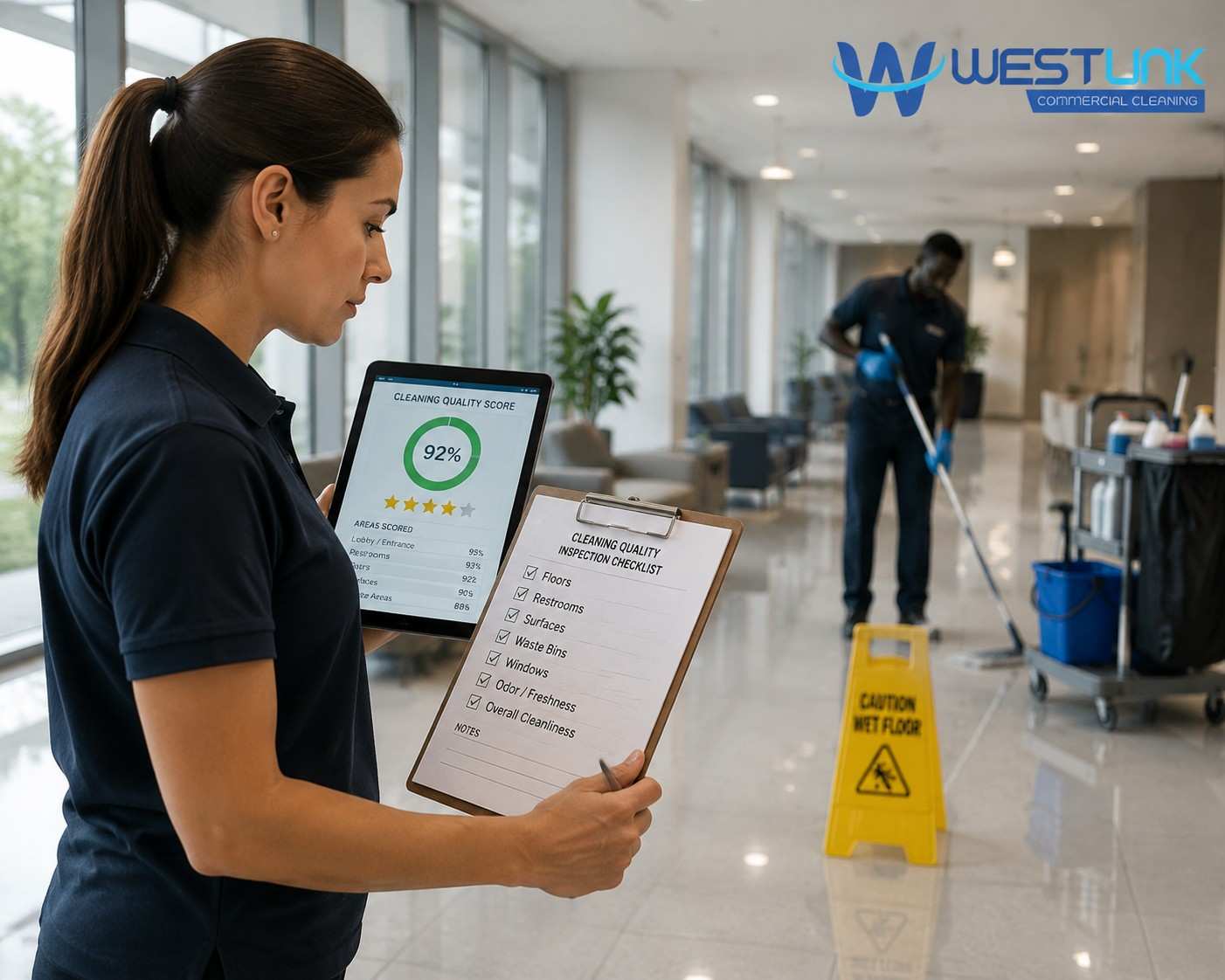
Quality Control & Monitoring During Cleaning of Commercial Mall
Even the best cleaning plan only works if it’s monitored regularly.
- Inspections: Use checklists digital or paper to review entrances, escalators, restrooms, and service areas. Regular inspections ensure standards are maintained.
- Audits: Supervisors or quality-control staff should perform periodic audits to confirm cleaning consistency and protocol compliance.
- Feedback Loop: Provide shoppers with ways to report issues via kiosks, mobile apps, or signage. Feedback helps adjust cleaning operations quickly.
- Data-Driven Adjustments: Track foot traffic, incident reports, or sensor data (like bin levels) to optimise cleaning schedules and resource allocation.
Regular monitoring ensures the mall stays clean, safe, and welcoming while helping managers make informed improvements.
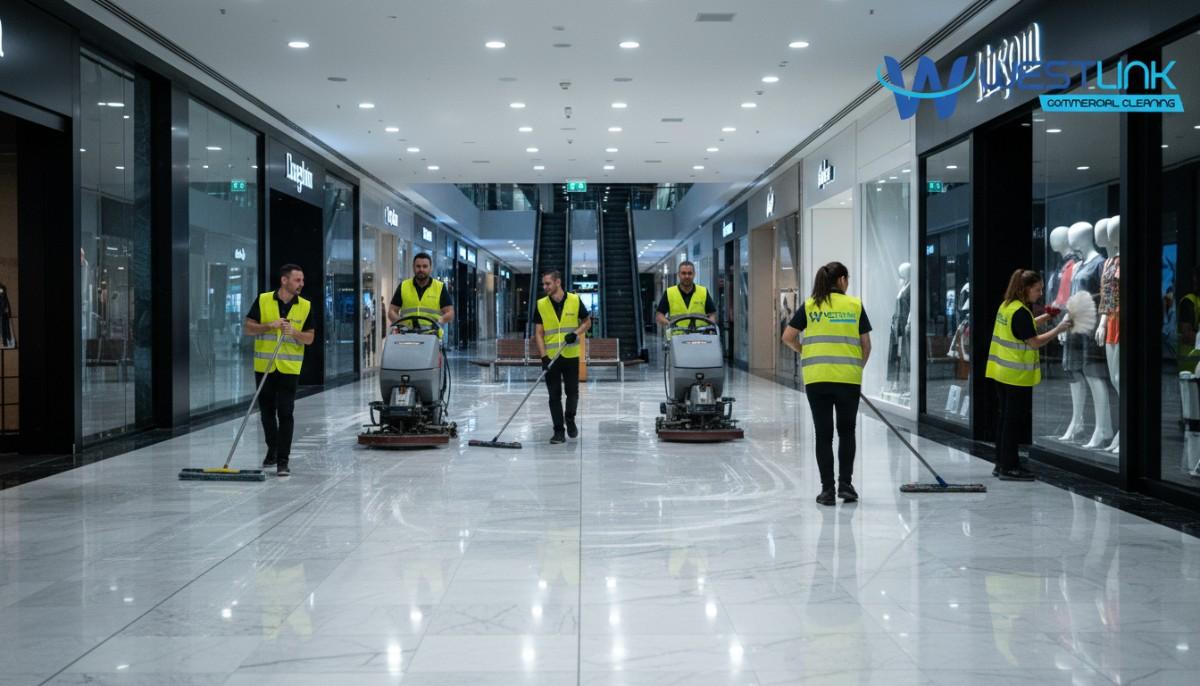
How to Clean Mall Step-by-Step Cleaning Process
A strong cleaning process keeps a mall safe and welcoming. Here’s a simple approach to follow:
Entrance & Exterior Areas
Start cleaning before store hours. Remove litter, sweep pavements, and clean entrance mats (clean-off zones) to catch dirt before it enters.
Parking lots, ramps, and external walkways should be cleaned nightly or during low-traffic hours, using vacuum sweepers or ride-on machines for efficiency.
Pay machines, trolley parks, kerbs, and pay stations are high-touch surfaces; disinfect them regularly.
Common Areas, Corridors, and Seating Zones
Throughout the operating hours, “hygiene stewards” or daytime cleaners should patrol high-traffic corridors, seating areas, and hallways. Use microfiber cloths dampened with cleaner to quickly wipe finger marks, glass surfaces, and railings.
Address spillages immediately. A fast response with a mop or spray mop reduces slip risk and prevents staining. Total Clean recommends this, especially in summer months.
Escalators, Elevators, and Glass Surfaces
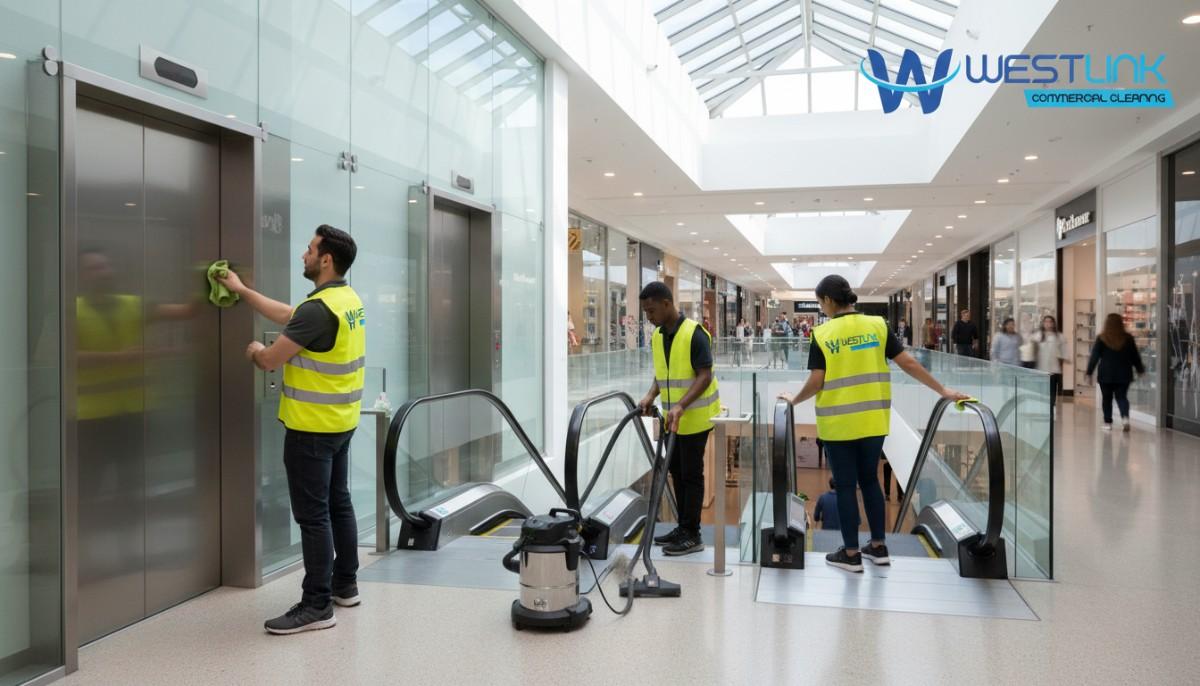
Escalator handrails are constant contact points. Clean these with microfiber cloths soaked in disinfectant, a method recommended by professional cleaning providers.
Lift interiors: vacuum loose dirt, mop the floors, and use handheld vacuum tools for mirrors or glass surfaces. For greasy or sticky metal and glass, steam cleaners paired with microfiber cloths do wonders; they remove grime while minimising streaks.
Restrooms & Hygiene Facilities
Restrooms are among the most critical areas in mall hygiene. They require frequent disinfection of sinks, toilets, mirrors, flush handles, and baby-changing tables. Colour-coding textiles helps prevent cross-contamination (e.g., towels for urinals separate from general areas). Refill supplies (soap, paper towels, and sanitiser) diligently, and deep clean restrooms at least once a day or per shift, depending on foot traffic.
Food Courts & Dining Areas
Food courts are grease, spill, and bacteria magnets. Clean tables, chairs, and touchpoints right after use, wipe surfaces with disinfectant, and vacuum or sweep crumbs from chairs and floors. At closing time, do a deep clean: steam or pressure-clean the flooring, sanitise waste bins, and deep-clean any kitchen or preparation surfaces in dining areas.
Use green cleaning products in food areas to avoid chemical residues where people eat.
Deep Cleaning & Restorative Maintenance
Schedule deep, restorative cleaning during off-hours or overnight. Use machine scrubbers, steam cleaners, and pressure washers to hit neglected zones — ceilings, vents, and escalator mechanisms.
Audits and inspections should track cleaning effectiveness (see the section on performance review below). Regular restorative cleaning preserves the quality of surfaces and extends the lifespan of materials.
Safety, Compliance & Risk Management
Cleaning isn’t just about aesthetics — it’s also about managing safety and regulatory risk. Here’s how to do that right:
High-Touch Surface Disinfection
High-touch zones demand frequent cleaning: door knobs, ATMs, benches, elevators, and rails. OSHA guidance for malls urges regular disinfection of these surfaces using approved disinfectants.
Establish a disinfection schedule that aligns with peak times, but ensure high-contact points are addressed multiple times a day.
Signage, Barriers & Communication
When cleaning is in progress, use clear signage (“Caution: Wet Floor”, “Cleaning in Progress”) to alert visitors.
Use temporary barriers if necessary to reroute foot traffic away from freshly cleaned or slippery surfaces.
Communicate with tenants and staff about cleaning schedules. When store owners know when cleaning happens, they can cooperate around deliveries, closing times, or sensitive displays.
Staff Training & Protocols
Provide regular training for your cleaning crew on disinfectant use, safe handling of chemicals, use of PPE, and how to respond to spills or accidents.
According to NEXT-NORM-WITH-COVID-SHOPPING-MALL Encourage strict compliance with safety SOPs. For instance, some mall SOPs require temperature screenings, visitor logs, or no-touch trash bins.
Use a checklist-based inspection system to ensure that cleaners don’t miss critical tasks, especially in high-risk areas.
Risk Reduction During Epidemics
In health-sensitive times (e.g., pandemics), malls may enforce additional measures: capacity limits, mask usage, and health checkpoints at entrances.
Encourage quick shopping, reduce store-hopping, and sanitise trolleys/carts to limit contact points.
Limit crowding in restrooms or shared spaces. Some SOPs advise blocking off every other bathroom stall to maintain distancing. According to OSHA guidelines.
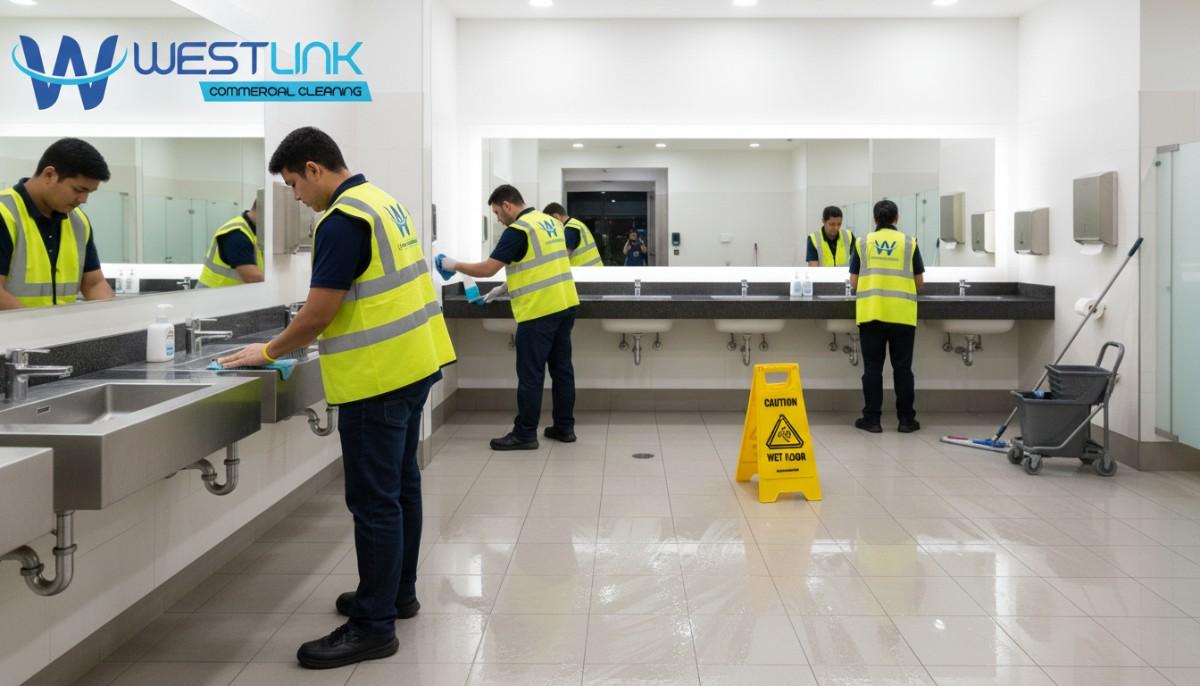
How to Handle Common Challenges in Mall Cleaning
Running cleaning operations in a mall comes with multiple challenges. Here’s how to tackle them.
- High Foot Traffic: Peak hours mean more dirt, more spills, and more pressure on cleaning staff. Counter by increasing patrol frequency, using portable sprayers, and having a rapid-response team ready.
- Disruption Minimisation: Cleaning during business hours can be disruptive. Use quiet machinery, perform deep cleaning during off-peak times, and communicate visibly with shoppers.
- Safety Risks: Wet floors, chemical exposure, and climbing to clean high areas are real hazards. Proper PPE, training, and signage are essential to reduce risk.
- Tenant Coordination: Some stores may resist cleaning schedules or find them inconvenient. Build good communication; involve tenant managers in cleaning planning, share the schedule, and adjust timing as needed.
- Consistency: Without ongoing oversight, standards can slip. Use digital checklists, regular audits, and designated supervisors to maintain quality.
- Budget Constraints: Cleaning is expensive. Justify investments by linking to safety, reputation, and
What are cost considerations for mall cleaning?
This table shows typical mall cleaning costs per square foot for different services. It helps managers plan budgets while keeping the mall clean, safe, and efficient. Here is a simple breakdown in the following table.
| Cleaning Type | Cost Range (USD per sq ft) | Notes / Assumptions |
| Janitorial / Custodial | 0.93 – 1.56 | Daily/weekly floor, restroom, and surface cleaning; essential for high-traffic areas. |
| Maintenance (non-janitorial) | 3.34 – 3.67 | HVAC, lighting, and structural upkeep; excludes routine cleaning. |
| Overall Maintenance + Janitorial | 1.19 – 1.43 | Combined benchmark for total soft/hard services in commercial retail spaces. |
| Window Cleaning | 0.06 – 0.09 | Annual exterior/interior cleaning; based on ~500,000 sq ft mall. |
| Waste Management | 0.02 – 0.03 | Collection and recycling offset possible via revenue streams in eco-focused malls. |
| Green / Sustainable Cleaning | +0.05 – +0.15 | Eco-products and low-water methods often cost-neutral after 1–2 years. |
| Labour (subset of all types) | 0.80 – 1.20 | Up to 90% of costs; varies globally (lower in Asia, higher in the EU/US). |
Environmental & Sustainability Best Practices
Adopting green and sustainable cleaning practices not only aligns with public expectations but can also reduce long-term costs and create a healthier environment.
- Use biodegradable, low-VOC cleaning agents.
- Choose machines (sweepers, scrubber dryers) that are battery-powered or low-noise to reduce carbon footprint and disturbance.
- Implement recycling and waste-segregation programmes, particularly in food courts and common trash bins.
- Encourage circular cleaning systems — reuse microfiber cloths instead of disposable wipes.
- Monitor indoor air quality and HVAC systems: regular maintenance helps reduce energy waste and ensures clean, healthy air.
Seasonal & Special Considerations
Summer & Hot Months
During hot seasons, malls often face increased indoor air conditioning use and more foot traffic. Total Clean advises paying closer attention to restroom hygiene, spill management, and HVAC filter maintenance.
Food court bins can fill up faster, and odours may build, so schedule bin emptying more frequently. Ensure HVAC systems are serviced regularly; change filters and consider air purification to maintain air quality.
Winter, Snow, or Rainy Weather
In colder or rainy climates, dirt and water tracked from outside increase. Use scrubber dryers and wet mops regularly, especially in entrance zones, to reduce slip hazards.
Maintain outside ramps, stairways, and sidewalks: use leaf blowers, snow shovels, or grit depending on conditions.
In snowy weather, ensure prompt removal of snow and ice, and use non-damaging salt or grit to maintain safety.
Event Days / Peak Shopping Seasons
During sales, holidays, or special events, malls become more crowded than usual. Increase cleaning frequency in crowded hotspots, and deploy extra cleaning teams.
Coordinate with event planners and tenants in advance: define cleaning windows, assign additional personnel, and ensure all trash bins/designated spots are serviced often.
Use real-time monitoring: feedback kiosks, mobile reporting tools, or staff can help identify messy areas quickly so they can be addressed promptly.
Maintenance & Aftercare
Cleaning doesn’t end with a mop; maintenance and aftercare help sustain cleanliness long-term:
- Regularly inspect cleaning tools and machinery. Machines must be maintained, serviced, and parts replaced to ensure ongoing performance.
- Perform periodic training refreshers. Even experienced staff benefit from updates on new cleaning agents, techniques, or safety guidelines.
- Rotate restorative cleaning tasks: deep-clean carpets, windows, and ceiling systems on a fixed cycle so nothing is permanently neglected.
- Audit and adjust your cleaning plan quarterly or semi-annually. Use data from inspections and feedback to fine-tune cleaning frequencies, resource allocation, and staffing.
- Celebrate cleanliness. Recognise and reward cleaning staff for outstanding performance. Showcase your mall’s commitment to hygiene through visible signage or communication so shoppers know you prioritise safety.
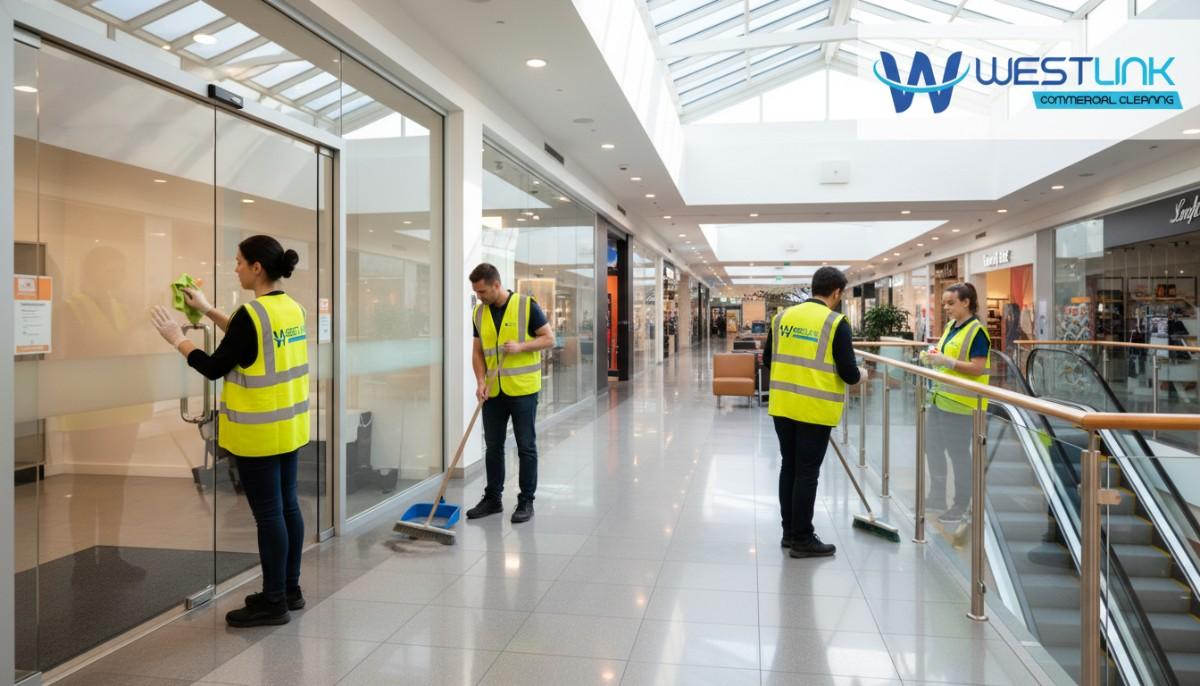
Why Hiring Professional Cleaning Services Helps
Many mall operators choose to partner with professional cleaning firms, and for good reason:
- Professionals bring expertise and scale: They know which chemicals to use, what machines are most efficient, and how to tackle specialised zones like escalators or HVAC vents.
- Cost efficiency: Outsourcing can reduce labour overheads, as specialised cleaners may have access to better equipment and bulk supplies.
- Flexibility: External teams can scale up during peak seasons or special events.
- Quality assurance: Many cleaning companies provide inspection reports, quality audits, and management systems so you can track performance.
- Enhanced trust: Hiring professionals demonstrates to tenants and customers that the mall is serious about hygiene, safety, and operational excellence.
Mall Cleaning Checklist
Here’s a practical mall cleaning checklist that outlines each area and the key tasks needed to keep the entire facility clean, safe, and well-maintained.
| Area / Task | Specific Actions |
| Entrance & Exterior | Sweep walkways and clean doormats; disinfect pay machines and trolley parks; empty external trash bins. |
| Common Areas & Corridors | Patrol and pick up litter; wipe down glass, railings, and seating; mop up spills immediately. |
| Escalators & Elevators | Disinfect handrails, vacuum/mop interiors, and steam-clean glass panels. |
| Restrooms | Disinfect toilets, sinks, and baby-changing tables; refill soap, paper towels, and sanitizers; deep clean nightly. |
| Food Court | Wipe tables and chairs after use; clean floors for crumbs and spills; service trash and recycling bins frequently; and deep-clean prep and dining surfaces. |
| Deep Cleaning (Scheduled) | Carpet steam cleaning; pressure-wash outdoor surfaces; clean air vents, ceilings, and high surfaces. |
| Safety & Signage | Display wet floor signs; use barriers when needed; refresh spray bottles, PPE, and instructions. |
| Quality Monitoring | Use inspection checklists to audit zones, record customer feedback, and review and optimise the cleaning schedule. |
| Training | Monthly refresher training for staff; PPE and chemical safety training; emergency response drills for spills. |
| Sustainability | Separate bins for recycling; use green cleaning agents; maintain and service cleaning equipment. |
Conclusion
Keeping a mall clean and safe is an ongoing commitment; a well-designed cleaning strategy doesn’t happen overnight. It requires the right tools, a structured schedule, trained staff, effective products, and continuous oversight. But when done right, the payoff is huge: a healthier environment, a reputation for excellence, fewer accidents, and happier customers and tenants.
If you’re a mall manager, facility director, or business owner, here’s your next step: implement a robust cleaning plan. Start by assessing your current cleaning routines, identifying key pain points, and setting up a cleaning checklist tailored to your mall’s layout. Invest in training and proper equipment, and decide whether outsourcing makes sense for your scale. Finally, monitor performance, gather feedback, and continually refine your approach because maintaining cleanliness is not a one-time job but a promise to everyone who walks through your doors.