Small commercial kitchen appliances, such as kettles, coffee makers, blenders, toasters, and food processors, are essential tools used every day. Due to frequent use, these appliances naturally accumulate grease, food particles, limescale, and hidden dirt in hard-to-reach areas or internal components. Over time, this buildup can reduce appliance efficiency, produce unpleasant odors, and even contaminate food or beverages with bacteria or mineral deposits. Regular cleaning and descaling prevent these issues, ensuring the appliances continue to function safely and reliably.
Maintaining a consistent cleaning routine not only protects food safety but also extends the lifespan of small kitchen appliances. Using proper techniques and food-safe cleaning products makes the process easy and effective, while descaling prevents limescale from affecting performance. By keeping appliances clean, commercial kitchens can maintain energy efficiency, smooth operation, and a hygienic environment, which is essential for safe food preparation and overall kitchen productivity
What Are Small Commercial Kitchen Appliances?
Small kitchen appliances are compact, electric tools designed to make everyday food preparation easier. Examples include kettles, coffee makers, blenders, food processors, mixers, toasters, air fryers, and electric grills. Because they have internal components, heating elements, and surfaces that come into direct contact with food, these appliances are prone to collecting grease, food residue, mineral deposits, and other hidden buildup over time.
What is Descaling?
Descaling is the process of removing mineral deposits, such as limescale, that accumulate inside appliances that use water. Over time, hard water can leave white or chalky buildup on heating elements, reservoirs, and internal components. Descaling restores appliance efficiency, improves heating performance, prevents damage, and ensures that water-based appliances like kettles, coffee makers, and steamers remain safe and functional. The EPA notes that limescale can reduce energy efficiency by up to 30 % (.gov).

Types of Appliances That Require Regular Cleaning
Appliances that collect grease
Certain small kitchen appliances are more prone to grease buildup and require regular cleaning to maintain performance and hygiene. Appliances such as blenders, food processors, hand mixers, stand mixers, air fryers, electric grills, sandwich makers, and toasters are frequently exposed to fats, oils, and food particles during use. These substances can stick to blades, heating elements, and internal surfaces, forming a layer of grease and residue if not cleaned consistently. Over time, this buildup can reduce efficiency, create unpleasant odors, and even harbor bacteria, making thorough and frequent cleaning essential for safe and effective operation.
These appliances are exposed to fats, oils, and food particles that stick to surfaces and blades, making them prone to grease accumulation if not cleaned regularly.
Appliances that need descaling
Some small kitchen appliances require descaling rather than just grease removal because they use water frequently. Electric kettles, coffee makers, espresso machines, steamers, and rice cookers often develop mineral deposits, commonly known as limescale, inside their reservoirs and on heating elements. Over time, these deposits can reduce heating efficiency, affect the flavor of beverages or food, and potentially damage internal components. Regular descaling removes these mineral buildups, ensures smooth operation, maintains appliance performance, and helps prolong the lifespan of the equipment.
These devices frequently use water, which can leave mineral deposits or limescale over time. Descaling prevents this buildup, ensuring proper heating and smooth operation.
Why Regular Care is Important
Regular care of small kitchen appliances is essential to maintain both hygiene and functionality. Food particles can easily cling to blades, trays, and internal surfaces, while heat causes grease and oil to solidify, forming stubborn, sticky buildup that is difficult to remove. Appliances that use water are also prone to limescale, as minerals can accumulate on heating elements and reduce efficiency over time. Additionally, moisture trapped in internal parts creates a breeding ground for bacteria and can lead to unpleasant odors. Consistently cleaning and maintaining appliances prevents these issues, ensuring they remain safe, efficient, and reliable for daily use. The CDC warns that contaminated appliances can spread pathogens like Salmonella and E. coli
Regular cleaning and descaling maintain hygiene, prevent damage, improve appliance efficiency, and ensure food safety in both home and commercial kitchens.
Why Cleaning and Commercial Kitchen Descaling Matters
Regular cleaning and descaling ensure appliances remain safe, efficient, and hygienic. Dirt, grease, and scale buildup can slow heating, affect flavor, and contaminate food. The USDA food safety basics highlight that residue inside appliances can harbor bacteria, increasing cross-contamination risks.
Key Benefits
Regular cleaning and descaling of small kitchen appliances offer several important benefits. By removing food residue, grease, and moisture, these practices help prevent the growth of bacteria and reduce the risk of food contamination. Descaling eliminates limescale buildup that can interfere with heating performance, ensuring appliances operate efficiently. Cleaning also removes unpleasant odors caused by trapped grease or moisture, improving the overall kitchen environment. Consistent maintenance enhances energy efficiency, extends the lifespan of appliances, and helps preserve their performance. It also ensures that food and beverages maintain consistent taste and quality while keeping appliances safe and reliable for daily use, especially in commercial kitchen settings.
How Often to kitchen Clean and Descale Appliances
The frequency at which small kitchen appliances need to be cleaned and descaled depends largely on how often they are used. Appliances that see daily or heavy use will naturally accumulate grease, food residue, and mineral deposits more quickly, requiring more frequent maintenance. Conversely, appliances used less often may need cleaning and descaling only after several uses. Understanding the usage pattern of each appliance helps determine an appropriate cleaning schedule, ensuring that all equipment remains hygienic, efficient, and safe for regular food preparation.
Recommended Schedule
- Daily: Small kitchen appliances should be cleaned every day to prevent immediate buildup of grease, food particles, and moisture. This includes wiping down all exterior surfaces, cleaning visible spills and crumbs, and rinsing removable parts such as trays, lids, or blades after use. Performing these simple tasks daily helps keep appliances hygienic, prevents residue from hardening, and ensures they remain ready for the next use.
- Weekly: Once a week, appliances require a more thorough cleaning. This involves washing and sanitizing both internal and external components, removing grease, debris, and any stuck-on food that may have accumulated during the week. Weekly cleaning prevents bacteria growth, keeps the appliances smelling fresh, and reduces the risk of damage caused by hardened food residue.
- Monthly: Monthly maintenance should focus on deep cleaning and descaling. Appliances that use water, such as kettles, coffee makers, and steamers, should be descaled to remove limescale deposits. Vents, corners, and hard-to-reach areas should also be thoroughly cleaned to eliminate hidden dirt, grease, and mineral buildup. Monthly deep cleaning ensures long-term efficiency, hygiene, and appliance longevity.
- Commercial Kitchens: In commercial kitchens, appliances require more frequent attention due to heavy use. Daily cleaning is essential, with mandatory weekly deep cleaning for all internal and external components. Appliances that use water should be descaled every one to two weeks depending on the hardness of the water, ensuring optimal performance, hygiene, and safety standards in a high-volume kitchen environment. This aligns with the ServSafe program’s appliance maintenance recommendations for commercial kitchens.
Best Food-Safe Kitchen Cleaning Products to Use
Using safe, non-toxic cleaning products is crucial for small kitchen appliances since they come into direct contact with food. Choosing gentle, food-safe cleaners helps remove grease, stains, and residue without leaving harmful chemicals behind, ensuring that appliances remain hygienic and safe for daily use. By relying on non-toxic options, such as unscented dish soap, vinegar, baking soda, or food-safe disinfectants, you can maintain cleanliness effectively while protecting both the appliances and the health of anyone using them.
Safe Cleaning Options
- Unscented dish soap for daily washing
- White vinegar (1:1 with water) for descaling
- Baking soda paste for stains and odors
- Hydrogen peroxide (3%) for mild sanitizing
- Food-safe disinfectant sprays
- Lemon juice for mineral deposits and odors
Products to Avoid
When cleaning small kitchen appliances, it is important to avoid products that can damage surfaces or leave harmful residues. Strong bleach should never be used near food-contact areas, as it can be toxic if ingested. Scented cleaners that leave chemical residues, abrasive powders on metal or glass, and harsh degreasers inside electric components can all cause damage or compromise appliance safety. Instead, using EPA Safer Choice–approved cleaners ensures that all cleaning is non-toxic, kitchen-safe, and effective, keeping appliances hygienic without posing health risks.
Cleaning Different Small Appliance Materials
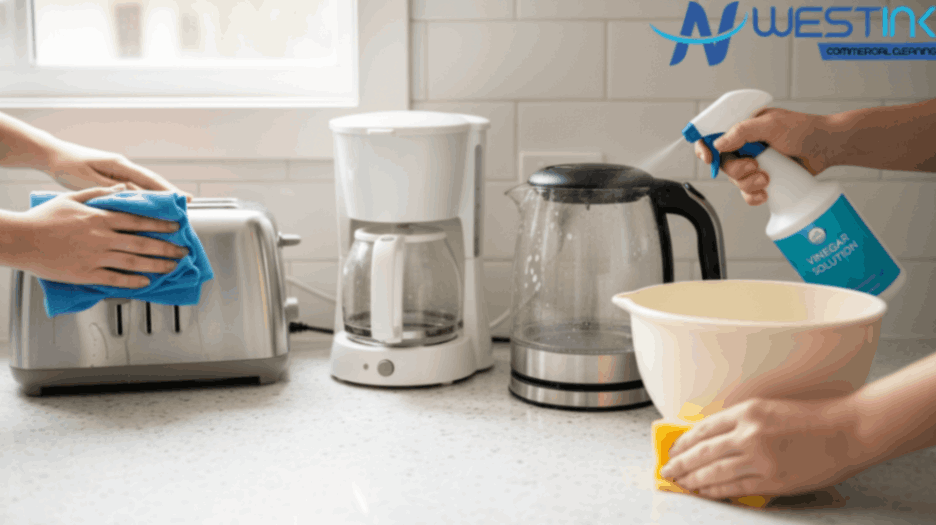
Different small kitchen appliances are made from various materials, each requiring specific cleaning methods to avoid damage and ensure longevity. Plastic components should be washed with warm, soapy water and dried thoroughly to prevent warping, while wooden parts need gentle wiping with a damp cloth and occasional mineral oil to maintain their finish. Stainless steel surfaces benefit from soft sponges or microfiber cloths to avoid scratches and water spots, and glass parts should be handled carefully and cleaned with mild detergent to prevent streaks or cracks. By following material-specific cleaning techniques, appliances remain safe, hygienic, and in optimal condition for daily use.
Plastic and Acrylic
Plastic and acrylic parts of small kitchen appliances should be cleaned gently to maintain their appearance and durability. Washing these components with warm, soapy water effectively removes grease, food residue, and spills, while avoiding abrasive pads or scrubbers prevents scratches and surface damage. For deodorizing and removing lingering smells, a mild solution of vinegar and water can be used safely, leaving the plastic or acrylic fresh and clean without compromising its integrity.
Glass and Containers
Glass components and containers of small kitchen appliances should be cleaned carefully to maintain clarity and prevent damage. Using mild dish soap effectively removes grease, food residue, and spills, while baking soda can be applied to tackle stubborn stains or discoloration. It is important to avoid sudden temperature changes, such as pouring hot water into a cold container, as this can cause cracking or breakage. Proper care ensures that glass parts stay clean, safe, and long-lasting.
Stainless Steel
Stainless steel parts of small kitchen appliances should be cleaned using a soft microfiber cloth and a mild, non-abrasive cleaner to maintain their shine and prevent damage. Steel wool and other harsh scrubbers should be avoided, as they can scratch the surface and leave permanent marks. After cleaning, it is important to dry stainless steel immediately to prevent water spots and maintain a polished, streak-free finish.
Non-Stick Surfaces
Non-stick surfaces require gentle care to preserve their coating and prevent scratches. Only soft sponges should be used for cleaning, while abrasive scrubbing powders or harsh tools must be avoided. Metal utensils should never come into contact with non-stick surfaces, as they can damage the coating and reduce the appliance’s lifespan. Following these precautions ensures non-stick parts remain effective and easy to clean.
Top Essential Tools for Kitchen Cleaning Appliances
Using the right tools is essential for cleaning small kitchen appliances effectively and safely. Soft sponges and microfiber cloths are ideal for wiping surfaces, removing grease, and preventing scratches on delicate materials. Bottle brushes are perfect for reaching deep crevices and cleaning narrow parts that are otherwise hard to access. Small scrub brushes help clean vents, corners, and other tight areas where food residue and dust accumulate. Descaling solutions or a white vinegar mixture remove mineral deposits from water-based appliances, restoring efficiency. Mild dish soap is a safe and effective option for washing removable parts and exterior surfaces. Drying towels ensure all components are dried completely, preventing moisture buildup that can lead to odors or bacteria. Finally, toothpicks or cotton swabs are useful for cleaning very tight gaps or hard-to-reach spots, ensuring every part of the appliance is thoroughly maintained.
Step-by-Step Appliance Kitchen Cleaning Guide
General Cleaning Process
- Unplug the Appliance
Always disconnect power before cleaning.
- Remove All Detachable Parts
Take off lids, blades, trays, drip pans, or baskets.
- Wash Removable Parts
Use warm soapy water to clean all detachable components.
- Wipe the Main Body
Clean with a damp cloth; avoid soaking electrical areas.
- Clean Corners and Vents
Use a soft brush or cotton swab for small spaces.
- Descale if Needed
Vinegar-water solution removes mineral buildup.
- Dry Completely
Ensure no moisture remains before reassembly.
- Reassemble and Store Properly
Keep appliances dry and ventilated.
Safety and Hygiene Tips for Commercial Kitchen cleaning
Maintaining safety and hygiene is essential when cleaning small kitchen appliances. Always use only food-safe cleaning products to avoid chemical contamination, and never immerse electrical bases or cords in water to prevent accidents. Ensure that all parts are dried completely before reassembling or using the appliance, as moisture can encourage bacterial growth. Sharp blades should be handled carefully and stored safely during washing to prevent injuries, and heating elements should not be scrubbed directly, as this can damage them. Additionally, when descaling with solutions like vinegar, make sure there is proper ventilation to avoid strong odors or fumes, keeping the cleaning process both safe and effective.
Signs Your Appliances Need Deep Kichen Cleaning
mall kitchen appliances show several indicators when they require a deep clean. Slow heating, uneven performance, white mineral spots inside kettles, bitter taste in coffee, greasy or sticky handles, burnt smells during use, cloudy or stained blender jars, and visible crumbs around heating elements are all common signs that buildup has accumulated and needs attention.
Common Mistakes to Avoid
When cleaning appliances, it is important to avoid practices that can damage them or compromise safety. Using harsh chemicals on food-contact surfaces, scrubbing non-stick coatings with metal pads, reassembling appliances while parts are still wet, ignoring internal buildup, submerging electrical components in water, and allowing scale to accumulate inside kettles are all common mistakes that reduce efficiency, safety, and lifespan.
How to Keep Appliances Kitchen Clean Longer
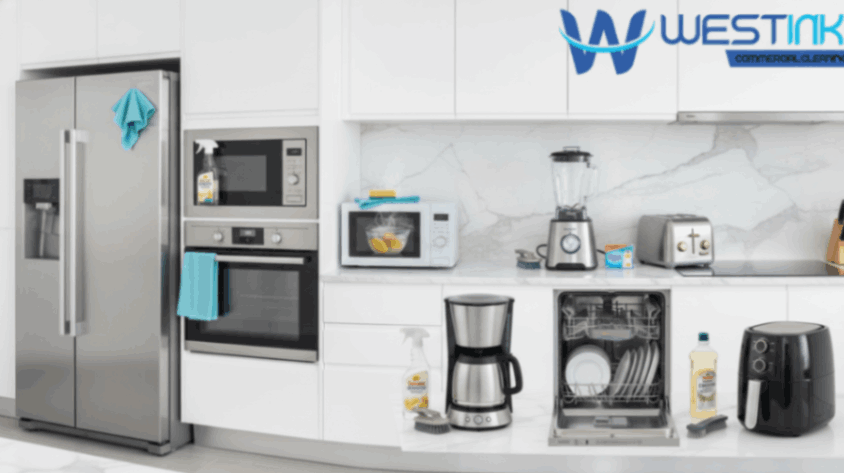
Maintaining small kitchen appliances over time involves consistent care. Washing removable parts immediately after use, performing weekly wipe-downs, regularly descaling water-using appliances, keeping reservoirs empty when not in use, using microfiber cloths to prevent streaks, and storing appliances in dry, cool areas all help prevent buildup and extend appliance lifespan.
Conclusion
Cleaning and descaling small kitchen appliances is essential for maintaining hygiene, performance, and food safety. With proper cleaning routines, safe products, and regular maintenance, small appliances stay efficient, fresh, and long-lasting. Consistent care enhances the quality of food preparation and keeps your kitchen running smoothly.
Frequently Asked Questions
Q1: How often should I descale small appliances?
Descale monthly or every 1–2 weeks in commercial kitchens.
Q2: Can I use vinegar to descale?
Yes, vinegar-water solution is safe for kettles, coffee makers, and steamers.
Q3: How do I remove odors from blenders or containers?
Use baking soda paste or a vinegar soak.
Q4: Can I wash appliance bases?
No. Only wipe bases — never submerge.
Q5: How do I avoid scratching non-stick surfaces?
Use soft sponges; avoid metal tools.
Q6: What causes white spots in kettles?
Mineral deposits from hard water (limescale).
Q7: Are food-safe cleaners necessary?
Yes — they prevent chemical residue on food-contact surfaces.