
How to clean a kitchen range hood is easiest when you treat it like a routine system check, not a once-a-year scrub. In a busy kitchen, grease and steam in the air settle quickly, forming a sticky film that slows down airflow, traps aromas, and makes drips over the cookline. This article gives you a safe, repeatable way to clean an exhaust hood, keep smoke capture steady, and take care of your kitchen ventilator without hurting the finishes or electrical parts.
How Grease Build-Up Affects Range Hood Airflow, Smoke Control, and Odours?
Your objective isn’t merely “clean.” Every shift, it is steady extraction and results that can be counted on. When oil builds up, air doesn’t travel through the system as well, smoke gets into the room, and smells last longer. You also get more grease dripping from the filter rails and the underside lip, which makes it more likely to slip and looks bad. Fire and Rescue NSW kitchen fire safety advice says that grease buildup in filters and exhaust systems is a big fire risk: The quickest approach to break the cycle is to clean off the grease that has built up on the filters, rails, front lip, and ledges that are easy to reach. If you do this every time, the job will go quickly instead of painfully.
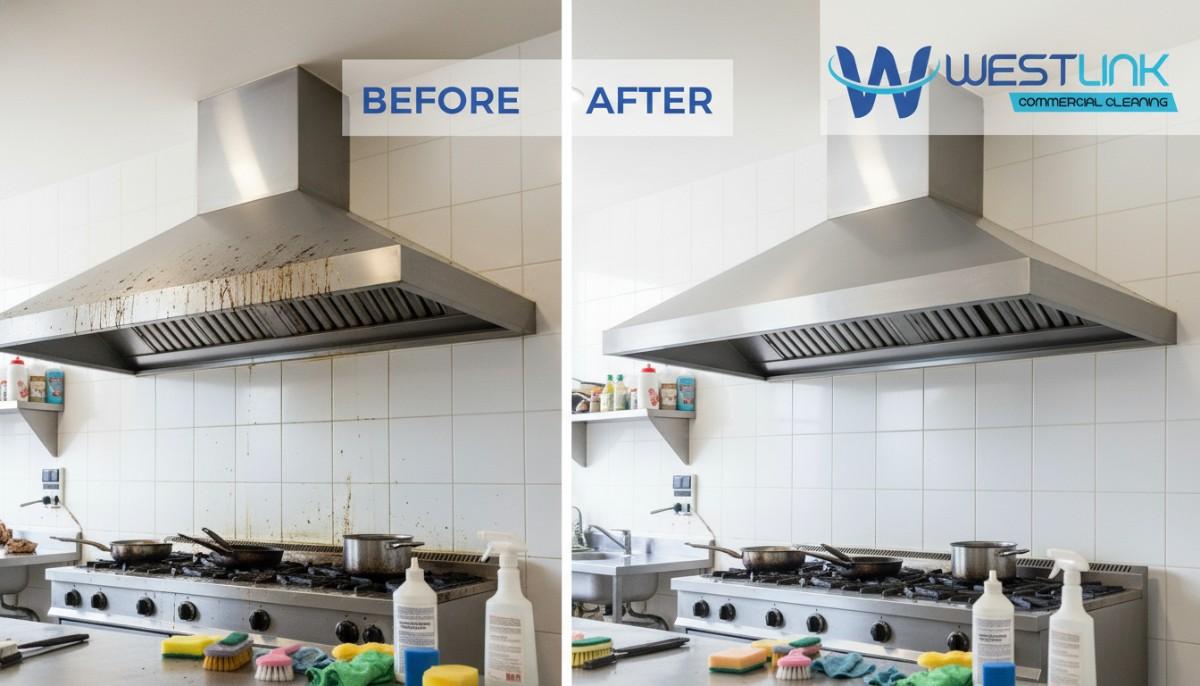
Tools and supplies you need to do your job To clean the kitchen range hood
Use tools that aren’t abrasive so you don’t scratch stainless steel, ruin coatings, or bend filters.
Tools
- Two to four microfiber cloths
- A soft sponge or a pad that doesn’t scratch
- Brush made of nylon (like a dish brush or a little scrub brush)
- An old toothbrush for cleaning seams and edges
- Plastic scraper or old card (for thick film, use with care)
- Screwdriver (just if you need it for your light cover)
- Plug for the sink or a big tub
- Towel or drying rack
- Paper towels (for rapid cleanups and leaks)
Cleaning products
- Liquid for washing dishes
- Degreaser that is safe to use in the kitchen (spray or concentrate)
- Baking soda (optional, for thick film)
- Water that is hot
- Gloves
- A tiny bag or bin liner to throw away the charcoal filter (if it has one)
- A little bit of cooking oil or stainless steel cleanser (for the final wipe on stainless)
Don’t use steel wool, abrasive powders, or strong solvents near control panels or plastic trims.
Safety and preparation (remain safe and clean up food places)
Plan for a short break before you start and keep the work space under control. Turn off the unit at the wall and wait until the lights and other surfaces have cooled off completely. Put a cloth or tray under the area to catch any drips, and move any food, utensils, or packaging that is not covered away from the cleaning area. Do not spray liquid into buttons, seams, sockets, or motor regions because moisture can cause problems. After you’re done cleaning, sanitise the splash zones and benchtops adjacent because wiping might spread fine grease. If you hear buzzing, smell burning, see sparks, see loose wiring, or see damaged insulation, stop what you’re doing and call for a service check right away.
Identify the setup and filter type (so you clean the right parts)
Before you start, know what you’re getting into.
Ducted arrangement (vents are outdoors)
Through ducting, air is pulled out and sent outside. It usually has metal grease filters that can be washed, so you mostly just clean the filters and the parts of the canopy that you can reach.
Setup for recirculation (air goes back into the room)
The air is cleaned and put back into the kitchen. It usually features a metal filter that can be washed and a charcoal filter that gets rid of smells. The charcoal filter is usually just replaceable.
Filter with baffles
Metal panels that are stiff and have channels that collect grease as air flows through. Can handle a lot of cooking and is easier to clean.
Filter with mesh
Metal mesh with layers that captures grease but gets clogged faster. If you scrub too hard or pull too hard on it as you take it off, it could bend or change shape.
Filter for charcoal
A black pad or cartridge that goes beneath the metal filter in hoods that recycle air. It cuts down on smells, but it can’t be washed well, so it’s usually thrown away.
A quick check if you’re not sure
Take off the metal filter and peek behind it. The charcoal filter is the black pad or cartridge.

To clean a range hood, follow these steps:
1) Cleaning the grease off your exhaust hood filters (the step that lets air flow again)
Most of the work is done by the filters. Do this first so that everything else is simpler.
Step A: Take off the filters without spilling
- Hold the filter up with one hand.
- Let go of the clasp or clip, then slide and tilt down like it should.
- Put it immediately into a sink or tub and keep it level.
Tip: Take a quick picture so the baffle panels go back in the same way.
Step B: Soak in hot water
- Put hot water in the tub.
- Add dish soap and the right amount of degreaser (follow the guidelines on the label).
- Put it in water and let it soak for 15 to 30 minutes.
- Put a little baking soda in the water if you want to make the film thicker.
Step C: Brush gently, rinse, and dry
- Brush following the lines of the mesh or channels.
- Keep rinsing with hot water until it runs clear.
- Use a towel to dry completely, then let it air dry before putting it back together.
Note for the dishwasher: Some filters can handle a moderate cycle, while others change colour. Look at the instructions for your model.
2) Clean the inside of the vent hood that you can safely reach.
Once the filters are out, clean the grease traps that make the smell last and cause drips.
Where grease first creeps up
Rails for filtering
- Edge of the front lip and the bottom
- Ledges and corners close to seams
How to do it
- Don’t put cleanser straight on the device; put it on a cloth first.
- Wipe in steady strokes, and then use a moist cloth to pick up the rest.
- Wipe it dry with a clean cloth.
- For corners, use a toothbrush or a utensil wrapped in cloth.
Don’t shove tools into the fan housing or wipe into the duct hole. If you can see thick accumulation that is deeper than what you can reach, you need to get a professional to clean it.
3) Clean the outside and safeguard the controls
Cleaning the outside is about looks and keeping buttons from sticking.
Start with warm, soapy water on the light film.
- Only use degreaser where you need it, and then wipe it off completely.
- To avoid streaks, dry right away.
- Wipe with the grain on stainless steel.
Use a cloth that is only slightly damp to clean the controls, and never spray the panel directly.
4) Covers for the lights, pieces for recirculation, and finishing touches
Covers for lights
- Make sure the lights are off and the power is off.
- If you can take it off, do so, clean it with warm soapy water, dry it completely, and then put it back on.
- If you can’t take it off, wipe it down and dry it right away.
Charcoal filter (if there is one)
If you have a recirculating cooker hood, you should change the charcoal filter on a regular basis because it doesn’t work as well when the metal filters look fine. Every three to six months is a good time to do this, but sooner if the kitchen gets a lot of use and scents stay.
Finish cleaning
A last wipe can make the chimney hood look new again. Put some stainless cleanser or a small bit of cooking oil on a cloth and polish it softly. Don’t leave oily residue near the controls.
5) Reinstall, check the airflow, and keep simple records
Install again and check
- Check that the filters are totally dry.
- Put the seat filters flat and lock them in.
- Turn on the electricity and check the low and high speeds.
- Listen for rattling or vibrations.
- Fast performance tests
- To make sure the draw is strong, hold a paper towel at the intake.
After the initial cooking run, look for new drops along the edge of the bottom.
Easy log (30 seconds)
- Date and time
- What was cleaned (the filters, rails, underbelly, and outside)
- How it was done
- Initials of staff
- Notes (smell, drops, noise, apparent buildup)
This helps you maintain the overhead vent steady and makes it clear when the schedule has to be tightened.
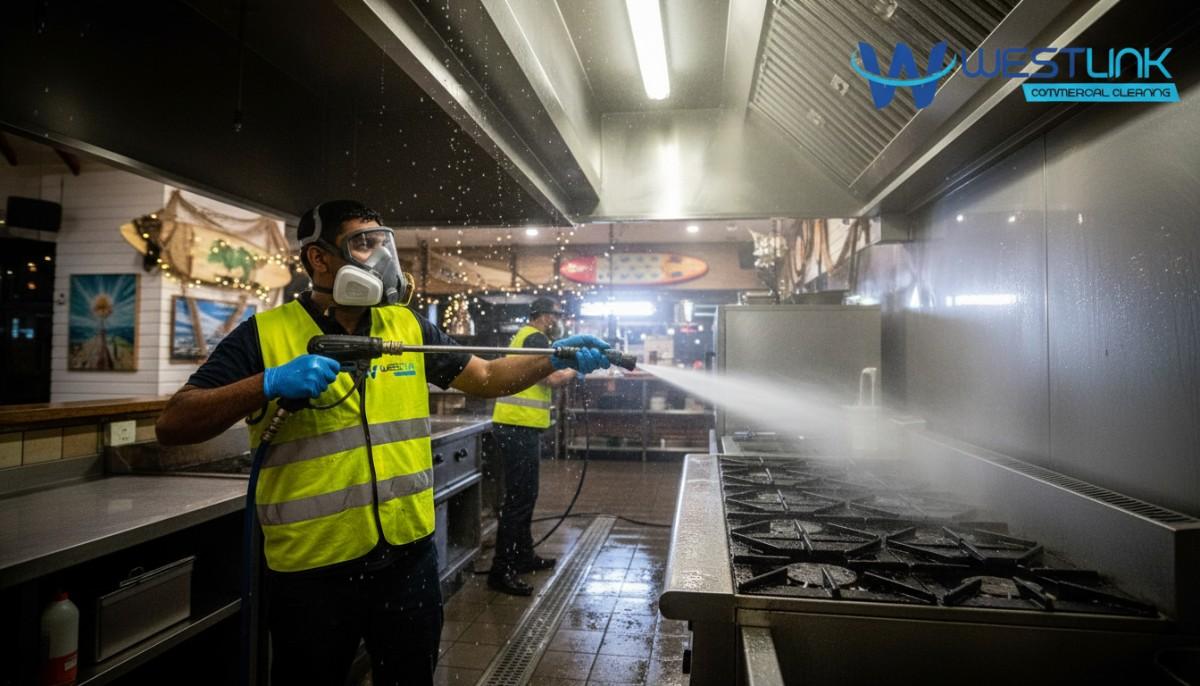
Frequency that can handle a lot of grease
Start with this and then change it based on what you get.
Use it lightly: wipe it down once a week and clean it more thoroughly every 4 to 6 weeks.
Service every day: a simple wipe twice a week and a deeper clean every 2 to 3 weeks
Heavy use (frying, grilling, and high heat most shifts): fast wipe every few days and a deeper clean once a week or as needed.
If the suction drops, the smells stay, or the drips come back soon, make the time shorter. In New South Wales, regular maintenance of commercial spaces is in line with SafeWork NSW guidelines for managing work environments and facilities: “Follow the manufacturer’s instructions to regularly service and maintain ventilation and air-conditioning systems.” This supports changing the frequency for kitchens that get a lot of use.
Your trusted team for cleaning range hoods and kitchen exhausts is Westlink Commercial Cleaning.
Westlink Commercial Cleaning is the right choice for you if you want a staff that takes cleaning kitchen exhaust as a job that requires skill and safety, not just a simple wipe down. We help restaurants and cafes, takeaways, pubs, clubs, kitchens for the elderly, and other businesses that need reliable results and clear records.
Using the correct degreasers and safe work controls for your site, our professionals get rid of grease build-up on the hood canopy, filters, rails, drip edges, and duct entrance points that are easy to get to. The goal is simple: improved extraction, less smoke spill and lingering smell, less grease drip, and a cleaner look that your workers and customers will notice.
We also make it easy to follow the rules by giving you a clear scope, checklists, and service records for audits and inspections. We can work around trading hours to keep downtime to a minimum at busy locations. Book a kitchen exhaust clean with Westlink Commercial Cleaning if you want your range hood system to perform better and be cleaner.
Final Thoughts
A regular cleaning schedule maintains extraction steady, cuts down on smells, and stops drips that can get in the way of service. First, focus on the filters, then the rails and the lip on the bottom. Keep a simple journal so that all workers follow the same steps. If the kitchen runs hard and you can see grease deeper than you can reach, call or book professionals to fix the airflow and make sure the system works as it should.
Frequently Asked Questions
How often do I need to clean the filters on my range hood?
Every three to four weeks, clean the washable metal grease filters in most kitchens. If you fry, grill, or cook on high heat most days, you should clean them once a week. If you notice that the suction isn’t as strong, there are still smells, or there are new drops within a few days, decrease the timetable.
Can I wash range hood filters in the dishwasher?
Yes, but only if your filter and the company who made it say it’s okay. Put the filter through a regular or mild cycle by itself, stay away from harsh detergent boosters, and let it dry completely before putting it back in. If you see that the colour is changing or the shape is changing, wash it by hand.
Why did the colour of my metal filter change after I washed the dishes?
That change is usually just cosmetic and happens when the filter surface reacts with heat, strong detergent, and minerals in the water. The filter will still work, but if you don’t like the way it looks or if you observe any deformation, use the soak and brush method instead.
Is it possible to wash a charcoal filter, or do I need to get a new one?
Most of the time, charcoal filters can only be replaced. They catch smells, but you can’t wash them back to normal performance. Change them every 3 to 6 months, or sooner if you use the kitchen a lot or if the metal filters still smell bad after you clean them.
How can I tell if my hood is ducted or recirculating?
Take off the metal grease filter and look behind it. A black pad or cartridge is usually a charcoal filter, which means that the water is usually recirculating. If there is no charcoal filter and a vent passage leads outdoors, it is probably ducted.
What kinds of cleaners shouldn’t I use on a range hood and filters?
Don’t use steel wool, rough powders, or strong solvents. These can scrape stainless steel, damage coatings, and make plastic trims weaker. You should also stay away from spraying liquids into buttons, seams, sockets, or the area around the motor. Put cleanser on a cloth first, then wipe.
Why is the oil dripping from my range hood?
When filters and rails are too full, grease drips start to happen. This is because vapour condenses and runs to the edges. First, clean the filters. Then, wipe down the seams, rails, and underneath lip. If the dripping doesn’t stop, the deposit may be further inside the hood throat or duct, which requires a professional cleaning.
My hood is on, but it’s still not pulling smoke. What should I look at?
To begin, make sure the filters are clean and dry, the fan speed is set correctly, and there is no blockage at the intake. If it still doesn’t work well, it could be because the damper is jammed, the duct outlet is clogged, the ducting is crushed, or there is a lot of buildup that you can’t reach. If the airflow doesn’t get better after you clean the filter, call for a service inspection.
How can I clean stainless steel without leaving streaks?
For light film, use warm soapy water, then wipe with a clean, moist cloth to get rid of any leftover soap. Dry right away. Always wipe with the grain. When you polish, use a small amount on a towel and stay away from controls so you don’t leave behind slippery residue.
When is it time to cease doing things yourself and hire a pro?
If you can see grease deeper than the region near the fan or duct entry that you can reach, if there is a heavy buildup that you can’t safely remove, or if you see warning indicators like buzzing, a burning smell, sparks, loose wiring, or broken insulation, stop and call a professional. Scheduled professional cleaning and written records also help staff stay consistent in busy commercial kitchens.