To clean laminate floors properly in commercial settings, the process needs to be low-moisture, residue-controlled, and inspection-ready:
- Remove grit first (HEPA vacuum/dust control), so micro-scratches don’t build up.
- Use a microfibre flat-mop system with a pH-neutral cleaner at label dilution.
- Avoid flood mopping, steam, waxes, and abrasives (laminate joints and wear layers are unforgiving).
- Separate goals: soil removal (cleaning) ≠ sanitising/disinfecting (risk-based).
- Finish with QA checks under raking light and reopen safely with WHS controls.
This guide is written for facility managers, office admins, strata managers, venue operators, and cleaning coordinators who need reliable outcomes across offices, strata/common areas, retail, hospitality, warehouses (admin/amenities), and post-construction sites.
Quick contents preview
- Why does laminate look dirty after cleaning
- What to use (and what to avoid)
- Daily + weekly SOPs
- Deep clean / reset for sticky film
- Sanitising vs disinfecting (risk-based)
- Tools, chemicals, SDS + WHS controls
- Quality control, frequency, and when to call a pro
- FAQs + troubleshooting
World Floor Covering Association (WFCA) advises: “Dust and dirt act as an abrasive on a laminate’s surface and seriously dull its appearance… regular sweeping, dust mopping or vacuuming to remove loose dirt and grime” is essential. Avoid abrasive cleaners, steel wool, scouring powder, flooding, or refinishing attempts, perfect for protecting high-traffic Sydney commercial zones.
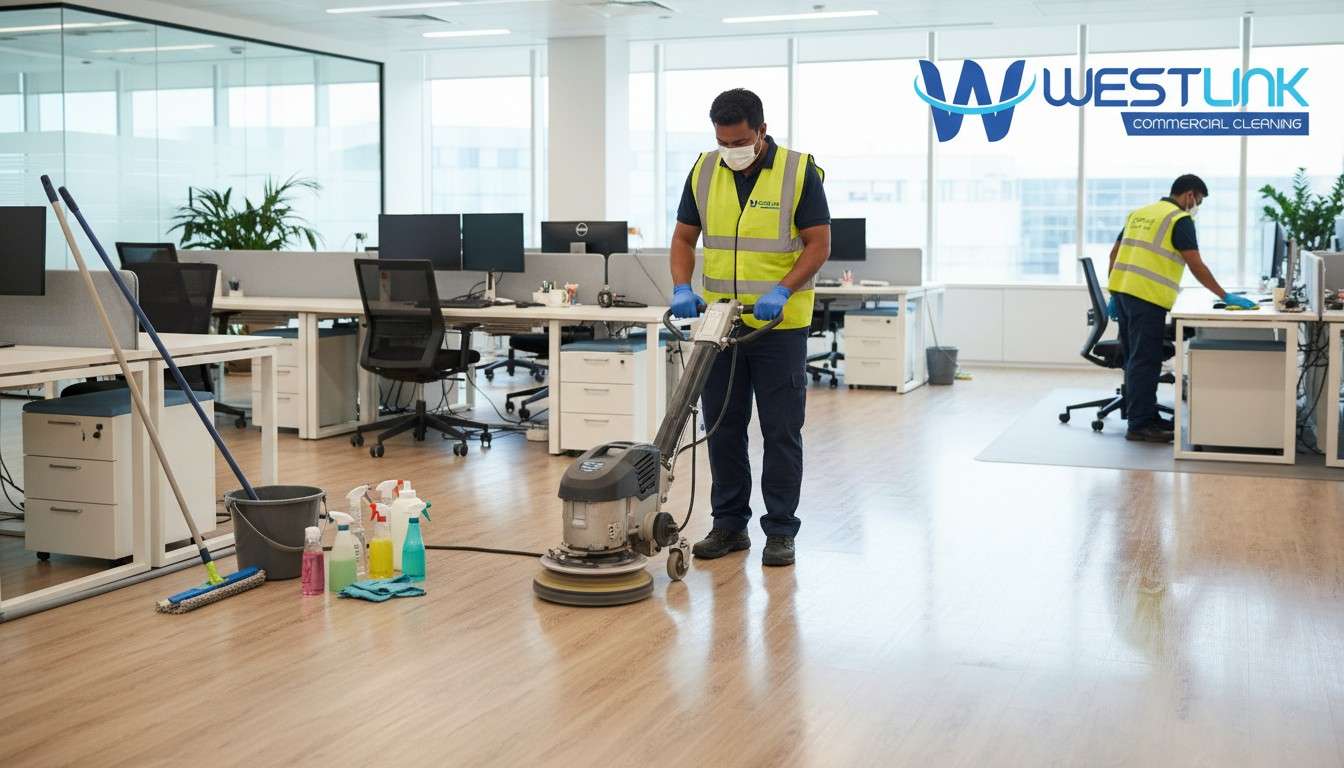
Why Laminate Floors Get Dirty: Common Causes Behind Complaints
Laminate floors often fail inspections for reasons that aren’t obvious at first glance. “Dirty” can mean soil, film, grease, construction dust, or moisture-related haze, and each has a different fix.
The most common causes
- Detergent residue (film): Too much product, wrong product, or poor rinse control leaves a sticky layer that grabs soil faster.
- Dry soil (grit/sand): Entry grit behaves like sandpaper. If it’s not removed first, every mop pass can drag particles and create micro-scratches.
- Uneven moisture + drying: Laminate shows streaks under LED lighting, especially in foyers, corridors, and reception areas.
- Hospitality grease transfer: Café queues, staff break rooms, and back-of-house transitions can leave an oily film that neutral cleaners alone may not fully lift.
- Post-construction dust: Fine particulate settles into edges, transitions, and textured finishes; inadequate dust control leads to haze and re-soiling.
Symptom → Likely cause → Fix (fast diagnostic table)
| Symptom | Likely cause | Practical fix | Prevention |
| Sticky feel after mopping | Detergent film / over-application | Reset with low-moisture method + controlled rinse pass | Correct dilution + microfibre pad rotation |
| Dull/hazy finish | Residue + re-deposited soil | HEPA vacuum first, then pH-neutral damp clean + dry/buff | Don’t mop dirty floors; remove grit first |
| Streaks under lights | Uneven moisture, product left behind | Smaller sections + consistent dampness + dry pass | Flat mop system + reopen timing |
| Dark traffic lanes | Soil load + film build-up | Targeted deep clean in lanes + entry control | Matting + daily dry soil removal |
| Slippery after cleaning | Residue + slow drying | Reduce chemical load, improve drying, and apply WHS controls | Signage, barricades, reopen protocol |
A 60-second pre-check that prevents rework
Before any mop touches the laminate floor, a supervisor or cleaner can quickly confirm:
- Are there visible grit lines near entries or transitions?
- Does the floor feel tacky in traffic lanes?
- Is the site dealing with wet weather, construction activity, or high café grease exposure?
- Is the lighting harsh (raking light) that will reveal streaks?
When the “why” is clear, the method becomes predictable and complaints drop.
Laminate Floor Cleaning Rules for Commercial Sites: What You Can and Can’t Use
Laminate is not vinyl/LVP, not timber, and not tile. It behaves like a composite surface that depends on edge integrity and moisture control. The cleaning method needs to protect the weakest point: joints, seams, and the core.
What laminate requires
- Low-moisture cleaning (damp, not wet)
- Controlled chemistry (start with pH-neutral)
- Consistent microfibre workflow (pads rotated and laundered correctly)
- Fast drying and safe reopening (WHS controls reduce slip risk)
What to avoid (common damage and risk triggers)
- Flood mopping: Water can track into joints and swell edges.
- Steam mops: Heat + moisture can stress seams and finishes.
- Abrasives (pads, powders, harsh scrubbing): Micro-scratches lead to permanent dulling and soil retention.
- Wax/polish “shine” products: These often create film, streaking, and slip risk.
- Harsh acids/alkalis: These can destabilise finishes and create hazing.
Mixed-surface facilities: why compatibility matters
Commercial sites rarely have only one surface type. A cleaning plan often needs to move across:
- Laminate
- Vinyl/LVP
- Tile & grout
- Carpet
- Timber
- Stone
- Glass
- Stainless steel
The biggest operational mistake is using a “one chemical fits all” approach.
For example:
- Stripping and sealing is appropriate for vinyl floors in some programs, but not for laminate.
- A degreaser might be needed in a café zone, but that doesn’t mean it belongs in a general office corridor.
A site-specific Scope of Works should define which methods and chemicals apply to each surface zone.
Daily / Shift SOP: Dry Soil Removal + Fast Spot Cleaning
Daily maintenance is what protects the laminate in the long term. If grit is consistently removed, the laminate stays cleaner with less chemical use and less labour.
Daily goals (commercial reality)
- Remove dry soil (gives the laminate a longer life)
- Prevent stains from setting (spot cleaning beats “later” cleaning)
- Control slip risk (clean, dry, reopen safely)
- Keep presentation consistent (lobbies, lifts, corridors, reception)
Sweep vs vacuum (what’s safer)
Sweeping can work, but in busy sites it often misses fine dust and can push grit into edges. A HEPA vacuum on hard-floor settings is typically more consistent, especially for:
- offices with high foot traffic
- strata/common areas
- post-construction dust management
- retail aisles with frequent debris
Operational rule: If the site has visible fine dust, or if streaking complaints are recurring, upgrade dry soil removal to HEPA vacuuming.
Spot cleaning rules (fast, controlled, non-abrasive)
Spot cleaning prevents stains and scuffs from becoming “full floor problems.”
Spot clean immediately for:
- drink spills
- tracked-in grime near entry lines
- heel marks/scuffs in reception
- sticky drops near vending/tea points
Spot cleaning discipline:
- Use a soft cloth or microfibre.
- Use a compatible cleaner at the correct dilution.
- Avoid abrasive pads.
- Dry the spot to prevent streaking.
Entry control that reduces labour
Entry zones are where laminate loses the battle first.
A daily plan should include:
- Matting check: mats present, positioned correctly, not saturated
- Wet weather response: more frequent dry soil removal + controlled damp cleaning
- Signage and barricades: prevent slips and stop traffic walking through wet areas
When entry control improves, frequency can be more stable and costs become easier to manage.
Weekly Method: Low-Moisture Damp Clean (Streak-Free Steps)
Weekly cleaning is where many sites accidentally create residue and streaking. The fix is not “more water.” The fix is better soil separation, better pad discipline, and better drying control.
The 7-step laminate damp-clean method (commercial SOP)
- Pre-vacuum / dust control
Remove grit and fine particulate with a HEPA vacuum where possible. - Prepare the solution correctly
Use a pH-neutral cleaner and follow the label dilution. Over-concentration is a direct path to film build-up. - Use a microfibre flat mop system
Flat mops distribute moisture more evenly and reduce over-wetting. - Work in small sections
Clean 10–20 m² at a time (depending on airflow and traffic). Smaller sections dry more evenly and reduce streaking. - Control moisture
The mop should be damp, not wet. If it drips, it’s too wet for laminate. - Rinse pass when film risk is high
In high traffic lanes, cafés, or sites with history of stickiness, a controlled rinse pass helps prevent residue. - Dry/buff and reopen safely
A quick dry pass (clean microfibre) improves appearance and reduces slip risk. Use wet floor signage and reopen protocols.
A microfibre workflow that prevents re-depositing soil
Laminate often looks worse when cleaning pads are overused.
Pad rotation rule of thumb:
- Rotate pads frequently in high soil zones.
- Separate pads by zone (entries vs corridors vs amenities).
- Launder correctly, so detergent doesn’t re-enter the workflow.
Edge detail (where film builds up)
Film and haze often sit:
- along skirting lines
- around reception desks
- near lift thresholds
- at transitions to tile/carpet
A consistent edge pass reduces repeat complaints and helps the floor look “finished,” not just “mopped.”
Deep Clean / Reset: Fix Sticky Film Without Damaging Laminate Floor
When the laminate stays sticky or dull after routine cleaning, the site usually needs a reset, not repeated standard mopping.
Step 1: Identify the film (don’t guess)
Most persistent issues fall into three categories:
- Detergent residue: overuse of general cleaners or “shine” products
- Grease film: hospitality or break room transfer
- Construction dust: fine particulate that smears into haze
A small test patch in a traffic lane can confirm which issue is dominant.
Step 2: Use an escalation ladder (low-risk first)
A safer approach is to escalate methodically:
- pH-neutral reset with tighter dilution control and pad rotation
- Improved rinse control (targeted rinse pass)
- Targeted degreasing only where grease is confirmed (break rooms, café edges)
- Spot treatment for isolated marks, then dry/buff
The principle is simple: minimum chemicals necessary, maximum process discipline.
Hospitality edges (grease management)
Where food is present, grease behaves differently from general soil. A controlled degreasing step can be required, but it should be:
- limited to the zone where grease is present
- used with SDS guidance, PPE, and ventilation
- followed by controlled removal so it doesn’t become a slip hazard
Post-construction laminate reset
Post-construction cleaning should prioritise:
- HEPA vacuuming to remove fine dust
- strict “no grit” rules before wet work
- careful damp cleaning with controlled drying
If grit remains on the floor, any mop pass can drag abrasive particles and permanently dull the finish.
Sanitising vs Disinfecting Floors: Safe, Risk-Based, Compliance-Friendly Guidance
“Cleaner” is not the same as “safer.” Floors can be a hygiene concern in specific environments, but chemical use must be risk-based and surface-compatible.
Key definitions (that change decisions)
- Cleaning: removes soil and organic matter (enables everything else).
- Sanitising: reduces microbial load to a safer level (often relevant in food-adjacent contexts).
- Disinfecting: inactivates pathogens when the product is used exactly as directed (including dwell time).
The operational rule: soil removal first
Disinfectants and sanitisers are less effective when applied over soil. A strong process separates:
- Soil removal (cleaning)
- Risk-based sanitising/disinfecting where required
When disinfecting is appropriate
Disinfection can make sense when:
- the site has infection control requirements
- there is a specific contamination event (spill, exposure risk)
- the facility type requires higher controls (some healthcare-adjacent settings)
In many standard office and strata settings, routine disinfection of the whole floor is not automatically necessary. Overuse increases:
- residue risk
- slip risk
- chemical exposure burden
- cost without proportional outcome
Dwell time, compatibility, and reopening
If disinfection is required, the product must be:
- compatible with laminate and used at label dilution
- applied with correct dwell time
- managed to avoid slippery residue
- controlled with ventilation and PPE as per SDS
Standard Tools, Chemicals, SDS, and WHS Controls for a Consistent Cleaning Program
High-performing commercial programs do not rely on “hero cleaners.” They rely on standardised tools and repeatable processes.
Tools that reduce rework
- HEPA vacuum (hard-floor setting) to capture fine particulates
- Microfibre flat mop system with pad rotation
- Spray system that controls chemical application (avoids over-wetting)
- Wet floor signage and barricades for traffic control
- PPE appropriate to chemicals and tasks
Chemicals that protect laminate and outcomes
- pH-neutral cleaner as the default
- Targeted degreaser only where grease is confirmed
- Sanitiser/disinfectant only where risk-based requirements exist
SDS: not paperwork—risk control
An SDS helps confirm:
- chemical hazards and first aid
- required PPE and ventilation
- safe storage and handling
- incompatibilities (including “do not mix” warnings)
WHS controls that matter on floors
Laminate cleaning impacts slips and trips, especially in:
- foyers
- stairs/landings adjacent to the laminate
- corridors near amenities
- entry zones during wet weather
A basic WHS control set includes:
- signage and barricades
- section cleaning and reopen timing
- manual handling controls (equipment and workflow)
- controlled chemical use (label + SDS compliance)
SafeWork NSW’s Guide to Preventing Slips, Trips and Falls at Work stresses that “a suitable cleaning program results in effective removal of contamination and maintains the grip of flooring” and recommends “using temporary safety barriers to keep pedestrians out of this area… providing an alternate safe route carrying out cleaning in an alternate manner to provide safe access (e.g. cleaning a hallway in strips rather than all at the same time).
Quality Control + Cleaning Frequency And When to Call a Professional Team
Without quality control, laminate floor programs drift. Residue builds slowly, and the first sign is usually a complaint by then, labour and cost increase.
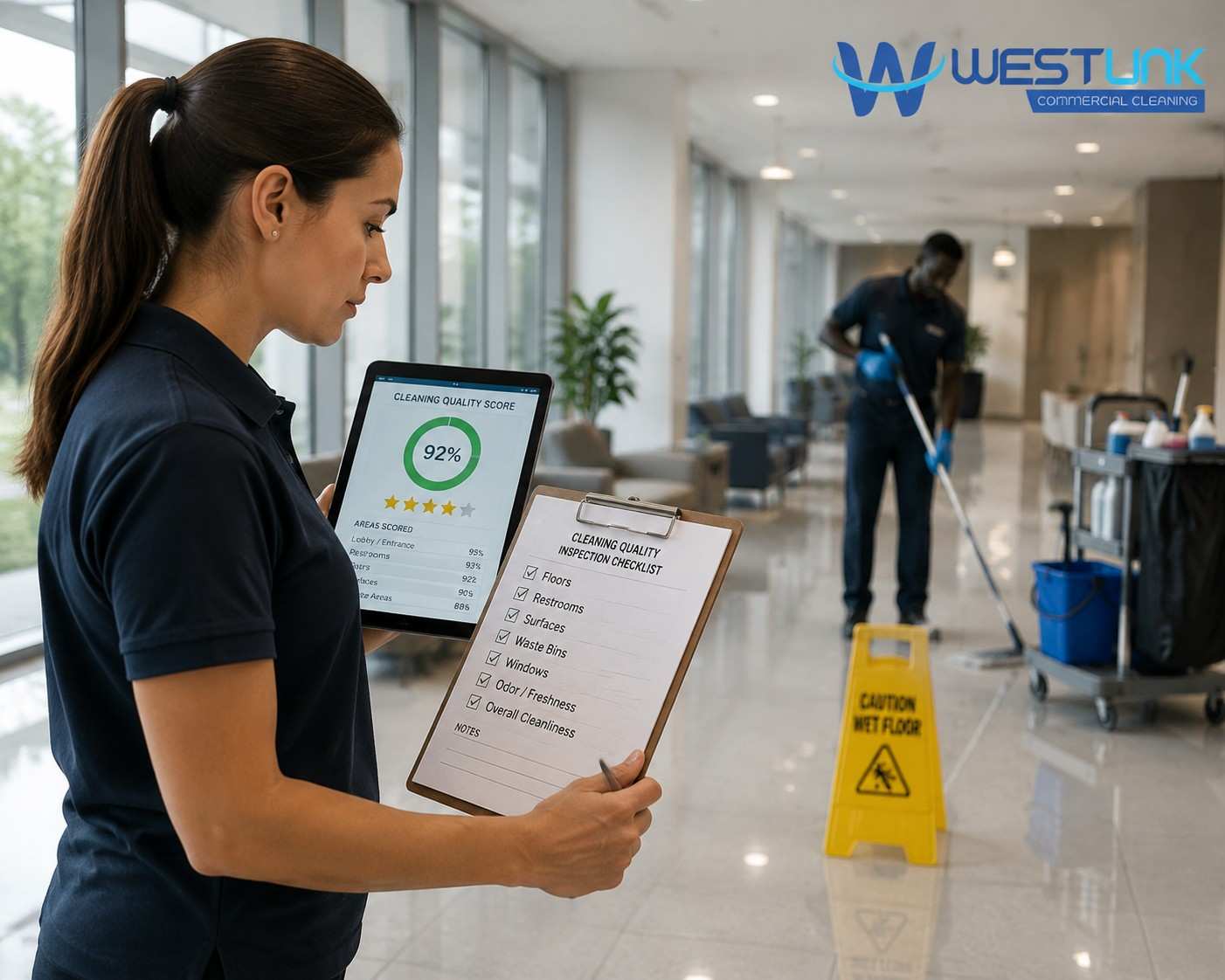
QA inspection points that predict complaints
A supervisor can check:
- traffic lanes under raking light
- entry lines and transitions
- edges near skirting
- tackiness (light touch test in a small zone)
- streaking under LED lights
- drying completeness before reopening
Frequency should follow soil load, not the calendar
Cleaning frequency changes based on:
- weather (wet entry load)
- foot traffic volume
- adjacency to cafés/tea points
- construction activity
- matting effectiveness
- mixed surface transitions (tile/grout, carpet)
Scope of Works: what decision-makers should define
A commercial Scope of Works should clarify:
- inclusions/exclusions for laminate zones
- daily vs weekly vs reset tasks
- who supplies consumables
- QA standards (inspection points, reporting)
- scheduling and access windows
- escalation rules (when reset cleaning triggers)
When to call professionals (thresholds and cost drivers)
Professional floor cleaning becomes the smarter option when routine mopping and spot-cleaning can’t solve the core problem. If sticky residue keeps coming back, it usually points to product buildup, incorrect dilution, poor rinsing, or a surface finish that needs a controlled reset. Call in professionals when slip incidents or near-misses start to feel likely, because safety, traction, and residue removal need measured methods and the right chemistry. The same applies after construction or renovations, where fine dust and grit can keep reappearing and cause scratching without specialist extraction.
Professional like westlink commercial cleaners support also makes sense when a site has mixed surfaces tile, vinyl, sealed stone, concrete, timber because each material has different chemical and mechanical tolerances, and compatibility control prevents damage and uneven results. Finally, if stakeholders require reporting, sign-offs, or QA audits, professional teams can provide documented processes, checklists, and measurable outcomes that build confidence and reduce disputes about what was cleaned, how it was cleaned, and whether standards were met.
Common cost drivers include:
- total m² and zone complexity
- access hours and traffic restrictions
- entry soil load and wet weather exposure
- mixed surface management (laminate + vinyl + tile + carpet)
- frequency and reporting requirements
See our more related guide on Floors
- How to Clean Wood Floors: Practical Guide for Busy Sites
- How to Keep Your Hybrid Floors Spotless and Durable
- How to Clean Bamboo Floors for a Shiny and Fresh Look
- How to Clean Tile Floors: Daily, Weekly, and Deep Clean Guide
Conclusion
A commercial laminate floor stays presentable and safe when the program is designed around dry soil removal, low-moisture microfibre cleaning, pH-neutral chemistry, and quality control. Most streaks and sticky complaints come from residue and process driftnot from a lack of effort.
For sites that need consistent results across offices, strata, retail, hospitality, warehouses, and post-construction environments, a structured Scope of Works and QA routine prevents rework and reduces long-term wear. Westlink Commercial Cleaning can provide a site assessment and a tailored Scope of Works for laminate (and mixed-surface) zones, including frequency recommendations and QA reporting.
Frequently Asked Questions
What’s the difference between cleaning vs deep cleaning laminate floors?
Cleaning is routine soil removal (daily/weekly). Deep cleaning is a controlled reset for residue, traffic lanes, grease film, or post-construction dust without flooding the floor.
What’s sanitising vs disinfecting and which is needed?
Sanitising reduces microbial load. Disinfecting inactivates pathogens when label instructions (especially dwell time) are followed. Many commercial laminate floors only need routine cleaning unless risk-based requirements apply.
Why do laminate floors look dull or hazy after mopping?
Most dullness comes from detergent residue or re-deposited soil. A HEPA vacuum first, correct dilution, microfibre pad rotation, and a dry/buff finish usually fixes it.
Why do laminate floors feel sticky after a “deep clean”?
Sticky floors typically indicate product film, over-application, or insufficient removal—often a process issue rather than “more dirt.”
What’s the best cleaner for laminate floors in commercial buildings?
A pH-neutral cleaner used at label dilution is usually the safest baseline. The method (low moisture + microfibre) matters as much as the chemical.
Can vinegar be used on laminate floors?
It’s generally safer to avoid routine acidic DIY approaches on commercial laminate. Controlled products with SDS guidance and test patches reduce risk.
Can bleach be used on laminate floors?
Bleach use should be strictly label-driven and risk-based. Chemical mixing should be avoided, and SDS guidance should govern PPE and ventilation.
Is a steam mop safe for laminate floors?
Steam introduces heat and moisture that can stress seams and increase joint risk. Low-moisture microfibre systems are more consistent for commercial outcomes.
How often should laminate floors be cleaned in offices?
Most offices benefit from daily dry soil removal (especially entries and corridors) and a weekly low-moisture damp clean, with resets scheduled based on traffic and residue risk.
How often should laminate floors be cleaned in strata/common areas?
Strata foyers and lift lobbies often need daily dry soil control and frequent damp cleaning in wet weather. Frequency should follow foot traffic and entry soil load.
Why do floors streak even after “proper” mopping?
Streaking usually comes from uneven moisture, product concentration, or dirty pads. Smaller sections, correct dilution, and a dry pass reduce streaks.
What should be avoided to prevent damage and slip risk?
Flood mopping, steam, abrasive pads, wax/polish films, and mixing chemicals should be avoided. Any chemical step should follow label and SDS guidance.