Dealing with vomit on carpets is one of the most unpleasant household chores, yet it is a situation that many homeowners, parents, and pet owners face at some point. Vomit not only leaves unsightly stains, but it also introduces bacteria, stomach acids, and strong odors that can weaken carpet fibers if not cleaned properly. Acting quickly and using the correct cleaning methods can save your carpet, maintain hygiene, and prevent long-term damage.
This guide will walk you through everything you need to know about cleaning vomit off carpets efficiently, removing the smell, and preventing lingering odors or fiber damage. With clear instructions, practical tips, and precautionary measures, you can restore your carpets to their original condition without unnecessary stress.
What Is a Vomit Stain and Why It Needs Immediate Attention
Vomit is a combination of partially digested food, stomach acids, and bacteria, all of which can settle into carpet fibers quickly. When left untreated, these substances penetrate deep, leaving stains that are difficult to remove and often cause unpleasant smells. Bacteria and microbes present in vomit can multiply if the spill is not addressed immediately, creating potential health risks for children, pets, and anyone with allergies.
Immediate cleaning is critical because even small delays can result in permanent stains, lingering odors, and structural damage to carpet fibers. Understanding why vomit requires fast action helps homeowners respond methodically rather than reacting hastily, which can make the stain worse. For proper vomit cleanup and hygiene tips, see this guide from the University of Minnesota Extension on norovirus and vomit cleanup.
Types of Carpets and How They React to Vomit
Different carpet materials respond differently to vomit and cleaning solutions, so knowing your carpet type is essential for effective stain removal.
Wool Carpets
Wool carpets are made from natural fibers and feel soft and luxurious. While they are durable, they can shrink, lose their texture, or become discolored if exposed to harsh chemicals or excessive moisture. Gentle cleaning methods, such as blotting with mild cleaning solutions, are recommended to avoid damaging the fibers.
Nylon Carpets
Nylon is a synthetic fiber that is strong, stain-resistant, and ideal for high-traffic areas. Vomit stains on nylon are generally easier to remove with prompt action and appropriate cleaning solutions, making it a forgiving option for busy households.
Polyester Carpets
Polyester carpets are soft, affordable, and available in vibrant colors. However, they tend to absorb odors quickly, so immediate cleaning is necessary to prevent smells from settling into the fibers.
Olefin Carpets
Olefin, often used in basements or outdoor areas, is moisture-resistant but can develop mold if wet vomit is left to sit. Quick drying and immediate cleaning are critical to prevent mold growth and long-term odor.
Why Vomit Stains Can Be a Serious Problem
Leaving vomit untreated can lead to several problems. The acids and bacteria in vomit can penetrate carpet fibers, weakening the pile and backing over time. Lingering odors can make your home environment uncomfortable, and bacteria can pose health risks, particularly for children and pets who spend time on the floor.
Even small vomit spills can quickly become stubborn, permanent stains if ignored. This makes it essential to act promptly and follow proper cleaning methods to protect the appearance and integrity of your carpets, as well as the overall hygiene of your home.
Importance of Quick Action
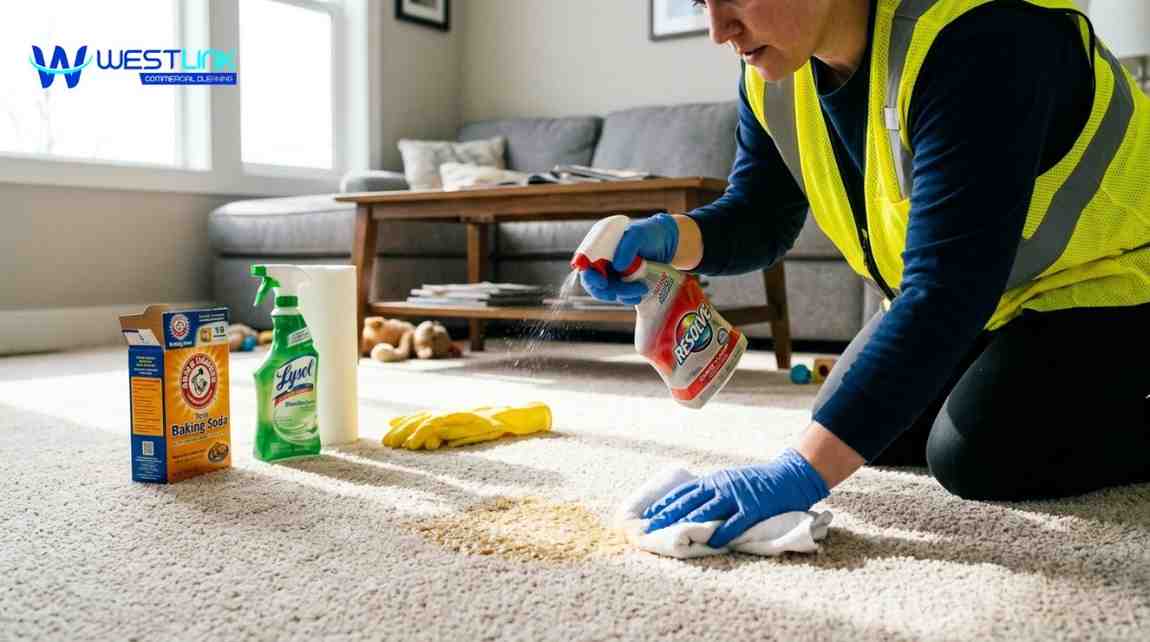
Cleaning vomit quickly provides multiple benefits. Acting immediately prevents permanent stains by stopping acids and food particles from setting into carpet fibers. It also reduces odors before bacteria multiply, helping to maintain a fresher indoor environment.
Prompt cleaning protects the structure of the carpet, prevents microbial growth, and minimizes the overall effort required. By responding quickly, homeowners can restore the carpet to its original condition and reduce the need for intensive deep cleaning later.
Carpet Care Tips for Vomit Emergencies
Emergencies like vomit or other sudden spills can happen unexpectedly, but knowing how to respond quickly can save your carpet from stains and odors. Here are some essential tips to handle these situations effectively:
- Keep Cleaning Supplies Handy
Always have paper towels, a spatula, mild detergent, vinegar, baking soda, and a small brush within easy reach. Quick access ensures you can respond immediately, preventing stains and smells from setting into the carpet fibers. - Act Quickly
Remove any solid matter gently using a spatula or paper towel. Then, blot liquids from the edges toward the center to avoid spreading the mess. Prompt action is key to minimizing damage and lingering odors. - Use Protective Mats in High-Risk Areas
Place mats near beds, sofas, or areas where pets spend a lot of time. These mats act as a first barrier, reducing direct contact between spills and the carpet. - Encourage Immediate Action from Family Members
Make sure everyone in your household knows to act fast during accidents. Prompt attention prevents stains from setting and keeps the carpet easier to clean. - Maintain Regular Vacuuming
Keeping a clean carpet overall reduces dirt and contamination, making any emergency cleanup faster and more effective. It also helps preserve the carpet’s look and longevity over time.
By following these simple tips, you can handle carpet emergencies efficiently, keep your home hygienic, and avoid costly professional cleaning services.
Step-by-Step DIY Guide to Cleaning Vomit Off Carpet
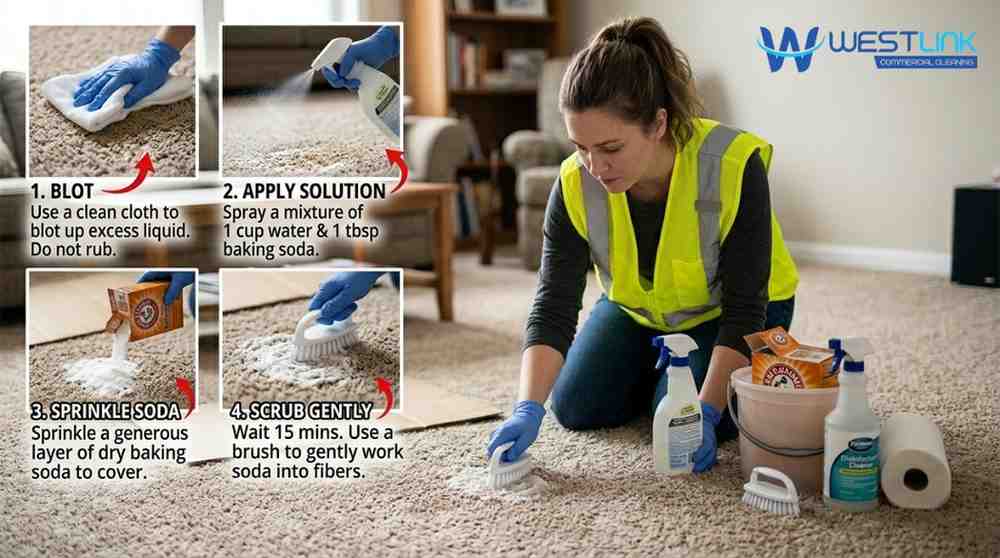
Step 1: Remove Solid Matter
Gently lift solid vomit using a spatula, spoon, or disposable paper towel. Avoid pressing or rubbing, as this can push the vomit deeper into the fibers and make cleaning more difficult.
Step 2: Blot Liquids
Use a clean cloth or paper towel to blot the liquid portion of the vomit. Work from the edges toward the center to prevent spreading. Repeat with fresh clothes until most of the moisture is absorbed. Always blot — never scrub — as recommended in best practices for stain removal from the Carpet and Rug Institute.
Step 3: Apply a Natural Cleaning Solution
Mix one part white vinegar with two parts warm water and lightly spray or dab the solution onto the affected area. Let it sit for 5–10 minutes, then blot with a clean cloth. This neutralizes odors and breaks down the acids safely.
Step 4: Deep Clean If Necessary
For thicker carpets or older stains, use a carpet cleaning machine or steam cleaner. These devices extract embedded vomit, bacteria, and odors, restoring your carpet to a clean state.
Step 5: Dry Properly
Ensure the carpet dries completely to prevent mold or mildew. Open windows, use fans, or a dehumidifier. Avoid walking on the carpet until it is fully dry.
Do It Yourself (DIY) Carpet Cleaning
Cleaning vomit from carpets yourself can be quick and effective. It is safe as long as you follow the right steps. First, gently remove solid matter using a spatula or paper towel. Then, carefully blot liquids from the edges toward the center to prevent spreading the stain.
Next, apply a natural cleaning solution, such as a mix of white vinegar and warm water. This helps neutralize odors and break down acids without damaging the carpet fibers.
For persistent stains or odors, sprinkle baking soda over the affected area and let it sit for 30–60 minutes before vacuuming. Enzyme-based cleaners are also effective, especially for tough or old stains, as they break down organic matter and eliminate smells at the source.
Finally, ensure the carpet dries completely by opening windows, using fans, or running a dehumidifier. This prevents mold or mildew from forming. Following these steps, you can tackle vomit accidents efficiently and keep your carpet clean and hygienic—no professional help needed.
Removing Odor from Carpet
Even after cleaning, vomit can leave stubborn odors. One of the most effective methods is baking soda, which naturally absorbs odors. Sprinkle generously over the area, leave for 30–60 minutes, then vacuum.
Enzyme cleaners are another solution. They break down organic material, such as proteins in vomit, eliminating the source of odor rather than masking it. Follow the product instructions carefully for best results.
A vinegar solution can also help. Lightly mist the carpet to neutralize lingering smells without leaving strong chemical residues.
For small rugs or carpets, shaking and brushing beforehand removes loose debris and allows the other odor removal methods to work more effectively.
Alternative Cleaning Method Without a Vacuum
If a vacuum cleaner is unavailable, small rugs or carpets can still be cleaned effectively. Shake the carpet outside to remove loose debris. Brush gently with a soft brush, sprinkle baking soda to absorb odors and moisture, and spot clean with a mild detergent solution. Finish by allowing the carpet to dry thoroughly in open air or with fans.
Protecting Carpets from Damage While Cleaning Vomite
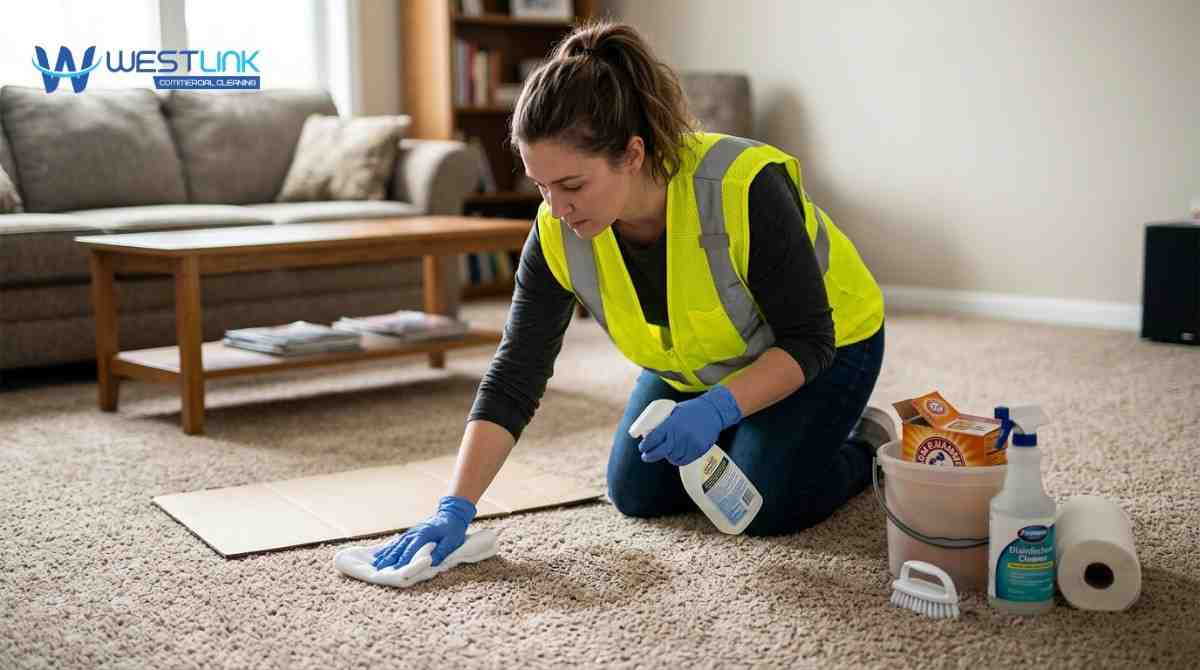
To extend the life of your carpets, avoid scrubbing aggressively, as this can spread stains and damage fibers. Do not over-saturate the carpet with water, which can weaken the backing. Move furniture occasionally to prevent permanent indentations, and use rugs or mats in high-traffic areas to reduce wear.
When to Call a Professional
For large, stubborn, or old stains, professional carpet cleaners may be necessary. They use industrial-grade equipment and specialized cleaning solutions to remove deep-set vomit and odors while sanitizing the carpet. Many homeowners schedule professional cleaning every 12–18 months or after severe accidents.
Cost of Professional Vomit Removal in Australia
- Small room: $30–50 per room
- Whole-house treatment: $120–300 depending on property size
- Commercial spaces: Priced by square meters and stain severity
Conclusion
Cleaning vomit off carpets quickly is essential for maintaining a hygienic, odor-free, and safe home environment. Prompt action, appropriate cleaning solutions, proper drying, and preventative measures all contribute to the longevity and appearance of carpets. Combining DIY methods with occasional professional cleaning ensures your carpets remain fresh, safe, and durable. For more on indoor air quality and allergens trapped in carpets, check Your Home – Indoor Air Quality guidelines.
Frequently Asked Questions (FAQ)
Can vomit cause permanent carpet stains?
Yes. Acids and food particles can set into fibers if not cleaned immediately.
What natural solutions work best?
Vinegar, baking soda, and mild detergent are safe and effective.
Do I need a carpet cleaner for small spills?
Small spills can usually be managed with blotting and spot cleaning.
How can I remove odor completely?
Use baking soda, enzyme cleaners, or vinegar solutions to neutralize smells.
Is steam cleaning safe for all carpets?
Generally yes, but always follow manufacturer instructions for delicate fibers like wool.
Can pets affect vomit cleaning?
Yes, pets may track bacteria or disturb the cleaning area. Keep them away until the carpet is dry.
How long should I dry the carpet?
Typically 6–12 hours depending on carpet thickness; ensure it is fully dry.
What if the vomit stain is old?
Professional cleaning or specialized solutions may be required.
Can DIY cleaning damage my carpet?
Improper solutions, excessive water, or harsh scrubbing can harm fibers.
How often should carpets be professionally cleaned?
Every 12–18 months, or immediately after major accidents.