
Kitchen blinds and curtains close to cooking zones often collect more than just dust — they trap grease, cooking vapors, and food particles. Over time, this buildup can make fabrics sticky, discolored, and difficult to clean, reducing the lifespan of your window coverings and potentially affecting indoor air quality. Regular cleaning helps prevent odors, bacteria growth, and fire risks from greasy fabrics, as highlighted in the NFPA’s guide to preventing cooking fires (.org).
Cleaning them properly matters not just for aesthetics but for hygiene and maintenance. Greasy blinds and curtains can harbor bacteria and odors, and if ignored, they may require more aggressive cleaning or even replacement. In a construction-cleaning or post-construction context, knowing the right cleaning methods ensures these delicate surfaces are handled safely and efficiently.
What Are Commercial Kitchen Blinds?
Kitchen blinds are window coverings made from materials like vinyl, aluminum, faux wood, or fabric, designed to control light and privacy. In kitchens, especially near cooking areas, blinds are often chosen because they are easy to clean, resistant to moisture, and can withstand heat and grease exposure.
They come in different styles such as venetian blinds, roller blinds, vertical blinds, and mini blinds, each with slats or flat surfaces that can be wiped down regularly. Their smooth surfaces make them practical for kitchens, but they can also trap grease, dust, and cooking vapors, requiring frequent maintenance.
Types of Kitchen Blinds
- Venetian Blinds – Feature horizontal slats made of wood, faux wood, or aluminum that can be tilted to control light and privacy. They are easy to wipe clean and ideal for kitchens because grease and dust settle on the flat slats, which can be wiped down.
- Roller Blinds – Made from a single piece of fabric that rolls up or down. They are simple to operate, space-saving, and easy to clean with a damp cloth or gentle cleaner.
- Vertical Blinds – Have vertical slats that hang from a track and can be rotated to adjust light. They are suitable for wider windows and sliding doors, and their vertical design reduces dust accumulation on horizontal surfaces.
- Mini Blinds – Smaller horizontal slats, usually aluminum or vinyl, that are lightweight and easy to maintain. They are practical for compact windows in kitchens and can be wiped or washed regularly to remove grease.
What Are Commercial Kitchen Curtains?
Kitchen curtains are fabric window coverings used to soften the look of the kitchen while controlling light and adding style. Unlike blinds, curtains are made of materials like cotton, polyester blends, linen, or blackout fabric, which absorb moisture, steam, and airborne grease.
Because they hang close to cooking zones, curtains often collect odors, stains, and sticky residue, making them harder to clean than blinds. They may need regular washing, spot cleaning, or steaming to stay fresh. Curtains come in styles such as café curtains, valances, full-length drapes, or tiered panels, and each type requires specific cleaning care depending on the fabric.
Types of Kitchen Curtains
- Café Curtains – Cover only the lower half of a window, allowing light to enter from the top while providing privacy at the bottom. Ideal for kitchen sinks and small windows.
- Valances – Short decorative drapes that hang at the top of a window. They are mainly aesthetic and often paired with blinds or full curtains.
- Full-Length Drapes – Extend from the curtain rod to the floor or window sill, offering maximum coverage and privacy. Best for larger kitchen windows or open-plan kitchens.
- Tiered Panels – Multi-layered or tiered curtains that combine style and function, often used to enhance light control while adding texture and design.
- Blackout Curtains – Made from thicker fabric to block light completely, reduce odors absorption, and improve energy efficiency in the kitchen.
Why It’s Important to Commercial Clean Kitchen Curtains and Blinds
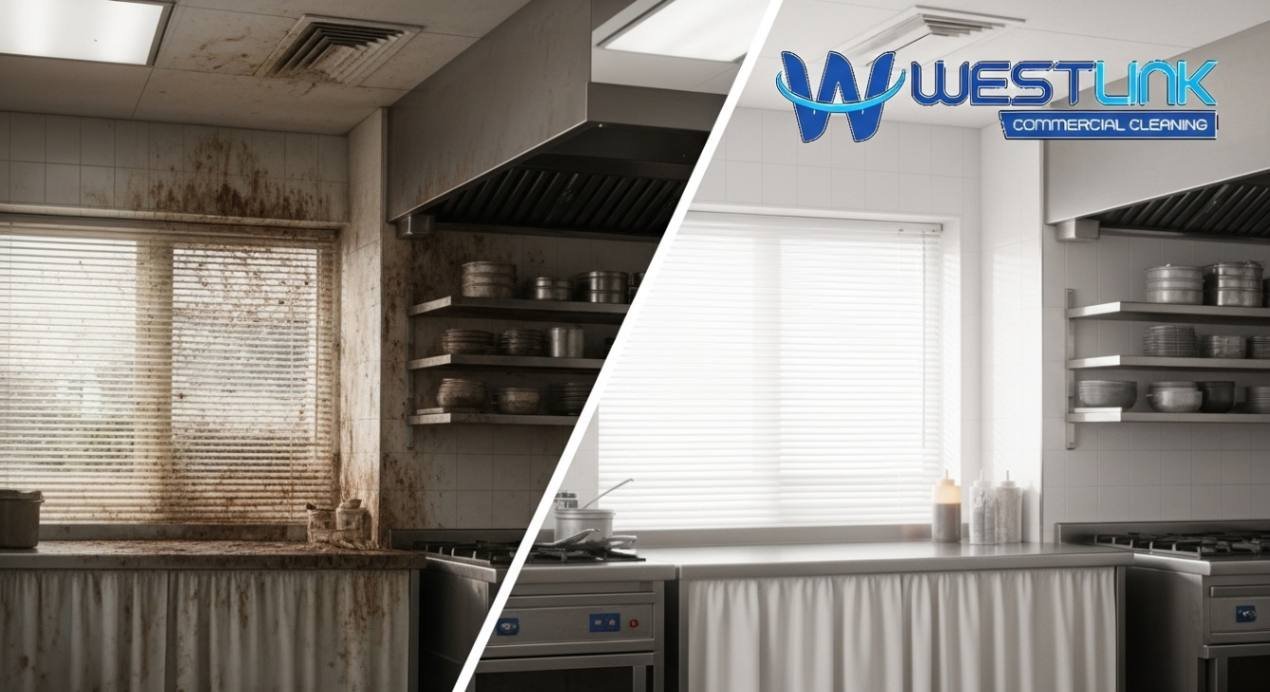
Cleaning kitchen curtains and blinds is essential because these surfaces absorb and collect grease, steam, smoke, dust, and food particles from daily cooking. When left uncleaned, they become sticky, discolored, and can even trap odors that affect the overall hygiene and appearance of the kitchen. Dirty blinds and curtains also reduce airflow, attract pests, and may trigger allergies due to buildup of dust and bacteria. Regular cleaning not only keeps them looking fresh but also prevents long-term fabric damage, extends their lifespan, and supports a healthier indoor environment.
Key Reasons to Clean Them Regularly:
- Prevents grease buildup that makes fabrics and slats sticky, dull, and harder to maintain over time.
- Reduces odors caused by smoke, spices, and trapped cooking vapors inside fabrics.
- Improves kitchen hygiene by removing bacteria, dust, and contaminants from surfaces.
- Extends the life of blinds and curtains by preventing permanent stains and material damage.
- Enhances air quality by reducing dust, allergens, and airborne particles stuck in fabric and slats.
- Keeps the kitchen looking clean and professional, especially in commercial or open-style kitchens.
How to Clean Commercial Kitchen Curtains and Blinds
Commercial kitchen curtains and blinds require stronger cleaning methods than home kitchens because they are exposed to heavier grease, steam, smoke, and continuous cooking activity. These surfaces trap airborne oils, food particles, and odors, making routine cleaning essential for hygiene, safety, and compliance with food standards. Below is a structured guide to help clean both effectively in a commercial environment.
How to Clean Commercial Kitchen Blinds
1. Remove Surface Dust
- Close the blinds and wipe with a microfiber cloth to remove loose dust and debris.
- This prevents dust from mixing with grease and becoming sticky.
2. Apply a Commercial Degreaser
- Spray a food-safe degreaser suitable for commercial kitchens.
- Let it sit for 3–5 minutes to break down heavy grease buildup
3. Scrub Each Slat Thoroughly
- Use a soft-bristle brush or scouring sponge to scrub slats individually.
- Pay special attention to edges and corners where grease collects most.
4. Rinse and Wipe Clean
- Use hot water and a clean cloth to remove remaining residue.
- Ensure all product is rinsed off to avoid sticky films.
5. Sanitize the Blinds
- Apply a food-safe sanitizer to keep the area hygienic. The EPA provides a list of approved disinfectants safe for food-contact surfaces, which work well on blinds near cooking zones.
- This step helps kill bacteria and remove lingering odors.
6. Dry Completely
- Use a dry microfiber cloth to prevent streaks and water marks.
- Airflow or fans can speed up drying in busy kitchens.
How to Clean Commercial Kitchen Curtains
1. Remove Dust and Debris
- Take curtains down and shake them outdoors or in a cleaning zone.
- Commercial curtains hold more airborne grease, so this step is essential.
2. Pre-Treat Grease and Stains
- Apply a commercial-grade degreaser or stain remover to targeted spots.
- Let it sit for 10 minutes, especially on heavily soiled areas.
3. Machine Wash with Heavy-Duty Detergent
- Use warm water and a strong detergent designed for grease removal.
- Choose a gentle cycle to protect fabric but allow deep cleaning.
4. Hand Wash Delicate Fabrics
- Soak in hot water mixed with a commercial degreasing solution.
- Lightly agitate to release oils, then rinse thoroughly.
5. Use a Steam Cleaner for Extra Sanitization
- Steam helps remove odors, sanitize fabric, and loosen remaining grease.
- Safe for most commercial curtain materials.
6. Air Dry to Protect Fabric
- Hang curtains to dry naturally, ensuring good airflow.
- Avoid dryers, which can shrink or damage fabric under high heat.
General Cleaning Tips for All Commercial Kitchen Blinds and Curtains
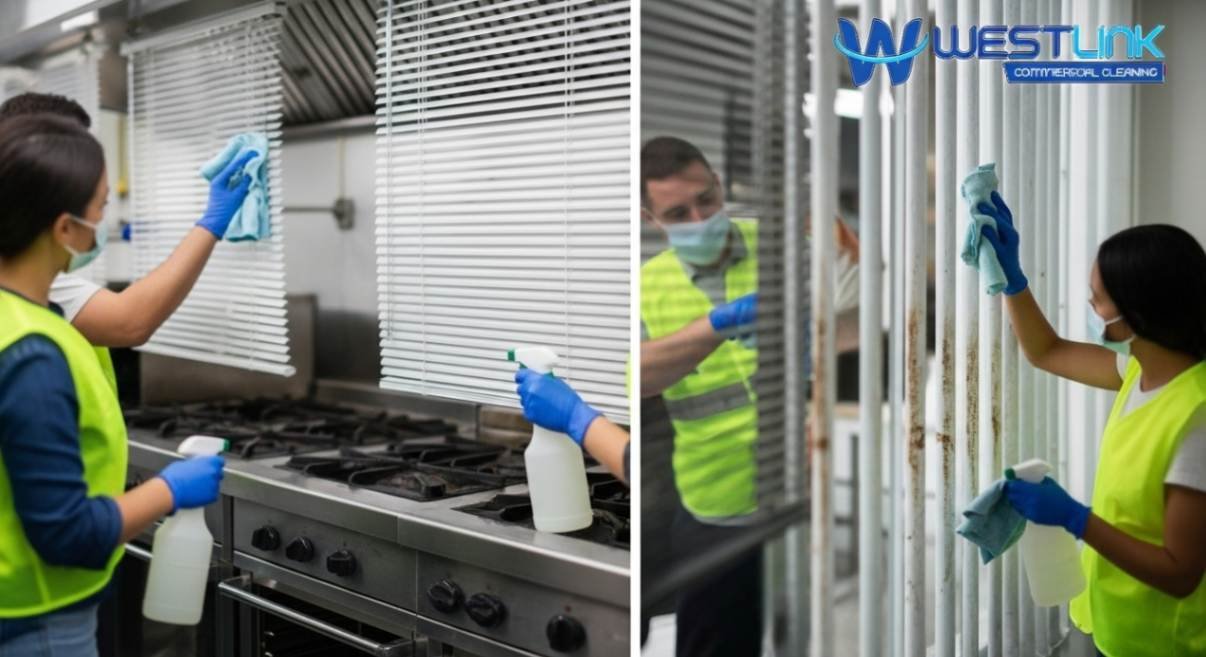
To keep kitchen blinds and curtains in good condition, regular light cleaning and periodic deep cleaning are essential. Heat, grease, and cooking vapors settle on all window coverings, so following the right routine prevents stains, odors, and buildup.
General tips for both blinds and curtains:
- Clean regularly before buildup forms
Wipe or dust weekly to stop grease and dirt from sticking, making deep cleaning easier and faster.
- Use the right cleaning products
Choose mild detergents or fabric-safe cleaners to prevent damage, discoloration, or fabric weakening over time.
- Avoid excessive moisture
Too much water can warp blinds or shrink curtains, so always use damp—not soaking—cloths and ensure full drying.
- Spot-clean stains immediately
Address splatters and grease marks right away so they don’t become permanent or harder to remove later.
- Vacuum with a soft brush attachment
This removes dust and light debris without tugging or scratching surfaces, especially helpful for fabric curtains.
- Deep clean once every 4–8 weeks
Kitchens near cooking zones need regular deep cleaning to remove grease that normal wiping cannot dissolve.
- Keep windows and exhaust fans clean
A clean cooking environment reduces airborne grease, helping blinds and curtains stay cleaner for longer.
The Best Commercial Kitchen Curtain and Blind Cleaning Techniques for Homes
Cleaning curtains and blinds at home requires using the right methods based on material, level of grease, and the type of window covering. Since cooking areas expose fabrics and surfaces to steam, oil particles, and dust, choosing the correct technique helps maintain appearance, hygiene, and lifespan.
Best Cleaning Techniques for Home Curtains and Blinds
- Regular Dusting & Vacuuming
Use a microfiber cloth or a vacuum with a soft brush attachment to remove loose dust and light grease before it settles deeper into the fabric or slats.
- Spot Cleaning for Small Stains
Apply a mild detergent solution to stained areas and gently blot—this prevents small splatters from becoming permanent marks.
- Steam Cleaning for Heavy Grease
A handheld steamer helps loosen grease and refresh fabric curtains without soaking them, and also sanitises blind surfaces.
- Washing Machine Cleaning (If Fabric Allows)
Many curtains can be washed on a gentle cycle with cold water; this removes embedded odours and sticky residue caused by cooking vapors.
- Hand Washing Delicate Fabrics
For linen, sheer curtains, or embellished fabrics, use lukewarm water and mild soap to avoid damage or stretching.
- Soaking Blinds in Warm Soapy Water
Vinyl, plastic, and aluminum blinds can be removed and soaked to dissolve tougher grease buildup that cannot be cleaned while hanging.
- Wipe-Down with Degreaser for Kitchen Blinds
A light, kitchen-safe degreaser helps break down oil films on blinds located above stoves or near cooking zones.
- Air Drying Only
Always air dry blinds and curtains to prevent shrinkage, warping, or damage from heat-based drying methods.
Step-by-Step Cleaning Process
- Dust First
Use a microfiber cloth or vacuum with upholstery attachment to remove surface dust. Work top to bottom.
- Mix a Grease-Cutting Solution
Combine warm water with a mild dish soap. For extra power, add a splash of white vinegar.
- Spot Clean or Soak
- For blinds: If removable, take them down and soak in a tub of warm, soapy water for 10–15 mins.
- For fixed blinds: Spray your cleaning solution lightly and wipe each slat with a microfiber cloth.
- For curtains: Check care labels. If washable, wash on delicate. If not, steam or blot spot areas.
- For blinds: If removable, take them down and soak in a tub of warm, soapy water for 10–15 mins.
- Tackle Greasy Spots
For stubborn grease on blinds or fabric, make a paste of baking soda + water, apply gently, let it sit, then scrub with a soft toothbrush.
- Rinse & Remove Residue
Use a clean, damp cloth to rinse off soap or baking soda. For fabric curtains, follow with a water rinse or refresh cycle.
- Dry Thoroughly
Blinds: Wipe each slat dry to prevent water spots.
Curtains: Hang to air dry or tumble-dry (if label allows).
- Finish & Protect
Once clean, you can lightly polish faux-wood or vinyl blinds with an anti-static microfiber cloth to slow future dust buildup.
For curtains, ensure they’re fully dry before rehanging to prevent musty smells.
Tools & Products You’ll Need To Clean Commercial Kitchen Curtain and Blind
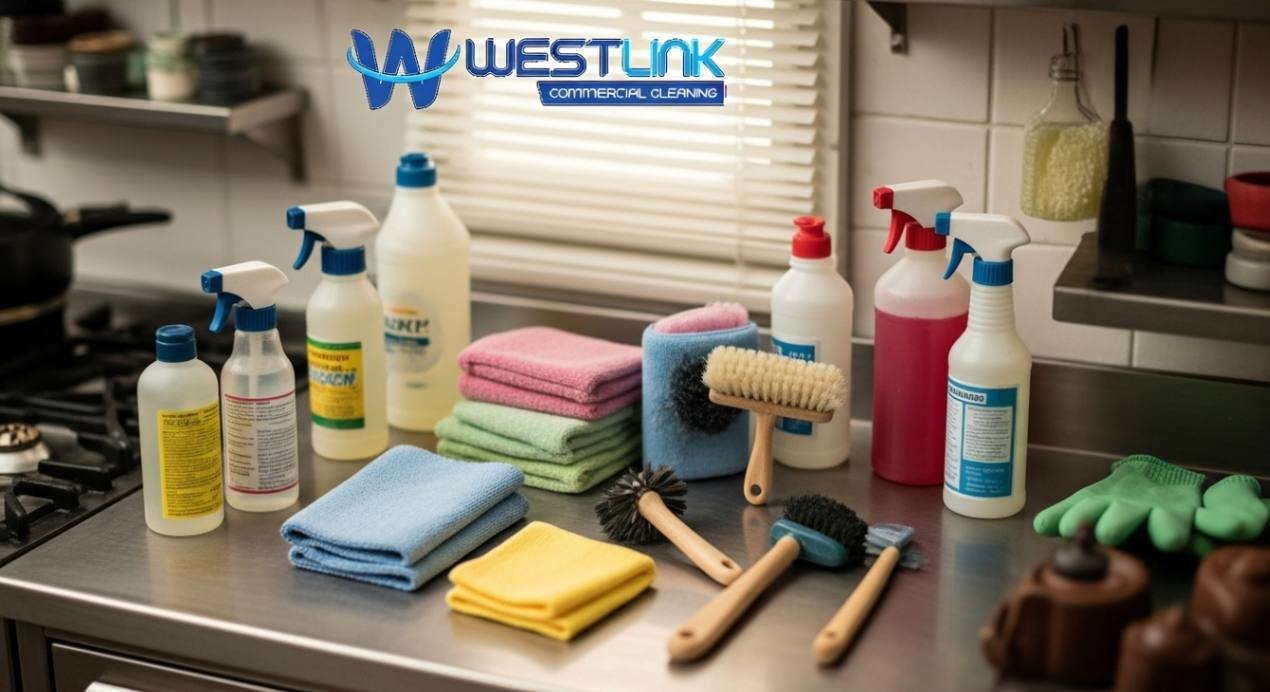
- Microfiber cloths or duster
These trap dust and grease effectively without scratching surfaces, making them ideal for blinds and delicate curtain fabrics.
- Vacuum with upholstery or crevice attachment
Helps remove dust from folds, pleats, and slats, especially in areas where cloths can’t reach easily.
- Mild dish soap
A gentle cleaner that breaks down light grease and stains without damaging fabric or blind surfaces.
- White vinegar (optional)
Useful for cutting through stubborn grease and neutralizing kitchen odors on washable fabrics and blinds.
- Baking soda
Works as a natural deodorizer and mild scrub for removing tough stains or sticky residue.
- Soft toothbrush or small scrub brush
Helps clean corners, edges, and detailed areas like slat hinges or fabric seams.
- Bucket or tub
Needed for soaking blinds or mixing cleaning solutions safely and conveniently.
- Spray bottle
Allows you to apply cleaning solutions evenly across blinds or spot-treat curtain stains.
- Dry microfiber cloth
Used to wipe, dry, and polish surfaces after cleaning to prevent streak marks or water spots.
Safety Tips & Precautions Commercial Kitchen
- Always test cleaning solutions on a small, hidden area first
This ensures the fabric or blind surface won’t fade, stain, or get damaged before you clean the entire piece.
- Don’t soak wooden blinds — too much water can warp or damage them
Wood absorbs moisture quickly, causing swelling, bending, or peeling, so they must only be cleaned with a damp—not wet—cloth.
- Use a gentle blotting motion for fabrics — avoid scrubbing aggressively
Scrubbing can stretch, tear, or damage curtain fibers, while blotting safely lifts stains without harming the material.
- Proper ventilation during cleaning helps avoid inhaling fumes from detergents or vinegar
Open windows or turn on exhaust fans to keep the air fresh and reduce irritation to your eyes, throat, or skin.
Common Mistakes to Avoid Commercial Kitchen Cleaning
- Using harsh chemicals like oven cleaner or bleach on fabrics
These strong cleaners can weaken fibers, remove color, or cause permanent stains.
Always choose mild and fabric-safe cleaning products instead.
- Skipping the rinse step — leftover detergent will attract more dirt
Soap residue becomes sticky over time, causing dust and grease to cling faster.
Rinse or wipe surfaces properly to keep blinds and curtains cleaner for longer.
- Trying to clean everything at once — break the job into smaller sections
Cleaning in smaller areas helps you remove grease more thoroughly.
It also prevents fabric from becoming overly wet or blinds from being damaged.
- Neglecting the tracks or frames — grease and dust also build up there
Even if curtains and blinds are clean, dirty tracks make them look messy and work poorly.
Wipe frames, rods, and tracks regularly to maintain smooth operation and hygiene.
Maintenance Tips: Keeping Them Clean Longer Commercial Kitchen cleaning
- Dust blinds weekly or bi-weekly to prevent buildup
Regular dusting stops grease from sticking and becoming harder to remove later.
A microfiber cloth or duster works best for quick maintenance.
- Wipe down with your soap–vinegar mix once a month if near a busy cooking area
This removes early grease before it hardens into stubborn residue.
Monthly cleaning keeps blinds and curtains fresh between deep cleans.
- Use kitchen ventilation (hood fan) while cooking to reduce airborne grease
Proper airflow prevents steam, smoke, and grease particles from settling on fabrics.
This dramatically slows the buildup on curtains, blinds, and nearby surfaces.
- Consider a quarterly deep clean (especially for greasy kitchens) to stay ahead of grime
A thorough cleaning every 3 months keeps materials in good condition and odor-free.
This prevents long-term damage and extends the life of your blinds and curtains.
When to Call a Professional
- Curtains made of delicate fabric (silk, velvet) that require dry-cleaning.
- Very large or heavy blinds that are difficult to remove or lift safely.
- Persistent, sticky grease that DIY cleaning can’t fully remove.
- After a renovation or construction — to remove layers of dust + grease properly.
Conclusion
Cleaning kitchen blinds and curtains near cooking zones doesn’t have to be difficult. With the right tools, gentle cleaners, and a consistent routine, you can easily remove grease, dust, and stains before they become a problem. Regular care keeps your blinds and curtains looking fresh, helps them last longer, and maintains a cleaner, healthier kitchen environment—both at home and in commercial settings.
FAQs Commercial Kitchen Blinds and Curtains
Q1: Can I use bleach or strong chemical cleaner on my kitchen blinds?
A1: No — strong chemicals like bleach or oven cleaners can damage fabric and finishes. Use mild soap or a gentle vinegar mix instead.
Q3: Can I put my curtains in the washing machine?
A3: Only if the care label allows. Use a delicate cycle and mild detergent, or consider hand-washing to preserve the fabric.
Q4: What if the grease stains on my curtains don’t come off?
A4: Try making a baking soda paste or use a steam cleaner. If that fails, professional cleaning may be required.
Q5: How do I prevent future grease buildup on blinds?
A5: Use your kitchen hood fan while cooking, clean spills quickly, dust regularly, and deep-clean periodically.