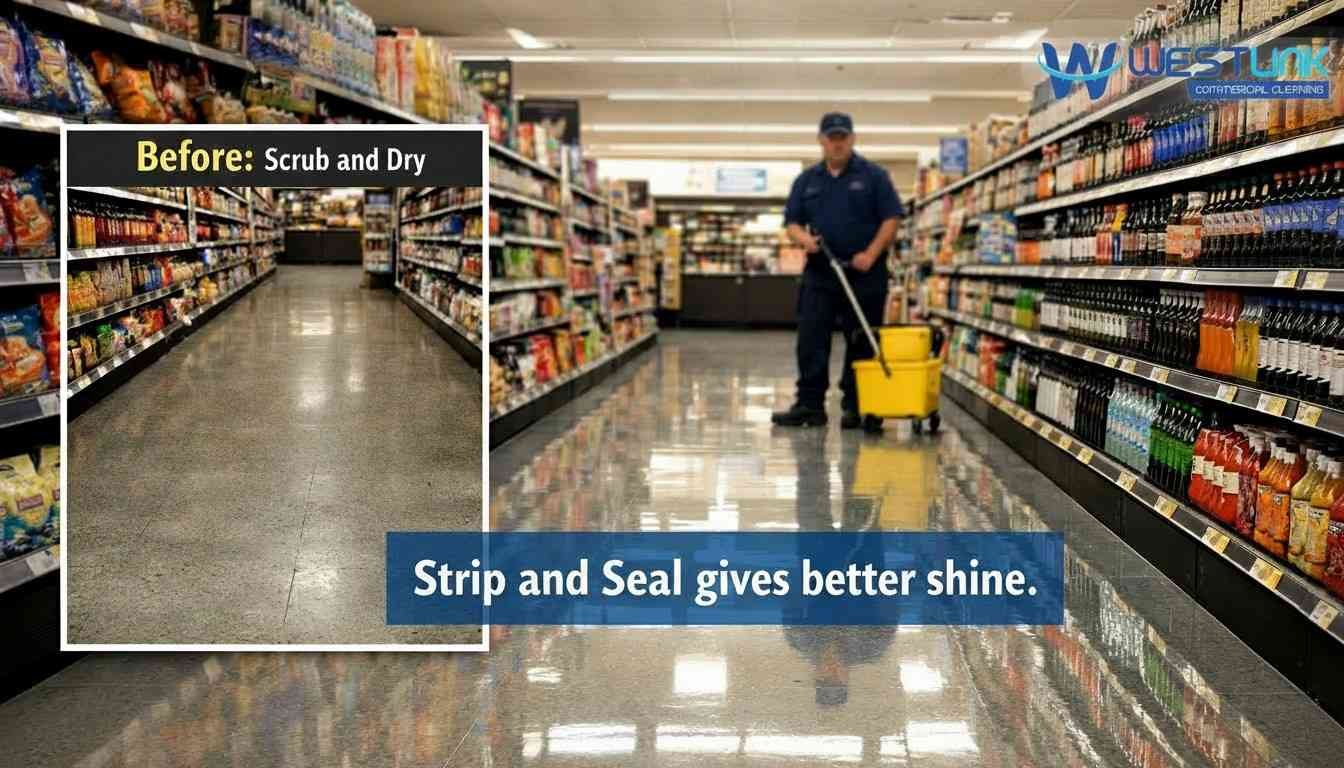
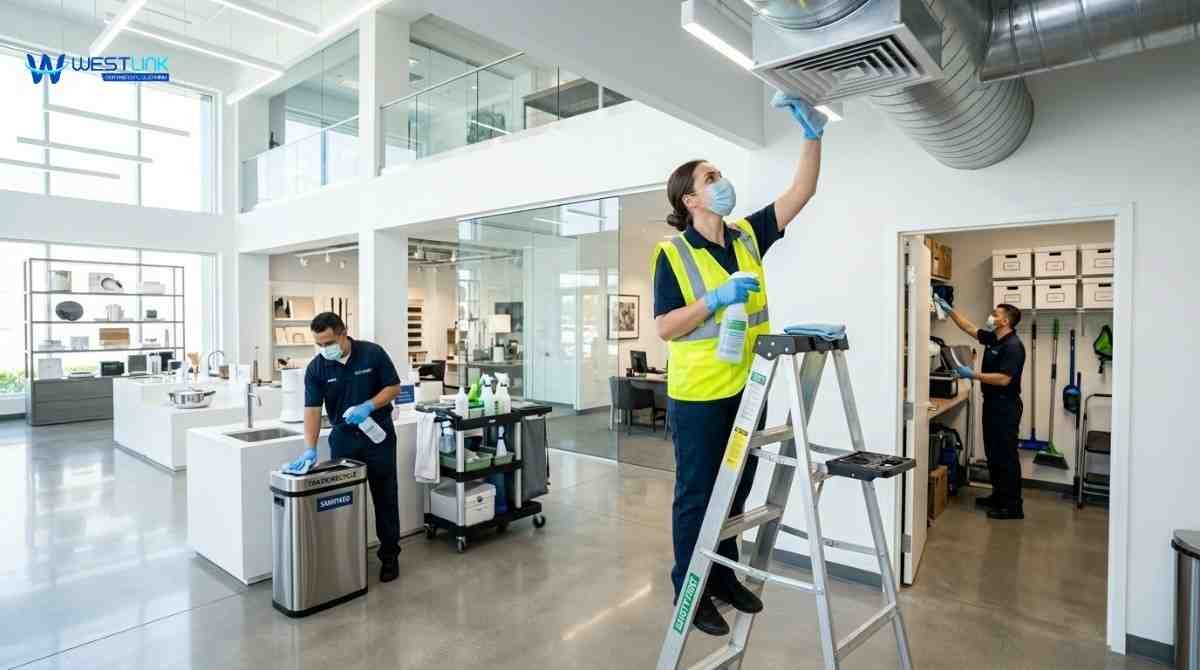
Many renters ask the same question before final inspection: are tenants responsible for cleaning outside windows? It matters because a small issue at the end of a lease can turn into stress, delays, and bond disputes.
In most cases, the answer is yes, but only when the outside windows are safe and easy to reach. If not, then you need professional cleaning help such as Westlink Commercial Cleaning. If a tenant can clean the outside glass from the ground, a balcony, or another safe spot, the property manager will usually expect that glass to be clean at the end of the tenancy. However, if the windows are high up, require special equipment, or pose a safety risk, the expectation usually shifts to hiring a professional window cleaning company rather than cleaning them yourself.
When is cleaning the outside windows the tenant’s responsibility?
In most Sydney commercial leases, the tenant is usually responsible for cleaning outside windows that are part of the leased premises, especially ground-level shopfront glass. The lease is the first document to check because commercial lease obligations usually come from the lease terms. If the premises are a retail shop, the Retail Leases Act 1994 (NSW) may also apply. This is different from the Residential Tenancies Act 2010 (NSW), which applies to premises used as a residence, not standard commercial premises. For guidance, tenants can also refer to the NSW Small Business Commissioner Retail Tenancy Guide.
Common situations where you need to clean windows
Ground-floor shopfronts
The tenant will usually clean both the inside and outside of the front windows when the glass forms part of the shopfront and can be accessed safely. In retail leasing, cleaning can also appear as a service, facility, or outgoing, so the lease and disclosure statement should be checked carefully.
Multi-storey commercial buildings
The tenant will usually clean internal windows only. External facade or high-access window cleaning is often managed by the landlord or building manager, then dealt with under building services or outgoings if the lease allows it. This responsibility should be confirmed in the lease and disclosure documents.
Strata commercial properties
Responsibility depends on the lease and the strata arrangement. NSW strata rules commonly place responsibility on the owner or occupier for accessible boundary windows, including exterior glass, but the owners corporation is responsible for exterior glass that cannot be accessed safely. The owners corporation must also maintain common property.
Sole-Occupancy Commercial Buildings
In a sole-occupancy commercial building, outside window cleaning usually depends on the lease. Because there is no shared building manager or owners corporation handling the exterior, tenants are often responsible for more of the property’s day-to-day cleaning and upkeep, including external windows. This is especially common in warehouses, standalone offices, showrooms, and free-standing retail sites.
That said, responsibility should never be assumed. Some leases place full cleaning obligations on the tenant, while others require the landlord to handle certain external maintenance items. The best approach is to check the lease carefully, especially the clauses covering cleaning, maintenance, repairs and make good on obligations at the end of the tenancy.
What tenants should do first
Before arranging or refusing outside window cleaning, read the lease clauses on cleaning, maintenance, outgoings, common areas, and services provided by the landlord. These documents usually decide who is responsible and whether the cost can be passed on to the tenant.
What NSW Businesses Need to Know About Window Cleaning Responsibilities?
In NSW, lease agreements typically dictate cleaning responsibilities for commercial premises, rather than residential tenancy law. NSW retail leasing guidance says commercial and retail leases are different from residential leases, and the lessee is often responsible for repairs, maintenance and cleaning under the lease. The Retail Leases Act 1994 applies to retail shop leases, but only to premises that fall within that Act.
Who Is Responsible for Outside Window Cleaning in a Commercial Property?
In a commercial property, outside window cleaning is usually a lease issue. NSW guidance says the lease should clearly state who handles maintenance and repair items. That can include glass, services, and other parts of the premises. If external windows are part of the tenant’s upkeep obligations, the business may be responsible for keeping them clean. The safest approach is to check the lease before making assumptions.
Why Safety Matters More Than Convenience
Even when a lease makes the tenant responsible for cleaning, workplace safety laws still apply. Under NSW work health and safety rules, a business must manage the risk of falls. Where possible, the work should be done from ground level or using a stable and suitable platform. If that is not reasonably practicable, the business must use appropriate fall protection, safe work procedures, and rescue arrangements where required. SafeWork NSW also says workers must have the right training and skills for the task.
Why Many Businesses Hire Window Cleaning Services
External window cleaning can involve height risks, access equipment, and compliance requirements. SafeWork NSW notes that fall risks must be controlled, and extra requirements apply in some higher-risk settings, including construction work where a person could fall more than two metres. That is why many businesses use commercial window cleaning services like Westlink Commercial Cleaning for external glass, high-access windows, and scheduled maintenance. It is safer, more practical, and better suited to commercial sites.
The Practical Takeaway
For commercial properties, the main question is not whether the rule is the same as residential. It is whether the lease assigns the cleaning duty and whether the work can be done safely. A clear lease and a professional commercial cleaning service help businesses stay compliant, protect staff, and keep the property looking professional
Shopfront, Office, or Strata? How the Property Type Changes the Window Cleaning Rules
The type of commercial property determines who typically handles outside window cleaning. A street-facing shopfront is different from a strata office or a high-rise tower. In most cases, the lease is the first place to check because it usually decides who cleans the glass and who pays for it. For retail premises, those costs may also sit under building services or outgoings if the lease allows it
Ground-Floor Shopfronts
For most ground-floor retail shops, the tenant usually cleans both the inside and outside of the front windows when the glass is part of the leased shopfront and can be reached safely. This is common in street-facing premises where the shopfront forms part of the tenant’s day-to-day presentation of the business. The lease and disclosure documents should still be checked because cleaning costs can sometimes appear under services or outgoings.
Office Suites in Commercial Buildings
In a standard office suite, the tenant usually handles the windows inside the leased space. External facade glass is usually managed by the landlord, building owner, or building manager, especially where the glass is part of the wider building exterior. This is more common in multi-storey office buildings where external cleaning is organised as part of building operations.
Strata Commercial Premises
Strata commercial properties follow a different structure. The owners corporation is responsible for common property, and NSW strata rules also distinguish between windows that an occupier can safely access and windows that cannot be reached safely. In practice, this often means the tenant may clean accessible glass connected to their lot, while the owners corporation handles exterior glass that is unsafe or impossible for the occupier to access.
High-Rise Offices and CBD Towers
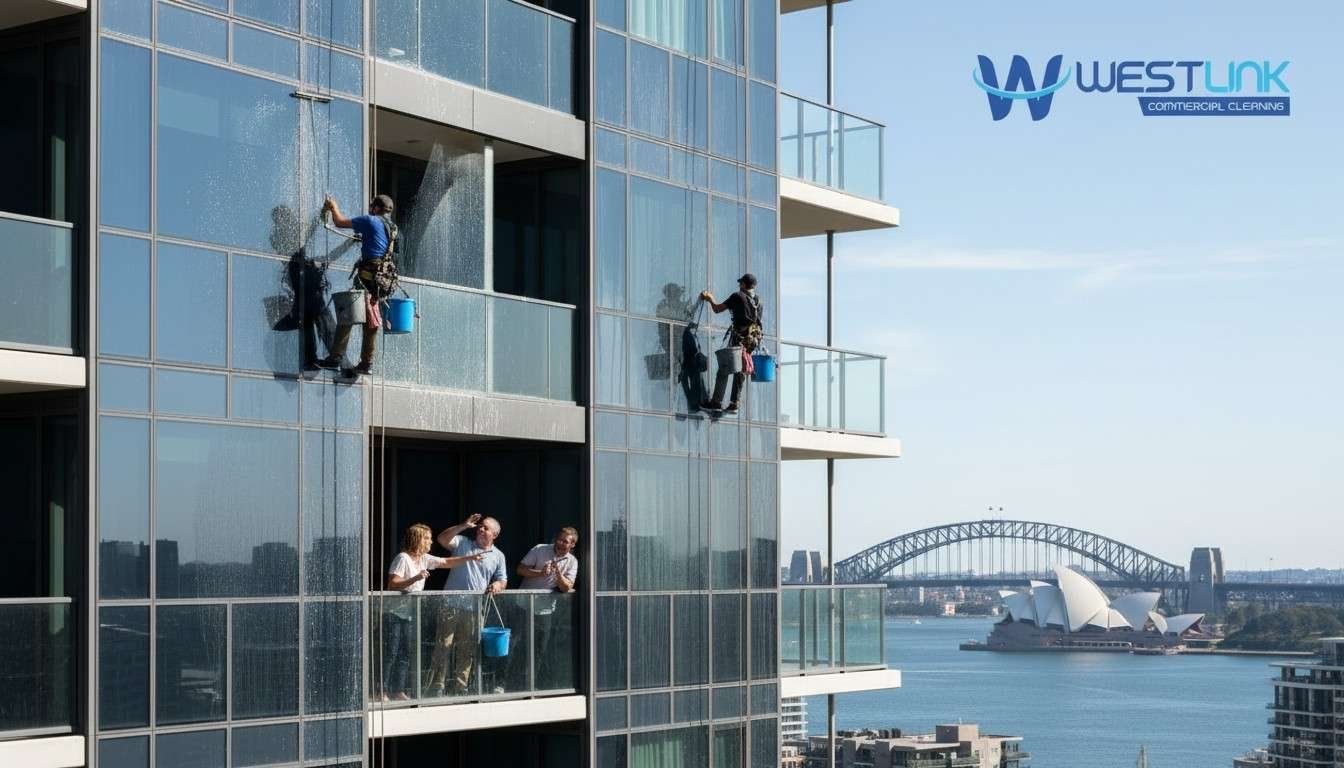
In high-rise commercial buildings, outside window cleaning is usually a building-level service. It is normally arranged by the landlord, owners’ corporation, or building manager because facade cleaning requires specialist access and sits within broader building management. Tenants in these buildings are usually responsible for internal glass only, unless the lease clearly says otherwise.
Sole-Occupancy Commercial Buildings
A sole-occupancy commercial building works differently because there is no shared building manager or owners corporation handling the exterior. In these leases, tenants often take on broader cleaning and maintenance obligations, including outside windows, external glass, and presentation of the property. The exact lease wording is critical here.
What Commercial Tenants Should Check First
Before assuming who pays, check the lease clauses on cleaning, maintenance, services, common areas, and outgoings. That will usually give the clearest answer. If the premises are in a strata building, check the strata rules as well.

Shopfront Windows: What Sydney Business Owners Should Know
You run a ground-level business in Sydney, cleaning the outside of your shopfront windows is usually your responsibility as the tenant. This applies to shops, cafes, restaurants, offices, and other businesses with glass facing the street.
Clean windows are important because they affect how people see your business. They help create a strong first impression and can even influence whether someone decides to walk in. If your windows look dusty, smeared, or dirty, customers may think your business is not well looked after.
For example, a café with dirty front windows can turn people away before they even step inside. A real estate office with a grimy shopfront can give the wrong impression to potential clients.
How Often Should Shopfront Windows Be Cleaned?
In Sydney, shopfront windows get dirty quickly. Traffic pollution, construction dust, and coastal air can all cause a build-up on the glass, especially in busy inner-city and CBD areas.
A regular cleaning schedule works best for most businesses:
- Weekly or every two weeks for cafes, restaurants, retail stores, and busy shopfronts
- Once a month for offices, medical clinics, and professional service businesses
- After major weather events such as dust storms or bushfire haze
Why Regular Cleaning Matters
Regular window cleaning is not only about looking good. It also helps protect the glass. When dirt and minerals stay on the surface for too long, they can leave stains or cause permanent damage.
If the glass becomes etched, normal cleaning will not fix it. The window might then need to be replaced. Replacing commercial glass is much pricier than keeping up with regular cleaning.
This is why a simple cleaning schedule can save money and help your business look more professional at the same time.
Multi-Storey Office Buildings: Who Handles the Upper Floors?
In Sydney’s larger commercial buildings, CBD towers, business parks, and multi-level office complexes, external window cleaning is generally not the individual tenant’s direct responsibility. The building owner or property management company typically handles this task and recovers the costs through building outgoings.
However, commercial tenants in these buildings are still expected to maintain a clean standard inside their tenancy. As part of general premises maintenance, tenants must keep internal window surfaces, glass partitions, and inward-opening windows clean.
What Tenants in Shared Commercial Buildings Should Check
Commercial tenants in multi-tenancy buildings should confirm the following before signing or renewing a lease:
- Is external window cleaning included in building outgoings?
If yes, verify how costs are allocated across tenants.
- Who is the building manager, and how often is cleaning scheduled?
Some buildings clean external glass quarterly; others annually.
- What is the tenant’s obligation if the external windows within their floor become
- unusually dirty?
(Construction dust, graffiti, or accidental damage may require a special clean at the tenant’s cost.)
Getting these answers in writing, either in the lease or in a side letter from the landlord, prevents disagreements when the issue arises later.
End-of-Lease Window Cleaning for Commercial Tenants in Sydney
The end of a commercial lease is when many window cleaning disputes happen. At this stage, the ‘make good’ clause applies. The landlord or property manager checks the condition of the property before the lease ends.
If the windows do not meet the required standard, the tenant may have to pay the cost. This usually happens when external windows are dirty, marked by water stains, or show heavy build-up from poor maintenance. In Sydney, landlords can deduct these costs from the security deposit. If the deposit is not enough, they may recover the remaining amount through legal action.
What a Commercial-Grade Good Window Clean Should Include
A professional end-of-lease window cleaning service for a commercial property in Sydney usually includes:
- Exterior window cleaning for all accessible glass and panels
- Interior glass cleaning, including partitions and window tracks
- Cleaning of window frames and sills, with removal of rust marks or stains
- Shopfront glass, display windows, and signage-backing glass
- Special glass surfaces such as frosted, tinted, or treated glass
Why Professional Cleaning Matters
Commercial cleaning companies, such as Westlink Commercial Services, that handle end-of-lease work understand the importance of clear requirements. They know what landlords and property managers expect during the final inspection. A basic clean from a general cleaner may not be enough for a commercial lease standard.
What Happens If a Commercial Tenant Does Not Clean Outside Windows?
The financial impacts for a commercial tenant who ignores outside window cleaning obligations are real and legally enforceable.
In Sydney’s commercial property market, landlords routinely engage independent property inspectors to assess the condition of a premises at the end of a lease. If windows do not If the required standard is met, the tenant receives a timeline of works, a list of items that must be addressed, and the cost if the landlord engages a contractor to fix them.
If the tenant disputes the cost, the matter can proceed to the NSW Supreme Court or the NSW District Court, depending on the value of the claim. Unlike residential bond disputes that go to NCAT, commercial lease disputes are civil litigation matters — considerably more expensive and time-consuming for both sides.
The most cost-effective solution is simple: keep outside windows clean throughout the tenancy and arrange a thorough professional clean before the lease ends.

How a Commercial Lease Agreement Decides Cleaning Responsibility
In a commercial property, the lease agreement decides almost everything. Unlike a residential tenancy, there are fewer default rules. What matters most is what the landlord and tenant agreed to in writing.
If the lease says the tenant must clean the outside windows, then that becomes the tenant’s job. If the lease says the landlord is responsible, then the landlord must handle it. When the lease does not explain this clearly, confusion starts and disputes often follow.
What to Check in a Commercial Lease Cleaning Clause
A good commercial lease should clearly explain who is responsible for cleaning. It should cover:
- whether the tenant handles only internal cleaning or both internal and external cleaning
- whether professional cleaning is needed at the end of the lease
- who is responsible for high-access or upper-floor window cleaning
- whether window cleaning costs are included in building outgoings
A clause that only says the tenant must keep the premises clean is too vague. Many Sydney commercial tenants later find that landlords interpret this to include full external window cleaning, even for upper-floor glass.
When Window Cleaning Is Included in Building Outgoings
In many Sydney office buildings and retail centres, external window cleaning is treated as a building outgoing. This means the landlord or building manager arranges the work and pays for it first. The cost is then recovered from tenants through outgoings.
In this setup, the tenant usually does not organise the outside window cleaning directly. However, the tenant may still contribute to the cost through monthly or annual outgoings. This should be clearly disclosed before the lease is signed.
Why Clear Lease Terms Matter
A clear lease helps both landlords and tenants avoid misunderstandings. Before signing, always check how the lease explains cleaning duties, window cleaning costs, and building outgoings. Clear terms make compliance easier and reduce the risk of future disputes.
What a Lease Agreement Should Say About Window Cleaning
A clear lease agreement helps prevent disputes before they begin. If the lease does not clearly explain who handles window cleaning, both the landlord and tenant may make different assumptions. That often leads to unnecessary conflict later.
Red Flags in a Lease Cleaning Clause
Some lease clauses are too broad to be useful. For example, a term that says the tenant is responsible for all window cleaning can create confusion if it does not explain what all includes.
A good lease should clearly define accessible windows and high-access windows. It should also separate regular cleaning from professional end-of-lease cleaning. This makes each party’s responsibility easier to understand.
How to Record Window Condition at Move-In
Tenants should take clear photos of every outside window on move-in day. This should include the glass, frames, and tracks. The photos should be time-stamped and stored safely.
If there is already dirt, mould, stains, or damage, it should be written in the condition report before signing. This helps avoid disputes at the end of the lease.
Note: A detailed condition report protects both landlords and tenants. Landlords should also include clear photos that show the condition of the windows at the start of the tenancy.
How Often Should Tenants Clean Outside Windows in Sydney?
Sydney’s environment is not the same as regional Australia. The city’s coastal air particularly in the eastern suburbs, northern beaches, and inner west carries salt particles, pollution, and moisture that accumulate on glass far faster than in inland areas.
For Sydney tenants in coastal or inner-city suburbs, outside windows need cleaning roughly every three months to stay in a reasonable condition. For properties in western suburbs or areas away from the coast, twice a year is generally sufficient to meet the “reasonably clean” standard.
Seasonal Cleaning That Sydney Tenants Must Not Ignore
After Sydney’s bushfire season (typically January to March), fine ash and smoke residue settles on external glass. Left untreated, this residue can begin etching the glass surface turning a cleaning issue into a replacement issue. Tenants should clean outside windows promptly after heavy smoke events.
After summer storm periods, water stains and mould can appear quickly on external glass and window frames. Mould left to grow on window frames may become a landlord’s problem to fix but only if the tenant reports it. Mould caused by a tenant’s failure to maintain cleanliness stays the tenant’s responsibility.
The standard at the end of the lease is not “roughly clean”. It is clean to the same standard as when the tenancy started. For a Sydney property, this means staying on top of external windows throughout the tenancy, not scrambling the week before the final inspection.
Will Dirty Outside Windows Cost Tenants Their Bond?
The honest answer is yes, they very often do.
Property managers across Sydney conduct final inspections with a detailed checklist. Outside windows are on that list. The standard applied is simple: were the windows clean at move-in? If yes, they must be clean at move-out.
Fair Wear and Tear vs. Neglect — The Window Test
Normal ageing, minor water spots from rain, and light dust that builds up over months all qualify as fair wear and tear. A landlord cannot deduct bond money for these.
However, windows that have heavy dirt build-up, mineral staining from hard water, mould on frames, or visible grime from not being cleaned throughout the tenancy cross into neglect territory. These are legitimate grounds for a bond deduction in NSW.
How much bond can be deducted for dirty outside windows?
There is no fixed dollar amount written into NSW law. The deduction must reflect the actual cost of bringing the windows back to the condition they were in at move-in. In Sydney, a professional external window clean for a standard house ranges from $150 to $350, depending on the number of windows and the level of build-up. The bond deduction must be reasonable and supported by a quote or invoice.
How Tenants Can Dispute an Unfair Window Cleaning Deduction
If a landlord makes a bond deduction that a tenant believes is unfair, the tenant has the right to dispute it. The process is:
- Request an itemised breakdown of the deduction in writing.
- Please provide move-in photos and the condition report to address the claim.
- Contact NSW Fair Trading for free advice and mediation.
- If the dispute remains unresolved, you can apply to NCAT the NSW Civil and Administrative Tribunal for a formal hearing.
NCAT decisions on bond disputes are legally binding. Tenants with good documentation photos, emails, and condition reports have a strong foundation in these proceedings.
What to Do If a Landlord and Tenant Disagree About Window Cleaning
Disagreements about outside window cleaning are common in rental properties. They usually happen during a routine inspection or at the end of the tenancy when the bond is being reviewed. A clear process can help both sides solve the issue faster and avoid unnecessary stress.
Step 1: Check the Lease and Condition Report
Start by reading the lease agreement and the original condition report. These documents show what was agreed at the start of the tenancy and whether external window cleaning was part of the tenant’s responsibility.
Step 2: Explain the Issue in Writing
If the tenant does not agree with the request, they should respond in writing. The message should be polite, clear, and based on facts. It should mention the lease terms, the condition report, and any safety concerns related to cleaning outside windows.
Step 3: Consider Professional Window Cleaning
In some cases, it is easier to solve the dispute by arranging a professional window cleaning service. This can be helpful when the issue is about presentation, end-of-lease expectations, or access to hard-to-reach windows. A professional service can also provide proof of cleaning, which may help during a bond discussion.
Step 4: Contact NSW Fair Trading
If both sides still disagree, contact NSW Fair Trading on 13 32 20. Fair Trading offers free dispute resolution services for landlords and tenants. Many disputes are resolved at this stage without formal action.
Step 5: Apply to NCAT if Needed
If the dispute involves a bond deduction and no agreement is reached, the tenant can apply to NCAT. The process is usually simple and low cost. Hearings are often scheduled within a few weeks.
Get Advice Before the Issue Escalates
Tenants can contact the Tenants’ Union of NSW for free and independent advice. Landlords can also speak with their property manager or seek professional guidance before taking formal steps.
Why Professional Help Can Make a Difference
Hiring an experienced window cleaner can save time, reduce disputes, and improve the final condition of the property. For end-of-lease cleaning, professional exterior window cleaning may help protect the bond and make the handover process smoother.

Quick Summary: Who Is Responsible for Outside Window Cleaning?
| Situation | Who Is Responsible |
| Ground-floor house, windows within reach | Tenant |
| Two-storey house, upper windows | Landlord / professional |
| Ground-floor unit with balcony access | Tenant |
| Mid-rise apartment, external facade windows | Owners’ corporation |
| High-rise apartment | Owners corporation/building manager |
| Strata property, common property windows | Body corporate |
| Windows requiring a ladder | Landlord / professional |
| Lease specifies tenant responsibility | Tenant (if safely accessible) |
| No mention of windows in lease | The general rule applies (accessible = tenant). |
The golden rule: if a tenant can clean the outside window safely with both feet on the ground, it is their responsibility. If it requires climbing, a ladder, or specialised equipment, it is not considered safe need professional help.
Conclusion
In most Sydney commercial properties, outside window cleaning is the tenant’s responsibility only when the glass is part of the leased premises and can be cleaned safely. If the windows are high, difficult to access, or covered by building or strata management, the responsibility often shifts elsewhere or is handled through outgoings. The safest way to avoid disputes is to check the lease carefully, understand the ‘make good’ terms, and arrange professional cleaning when needed.
Frequently Asked Questions About Outside Window Cleaning in Sydney Rentals
Do commercial tenants have to clean outside windows in Sydney?
Usually, yes, but only when the outside glass forms part of the leased premises and can be cleaned safely. In commercial properties, the real answer usually comes from the lease, the disclosure documents, and any make good clause rather than a one-size-fits-all rule.
Who pays for high-rise or hard-to-reach outside window cleaning?
Building-level personnel typically handle high-rise, upper-floor, or difficult-access glass due to the need for safety controls, specialist access, and common-property considerations. In many Sydney commercial buildings, that means the landlord, building manager, or owners corporation arranges the clean, and the cost may be recovered through outgoings if the lease allows it.
Can a commercial lease make the tenant responsible for all external window cleaning?
Yes, a lease can assign broad cleaning and maintenance duties to the tenant, especially in a sole-occupancy building or street-facing retail premises. That said, broad wording is where disputes usually start, so the smarter approach is to spell out whether the tenant handles only accessible glass or all external glass, and whether specialist access cleaning is excluded or passed through as an outgoing.
Are shopfront windows usually the tenant’s responsibility?
In most street-front retail settings, yes. If the front glass is part of the leased shopfront and can be cleaned safely from ground level, it is usually treated as part of the tenant’s day-to-day presentation of the business, much like keeping signage, entry glass, and visible surfaces clean for customers.
Is outside window cleaning included in commercial outgoings?
Sometimes. In shared office buildings, shopping centres, and larger commercial complexes, external window cleaning may be bundled into building services or outgoings rather than organised directly by each tenant. The lease and disclosure statement should make that clear before the tenant signs, because that is where cleaning costs often get overlooked.
What changes if the property is in a strata commercial building?
In strata properties, responsibility often depends on whether the window is part of the lot or part of common property. In practice, this usually means accessible glass connected to the tenancy may fall to the occupier, while building-level or unsafe-to-access exterior glass is more likely handled through the strata structure.
Can a landlord charge a tenant for window cleaning at the end of a lease?
Yes, if the lease or make good clause requires the premises to be returned in a specified condition and the windows do not meet that standard. In commercial leasing, make good obligations are often stricter than tenants expect, so a tenant who ignores dirty external glass can end up paying the cost of rectification after final inspection.
Do tenants need to hire a professional window cleaner?
Not always. If the outside glass is low, reachable, and safe to clean, a tenant may be able to handle it as part of normal upkeep. But once the job involves height, traffic exposure, specialist equipment, or inspection-level presentation, professional cleaning is usually the safer and more practical option.
How often should shopfront windows be cleaned in Sydney?
There is no fixed legal schedule, but there is a practical one. Busy Sydney shopfronts often need weekly or fortnightly cleaning because traffic dust, coastal residue, and hand marks build up fast, while lower-traffic offices may only need monthly maintenance. The right frequency depends more on visibility, foot traffic, and location than on a rule in the lease.
What should a tenant check before agreeing to outside window cleaning costs?
Start with the lease, then the disclosure statement, then any building rules or strata documents. A tenant should confirm three things in writing: whether the glass is part of the leased premises, whether the cleaning is classed as a building service or outgoing, and whether the work can be done safely without specialist access. That one step prevents a lot of arguments later.