
Commercial tiled floors don’t look bad because staff don’t mop. They look bad because the same wrong cleaning method gets used again and again. Dirty mop water leaves a thin film on the tile. Grout soaks up dirt and spills. Leftover cleaner and sticky residue grab new dirt faster.
A good tile floor cleaning plan aims for four results:
- The floor looks even and clean.
- Germs, grease, and grime are removed properly.
- The floor is not slippery and feels safe to walk on.
- The floor stays clean for a longer time.
This guide explains a step-by-step workflow you can repeat in busy places. The steps stay the same, but the details change based on the site. The method adjusts for the tile type, the surface texture, the grout, the kind of dirt (like grease or dust), and how much time the area can be closed for cleaning.
What Clean Really Means for Tile Floor Cleaning
A floor can look fine and still be dirty or unsafe. To check a commercial floor properly, look at three things:
- Appearance: No haze, no streaks, no grey walk paths, and no blotchy grout colour.
- Hygiene: Dirt is lifted off the floor, not pushed into grout lines or rough texture.
- Safety: No slippery film, no soap left behind, and the floor is dry enough before people walk on it again, as highlighted in SafeWork NSW guidelines on slips, trips and falls on the same level
If the floor feels sticky after it dries, that is not extra clean. It means cleaner was left on the floor. That leftover soap will attract more dirt faster.
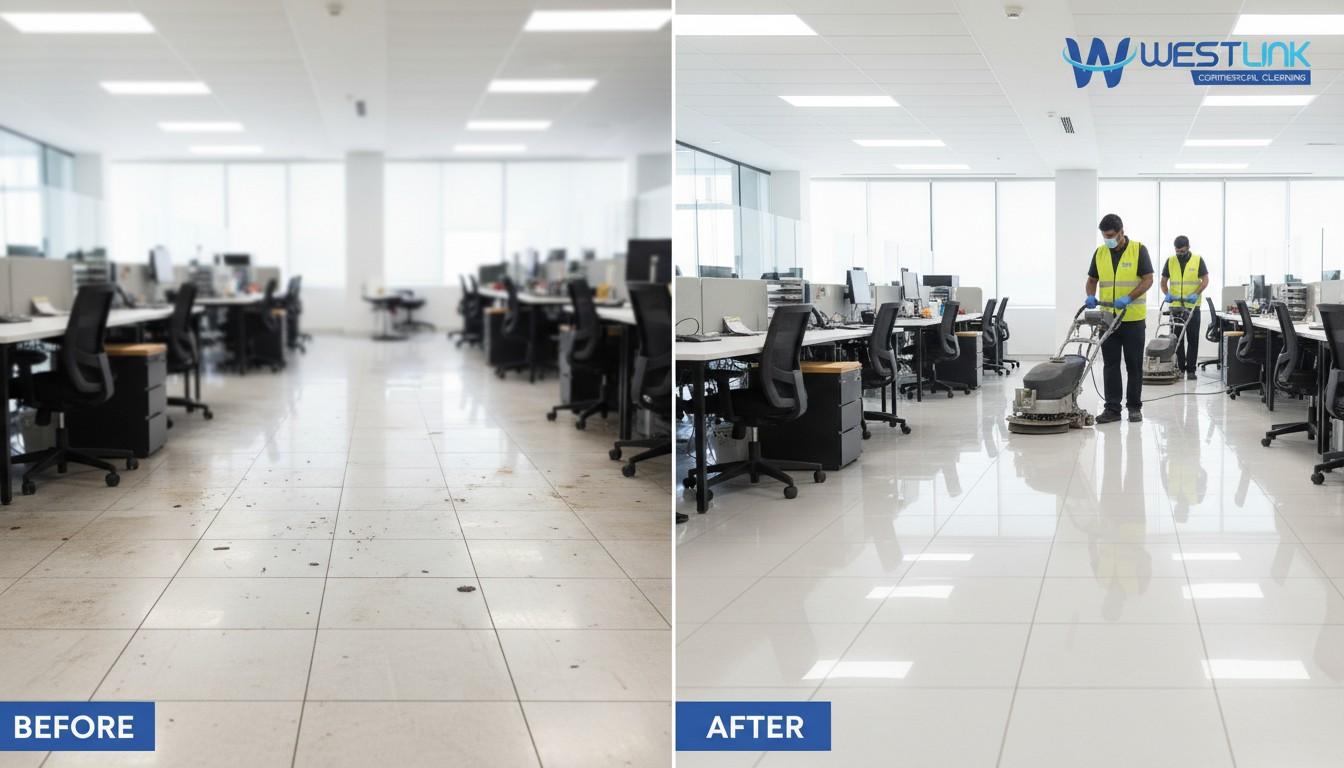
A 10-minute Tile Floor check that helps prevent damage
Before using any cleaner, the operator should do a quick check and write down what they see.
1) Tile type
- Ceramic or porcelain: usually tough and easy to clean.
- Quarry tile: often porous and can hold grease.
- Natural stone: more sensitive and needs gentler products.
2) Surface finish
- Polished or glossy: shows haze and tiny scratches easily.
- Matte: hides marks better and can handle more.
- Textured or non-slip: traps dirt in small holes.
3) Grout type and condition
- Cement grout: porous, so it can stain and turn dark.
- Epoxy grout: less porous, but film can still build up on edges.
4) Protection and wear
- Check if grout lines are sealed or not sealed.
- Look for worn walk paths where dirt builds up.
- Notice loose tiles, crumbling grout, or damp areas because these change the cleaning plan.
Test patch: Always clean a small hidden spot first. This helps avoid damage like dull patches, colour changes, or surface marks.
Understanding Soil Build-up on Tile Floors in Busy Places
Food courts
Food court floors often get a mix of grease, sweet drinks, and heavy foot traffic all day. Cleaning time is usually short, so quick mopping seems like the easiest choice. But light mopping can spread grease and make the whole floor look shiny and slippery. A better approach is to use a controlled degreaser, scrub the surface with a machine, pick up the dirty water, then rinse with clean water. This removes the grease instead of spreading it around in line with cleaning and sanitising practices for NSW food businesses.
Restaurants
Restaurant floors collect grease, food spills, and strong smells, especially near the kitchen doors and walkways. If a strong cleaner is used and not rinsed well, it can leave a sticky layer behind. That layer grabs more dirt fast and makes the floor feel tacky. The best way is to clean in zones, like the dining area and the kitchen area, because they get different kinds of dirt. After cleaning, rinsing properly matters every time so no film is left behind.
Office lobbies and lift areas
Lobby and lift floors get grit from shoes, rainwater on wet days, and scuff marks from constant walking. These areas also need to look good because they are the first thing people see. If cleaning leaves a cloudy haze, the floor will look dull and dirty again quickly, especially in the main walking lanes. Strong dry-dirt control helps first, like sweeping or vacuuming before washing. Then a neutral cleaner can be used for regular washing, with periodic scrubbing focused on the busiest lanes to keep them from turning grey.
Safety Setup Before Wet Cleaning Tile Floors
Before wet cleaning starts, the area must be made safe for everyone. Commercial floors get busy fast, so one wet patch can cause a slip in seconds. A simple safety setup keeps people protected and helps the job run smoothly.
- Block off the area: Use cones, barriers, and wet floor signs. This stops people from slipping and keeps foot traffic away.
- Keep air and walkways clear: Make sure doors and exits stay open. Place cords and hoses along walls so no one trips.
- Handle chemicals the safe way: Read the label first. Wear the right safety gear, like gloves and eye protection. Keep chemicals in closed containers and store them safely.
- Only reopen when it’s truly safe: The floor must feel dry when touched. Walk on it to check if it is not slippery.
Note: Safety is not the last step. It is the first step that protects people and lowers risk.
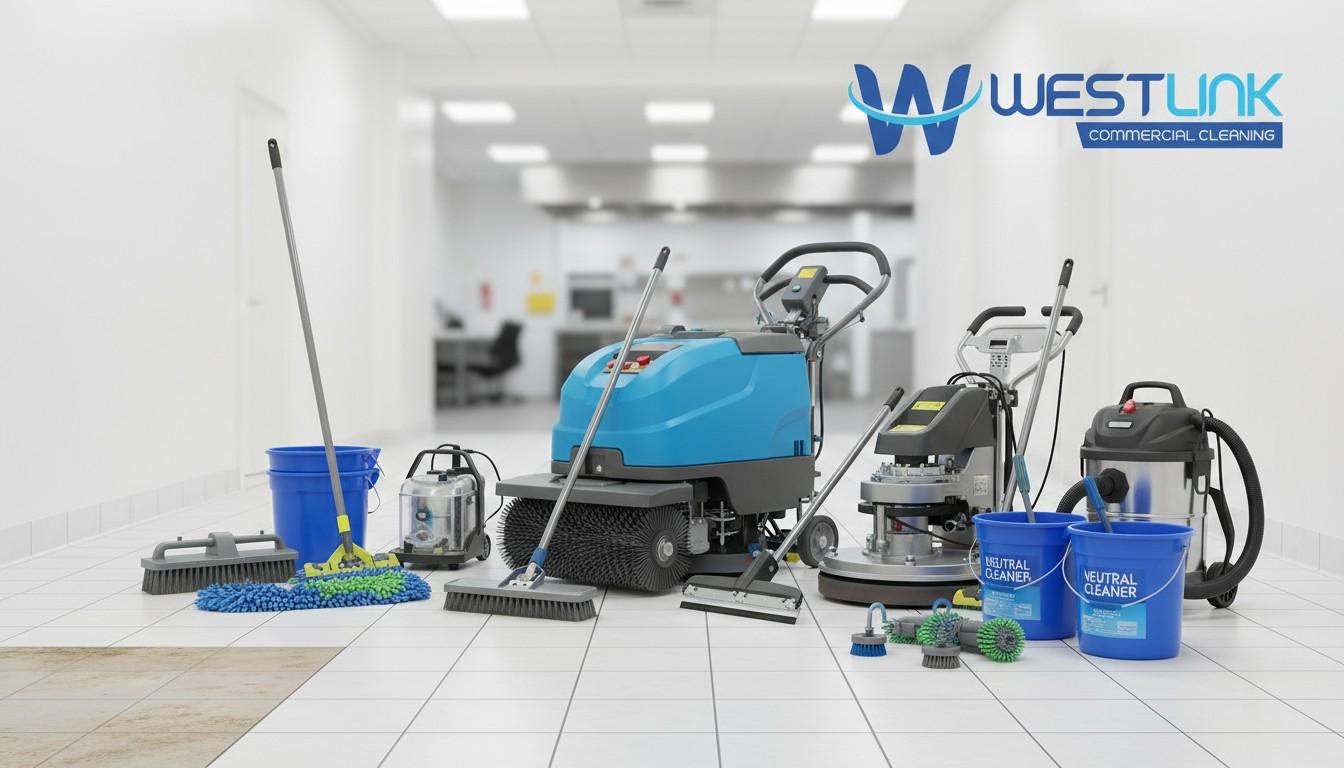
Equipment Selection for Tile Floor Cleaning: Pick Tools by Area Size, Tile Finish and Dirt Level
When cleaning tile floors, your tools should match the real job site. Choose equipment based on how big the area is, how delicate the tile finish is, and how heavy the dirt is.
- Small areas and tight spaces: In small rooms and narrow spots, you need tools that can reach edges and corners. Use hand brushes for tile floor edges, corners, and around toilets, sinks, and other fixtures. For bathrooms and tight corridors, a compact scrubber works well because it can scrub and pick up dirty water without making a mess.
- Large open areas: For wide tile floor spaces, use machines that clean evenly and remove dirty water at the same time. An autoscrubber is best for a consistent wash and strong recovery. If the tile floor needs a deeper “restore” pass, a rotary or swing machine can help, but only when you use the correct pad or brush for that tile finish.
- Textured or non-slip tile floors: Textured tile floors hold dirt inside the small grooves. Flat pads often miss those low areas. Use bristle brushes that can reach into the texture so you can clean the whole surface, not just the top.
- Grease-heavy tile floor zones: Kitchens, food areas, and entry paths often have greasy buildup. These areas need degreasing chemistry, strong scrubbing, and good recovery. After that, rinse more than once, because grease zones almost always leave residue if you rinse only one time.
- Key point: Equipment is not just about cleaning faster. The right tile floor tools help you clean the same way every time, remove dirty water properly, and reduce residue that can cause sticky floors or haze later.
Daily or Shift Tile Floor Cleaning Routine to Stop Dirt Before It Becomes Grout Stains
Grout stains often start as simple dirt that gets pushed into the lines. In busy places like food courts, restaurants, and office lobbies, floors collect dust, grease, and spills all day. A short routine each day or each shift keeps the tile looking clean and stops grime from building up.
Do a quick floor check first
Walk the area for 1–2 minutes. Look for spills, sticky spots, and heavy-traffic lanes. This helps you clean the worst areas first.
Remove dry dirt before using water
Sweep or dust mop the whole floor. Dirt acts like sand and scratches tile. If you mop while dirt is still there, it turns into muddy paste and settles into grout.
Spot-clean spills right away
Wipe spills as soon as you see them. Use a damp cloth or small mop for the spot. This stops stains from soaking into grout and keeps the floor safer to walk on.
Use the right cleaner for the mess
For greasy areas (like near kitchens), use a gentle degreasing cleaner that is safe for tile. For general dirt, use a neutral floor cleaner. Always follow the label and don’t mix chemicals.
Mop in small sections, not the whole floor at once
Mop one small area, then rinse or change the water when it looks dirty. Dirty water spreads grime and makes grout darker over time.
Scrub grout lines in high-traffic zones
Use a soft brush on the grout in the busiest paths. Even 2–3 minutes on key areas each shift helps prevent deep stains.
Rinse if the cleaner leaves residue
Some cleaners leave a film that attracts more dirt. If the floor feels sticky after drying, do a quick mop with clean water.
Dry the floor and control foot traffic
Use floor fans if available. Keep warning signs up until the surface is dry and not slippery.
End with a fast check
Look at the grout lines and corners. If a spot is still dark or sticky, clean it again before it becomes a stain.
This routine is short, but it works because it stops dirt early before it gets ground into the grout.
Weekly Tile Floor Maintenance Wash: An Anti-Residue Routine
Even if the tile looks clean each day, a thin layer of soap film and tracked-in grime can build up over the week. This leftover film is called residue. It makes floors look dull and helps dirt stick faster, especially in grout lines. A weekly wash removes that hidden layer so the floor stays brighter and easier to clean.
Do a quick walk-through and plan the work
Check corners, entryways, and heavy-traffic paths. Note any sticky spots, dark grout lines, or dull patches. Clean these areas first.
Dry-clean the whole floor first
Sweep or dust mop to remove loose dirt. If you skip this step, wet cleaning turns dirt into muddy paste that sinks into grout.
Mix a neutral cleaner the right way
Use a neutral pH tile-safe cleaner. Measure it as the label says. Too much cleaner is a big cause of residue, because extra soap dries on the floor.
Pre-treat greasy or sticky areas
On kitchen edges, food courts, and entryways, apply a small amount of cleaner and let it sit for a few minutes. This loosens grime so you don’t need harsh scrubbing.
Scrub the grout lines in problem zones
Use a soft brush or a deck brush. Focus on the busiest lanes and around tables, bins, and doors. This is where grout stains start.
Mop in small sections and keep the water clean
Work in small areas like “one room, corner at a time.” Change the mop water when it looks dirty. Dirty water spreads residue and makes grout darker.
Rinse to remove leftover cleaner
Do a second pass with clean water. This step is the “anti-residue” part. If the floor is not rinsed, the cleaner can dry as a film and pull in more dirt later.
Dry the surface fast and safely
Use floor fans or ensure good airflow. Keep wet floor signs up until the floor is dry to the touch and not slippery.
Finish with a simple check
Run your hand over a small area when dry. If it feels sticky or looks hazy, there is still residue. Re-rinse that section with clean water.
This weekly routine keeps tile from turning dull and keeps grout lines from getting stained. It also makes daily cleaning quicker because dirt has less to cling to.
Deep Clean SOP: Restore Tile Floors, Don’t Just Scrub Harder
A deep clean for tile floors should follow a clear process. Don’t rush. Work in small sections so you can control the results.
The reliable deep-clean sequence for tile floors
Pre-check the tile floor + do a test patch
Look for stains, dull areas, and damaged grout. Test your cleaner on a small spot first.
Dry vacuum and detail the edges
Remove dry dust and grit. Clean along walls and corners so dirt doesn’t spread later.
Apply the cleaning solution and wait (dwell time)
Spread the solution evenly on the tile floor. Let it sit for a few minutes so it can loosen soil.
Scrub with the right tool for the tile floor
Use a brush or pad that matches the tile and grout. Scrub evenly, not aggressively.
Pick up the dirty liquid (recovery)
Use a wet vacuum or machine to remove the dirty solution from the tile floor right away.
Rinse well (usually more than once)
Rinse the tile floor with clean water. In greasy areas, one rinse is almost never enough.
Detail edges and corners again
Dirt hides at the edges. Wipe and rinse those areas so they match the rest of the tile floor.
Dry the tile floor and inspect with an angled light
Dry the surface. Shine light at an angle to spot haze, streaks, or leftover residue.
Fix problems immediately
If you see haze or sticky spots, re-clean that area before it fully dries.
Why rinsing and recovery matter on tile floors
If you deep clean a tile floor but don’t recover and rinse well, the cleaner and dirt can stay behind. That leftover film often dries into a dull haze and can show up again within a few days.
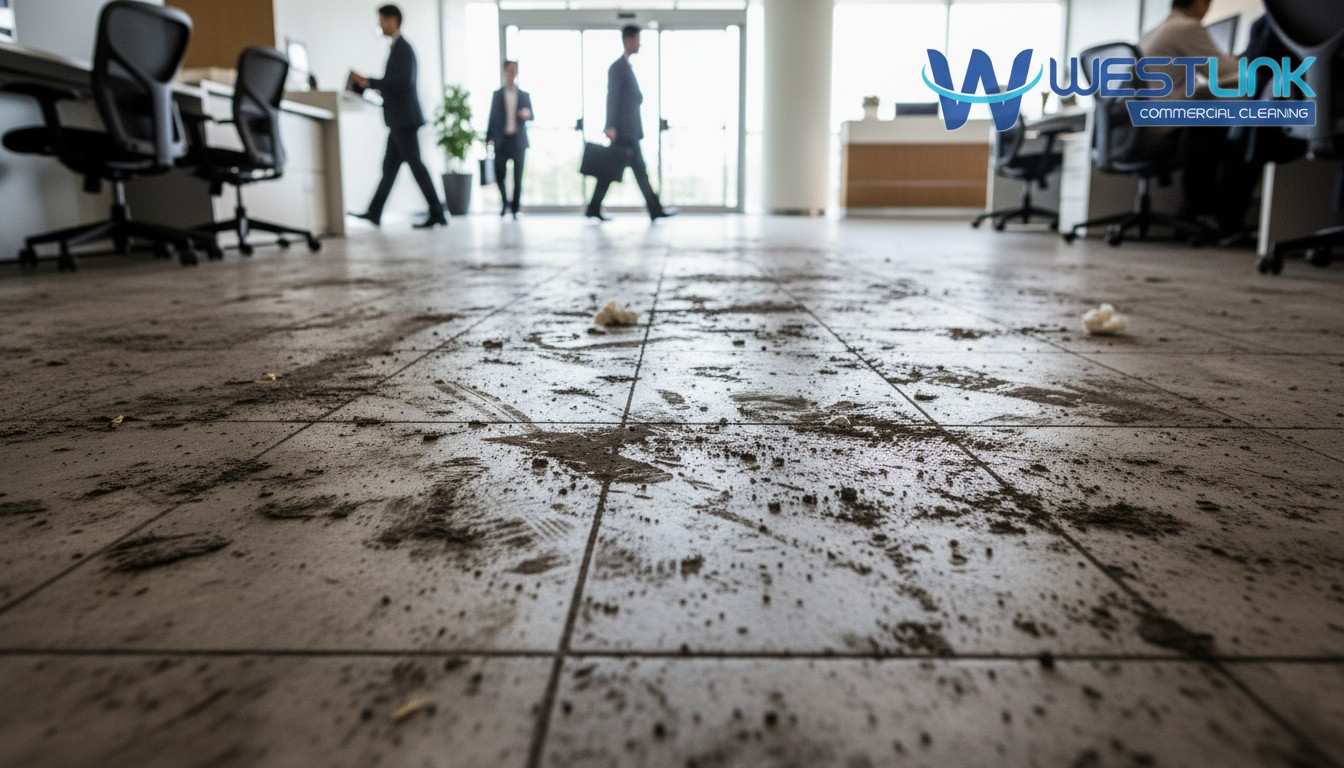
Common Tile Floor Cleaning Problems and How to Fix Them
Below are some common mistakes explained clearly with proper solutions.
Mistake 1: Using too much cleaner on tile floors
Many people think more cleaner means a cleaner tile floor, but it often does the opposite. Extra cleaner dries into a sticky layer that traps dust and makes the tile floor look dull. The fix is to use a neutral tile cleaner and follow the correct dilution on the label. After scrubbing, always rinse with clean water and remove the dirty water with a wet vacuum so no residue stays behind.
Mistake 2: Skipping the rinse step
If you mop and walk away without rinsing, the leftover cleaner stays on the tile floor. This can cause sticky tiles, slippery spots, and a cloudy film. The fix is to rinse the tile floor with clean water, and in greasy areas, rinse more than once. Use fresh water each time, because dirty rinse water spreads residue instead of removing it.
Mistake 3: Letting dirty water air-dry on the tile floor
When dirty water dries on tiles, it leaves behind soil and cleaner, which turns into haze and streaks. The fix is to recover the dirty water right after scrubbing. A wet vacuum or floor scrubber with recovery works best. If you don’t have a machine, use clean towels to soak up the dirty water before it dries.
Mistake 4: Not removing dry dust and grit before wet cleaning
If you start mopping without vacuuming first, the grit turns into mud and gets pushed into grout lines. This makes grout look darker and patchy. The fix is to dry vacuum or sweep the tile floor well, including edges and corners, before using any liquid. This one step makes your wet cleaning much more effective.
Mistake 5: Using the wrong brush or pad for the tile floor
A tool that is too soft won’t clean grout, and a tool that is too harsh can scratch some tile finishes. The fix is to match the brush or pad to your tile type and grout depth. Scrub with steady pressure, not aggressive force, and always test in a small area first to avoid damage.
Mistake 6: Rushing the cleaner instead of giving it dwell time
Cleaner needs time to break down grease and soil. If you scrub right away, you work harder and still leave dirt behind. The fix is to apply the solution evenly and let it sit for a few minutes (without letting it dry). Then scrub, recover the dirty water, and rinse well.
Mistake 7: Ignoring grout lines and edges
Tile floors often look “clean” in the middle but still look dirty because grout lines, corners, and edges hold the most buildup. The fix is to detail edges and corners both before and after scrubbing. Use a small brush for grout lines, then rinse and dry those areas so they match the rest of the tile floor.
Mistake 8: Not checking the tile floor under good light
Haze and streaks can hide until the floor dries or light hits it from an angle. The fix is to inspect the tile floor after drying using an angled light (like a flashlight or side light). If you see haze, rewash that small area, rinse again, and dry it right away.
Drying and Odour Control for Tile Floors: Stop Slips and Stop Re-Soiling
Slow drying on a tile floor causes two big problems. It makes the floor more slippery, and it lets new dirt stick to the wet surface. A damp tile floor also shows marks faster, so it looks dirty again too soon.
Practical controls: Start drying the hardest spots first, like corners, edges, doorways, and floor transitions. Use airflow from fans or open ventilation so these areas don’t stay wet for long. Try not to reopen a damp tile floor during busy foot-traffic times, because footsteps push dirt into grout lines and leave stains.
When odour stays: If a bad smell stays after cleaning, it usually means soil is trapped inside grout, or the tile floor is being over-wet too often. Too much water can keep grout damp and hold dirt inside it.
Fast, controlled drying helps the tile floor stay clean-looking for longer. It also lowers slip risk and reduces dark grout lines that keep coming back.
Protection and Sealing for Tile Floors: When It Helps and When It Wastes Money
Sealing and protective treatments can help tile floors by reducing stains and making regular cleaning easier. But they only work well when you apply them at the right time and keep them with the right care of them. If you seal a dirty or damp tile floor, you can lock in soil and end up wasting money.
When protection helps: Sealing is most useful when grout is porous, especially in food areas where spills happen often. It also helps in high-stain zones like entrances, drink stations, and kitchen transition areas where dirt, oils, and liquids hit the tile floor again and again.
Non-negotiables: The tile floor and grout must be fully clean and fully dry before sealing. If not, the sealant may not bond properly and can trap residue. After sealing, your routine cleaning products must match the protection layer. Harsh chemicals can break down the protective coating quickly, which makes the tile floor look worse over time.
Sealing is a support tool for tile floors. It does not replace good dry soil removal, proper scrubbing, strong recovery, and thorough rinsing.
Practical frequency model by venue
Food courts
- Daily soil control + spill response
- Weekly maintenance wash with rinse discipline
- Periodic restoration focused on grease build-up zones
Restaurants
- Zone-based plan (kitchen-adjacent vs dining)
- Weekly scrub focus at transitions
- Periodic grout restoration where staining appears
Office lobbies
- Strong daily dry-soil control
- Weekly lane-focused wash and rinse pass
- Periodic traffic lane restoration to prevent dulling
A simple log noting date, area cleaned, method, and issues found prevents “mystery failures” and keeps outcomes consistent across teams.
Long-Term Tile Floor Prevention Tips for Floor Cleaning
Keep tile floors looking clean by focusing on prevention, not just scrubbing. Increase dry vacuuming during dusty or rainy months so grit doesn’t get ground into grout lines. Place mats at entry points and shake or clean them often, because mats only work when they’re not full of dirt. Use colour-coded mops, pads, and brushes so tools from one area don’t spread soil into another.
Stick to a simple schedule that includes daily dry soil removal, regular rinsing to prevent residue, and a weekly anti-residue wash in heavy-use zones. Watch for early warning signs like dull patches, sticky feel, slippery spots, or grout that darkens again quickly. Log what was cleaned, what chemical was used, and any problem areas, so the next clean is consistent and not based on guesswork. When the tile floor starts losing its look even after proper cleaning, plan a deeper clean with a strong recovery before the buildup becomes permanent.
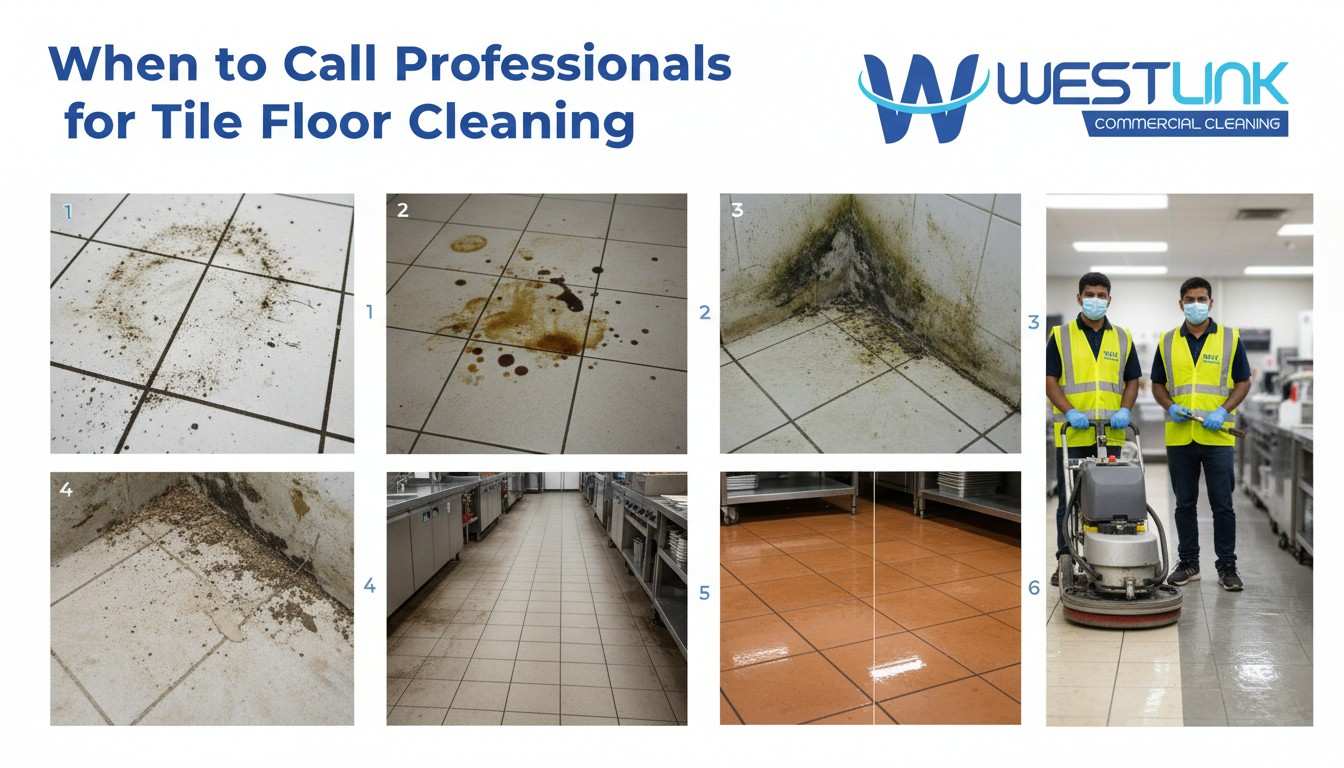
When to Call Professionals For Tile Floor
Now the questions come to mind when to call a pro for tile floor cleaning? Call professionals like Westlink Commercial Cleaning for tile floors. When you note problems don’t go away after correct cleaning. If tiles stay sticky, cloudy, or slippery even after good rinsing and dirty-water recovery, it usually means heavy residue or deep soil. Get help when grout stays dark, smells don’t clear, or moisture seems trapped in the joints. It’s also smart to call pros for large areas, heavy dirt zones, or when slip risk and uneven results are a concern. A scheduled “reset” deep clean is best when floors haven’t been properly deep cleaned in a long time, because pros have the right machines, brushes, pads, and recovery to remove buildup and restore the surface.
See Our Related More Blogs on
Final Thoughts
So the question about how to clean tile floors is clear in the above explanation. But note clean tile floors in any commercial spaces aren’t about scrubbing harder or using stronger chemicals, they’re about using the right process every time. When dry soil is removed first, cleaners are used correctly, dirty water is fully recovered, and rinsing is never skipped, tile and grout stay brighter, safer, and easier to maintain. Consistency beats intensity. Follow a repeatable system, adjust it to the tile type and traffic level, and you’ll prevent haze, sticky residue, dark grout lines, and early wear while keeping floors clean longer and safer for everyone who walks on them.
Frequently Asked Questions
What is the best way to clean commercial tile floors?
The best method is a controlled routine: dry dust-mop or vacuum first, then scrub with a pH-neutral tile cleaner using an auto-scrubber or rotary machine, and finish with a clean rinse. This removes grit that causes scratches and prevents sticky detergent residue. Prioritise edges and grout lines because that’s where soil packs in. Fast drying reduces slip risk and stops quick re-soiling.
What do professionals use to clean tile?
Professionals typically use a commercial auto-scrubber or rotary scrubber, a pH-neutral or low-alkaline cleaner, microfiber pads/brushes matched to the tile texture, and a wet vac for recovery. For grout, they may use targeted agitation (grout brushes) and periodic deep-clean chemistry. The key difference is controlled dilution, proper dwell time, and thorough rinse extraction. This prevents haze, dullness, and recurring dark grout.
Can floor tiles be professionally cleaned?
Yes, most tile floors can be professionally cleaned, including ceramic, porcelain, and many natural stone tiles (with the right process). A pro service deep-scrubs the surface texture and grout, then rinses and extracts dirty solution so it doesn’t dry back onto the floor. They also assess tile type, finish, and traffic conditions first. This ensures the method won’t etch, scratch, or leave residue.
Is it worth it to have tile professionally cleaned?
It’s usually worth it when grout is dark, the floor looks dull after mopping, there’s sticky build-up, or slip risk is increasing. Professional deep cleaning restores appearance, improves hygiene, and can extend floor life by reducing abrasive soil and chemical damage. It also saves staff time and reduces repeat-cleaning cycles. Many sites use routine in-house cleaning plus scheduled deep cleans for best value.
How do you clean vinyl tile floors?
Start by dry vacuuming/dust-mopping to remove grit, then damp-scrub with a vinyl-safe neutral cleaner—avoid harsh degreasers unless the manufacturer allows them. Use soft pads/brushes to prevent scuffing and finish with a clean-water rinse to stop residue and streaks. Keep water use controlled because over-wetting can weaken adhesives at seams. If the finish is worn, consider professional scrub-and-recoat rather than stronger chemicals.
Why do my tile floors still look dirty after mopping?
This usually happens because detergent residue is left behind or soil is being pushed around instead of removed. Use proper dilution, scrub with agitation, and rinse with clean water, then extract or mop-dry. Also change water frequently—dirty water redeposits film. A periodic deep clean may be needed to reset the surface.
How often should commercial tile floors be deep cleaned?
High-traffic areas often benefit from deep cleaning every 3–6 months, while lower-traffic spaces may need it every 6–12 months. The right schedule depends on entry matting, soil type (grease vs dust), and cleaning consistency. If grout stays dark or floors dull quickly, increase frequency. A site walk-through can set the correct cycle.
What’s the safest cleaner for tile and grout in busy facilities?
A pH-neutral cleaner is the safest everyday option for most ceramic/porcelain tile and many grouts. For heavy soil, a low-alkaline cleaner can be used occasionally with a full rinse. Avoid acids and bleach mixes because they can damage grout and create fumes. Always follow manufacturer guidance and SDS for safety.
Can steam cleaning damage tile or grout?
Steam can be effective, but it can also force moisture into grout lines and weaken some sealers or adhesives if overused. It’s best for targeted sanitation, not as the only maintenance method. Use controlled passes and ensure fast drying. For large commercial areas, scrub-and-extract is often more consistent.
How do you remove black grout lines or dark grout staining?
Dark grout lines are often trapped soil, detergent build-up, or moisture-related contamination. A professional deep scrub with the right grout-safe chemistry and strong agitation usually lifts it, followed by thorough rinse extraction. If staining returns quickly, check for over-wetting, poor rinsing, or entry soil control. In some cases, re-sealing after a full dry-out helps.