Linoleum flooring remains one of the best choices for many commercial properties across Sydney. It offers a clean, professional appearance, feels comfortable underfoot, and stands up well to heavy foot traffic when properly maintained. That’s why it’s commonly found in hospitals, schools, offices, retail stores, and shared commercial spaces.
However, linoleum floors can wear out faster than expected when the wrong cleaning methods are used. Dirt buildup, scuff marks, stains, and harsh chemicals can all damage the surface and reduce its lifespan. In most cases, the issue isn’t the flooring itself it’s the maintenance approach. A proper lino floor care plan protects the surface, improves safety, and helps maintain a polished, professional look while making cleaning routines more efficient.
In this guide, you’ll learn what linoleum flooring is, how it differs from other resilient floors like vinyl, and why correct floor identification is essential before cleaning. We’ll also cover common causes of early wear, the safest tools and products to use, and the best methods for both routine cleaning and deeper maintenance across different commercial environments.
More Floor Cleaning Guides
- Wood Floor Cleaning Tips
- Hybrid Flooring Maintenance Guide
- Bamboo Floor Cleaning Guide
- Tile Floor Cleaning Guide
- Streak-Free Laminate Cleaning Guide
What Is Linoleum Flooring?
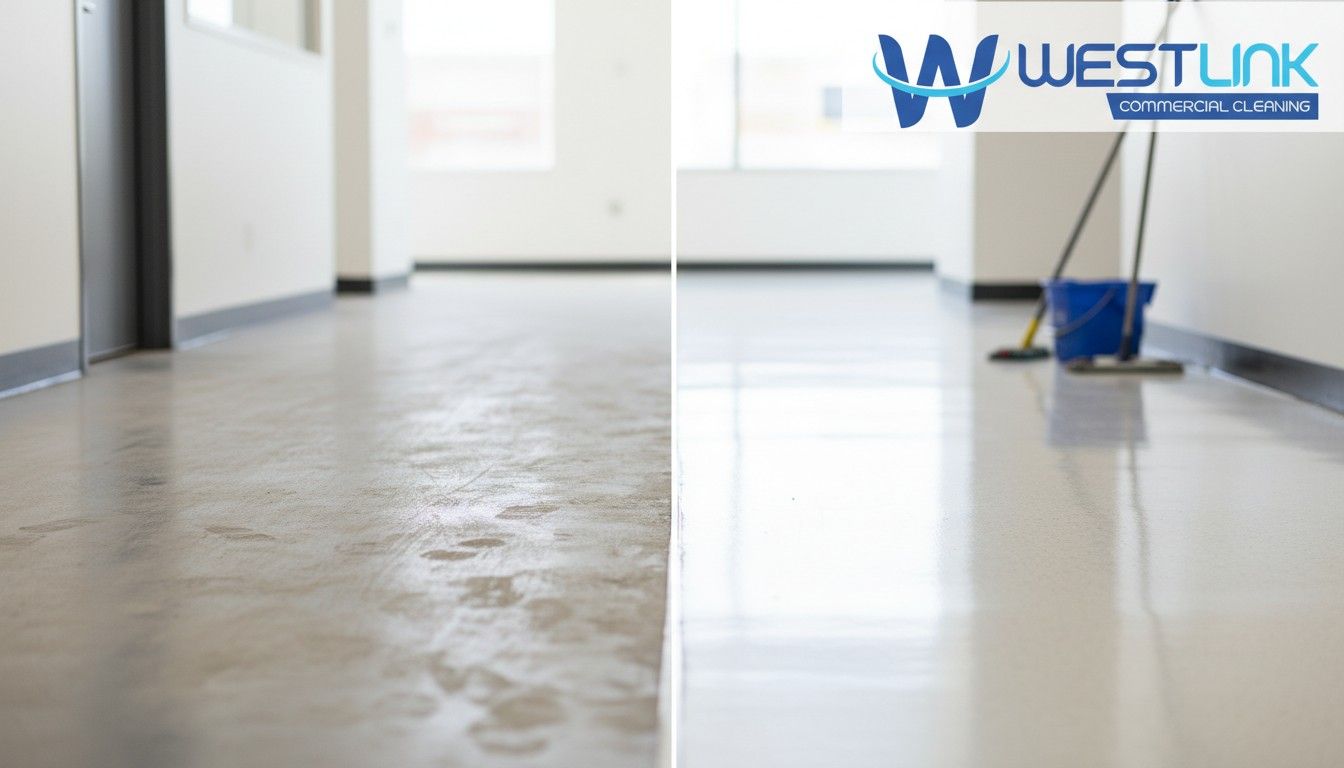
Linoleum is a long-lasting, environmentally friendly flooring material made from natural ingredients such as linseed oil, pine resin, wood flour, cork dust, natural pigments, and a jute backing. Unlike many synthetic flooring options, linoleum is produced from renewable materials and is valued for its durability, low environmental impact, and timeless appearance. For Sydney homes and commercial spaces, it offers a practical flooring solution that combines performance, comfort, and sustainability. With proper care, linoleum can last anywhere from 20 to 40 years or even longer.
Key Characteristics and Benefits
Naturally Cleaner Composition
Linoleum is made from mostly natural ingredients that don’t rely on heavy petroleum-based plastics. For Sydney property owners who prefer a cleaner, lower-chemical indoor environment, this can be an appealing flooring choice.
Hygienic Performance in Daily Use
Linoleum supports a cleaner home or workplace because it is naturally anti-static and helps reduce the buildup of dust and fine particles. It is also resistant to bacterial growth, which can be useful in kitchens, schools, clinics, and allergy-sensitive spaces.
Stain and Mark Practicality
Built for everyday life, linoleum holds up well in busy areas. Because the colour runs through the material, minor scuffs and surface marks can be less visually obvious—helping floors look cleaner between deep cleans.
Ease of Routine Cleaning
Linoleum is generally easy to keep tidy with consistent sweeping or vacuuming (hard-floor setting) and occasional damp mopping. Linoleum is easy to clean and slip-resistant types are available for safety, as noted in Queensland WorkSafe guidelines on flooring characteristics and applications. Using a pH-neutral cleaner helps remove grime without dulling the finish.
Gentler Cleaning Requirements
To protect the surface and keep it looking fresh, avoid harsh chemicals, abrasive scrubbers, and over-wetting. Excess moisture can damage the finish over time, so quick drying and minimal water use are best practice.
Linoleum Floors Difference from Vinyl (Cleaning & Maintenance Comparison)
Linoleum and vinyl are often grouped together, but they behave differently when cleaned. Vinyl can be more forgiving with moisture and may require less ongoing care. Linoleum, however, rewards gentle, consistent cleaning especially when Sydney property owners want a floor that supports a cleaner-feeling indoor space with a more natural material profile.
Protective Care and Long-Term Cleanliness
In some settings, sealing may be recommended to help protect the surface, reduce staining, and make ongoing cleaning easier particularly in high-traffic households and commercial areas.
Different Types of Linoleum Flooring for Sydney Commercial Spaces
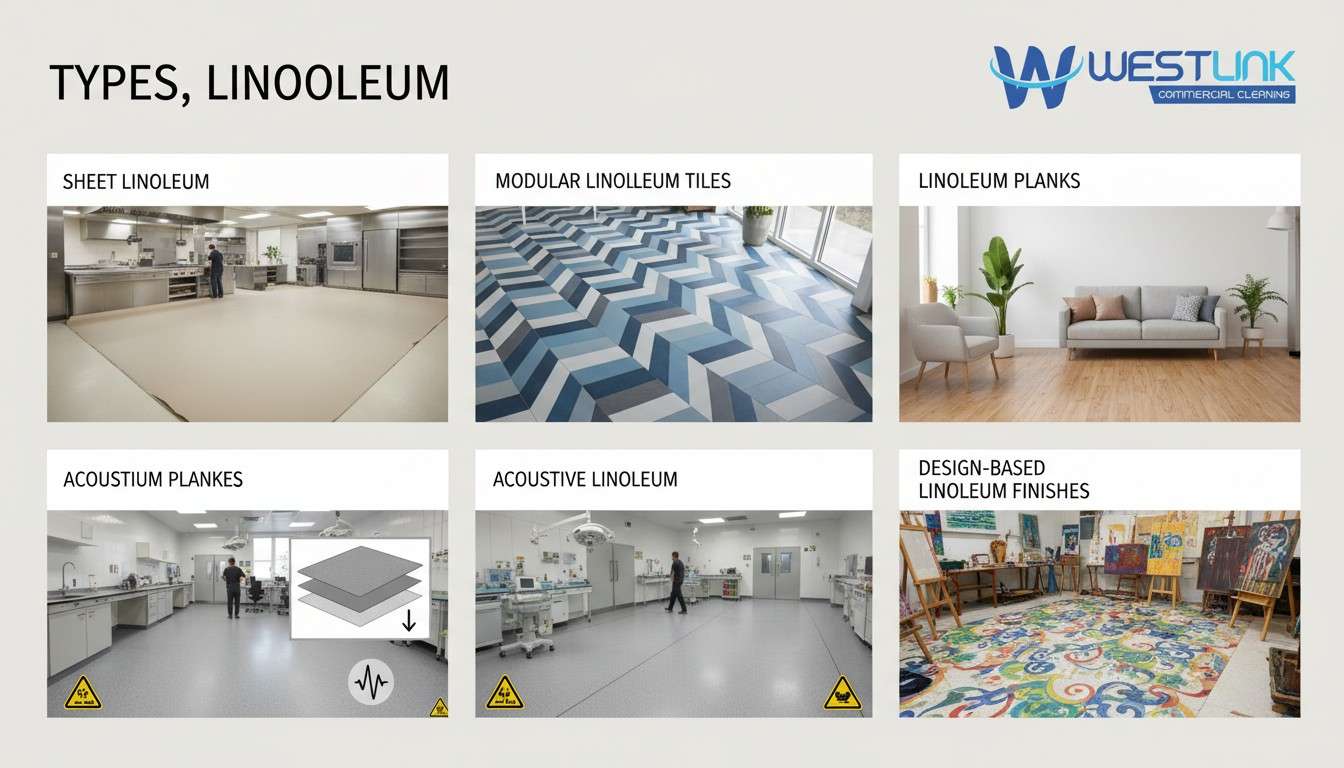
In Sydney commercial fit-outs, the most relevant types of linoleum flooring are sheet linoleum, modular linoleum tiles, linoleum planks, acoustic linoleum, and conductive linoleum. These categories are all represented within Australia’s commercial Marmoleum offering, and Sydney commercial flooring contractors also list Marmoleum and linoleum for offices, hospitals, schools, childcare settings, and other business premises.
1. Sheet Linoleum
Sheet linoleum is the traditional roll format and remains one of the most practical choices for commercial interiors that need a clean, continuous finish. Because sheet flooring has fewer joins, it can be easier to clean and maintain, which makes it a smart option for busy Sydney workplaces where hygiene and durability matter.
2. Modular Linoleum Tiles
Linoleum tiles are ideal for commercial spaces that need more design flexibility. In Australia, Marmoleum Modular tiles are promoted for commercial use across education, healthcare, offices, and public spaces, and they support zoning, wayfinding, and custom floor layouts. This makes them especially suitable for Sydney offices, showrooms, schools, and collaborative interiors.
3. Linoleum Planks
Linoleum planks offer the same natural flooring concept in a more contemporary format. Marmoleum Modular planks are available with wood, concrete, stone, and marble-inspired visuals, giving commercial interiors a more design-led appearance. For projects aiming for a warmer or more architectural finish, planks can work particularly well in offices, retail spaces, and reception areas.
4. Acoustic Linoleum
Acoustic linoleum is designed for spaces where sound control is important. Forbo’s Australian range includes Marmoleum Decibel, which offers impact sound reduction of 18 dB, and Marmoleum Acoustic, which offers up to 14 dB. These options are well suited to commercial environments where reducing footfall noise can improve comfort and usability.
5. Conductive Linoleum
Conductive linoleum is a specialised option used in commercial areas that require static control. Marmoleum Ohmex is designed for spaces with sensitive electronic equipment, including computer rooms and server rooms, and is made to meet higher electrical conductivity requirements. For Sydney businesses with tech-heavy workspaces, this is the most purpose-built linoleum category.
6. Design-Based Linoleum Finishes
Commercial linoleum can also be divided by visual style. Marmoleum Solid includes textures such as Cocoa, Walton, Concrete, and Piano, while Marmoleum Marbled includes patterns like Real, Fresco, Vivace, Splash, and Terra.
Important Note for Sydney Commercial Areas
Not every commercial zone should use linoleum. In wet or greasy back-of-house spaces such as commercial kitchens, manufacturers typically recommend slip-resistant safety flooring instead. In Forbo’s Australian commercial range, that category is safety vinyl rather than linoleum.
Why Floor Identification Matters Before Any Cleaning Starts
Many people call all resilient floors “lino”, but that is not always correct. True linoleum is different from vinyl. Each surface reacts in its own way to water, chemicals, pads and machines. When a cleaner treats one like the other, the floor can become dull, sticky or damaged.
That is why good floor care starts with correct identification. A trained cleaner checks the material, surface finish, age of the floor, traffic level and current condition before selecting any product or method.
This first step prevents common mistakes such as:
- using harsh chemicals on a sensitive finish
- over-wetting seams and edges
- applying polish where it is not needed
- scrubbing too hard with the wrong pad
- leaving residue that attracts more dirt
When a team knows exactly what sits underfoot, the entire maintenance plan becomes safer and more effective.
What Causes Commercial Linoleum Floors to Look Worn Too Early?
Commercial linoleum floors are made to last a long time. Many offices, schools, and hospitals use them because they are strong and reliable. But sometimes these floors start to look old sooner than expected. Most of the time, the problem is not the linoleum itself. The real causes are things like poor protection, wrong cleaning methods, too much moisture, heavy traffic, or mistakes during installation. If the floor is not cared for the right way, it can lose its clean and fresh look much earlier. Below are the some causes
Dirt and Grit Coming Inside
Dirt and small stones from outside are one of the main reasons linoleum floors wear out early. When people walk into a building, they bring dirt on their shoes. This dirt works like sandpaper. As people walk over it, the dirt scratches the floor and makes it look dull. If there are no entrance mats, much more dirt gets inside. Over time, this can make the floor look old even though it is still strong.
Using the Wrong Cleaning Products
Cleaning products also affect how long the floor keeps its good look. Some cleaners are too strong for linoleum. Harsh chemicals or rough scrubbing pads can damage the surface. When this happens, the finish on the floor starts to fade or wear away. The floor may then look scratched, dull, or uneven. Do not use bleach on linoleum; use all-purpose cleaners or detergents instead, as advised in Red Cross Australia guidelines for post-emergency cleaning. Using gentle, neutral cleaners helps keep the floor looking better for longer.
Too Much Moisture
Too much water can also cause problems for linoleum floors. This can happen if the floor is cleaned with too much water or if moisture comes from underneath the floor. If the subfloor is damp, the adhesive may not work properly. Over time, this can cause the floor to weaken, lift, or change its appearance. Keeping the floor and the area underneath dry helps prevent these problems.
Dragging Furniture on the Floor
Furniture and equipment can damage linoleum if they are moved the wrong way. Chairs, desks, trolleys, and other items are often moved around in commercial spaces. If they are dragged across the floor, they can scratch or scuff the surface. Hard or rubber wheels can also leave marks. Using soft pads on furniture legs and proper wheels on chairs helps protect the floor.
Heavy Use Too Soon After Installation
After a new linoleum floor is installed, it needs time to settle. The adhesive under the floor must fully set before the area is used normally. If heavy foot traffic or rolling equipment is used too soon, the floor can move or become stressed. This can cause early wear and make the floor look damaged sooner than expected.
Not Cleaning Busy Areas Often Enough
Different parts of a building get different levels of traffic. Busy places like corridors, reception areas, and shared spaces are used all day. These areas need more frequent cleaning. If the cleaning schedule is too light, dirt builds up faster. This makes the floor look dirty and worn. A maintenance plan that matches the level of traffic helps keep the floor looking good.
Using Linoleum in the Wrong Area
Sometimes the floor wears out quickly because it was installed in the wrong place. Linoleum works well in many commercial spaces, but not every environment. Areas with constant water, heavy grease, or special safety needs may require different flooring. When linoleum is used in these harsher spaces, it may struggle to keep its appearance.
When commercial linoleum floors start to look worn early, the cause is usually preventable. Dirt at entrances, harsh cleaners, too much moisture, furniture damage, early heavy use, weak cleaning routines, or choosing the wrong flooring for the area can all lead to faster wear.
When these problems are managed properly, linoleum floors can stay clean, fresh, and professional-looking for many years.
Tools and Products Needed for Linoleum Floor Cleaning
Maintaining linoleum floors in commercial environments requires careful cleaning methods because linoleum is made from natural materials such as linseed oil, cork dust, wood flour, and resins. These materials make the flooring durable but also sensitive to strong chemicals, excessive moisture, and abrasive cleaning tools.
Using pH-neutral cleaning solutions, microfiber systems, and professional floor cleaning equipment helps preserve the floor’s finish while preventing discoloration, dullness, or premature wear. Below are the essential products, professional tools, and protective items used in linoleum floor maintenance.Essential Cleaning Products
pH-Neutral Floor Cleaner
A pH-neutral detergent (pH 6–8) is the safest option for routine cleaning because it removes dirt without damaging the natural composition of linoleum.
Benefits
- Prevents discoloration and chemical damage
- Safe for daily cleaning
- Leaves no sticky residue
Examples
- Bona Hard Surface Floor Cleaner
- Diversey Neutral Floor Cleaner
- Enzyme Wizard No-Rinse Floor Cleaner
Floor Maintainer / Gloss Restorer
Floor maintainers are used during periodic cleaning to restore shine, reduce scuff marks, and extend the life of the protective finish.
Benefits
- Restores floor appearance
- Helps protect against traffic wear
- Reduces the need for frequent refinishing
Examples
- Diversey Revive Floor Maintainer
- Whiteley Rejuven8 Floor Maintainer
Protective Floor Polish or Finish
Commercial linoleum floors often require a high-quality acrylic floor finish to provide a protective barrier against heavy foot traffic.
Benefits
- Improves durability
- Enhances floor shine
- Makes routine cleaning easier
Example
- Blockbuster High Gloss Floor Sealer & Finish
Light Degreaser (For Kitchens & Food Areas)
In areas such as commercial kitchens, cafeterias, or food courts, grease buildup can occur. A mild degreaser formulated for resilient floors helps break down oils without damaging the surface.
Neutralizing Rinse
When floors are stripped or deep-cleaned, a neutralizing solution restores the floor’s pH balance and prevents residue from affecting new finishes.
Essential Cleaning Tools
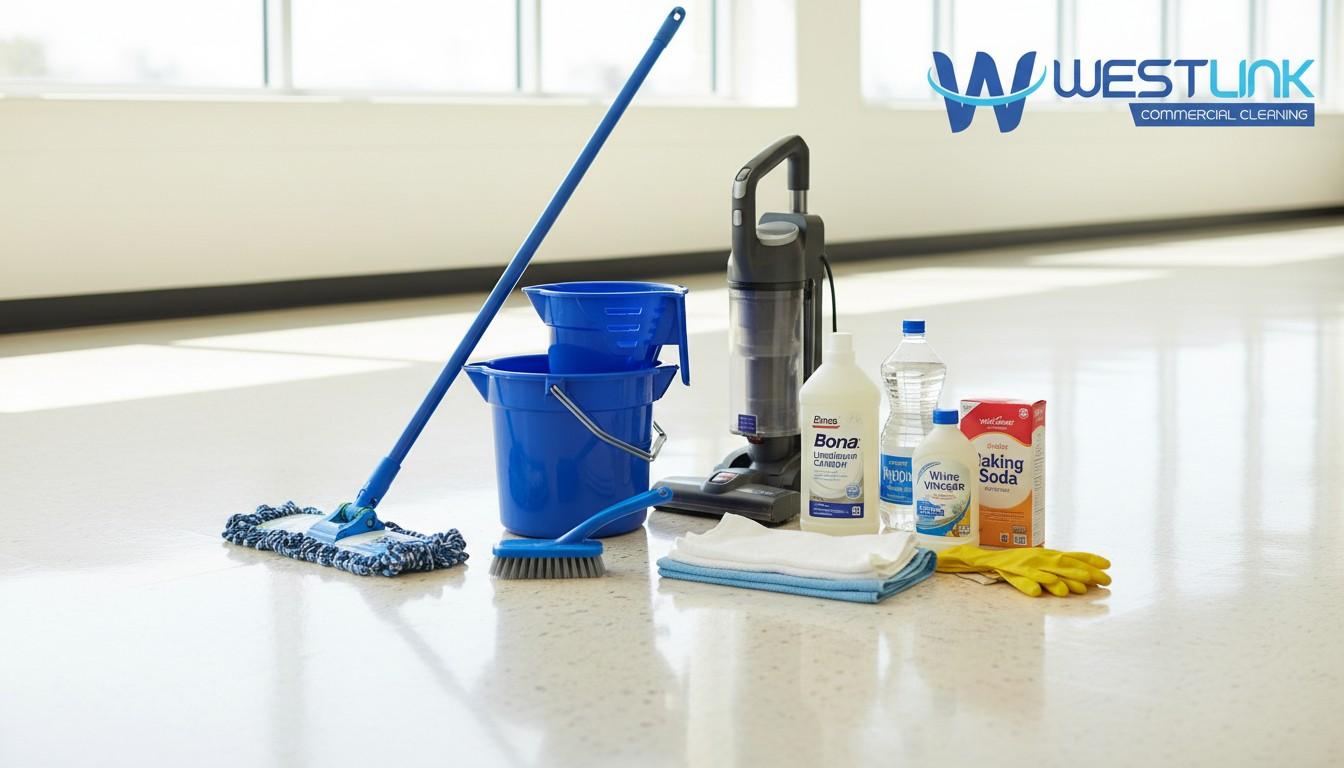
Microfiber Flat Mop System
Microfiber mops are widely used in commercial cleaning because they trap dirt effectively while using less water, which protects linoleum from moisture damage.
Advantages
- Uses less cleaning solution
- Removes more bacteria and dust
- Prevents over-wetting
Examples
- Rubbermaid HYGEN Pulse Mop
- OXO Microfiber Floor Mop
- Professional spray mop systems
Automatic Floor Scrubber
Automatic scrubbers are essential for large commercial areas such as hospitals, malls, schools, and office buildings.
Key benefits
- Cleans and dries floors in one pass
- Reduces manual labor
- Improves cleaning consistency
Popular machines
- i-mop walk-behind scrubber
- Tennant auto scrubbers
- Nilfisk commercial scrubbers
Low-Speed Floor Scrubbing Machine
A 175–300 RPM floor machine is used for deep cleaning, light scrubbing, or preparing floors for refinishing.
These machines are usually used with:
- Red or white scrubbing pads
- Soft brushes for sensitive floors
Commercial Vacuum Cleaner
A hard-floor compatible vacuum removes dust, sand, and grit that can scratch linoleum surfaces.
Recommended features
- HEPA filtration
- Hard floor mode (no beater bar)
- Strong suction for debris removal
Microfiber Cleaning Pads and Cloths
Microfiber cloths are essential for spot cleaning spills, drying surfaces, and wiping edges or corners that mops cannot reach.
Soft-Bristled Scrub Brush
A manual scrub brush is useful for removing ground-in dirt, stains, or scuff marks without damaging the floor.
Color-Coded Cleaning Systems
Many commercial facilities use color-coded mops, buckets, and cloths to prevent cross-contamination.
Typical color system:
- Red – Restrooms
- Blue – General areas
- Green – Food preparation areas
- Yellow – Clinical or sanitation areas
Maintenance and Protective Items
Entrance Floor Mats
Entrance mats are one of the most effective ways to protect linoleum floors because they trap dirt, sand, and moisture before they reach the floor.
Benefits include:
- Reducing scratches from debris
- Preventing water damage
- Lowering cleaning frequency
Furniture Pads and Floor Protectors
Heavy furniture and equipment can cause scratches, dents, or pressure marks on linoleum floors. Rubber or felt protectors placed under furniture legs help prevent this damage.
Safety Equipment
Commercial cleaning should also include:
- Wet floor warning signs
- Gloves and protective gear
- Spill cleanup kits
These items improve worker safety and reduce slip hazards.
Summary of Best Practices for Linoleum Floor Care
Avoid excessive water
Linoleum absorbs moisture easily, so floors should always be cleaned with a damp mop rather than a wet mop, and dried quickly.
Avoid harsh chemicals
High-alkaline cleaners, bleach, and ammonia can damage linoleum and remove protective finishes.
Do not use steam mops
High heat and moisture may warp the floor or weaken adhesives.
Cleaning Process for Linoleum Floors in Commercial Property
Linoleum is a resilient flooring material made from natural ingredients such as oxidized linseed oil, cork or wood flour, pigments, mineral fillers, and a jute backing. Because of this composition, it should be cleaned with methods that protect it from harsh chemicals, excess moisture, and abrasion.
Daily Routine Maintenance
Start by sweeping, dust mopping, or vacuuming the floor to remove grit, dust, and loose debris. This is important because tracked-in soil can scratch the surface and make the floor look dull faster. Spills should be cleaned immediately with a damp microfiber cloth and a neutral pH cleaner to prevent staining and moisture from getting into seams.
Standard Mopping Process
Prepare a solution of warm water and a neutral pH floor cleaner. Mop the floor with a well-wrung microfiber mop so it is damp rather than dripping. In commercial settings, a two-bucket system works best because one bucket holds fresh solution while the other is used to rinse out dirty water, which helps prevent grime from being spread back across the floor. After cleaning, rinse with clean water if needed and dry the surface with a dry microfiber mop or towels so no standing water remains.Use neutral detergent diluted to the manufacturer’s specification for damp mopping hard floors including lino, applying the damp mop with overlapping strokes and changing the mop head when dry or soiled, according to NSW Health cleaning procedures for healthcare environments.
Deep Cleaning for Larger Commercial Areas
For large or high-traffic spaces, use a scrubber dryer or rotary floor machine running at about 150–300 rpm with a red pad or equivalent soft pad and a neutral pH cleaner. After scrubbing, remove the dirty solution with a wet vacuum, squeegee, or scrubber dryer pickup system, rinse if required, and allow the floor to dry completely before reopening the area to traffic.
Periodic Restoration and Appearance Maintenance
When the floor starts to lose its even appearance, periodic maintenance may include spray cleaning, spray buffing, or using a floor maintainer. Where a finish system is part of the facility’s maintenance plan, the floor may also be stripped and recoated as needed. However, this should not be presented as mandatory for every linoleum floor, because some modern linoleum products are designed to perform well with regular neutral-cleaner maintenance alone.
Important Things to Avoid
Do not use bleach, ammonia, strong alkaline cleaners, or abrasive pads, because these can damage the surface or dull the finish. Avoid steam mops because excess heat and moisture can affect the floor over time. Rubber- or latex-backed mats should also be avoided because they can cause permanent discoloration. Instead, use non-staining entrance mats and keep them clean to reduce soil and moisture entering the building.
Best-Practice Tip for Commercial Properties
A strong commercial maintenance plan should also include entrance matting, protective furniture rests, and routine soil removal, because prevention reduces wear and lowers long-term maintenance costs. Regular cleaning is always more effective and less expensive than occasional heavy restoration.
Professional Linoleum Floors Cleaning for Every Commercial Environment
Healthcare Facilities Need Safe and Reliable Linoleum Floors Cleaning
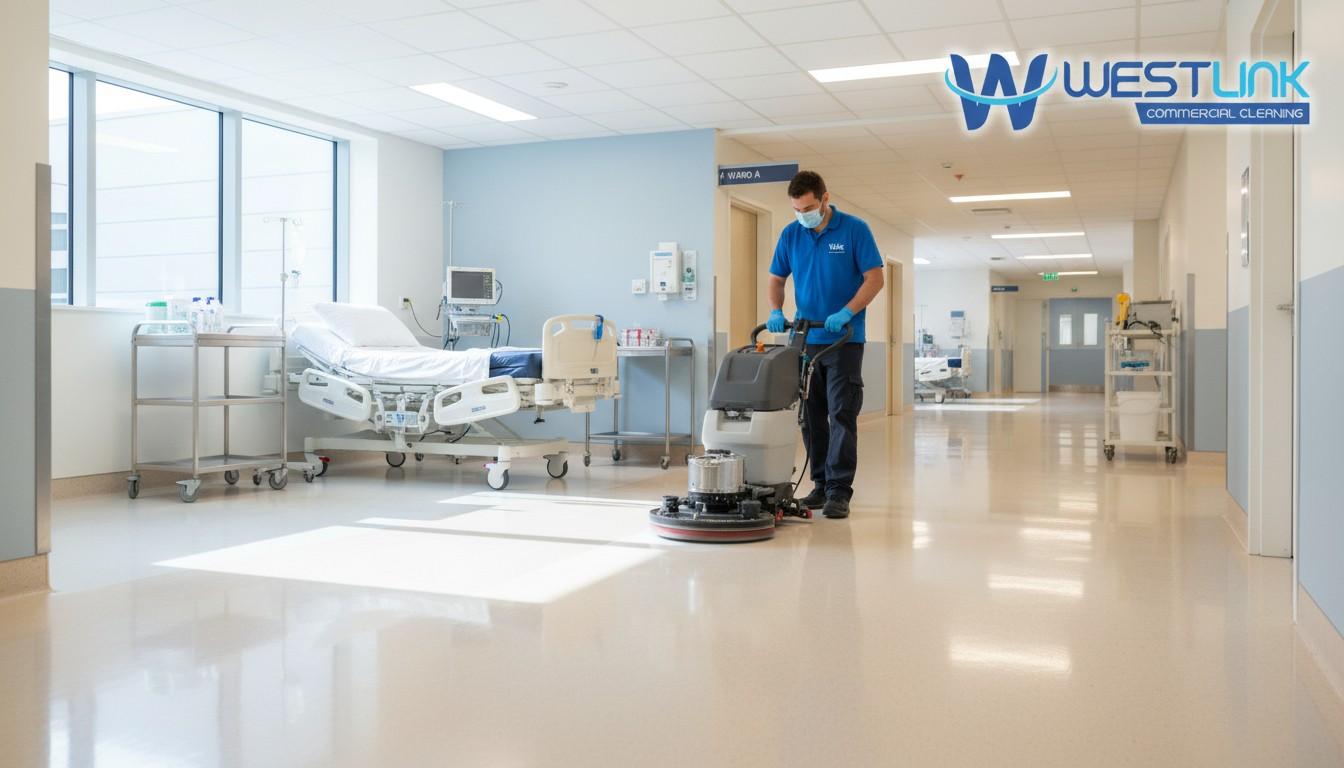
Hospitals, clinics, medical centres and aged care facilities place constant pressure on linoleum floors. These surfaces need to look clean, remain safe under foot traffic and rolling equipment, and help support a hygienic environment every day.
In healthcare settings, poor linoleum floors cleaning methods can create multiple problems at once. Wet floors can increase slip hazards. Strong chemical odours may disturb patients and staff. Dirt buildup in edges and corners can damage the appearance of the facility. Heavy trolley and wheelchair traffic can also leave dull pathways and speed up wear when the linoleum floor cleaning and maintenance plan is not strong enough.
Healthcare cleaning teams need a linoleum floor cleaning method that supports:
- fast spill response
- low-residue cleaning
- safe movement for staff, patients and visitors
- regular care in corridors and treatment areas
- quiet operation where possible
- detailed attention to entries, waiting rooms and nurse stations
Because many healthcare buildings operate 24/7, cleaning downtime is limited. That makes a structured linoleum floor cleaning schedule even more important. A clear routine helps teams work around patient flow while keeping linoleum flooring protected and presentable.
Clean, well-maintained linoleum floors do more than improve appearance. They help support safety, comfort, hygiene and confidence across the entire facility.
Schools and Education Settings Need Practical Linoleum Floors Cleaning
Education spaces put linoleum floors under real pressure. Students track in soil, drag chairs, spill drinks, drop food and leave marks in hallways all day. Art rooms, science rooms, canteens and shared corridors all create different linoleum floor cleaning challenges.
One classroom may only need basic daily linoleum floor cleaning. Another may need regular spot treatment for gum, paint, glue or muddy prints. Hallways often show the worst wear because hundreds of shoes pass through them in a short time.
School linoleum floor maintenance works best when it includes:
- morning and afternoon checks of busy walkways
- prompt removal of gum and sticky spots
- protection under chair and table legs
- stronger holiday deep cleans
- special care in canteens and wet areas
- good matting at school entrances
Clean, well-maintained linoleum floors help the building feel calm, organised and ready for learning. They also reduce the chance that dirt spreads from one area to another.
Many schools only think about linoleum floor restoration during term breaks, but strong daily linoleum floor care matters just as much. Small actions through the school week help protect the surface and reduce major clean-up later.
Offices Need Professional Linoleum Floors Cleaning With Low Disruption
Office linoleum floors may not face the same level of dirt as a supermarket or school corridor, but they still shape how staff and visitors view the space. Reception areas, meeting rooms, lift lobbies and shared kitchens all need a neat, well-maintained finish.
In offices, the biggest linoleum floor cleaning issues often include coffee spills, chair movement, black marks near desks, damp entries on rainy days and dull traffic lanes between workstations. These problems build slowly, so many teams ignore them until the linoleum flooring starts to look tired.
A good office linoleum floor care plan should focus on:
- clean presentation in client-facing areas
- low-odour cleaning products
- after-hours service where possible
- regular spot treatment in kitchen areas
- chair-mat or glide protection
- routine inspection of foyer and corridor wear
Office managers often want linoleum floors to look polished without turning cleaning into a major event. That goal becomes easier when the site follows a simple linoleum floor cleaning plan and handles small marks early.
Well-kept linoleum flooring supports a professional image. It also helps staff feel that the workplace receives proper care.
General Commercial Spaces Need Flexible Linoleum Floors Cleaning Plans
Not every building fits neatly into one category. Many commercial properties include shared lobbies, corridors, lifts, kitchens, amenities and multi-use spaces with changing traffic levels. These areas often suffer when no one adjusts the linoleum floors cleaning plan to match real use.
In shared commercial settings, one section may stay quiet all day while another handles constant movement from staff, visitors, deliveries and contractors. A fixed, one-size routine rarely works well for linoleum floor cleaning.
General commercial linoleum floor care should consider:
- which entries attract the most dirt
- which corridors carry the most foot traffic
- where moisture enters during wet weather
- how often bins, trolleys or stock move through the space
- which areas need more than one clean per day
- where deep cleaning should happen first
This practical approach helps property managers spend their linoleum floor cleaning budget where it matters most. It also improves consistency across the whole building.
A good linoleum floor care plan should follow actual use, not guesswork.
Preventive Maintenance Tips Save Money and Extend Floor Life
The best cleaning results do not come from mops alone. Prevention plays a major role in keeping commercial flooring in good shape.
Simple preventive steps include:
- placing quality mats at all main entrances
- using furniture glides and chair protection
- training staff to report spills fast
- checking products before use
- setting clear cleaning frequencies by area
- reviewing the floor condition every few months
These small actions reduce dirt, protect the finish and cut the need for major restoration work. They also make daily cleaning easier because the floor stays in better condition between services.
Good preventive care helps a site avoid common complaints such as dull entries, sticky surfaces, black scuff lines and worn traffic paths. It also supports a cleaner, safer environment for everyone who uses the space.
Conclusion
Commercial linoleum flooring performs well when cleaning teams treat it with care and consistency. It does not need harsh treatment. It needs the right method, the right timing and the right products. Healthcare facilities need hygiene and safe movement. Schools need practical care for heavy daily wear. Offices need a neat, low-disruption routine. Retail stores need fast spill control and strong presentation. Shared commercial buildings need flexible plans based on traffic and risk. A well-managed linoleum floor maintenance plan protects the surface, supports safety and helps a business present its space with confidence. In Sydney, where weather, foot traffic and busy schedules all affect floor condition, a smart routine makes a clear difference.
Frequently Asked Questions About Linoleum Floor Cleaning
What is the best thing to clean linoleum floors with?
The best way to clean linoleum floors is with a pH-neutral floor cleaner and a damp microfiber mop. This removes dirt without damaging the surface or leaving behind sticky residue. For regular maintenance, gentle cleaning methods work best and help keep the floor looking clean and well cared for over time.
What should you not clean linoleum floors with?
Linoleum floors should not be cleaned with bleach, ammonia, strong alkaline products, abrasive pads, or too much water. These can damage the surface, dull the finish, or weaken the floor over time. It is always safer to use mild products made for resilient flooring and avoid harsh scrubbing methods.
Can linoleum be professionally cleaned?
Yes, linoleum can be professionally cleaned, and this is often the best option for commercial floors with heavy traffic, built-up dirt, or visible wear. Professional cleaners use the correct products and machines to deep clean the floor without causing damage. This can help restore the floor’s appearance and improve its long-term condition.
How to make old linoleum look new again?
Old linoleum can often be improved with a thorough clean, removal of built-up residue, and the right maintenance treatment for the surface. In some cases, a suitable floor maintainer or finish may help restore its appearance. The best result depends on the floor’s age, condition, and whether it has been properly maintained over time.
Why is my linoleum floor still dirty after mopping?
A linoleum floor may still look dirty after mopping if dust and grit were not removed first, the mop water was dirty, or the cleaner left residue behind. Using too much water can also spread dirt instead of lifting it properly. Sweeping or vacuuming first and then mopping with a clean, damp microfiber mop usually gives better results.
How do I know if my floor is linoleum or vinyl?
Linoleum and vinyl can look similar, but they are made from different materials. Linoleum is made from natural ingredients, while vinyl is a synthetic flooring product. If you are unsure, it is best to check the product details, ask the installer, or have a flooring professional identify it before choosing a cleaning method.
Can you steam mop linoleum floors?
Steam mops are generally not recommended for linoleum floors because too much heat and moisture can damage the surface over time. This may affect the finish, seams, or adhesive underneath the floor. A damp microfiber mop with a pH-neutral cleaner is a much safer option for regular cleaning.
How to make linoleum floor shine without wax?
To improve shine without wax, start by cleaning the floor thoroughly to remove dirt, marks, and residue. After that, regular maintenance with the right cleaner and gentle buffing may help the floor look fresher. In many cases, a clean and well-maintained linoleum floor will naturally look better without needing wax.
Is there a wax for linoleum floors?
Some older linoleum floors may use protective finishes or maintenance products, but wax is not always necessary. Many modern linoleum floors are designed to perform well without traditional wax coatings. Before applying any shine or finish product, it is best to make sure it is suitable for that specific floor type.