Keeping commercial windows spotless requires the right combination of cleaning solutions, reusable tools, access equipment, and professional techniques. The correct products improve efficiency, reduce streaks, and help cleaners work safely across interior glass, shopfronts, exterior windows, and high-access façades.
Professional commercial window cleaning services use different combinations of tools depending on the glass type, building height, access conditions, and level of contamination. This guide covers 20 essential products and tools used in commercial window cleaning, explains where each is most useful, and shows how businesses can choose safer, lower-waste alternatives where practical.
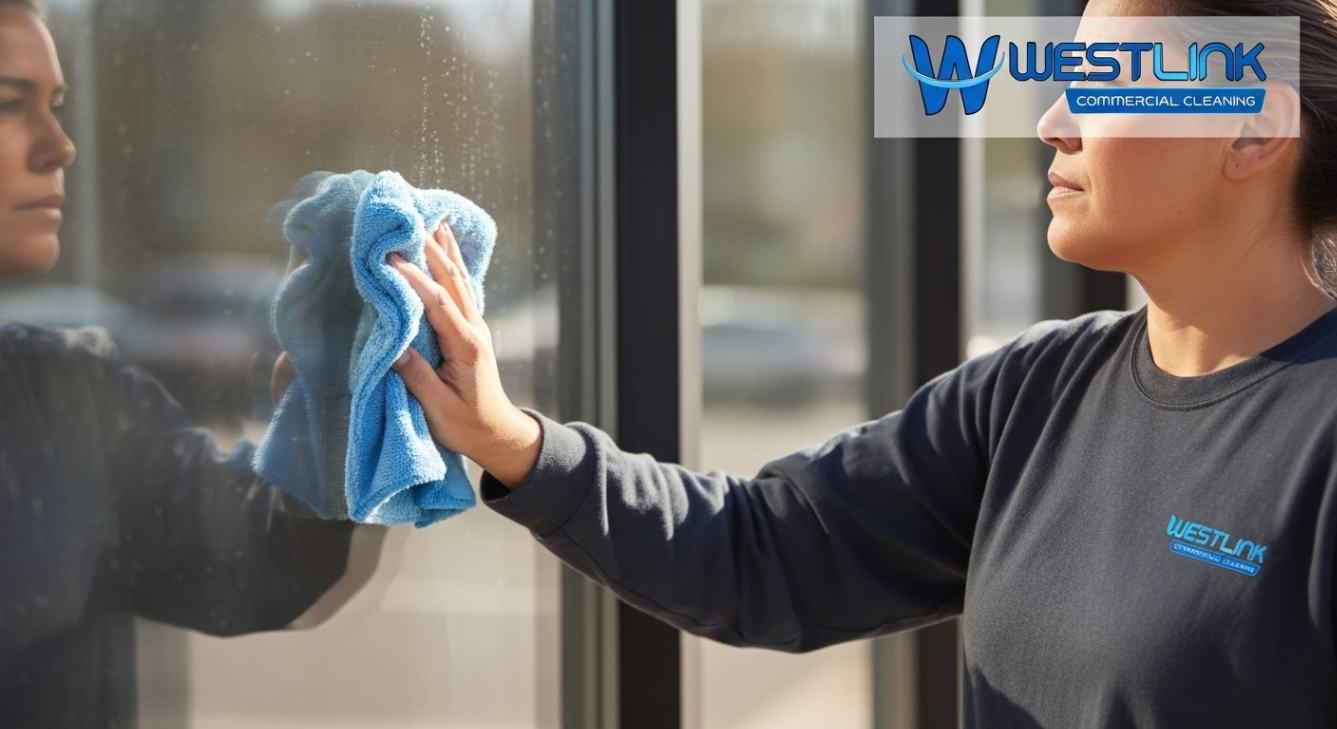
20 Essential Commercial Window Cleaning Products and Tools
The following products cover glass washing, detailing, stain removal, purified-water cleaning, and safe access. Before using any chemical or tool, check the glass manufacturer’s instructions, the product label, the current Safety Data Sheet, and the site-specific risk controls.
1. Professional Squeegee
A professional squeegee has a handle, channel, and replaceable rubber blade designed to remove water and cleaning solution from glass.
How it is used: After the glass has been wetted and agitated, the cleaner draws the blade across the pane in controlled strokes. The rubber removes liquid and helps create a clear, streak-free finish.
Choose a suitable channel width for the pane size and replace worn or damaged rubber. Clean the blade regularly because trapped grit can leave lines or scratch vulnerable surfaces.
2. Ammonia-Free Glass Cleaner
Ammonia-free glass cleaner is commonly used on interior windows, doors, mirrors, and smaller panes where controlled spray application is practical.
How it is used: Apply a small amount to the glass or cleaning cloth, loosen fingerprints and light soil, then wipe or squeegee the surface dry.
Ammonia-free does not automatically mean environmentally preferable or suitable for every coated surface. Check the product label, Safety Data Sheet, and glass-care instructions before use.
3. Extension Poles
Telescopic extension poles allow cleaners to attach a washer, squeegee, or detailing tool and reach elevated glass from a lower working position.
How it is used: The correct attachment is secured to the pole, adjusted to the required length, and operated from a stable position where the task can be completed safely.
Lightweight aluminium, fibreglass, and carbon-fibre poles can reduce operator fatigue. Extension poles should be inspected for damaged locks, worn fittings, and electrical hazards before use.
4. Foaming Glass Cleaner
Foaming glass cleaner clings to vertical surfaces and can help control drips during interior cleaning.
How it is used: Apply the foam sparingly, allow brief contact time where permitted by the manufacturer, then wipe with a clean microfiber cloth or remove it with a small squeegee.
Choose a formula suitable for the glass type and occupied environment. Avoid overspray near electronics, food, porous finishes, and unprotected flooring.
5. pH-Neutral Glass Cleaner
A pH-neutral cleaner is designed to remove light soil without relying on strongly acidic or alkaline chemistry.
How it is used: The cleaner is diluted or applied according to its label, spread over the glass, and removed with a squeegee or lint-free cloth.
Neutral products may be appropriate for some treated or coated glass, but compatibility must still be confirmed with the glass or film manufacturer.
6. Biodegradable Low-Foam Dish Soap
A small quantity of low-foam dishwashing liquid is sometimes added to water to provide lubrication and loosen oily residue.
How it is used: Add only the amount required to a bucket of clean water, apply it with a washer sleeve, agitate the glass, and remove the solution with a squeegee.
Avoid over-dosing because excessive foam increases rinsing time and can leave residue. Pre-test the solution before using it on tinted, coated, or specialist glass.
7. Residue-Free Interior Glass Cleaner
Residue-free cleaner is useful for internal partitions, entrance doors, display glass, mirrors, and other high-visibility surfaces.
How it is used: Apply a controlled amount, wipe the surface with a clean cloth, and buff dry with a separate detailing cloth.
Regular light cleaning can reduce the need for stronger chemicals later. Use separate cloths for glass and other surfaces to limit cross-contamination.
8. Microfiber Cloths
Microfiber cloths are highly absorbent, low-lint cloths used for wiping frames, cleaning edges, removing fingerprints, and polishing glass.
How they are used: Use one cloth for damp cleaning and a separate clean, dry cloth for final detailing. Fold the cloth into sections so a fresh surface is available as it becomes soiled.
Microfiber cloths are reusable, but they should be laundered correctly and without fabric softener. A laundry bag or filtration method can help reduce microfiber release during washing.
9. Soft-Bristle Brushes
Soft-bristle brushes loosen dust, traffic film, cobwebs, bird residue, and grime from glass, frames, sills, and corners. They are especially useful during commercial exterior window cleaning in Sydney, where pollution and weather exposure can create heavier surface buildup.
How they are used: Wet the glass, agitate the contamination with a suitable brush, rinse the surface, and then squeegee or pure-water rinse as required.
Use separate brushes for heavily soiled exterior work and lighter interior work. Rinse brush heads after use and replace damaged bristles that could mark the glass.
10. Concentrated Window Cleaning Solutions
Concentrated cleaning solutions are diluted before use and can reduce packaging and transport volume when they are dosed correctly.
How they are used: Measure the concentrate according to the manufacturer’s directions, mix it with the specified water quantity, apply it with the appropriate tool, and remove it from the surface as directed.
Do not assume a higher concentration will clean better. Over-dosing can leave residue, increase chemical exposure, and create unnecessary wastewater.
11. Professional Window Cleaning Soap
Professional window-cleaning soap is formulated to provide soil removal and sufficient glide for washers and squeegees.
How it is used: Mix the labelled quantity in a bucket, wet the glass with a washer sleeve, agitate the soil, then remove the solution using a squeegee.
Select products according to the site, glass type, environmental controls, and manufacturer guidance. Review third-party certification rather than relying only on terms such as “green,” “natural,” or “eco.”
12. Interior Window Cleaning Kits
An interior window-cleaning kit normally includes a compact squeegee, washer sleeve, extension handle, detailing cloths, and a controlled-application cleaning solution. Teams providing commercial interior window cleaning in Sydney use these kits for office partitions, lobby glass, internal doors, mirrors, and glazed meeting rooms.
How they are used: Tools are selected according to the pane size and surrounding finishes. Minimal solution is applied to control drips, and edges are detailed after squeegeeing.
A standardised kit makes it easier to maintain tools, control chemical use, and avoid disposable wipes. Cloths and applicators should be cleaned between sites and stored dry.
13. Commercial Ladders
Commercial ladders may be used for some low-level tasks when safer ground-based methods are not reasonably practicable and the ladder is suitable for the work.
How they are used: The ladder is selected, positioned, secured, and operated under the site’s risk controls and applicable work-at-height requirements.
Ladders are not a default solution for high or prolonged window-cleaning work. Inspect the ladder before use and consider extension poles, water-fed systems, elevated work platforms, or specialist access methods where appropriate.
14. Glass Scraper Blades
Glass scrapers can remove paint spots, adhesive, stickers, and other bonded deposits from compatible glass.
How they are used: Thoroughly wet the glass, keep the blade flat at a low angle, work in one direction, and stop immediately if scratching or resistance occurs.
Scrapers can damage coated, tinted, tempered, heat-treated, or already scratched glass. Confirm compatibility, use a clean undamaged blade, and follow the glass manufacturer’s instructions.
15. Washer Sleeves and Applicators
A washer sleeve fits over a T-bar and spreads cleaning solution evenly while lifting dirt from the pane.
How it is used: Dip or wet the applicator, remove excess liquid, agitate the glass, and follow with a squeegee before the solution dries.
Choose the sleeve material according to the soil level and glass type. Wash sleeves regularly because embedded particles can reduce performance or mark sensitive surfaces.
16. Squeegee-and-Washer Combination Tools
Combination tools place a washer and squeegee on one handle, allowing the operator to switch between wetting and drying with fewer tool changes.
How they are used: Wet and agitate the pane with the washer side, rotate or reverse the tool, and remove the liquid with the squeegee blade.
These tools can be efficient on repetitive panes and extension-pole work. Maintain both the sleeve and rubber blade to prevent streaks and repeat cleaning.
17. Pure-Water Filtration Equipment
Pure-water systems use filtration technologies such as reverse osmosis and deionisation to reduce dissolved minerals in the water.
How it is used: Source water passes through the filtration system and is then supplied to a water-fed pole or other compatible cleaning setup.
Low-mineral water can dry with fewer spots when the glass and frames have been properly agitated and rinsed. Filters, membranes, meters, hoses, and connections require scheduled maintenance.
18. Water-Fed Pole Systems
A water-fed pole delivers purified water through a telescopic pole to a brush head. The brush loosens dirt while the water rinses the glass and frames.
How it is used: The operator works from a controlled position, brushes the surface thoroughly, and completes a final pure-water rinse so the glass can dry without a squeegee.
Water-fed poles are commonly used as part of commercial high-rise window cleaning in Sydney when the glass can be reached safely from the ground or another controlled working position. They are not suitable for every façade; some buildings require rope access, elevated work platforms, or other engineered access systems.
19. Window Cleaning Buckets
Window-cleaning buckets are shaped to accommodate washer sleeves and may include measurement marks, lids, sieves, or tool holders.
How they are used: One bucket may hold cleaning solution while another holds clean rinse water. Graduated markings help operators mix the correct dilution.
Use durable, reusable buckets and avoid returning heavily contaminated tools to clean solution. Empty wastewater only through an appropriate disposal route for the site.
20. Low-VOC Streak-Free Glass Cleaner
Low-VOC streak-free cleaner is intended for high-visibility interior glass where quick drying and minimal residue are important.
How it is used: Apply the minimum effective quantity, clean the surface with a suitable cloth or squeegee, and polish remaining edges and corners.
Low-VOC is one product attribute, not proof that the entire formula is harmless or environmentally certified. Check the current Safety Data Sheet, ingredient information, packaging, dilution requirements, and recognised third-party certification.
Why Product Selection Changes Between Interior, Exterior, and High-Access Glass
Interior Glass
Interior partitions, lobby glass, mirrors, and entrance doors generally need controlled moisture, low-residue products, clean microfiber cloths, compact squeegees, and careful protection of floors and nearby furniture.
Exterior Glass
Exterior glass may collect traffic film, salt, dust, mineral deposits, cobwebs, and bird residue. Brushes, washer sleeves, professional soaps, pure-water systems, and longer poles may be required depending on the building.
High-Access Glass
High-access façades require more than cleaning products. Access design, worker competence, equipment inspection, exclusion zones, weather conditions, rescue planning, and building-specific controls all influence the method.
How Equipment Requirements Change Across Sydney
Sydney Inner City and CBD Towers
Dense CBD sites often have restricted ground access, pedestrian traffic, loading restrictions, and large glazed façades. Contractors providing high-rise window cleaning in Sydney’s Inner City may use water-fed poles, rope-access systems, or elevated work platforms after completing a site-specific risk assessment.
Lower North Shore Office Buildings
Office towers and glass-fronted commercial properties across the Lower North Shore often require planned access, purified-water systems, and low-disruption scheduling. These requirements make equipment selection an important part of commercial high-rise window cleaning on the Lower North Shore.
Eastern Suburbs Coastal Properties
Coastal air can leave salt residue on exposed glazing, increasing the need for effective rinsing and regular brush maintenance. For high-rise window cleaning in Sydney’s Eastern Suburbs, purified water can help reduce mineral spotting after salt and airborne contaminants have been removed.
Northern Beaches Commercial Buildings
Buildings close to the coast may experience repeated salt, moisture, and windblown residue. Contractors carrying out commercial high-rise window cleaning on the Northern Beaches therefore need clean brush heads, well-maintained hoses, suitable access equipment, and controlled pure-water rinsing.
Parramatta Commercial Centres
High-traffic commercial centres can accumulate airborne dust, traffic residue, and marks on street-facing glass. Commercial exterior window cleaning in Parramatta may involve soft-bristle agitation, purified-water rinsing, and a maintenance schedule suited to the property’s exposure and presentation requirements.
Sutherland Shire Sites
Commercial properties in coastal and mixed industrial areas may collect salt film, dust, and fine airborne particles. Equipment used for high-rise window cleaning in the Sutherland Shire should be selected according to the façade material, height, access points, surrounding hazards, and contamination level.
Safety and Environmental Compliance
Commercial window cleaning must address chemical exposure, slips, manual handling, falling objects, electrical hazards, work at height, public access, and wastewater management. Products described as lower-impact still require correct handling and site controls.
Work Health and Safety
- Follow relevant SafeWork NSW guidance and provide appropriate training, supervision, equipment, and safe systems of work.
- Keep current Safety Data Sheets available for hazardous chemicals used or stored at the workplace.
- Complete risk assessments for ladders, extension poles, water-fed equipment, elevated work platforms, rope access, and other work-at-height methods.
- Control wet-floor areas, hoses, overspray, falling objects, and access by workers, occupants, and the public.
Environmental Product Selection
- Review the manufacturer’s label, Safety Data Sheet, ingredient disclosures, dilution instructions, and packaging before making environmental claims.
- Recognised programs such as the US EPA’s Safer Choice program and independent standards such as Green Seal can assist product comparison, but certification should be confirmed for the exact product.
- Use concentrates and refill systems only when they are compatible with the work and can be measured accurately.
- Prevent untreated chemical wastewater from entering stormwater systems or environmentally sensitive areas.
When to Hire Professional Window Cleaners
Professional help is appropriate when the work involves high or inaccessible glass, large commercial façades, fragile or coated surfaces, public areas, difficult traffic management, specialist stain removal, or access systems such as rope access and elevated work platforms.
A competent provider should assess the site before selecting products and equipment. The safest and most effective method may involve traditional squeegee work, pure-water cleaning, extension poles, elevated platforms, rope access, or a combination of methods.
Final Thoughts
Commercial window-cleaning products should be selected for performance, glass compatibility, worker safety, environmental controls, and the access method. A familiar brand name or an “eco” label alone is not enough.
Businesses can improve results by using durable tools, replacing worn components, measuring chemical dilutions correctly, maintaining pure-water equipment, training workers, and choosing independently certified products where suitable.
FAQs
What is the best glass cleaner for commercial windows?
The best cleaner depends on the glass type, coating, soil level, and location. A suitable commercial product should clean effectively at the labelled dilution, leave minimal residue, and be compatible with the glass manufacturer’s instructions.
How can large office windows be cleaned without streaks?
Use clean tools, the correct solution concentration, a well-maintained squeegee blade, and consistent strokes. Detail the edges with a clean microfiber cloth and avoid allowing the solution to dry before removal.
Are microfiber cloths environmentally friendly?
Reusable microfiber cloths can reduce paper-towel waste and chemical use. However, they are synthetic and may release fibres during washing, so careful laundering and filtration or laundry bags should be considered.
What cleaner is suitable for tinted or coated commercial windows?
Use only products approved by the glass, coating, or window-film manufacturer. Many treated surfaces require ammonia-free and non-abrasive cleaners, but the exact requirements vary.
Can a natural window cleaner be used commercially?
Simple mixtures may work on small areas of compatible standard glass, but commercial sites often require documented products, controlled dilution, consistent results, and Safety Data Sheets. Test any solution before wider use.
What tools do professional window cleaners use?
Common tools include squeegees, washer sleeves, microfiber cloths, extension poles, soft brushes, scraper blades, ladders, pure-water filtration systems, water-fed poles, buckets, elevated work platforms, and specialist access equipment.
Is vinegar safe for every commercial glass surface?
No. Vinegar may be unsuitable for some tinted, coated, filmed, stone-adjacent, or specialist surfaces. Follow the manufacturer’s care instructions and test a small area first.
How often should commercial windows be cleaned?
Frequency depends on traffic, weather exposure, coastal salt, pollution, building use, and presentation standards. High-visibility shopfronts may need frequent cleaning, while protected office windows may require less frequent service.
What are the advantages of water-fed pole systems?
Water-fed poles can allow some elevated exterior glass to be cleaned from a controlled lower position. Purified water can reduce spotting and chemical use, but the method still requires training, suitable access, and site-specific risk controls.
How can lower-impact products reduce environmental harm?
Potential improvements include lower chemical toxicity, accurate dilution, concentrated refills, reusable tools, controlled wastewater, and less repeat cleaning. Environmental claims should be supported by current product information or recognised certification.