Commercial cleaning in Sydney costs $35 to $75 per hour or $1.20 to $3.50 per square metre, depending on property type, cleaning frequency, and site complexity. Ongoing contracts often use fixed monthly pricing based on the actual hours required, rather than a flat square-metre rate. Small suburban offices cleaned once or twice a week typically sit at the lower end, while medical centres requiring daily infection-control cleaning and high-traffic, multi-level strata buildings sit at the upper end.
This guide explains the three pricing models Sydney providers use, the factors that raise or lower quotes, budget examples by site size, and what a written quote should include to avoid hidden costs.
Sydney Commercial Cleaning Rates for 2026 at a Glance
Here’s the quickest way to sanity-check any quote you’re holding this year, broken down by the number that actually matters for your site type.
| Property Type | Typical 2026 Rate | Why |
| Small office (1–2 visits/week) | 35–60/hr | Open-plan, moderate traffic, low washroom density |
| Larger office (daily service) | 2–3/m² | Predictable layout, priced by area for consistency |
| Strata common areas | 1.50–3.50/m² | Lifts, stairwells, and lobbies add fixed servicing time |
| Warehouse & industrial | 1.20–2.80/m² | Large open floor area, offset by dust load and PPE needs |
| Commercial kitchen | 70–100+/hr | Food-safe products and stricter hygiene protocols |
| Fixed monthly contract | Custom, all-inclusive | Every task and product bundled into one predictable fee |
These ranges hold as general market benchmarks for 2026, but they’re a starting point, not a quote. Rates shift with how many washrooms your site has relative to its footprint, whether cleaning happens during business hours or after them, and how tightly your industry’s compliance standards are written. A medical suite and a standard office of the same size will never land on the same number, even though both fall under “commercial cleaning“.
The one constant worth remembering: prices below these bands aren’t automatically a bargain. A rate that undercuts the market by a wide margin is usually cutting somewhere: staff pay, compliance, insurance cover, or the quality checks that keep standards consistent from visit to visit. If a number looks too good against this table, it’s worth asking what’s been left out of it before you sign anything.
What Determines Commercial Cleaning Pricing in Sydney
Commercial cleaning in Sydney is priced based on site size, cleaning frequency, and complexity. Two sites with the same floor area can receive very different quotes depending on washroom count, after-hours access, and required hygiene standards.
Most Sydney providers use one of three pricing models: hourly, per square metre, or a fixed monthly fee. Small offices cleaned twice a week are often priced hourly. Strata buildings and warehouses are commonly priced per square metre because floor area is a more reliable workload indicator. Ongoing contracts are usually converted into a fixed monthly fee for predictable budgeting.
The main factor affecting price is the scope, not the pricing model. A provider that inspects your site can price the actual mix of washrooms, kitchens, high-traffic areas, and access requirements. A provider quoting from a postcode or generic rate card is estimating, which can lead to extra charges once the true scope is clear. That distinction matters when comparing quotes.
Choosing a Commercial Cleaning Provider in Sydney: What to Check First
With pricing and scope covered, the remaining question is which provider actually delivers on what’s promised, and that comes down to a short list of checks most businesses skip until something goes wrong.
Verify insurance and vetting before anything else. Ask for a certificate of currency showing public liability and workers’ compensation cover, and confirm staff are police-checked. This isn’t a formality; it’s what protects your business if something is damaged or someone is injured on your site. For workplace safety responsibilities and risk management guidance, refer to Safe Work Australia Workplace Health and Safety Guidance.
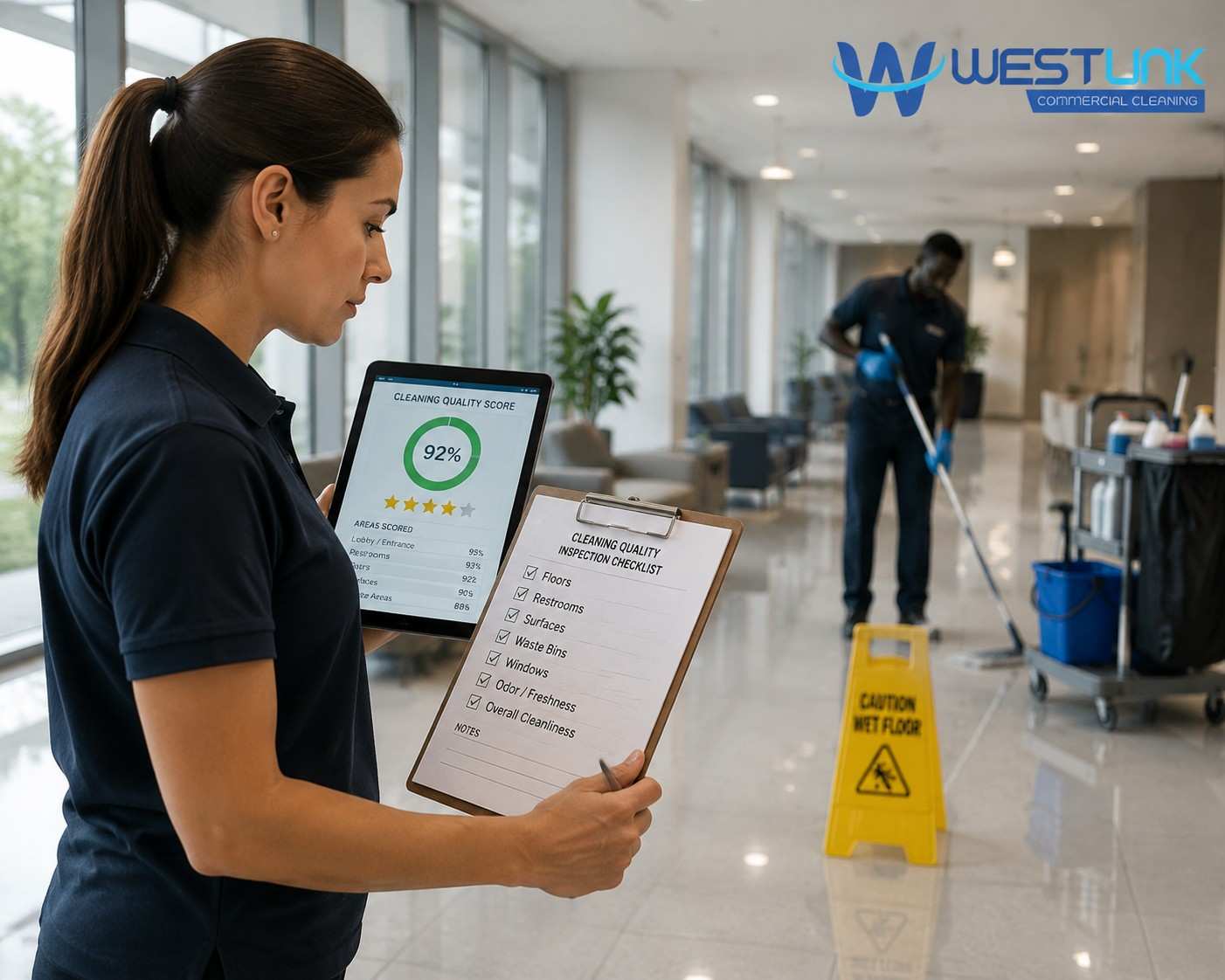
Ask how quality is checked, not just promised. A provider should have a documented process a checklist, a supervisor sign-off, an inspection routine – not just “we’ll make sure it’s good.” If they can’t describe how they catch a missed task before you do, they probably don’t have a system for it.
Test responsiveness before you sign, not after. How fast a provider answers a quote request is a reasonable preview of how fast they’ll respond when something needs fixing mid-contract. A same-day or few-hour turnaround on enquiries is a good sign; a slow, vague reply usually stays that way.
Check whether you’re locked in. No lock-in contract means a provider has to earn your business every visit, not just at sign-up. It’s a low-risk way to trial a new provider without committing to a term you can’t easily exit if standards slip.
Look for consistency, not just capability. Ask whether the same crew returns to your site each visit. A provider that rotates staff constantly loses the site-specific knowledge that keeps a clean, fast and thorough job – a point worth raising directly in the sales conversation, not assuming.
The fastest way to run all five checks at once is a free site assessment; it tells you not just the price but also how the provider communicates, what they notice on a walkthrough, and how clearly they explain their scope before asking for a commitment.
Commercial Cleaning Costs by Property Type in Sydney
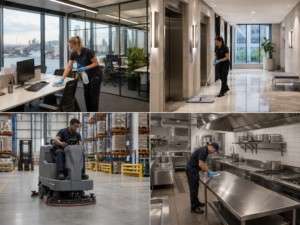
Commercial cleaning cost per square metre in Sydney varies by property type because different building types carry different amenity density, compliance requirements, and traffic patterns. Office cleaning, strata cleaning, warehouse cleaning, and commercial kitchen cleaning each price differently for these reasons.
Office cleaning typically prices at the lower-to-middle end of the market range because most workspaces are open-plan with predictable, moderate-traffic use. Costs rise with the number of meeting rooms, kitchenettes, and washrooms relative to total floor area. Office cleaning services are usually quoted on a weekly or nightly recurring schedule, which keeps the per-visit rate stable.
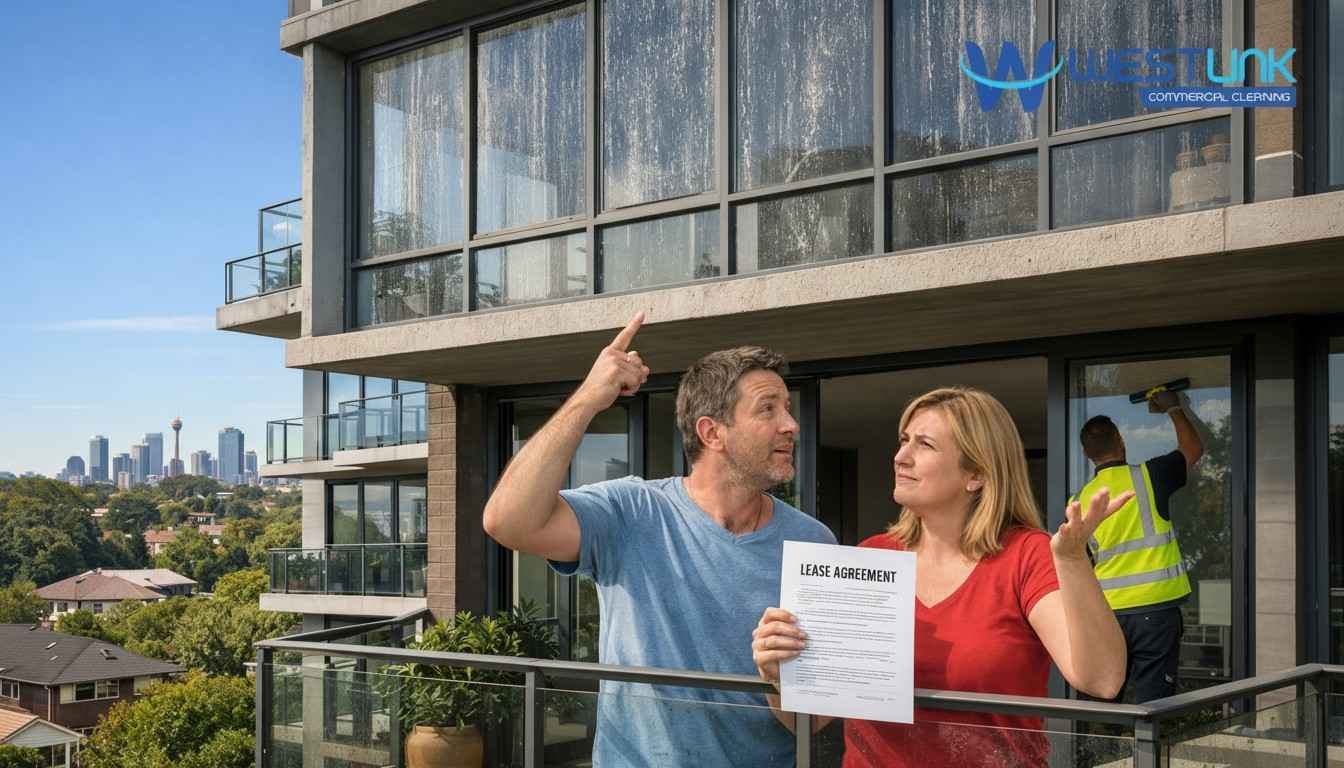
Strata cleaning covers shared common areas, lobbies, lifts, stairwells, corridors, and bin rooms and is almost always priced per square metre because a strata building’s common-area footprint is a fixed, measurable figure. Strata cleaning pricing also reflects lift and stairwell servicing, which adds time that flat office cleaning doesn’t require.
Warehouse and industrial cleaning sits towards the middle of the range on a per-square-metre basis because large open floor areas clean efficiently, but pricing rises with dust load, PPE requirements, and 24/7 access coordination across multi-site facilities. Warehouse cleaning services also factor in amenities, lunchrooms, and high-traffic walkways separately from the general floor clean.
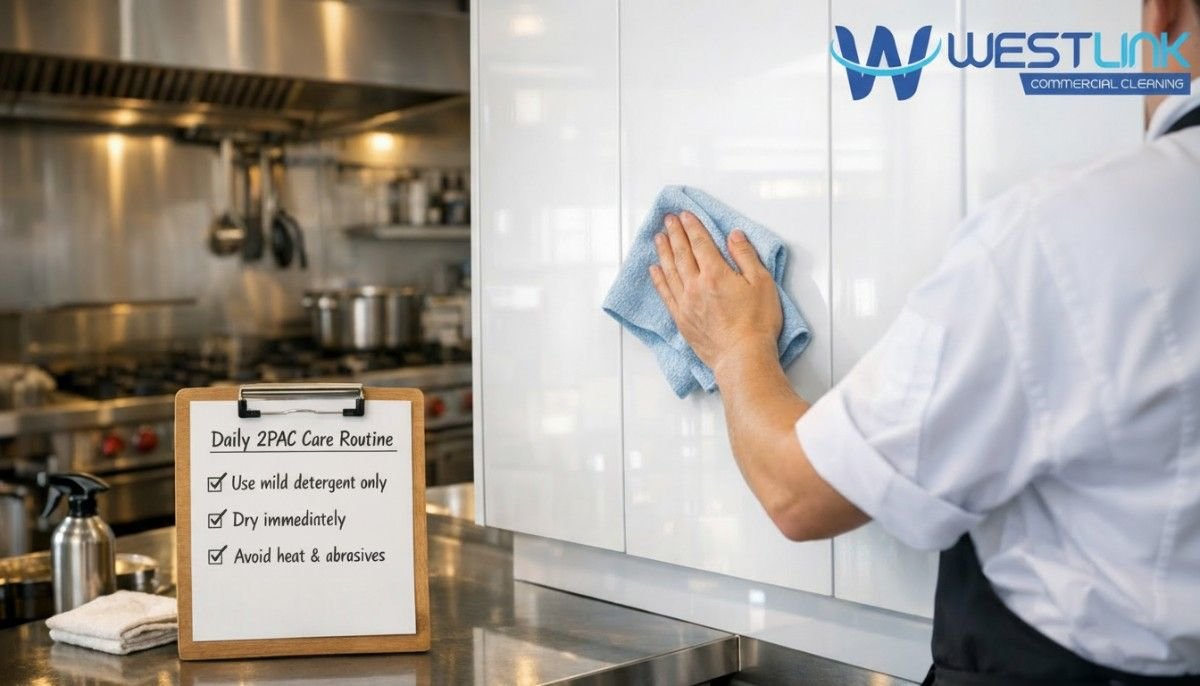
Commercial kitchen cleaning sits at the upper end of the pricing range because food preparation areas require food-safe products, more frequent servicing, and stricter hygiene protocols than general commercial spaces. Kitchen cleaning services are typically quoted with a higher per-square-metre rate because of the additional labour, specialist products, and compliance requirements involved. Food safety guidance from Food Standards Australia New Zealand Cleaning and Sanitising Guidance explains the importance of effective cleaning and sanitising practices in food preparation environments.
For a full breakdown of what commercial cleaning covers across property types, see our complete commercial cleaning overview.
How Commercial Cleaning Services Are Structured and Priced
Not every commercial cleaning cost is built the same way, and knowing which structure applies to your situation makes it much easier to read a quote and know whether it’s fair.
Hourly-rate cleaning sits at 35–75 per hour and works best for small offices, flexible bookings, and one-off jobs where the scope can change from visit to visit. It’s the most transparent model to compare, but it rewards efficiency you can’t always see on paper; two providers at the same hourly rate can still get very different amounts of work done in that hour.
Per-square-metre pricing runs 1.20–at 3.50 per m² and is the standard for strata buildings, warehouses, and larger offices, where total floor area is a more reliable measure of workload than an hourly guess. This model is also easier to scale: if you add a floor or expand into a second site, the pricing logic stays consistent.
Fixed monthly contracts bundle the full scope of every task, every product, and every piece of equipment into one all-inclusive figure. This is the model most businesses on a recurring schedule end up choosing, because it removes the guesswork of variable invoices and makes cleaning a predictable line item rather than a fluctuating cost.
One-off and specialty pricing sits outside the recurring rate entirely. Deep cleans, post-construction cleans, carpet extraction, and window cleaning are quoted separately because they don’t fit a weekly or monthly cadence, and bundling them into a base rate would either overcharge you on quiet months or undercharge the provider on the months you actually need them.
The structure that suits you depends on how your site operates, not just its size. A property with a stable, predictable routine usually saves money on a fixed monthly plan, while a site with irregular needs is often better served by hourly or per-visit pricing until that routine settles. The fastest way to find out which applies to you is a site assessment that prices your actual scope against these models side by side, rather than assuming one fits before anyone’s seen the property.
What Your Cleaning Budget Actually Buys You
Two quotes at the same price point can deliver very different levels of service, so it’s worth knowing what should be non-negotiable regardless of how much you’re spending and what only shows up once you move into a higher tier.
At every price level, these should already be included, no exceptions. A written scope of work, full public liability and workers’ compensation insurance, supervisor sign-off after each visit, and rectification of anything missed within the agreed scope. If a provider treats any of these as an upgrade or an add-on, that’s a red flag on the base offer, not a sign you need to spend more.
Baseline service covers the essentials: bins, washrooms, high-touch surfaces, floors, and general presentation, cleaned to a fixed frequency with standard sanitising products. This tier suits most offices and low-risk commercial spaces where routine upkeep is the goal, not a specific compliance standard. Guidance from the Environmental Protection Agency Cleaning and Disinfecting Information supports the importance of using appropriate disinfecting products correctly.
Standard service adds the layer most growing businesses actually need: more frequent servicing on high-traffic zones, kitchen and staff amenity detailing, and periodic extras like internal glass or spot carpet work folded into the regular visit rather than quoted separately every time.
Premium or enhanced service is where the price difference earns its keep: targeted disinfection for higher-risk environments; day porter support for daytime checks; consumables supply (paper, soap, and liners) managed for you; and priority response times if something needs attention outside the scheduled visit. This tier is built for sites where downtime, compliance failure, or a bad first impression carries a real cost.
The tier that makes sense for you isn’t about spending more for its own sake; it’s about matching the service level to what a missed clean would actually cost your business if it went wrong. A reception area that greets clients daily justifies a different tier than a back-office storage room, even within the same building.

Hourly Rate or Fixed Contract: Which Fits Your Site?
Deciding between hourly billing and a fixed contract rate comes down to how predictable your cleaning needs actually are.
HOURLY BILLING
$35 – $75/hr
Best for: flexible or changing needs
You pay for time, not a locked scope. Suits businesses testing a new schedule, mid-renovation, or not ready to commit to a term. Most providers set a minimum call-out per visit; confirm this before booking.
FIXED CONTRACT RATE
Custom, all-inclusive
Best for: stable, recurring schedules
One agreed monthly fee, regardless of a longer visit or a quieter week. Ideal once your scope is locked and you want cleaning off your list of variable costs.
Either model works; the commercial question is what happens when something changes. Ask an hourly provider whether your monthly spend is capped if visits run long. Ask a fixed-rate provider whether fee changes require your sign-off before they apply. A provider that won’t answer either clearly is one worth being cautious about, regardless of which billing model you choose.
DIY Cleaning vs Professional Cleaning
| Factor | DIY / Staff Cleaning | Professional Cleaning |
| Upfront cost | Looks cheaper: no invoice, but staff hours are paid at their actual wages. | 35–75/hr, or one fixed monthly fee |
| Staff time | Pulled from core duties to cover cleaning tasks | Scheduled after hours or in agreed windows, zero disruption to your team |
| Consistency | Depends on who remembers and how busy they are that week | Fixed scope, same crew, checked every visit |
| Equipment | Consumer-grade tools with limited capability | Commercial-grade machines matched to each surface |
| Compliance & insurance | No public liability or workers’ comp cover if something goes wrong | Fully insured, with a documented scope you can show on request |
| Asset lifespan | Incorrect products/methods wear floors and surfaces faster | The correct method per surface protects the asset and lowers replacement cost |
Professional cleaning also helps businesses maintain safer workplace conditions through structured processes, training, and documented procedures. Workplace safety resources from Safe Work Australia Workplace Health and Safety Guidance provide additional guidance on workplace health risks, safety responsibilities, and prevention.
What’s Included (and Excluded) in a Written Commercial Cleaning Quote
A written commercial cleaning quote should specify exactly what’s included and what will never appear as a surprise charge. This distinction matters more than the headline rate, because two quotes at the same hourly price can carry very different hidden costs.
What a properly structured quote includes:
- All equipment and cleaning products
- A free site assessment visit before pricing is finalised
- A written, site-specific scope of works
- Supervisor quality sign-off on every visit
- A named account contact for queries and issues
- Public liability and workers’ compensation insurance
- Rectification of any missed task within an agreed timeframe
What you should never be charged extra for:
- The site assessment itself
- Time spent preparing the quote
- NDA or confidentiality agreement setup
- Routine supervisor inspection visits
- Fixing an issue that falls within the agreed scope
- Certificate of currency (insurance proof) requests
- General contract administration
If a quote is silent on any of these points, ask before signing. The gap between an itemised, all-inclusive quote and a bare hourly rate is usually where unexpected costs appear later.
Your Pre-Sign Checklist for Comparing Commercial Cleaning Quotes
Before you sign anything, run the actual paperwork, not just the provider, through this checklist. These are the specific items to confirm in writing, distinct from the provider qualities to check in person.
- Scope matches the walkthrough. The written scope should reference your specific site zones, frequency, and task list, not a generic template that could apply to any building.
- Pricing states GST clearly. Confirm whether the quoted figure is GST-inclusive or exclusive before comparing it against another provider’s number.
- Exit terms are spelt out. “No lock-in” should come with an actual notice period in writing, how many days, and how you give it, not just a headline claim.
- Issue response time is a number, not a promise. “We respond quickly” isn’t a commitment. Look for a stated turnaround, e.g., issues acknowledged within a set number of hours.
- Products are named for your risk level. Compliance-heavy sites should see TGA-registered disinfectants specified; ask separately if eco-friendly or fragrance-free products are available where needed.
- Start date is confirmed. A quote without a mobilisation timeframe leaves you guessing when service actually begins.
- A change process exists for scope changes. New requests should become a written variation of what’s added and at what cost, not an informal addition that quietly expands the job.
If a quote is missing more than one or two of these, it’s worth asking for the gaps to be filled in before you sign, not after the first invoice raises a question you didn’t expect.
Get a Written, Site-Specific Quote for Your Sydney Property
You now know what drives commercial cleaning pricing in Sydney and what a properly structured quote should include. The only way to turn that into an exact number for your site is a free assessment.
Request a free quote and receive a written, all-inclusive price built around your property’s actual size, layout, and access requirements, with no obligation and no lock-in contract if you decide to proceed.
For additional guidance on workplace sanitation practices, the World Health Organization Environmental Cleaning Guidance provides internationally recognised infection prevention information.