Facility managers need more than a clean-looking building. They need measurable evidence that a commercial cleaning provider is consistently meeting required standards.
Cleaning quality can directly affect workplace presentation, employee satisfaction, safety expectations, and the overall performance of a commercial facility. However, without a structured measurement process, it can be difficult to determine whether a cleaning contractor is delivering the level of service expected.
The most effective facility managers measure cleaning quality through a combination of cleaning inspections, performance indicators, quality audits, service standards, and ongoing reporting.
This guide explains how facility managers can evaluate commercial cleaning quality, what metrics to track, and how to ensure a cleaning provider maintains consistent results over time.
How Facility Managers Measure Cleaning Quality at a Glance
Facility managers typically evaluate cleaning quality using several measurable areas:
| Quality Measurement | What It Evaluates |
| Cleaning inspections | Whether completed work meets agreed standards |
| Cleaning audits | Overall performance, processes, and compliance |
| Quality KPIs | Measurable cleaning performance trends |
| Service checklists | Completion of scheduled cleaning tasks |
| Complaint tracking | Recurring issues and response effectiveness |
| SLA reviews | Whether the cleaning provider meets contract expectations |
A strong cleaning quality system combines these measurements rather than relying on visual checks alone.
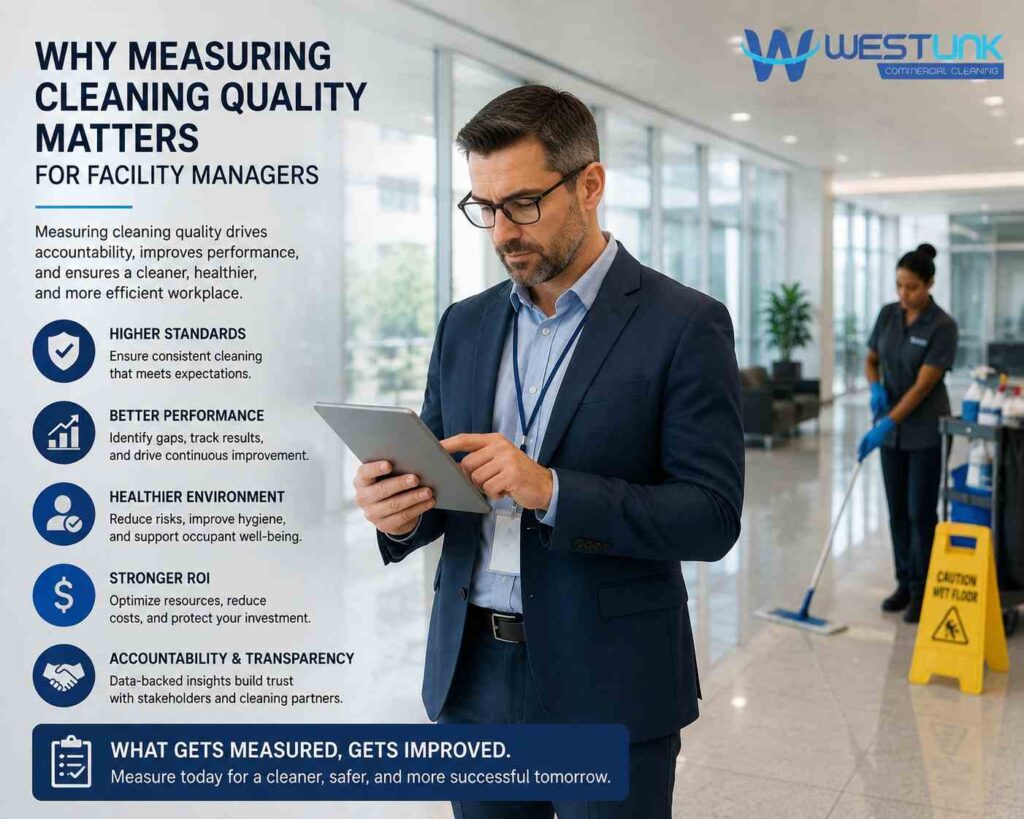
Why Measuring Cleaning Quality Matters for Facility Managers
Cleaning quality is often judged subjectively when there are no defined measurement systems in place.
A facility manager may notice that a building does not feel properly maintained, but without documented inspections or performance data, it can be difficult to identify:
- Which areas are consistently underperforming
- Whether issues are isolated or recurring
- Whether the cleaning provider is meeting contractual expectations
- What improvements are required
A measurable cleaning quality process creates accountability between the facility manager and the cleaning provider.
Instead of asking:
“Does the building look clean?”
Facility managers can ask:
“Is the cleaning service consistently achieving the agreed quality standard?”
This shift allows cleaning performance to be managed using evidence rather than assumptions.
Define Cleaning Standards Before Measuring Quality
The first step in measuring cleaning quality is establishing clear cleaning standards.
Facility managers cannot accurately evaluate performance if expectations are unclear.
A cleaning standard should define what acceptable results look like for each area of the facility.
For example:
| Facility Area | Cleaning Standard |
| Reception areas | Clean presentation with no visible dust, marks, or debris |
| Office spaces | Clean desks, floors, surfaces, and shared areas |
| Bathrooms | Hygienic condition, stocked supplies, odour control |
| Kitchens | Clean preparation areas, appliances, and high-touch surfaces |
| Common areas | Consistent presentation and removal of waste |
Clear standards allow both facility managers and cleaning teams to measure the same outcomes.
Use Cleaning Inspections to Measure Service Quality
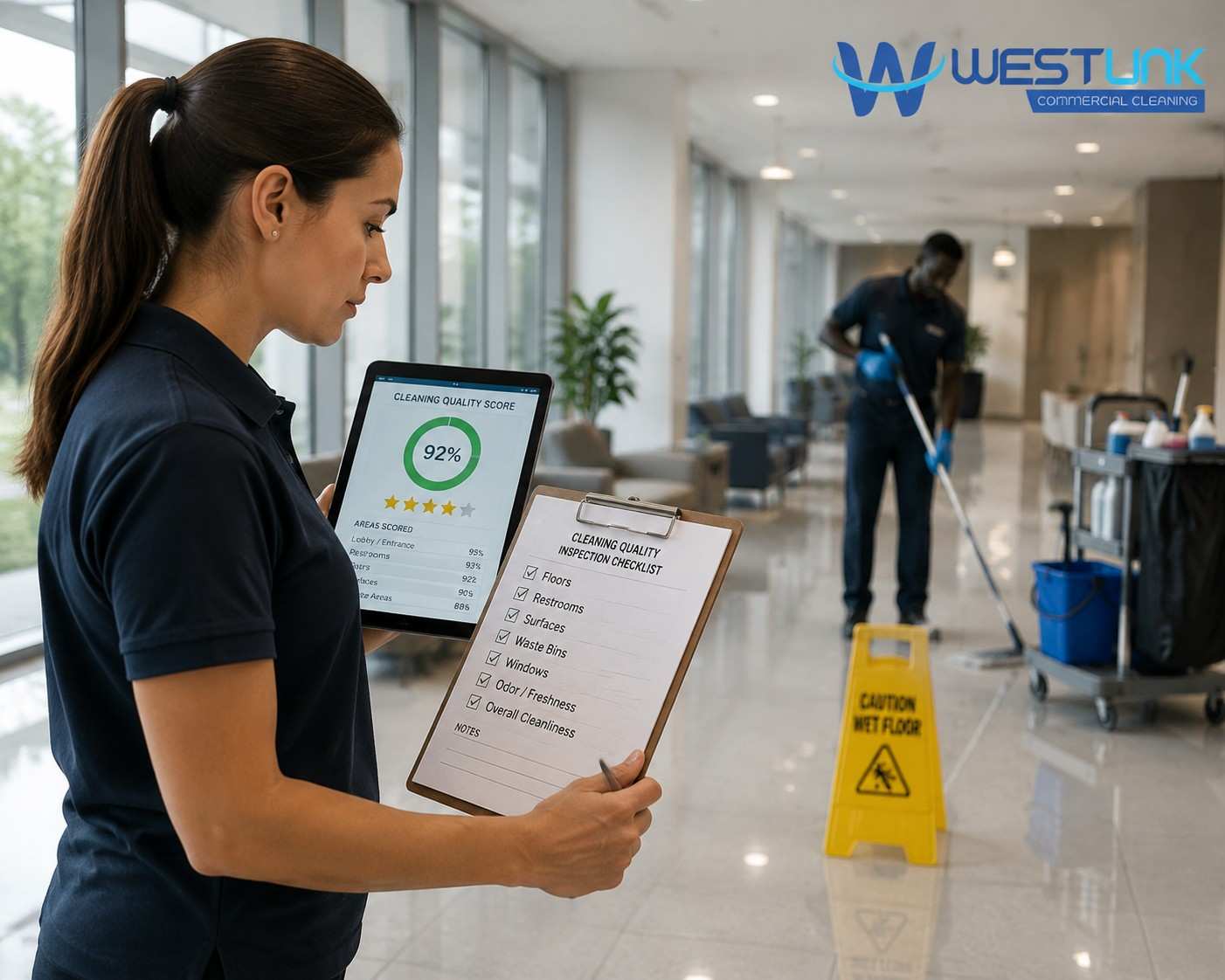
Cleaning inspections are one of the most practical ways facility managers evaluate cleaning performance.
A cleaning inspection involves reviewing completed work against an agreed checklist or quality standard.
During an inspection, facility managers may assess:
- Floor cleanliness
- Dust levels on surfaces
- Condition of high-touch areas
- Bathroom hygiene
- Overall building presentation
The inspection results should be recorded so performance can be tracked over time.
A documented inspection process helps identify whether a cleaning issue is:
- A one-time mistake
- A training issue
- A process failure
- A recurring service problem
For facility managers working with a commercial cleaning provider, regular inspections create a transparent way to maintain expectations.
Track Cleaning Quality Using Key Performance Indicators (KPIs)
Cleaning quality KPIs provide measurable data that helps facility managers understand service performance.
Important cleaning quality KPIs include:
Cleaning Inspection Scores
Inspection scores measure how closely cleaning results match the required standard.
Facility managers can monitor:
- Percentage of successful inspections
- Areas requiring improvement
- Performance changes over time
Consistent inspection scores indicate whether cleaning quality is being maintained.
Cleaning Complaint Frequency
Complaints can reveal problems that inspections may not immediately identify.
Facility managers can track:
- Number of cleaning complaints
- Complaint type
- Response time
- Resolution status
A reduction in repeated complaints can indicate improved cleaning consistency.
Task Completion Rates
Cleaning schedules should include clearly defined tasks.
Facility managers can measure whether required work is completed by tracking:
- Completed cleaning activities
- Missed tasks
- Delayed services
- Repeated missed areas
This helps determine whether a cleaning provider is delivering the agreed scope of work.
Conduct Regular Cleaning Quality Audits
A cleaning audit provides a deeper review of cleaning performance compared with a standard inspection.
While an inspection checks visible results, an audit evaluates the wider cleaning system.
A commercial cleaning audit may review:
- Cleaning procedures
- Staff compliance
- Equipment suitability
- Product usage
- Inspection records
- Corrective actions
Audits help facility managers identify whether quality issues are caused by individual mistakes or weaknesses in the cleaning process.
For larger facilities, regular audits provide a structured approach to maintaining consistent cleaning standards.
Evaluate Cleaning Providers Through Quality Control Processes
When comparing commercial cleaning providers, facility managers should evaluate how each company manages quality control.
A reliable cleaning provider should have clear processes for:
- Supervisor inspections
- Cleaning checklists
- Staff training
- Issue reporting
- Quality reviews
- Corrective actions
A provider that only promises “high-quality cleaning” without explaining how quality is measured may not have a reliable performance system.
The ability to monitor and improve cleaning standards is an important factor when selecting a commercial cleaning partner.
Westlink Commercial Cleaning provides structured commercial cleaning solutions designed around consistent service delivery, professional processes, and quality-focused cleaning standards.
Measure Cleaning Performance Against Service Level Agreements (SLAs)
A Service Level Agreement (SLA) defines the expected service requirements between a facility manager and a cleaning provider.
A cleaning SLA may include:
- Cleaning frequency
- Required service standards
- Inspection requirements
- Response times
- Reporting expectations
SLAs make cleaning quality measurable because both parties understand what performance is required.
Without defined service expectations, disagreements can occur because the facility manager and cleaning provider may have different interpretations of acceptable quality.
Use Feedback Data Alongside Cleaning Inspections
Facility managers should combine inspection results with feedback from building occupants.
Employees, tenants, and visitors experience the facility daily and may identify issues that are not visible during scheduled inspections.
Useful feedback sources include:
- Tenant feedback
- Internal service requests
- Cleaning reports
- Workplace satisfaction surveys
However, feedback should support structured measurements rather than replace them.
The strongest cleaning quality systems combine:
- Inspection results
- Audit findings
- KPI tracking
- Occupant feedback
Together, these provide a complete picture of cleaning performance.
How Facility Managers Can Improve Cleaning Quality Over Time
Measuring cleaning quality is not only about identifying problems. It also helps facility managers improve service outcomes.
A continuous improvement process involves:
- Reviewing cleaning performance data
- Identifying recurring issues
- Discussing improvements with the cleaning provider
- Updating cleaning procedures when required
- Monitoring whether improvements are effective
Regular quality reviews help maintain consistent cleaning standards as facilities change.
What Facility Managers Should Ask Before Hiring a Commercial Cleaning Provider
Before choosing a cleaning company, facility managers should ask:
- How do you measure cleaning quality?
- Do you use inspection checklists?
- How often are quality reviews completed?
- How are cleaning complaints handled?
- Are supervisors involved in quality checks?
- How do you report cleaning performance?
A provider that can clearly explain its quality management process demonstrates a stronger commitment to consistent results.
Choose a Commercial Cleaning Partner That Measures Quality

Cleaning quality should be measurable, trackable, and continuously improved.
For facility managers, the right commercial cleaning provider is not simply the company that completes cleaning tasks. It is the provider that has systems in place to maintain standards, identify issues, and deliver consistent performance.
By using inspections, KPIs, audits, and service agreements, facility managers can confidently evaluate whether their cleaning provider is meeting expectations.
If you are looking for a commercial cleaning partner that prioritises quality control and reliable service delivery, contact Westlink Commercial Cleaning for a site assessment.
Explore our commercial cleaning services and discuss a cleaning solution designed around your facility requirements.