Commercial window cleaning is a core part of building maintenance. Clean glass improves presentation, brings in more natural light, and helps protect windows, seals, and frames from long-term buildup caused by dust, pollution, salt, bird residue, and water spots.
This guide explains the difference between exterior and interior commercial window cleaning, the tools used for each, how the process changes by building type, and when professional service is the safer and more effective option.
What is Exterior Window Cleaning?
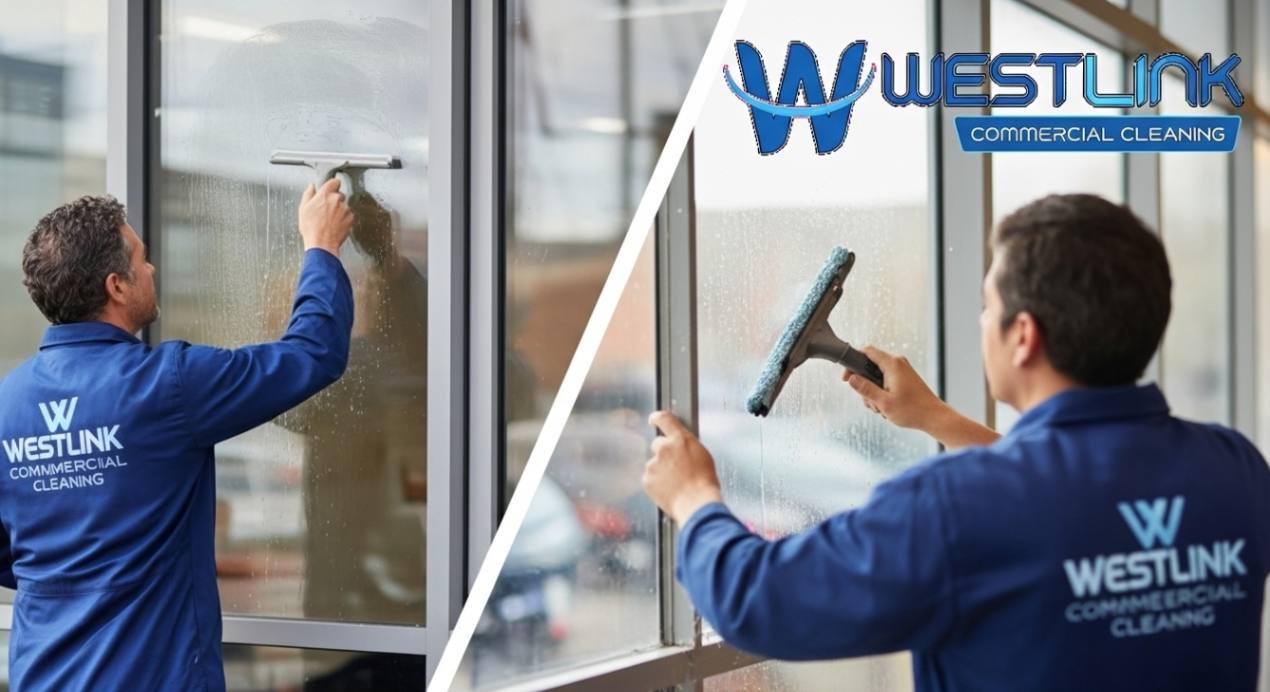
Exterior window cleaning refers to the cleaning of the outside-facing surfaces of windows, including the glass, frames, sills, and surrounding façade areas exposed to rain, wind, dust, pollution, bird droppings, pollen, and construction residue.
On commercial buildings, exterior cleaning is usually planned around access, height, traffic, weather, and façade condition. For properties that need a dedicated service, commercial exterior window cleaning in Sydney is often the right fit.
What is Interior Window Cleaning?
Interior window cleaning refers to the cleaning of glass surfaces, frames, sills, and sometimes tracks or glazing from inside the building. It focuses on removing smudges, fingerprints, dust, cooking film, condensation marks, and other residues that affect visibility, hygiene, and appearance.
For office interiors, reception areas, and customer-facing spaces, commercial interior window cleaning in Sydney helps maintain a cleaner and more professional finish.
Tools Used in Exterior and Interior Window Cleaning
Exterior
- Water-fed pole systems: Extendable poles with purified-water brushes that can clean many elevated windows from the ground where suitable.
- Rope-access cleaning: Used for high-rise façades where trained technicians work from harnesses and anchor points.
- Aerial lifts or scaffolding: Used in large complexes or access-restricted projects.
- Traditional squeegee method: Still common for ground-level storefronts and accessible glazing.
- Pure-water technology: Helps remove minerals and impurities for a spot-free result.
Interior
Interior window cleaning uses controlled tools to avoid streaking or water damage to flooring or furnishings. Common tools include:
- Microfibre cloths and scrubbers for smudge removal
- Squeegees with rubber blades for streak-free finishes
- Spray bottles with low-residue cleaning agents
- Extension poles for taller internal windows or skylights
- Vacuum systems for dust and debris in window tracks
- Steam cleaners for chemical-free sanitising where appropriate
Professional cleaners also use low-moisture techniques to avoid drips, especially in spaces with electronics, carpeting, or sensitive finishes.
Safety and Maintenance Practices
Exterior
Exterior window cleaning carries significant safety challenges, particularly for high-rise structures. Commercial work should follow site-specific safety procedures, including risk assessment, access planning, weather monitoring, and fall-prevention controls. Common requirements include:
- Certified rope-access training where rope work is used
- Anchor inspections before elevated work
- Weather monitoring to avoid high winds or rain
- Harnesses, helmets, and PPE for high-access jobs
- Emergency descent procedures for specialist access work
- Two-person supervision for complex or high-risk jobs
Exterior cleaning should be carried out with careful attention to the façade, the surrounding area, and the access equipment being used. Commercial teams usually document the work method before starting. For tall façades, commercial high-rise window cleaning in Sydney may be required instead of standard ground-based methods.
Interior
Interior window cleaning involves less physical risk than exterior work, but safety and environmental responsibility still matter. Best practices include:
- Furniture protection to prevent splash marks
- Proper ladder stability for high indoor windows
- Non-toxic, low-VOC cleaning solutions for indoor air quality
- Electrical safety awareness near outlets or equipment
- Ergonomic technique to reduce repetitive strain
Interior cleaning should be planned to minimise disruption to people, equipment, and business operations.
Frequency of Exterior and Interior Window Cleaning
The right cleaning frequency depends on location, building type, and environmental exposure.
Exterior
| Building Type | Recommended Frequency | Notes |
| Commercial Offices | Every 2–3 months | Maintains professional appearance |
| High-Rise Buildings | Monthly or bi-monthly | May be needed for visibility and presentation |
| Coastal Properties | Monthly | Salt and mineral accumulation build quickly |
| Retail Centres | Every 4–6 weeks | Supports customer-facing presentation |
Regular maintenance helps preserve transparency and shine while also extending glass lifespan by reducing etching and corrosion.
Interior
| Property Type | Recommended Frequency | Notes |
| Office Buildings | Monthly or bi-monthly | Keeps interiors bright and professional |
| Retail Stores | Every 2–4 weeks | Essential for presentation and hygiene |
| Restaurants | Weekly | Grease and steam build up quickly |
| High-Traffic Facilities | Bi-weekly | Helps keep glazing consistently clear |
Routine interior maintenance complements exterior cleaning and helps keep glass clear from both sides.
Commercial Window Cleaning Across Sydney
Different Sydney areas often create different cleaning demands. Coastal exposure, busy roads, business density, and glass-heavy commercial sites all affect how often windows should be cleaned and which methods work best.
Bankstown
Mixed commercial properties in the area may need more regular maintenance due to traffic film and general dust. That is why commercial window cleaning in Bankstown can be important for street-facing sites.
Chatswood
Office buildings and retail sites in business districts often need a more polished appearance, which makes commercial window cleaning in Chatswood a strong fit for busy commercial properties.
Crows Nest
Smaller offices, hospitality spaces, and glass-heavy frontage can benefit from scheduled commercial window cleaning in Crows Nest.
Edgecliff
Prestige commercial properties and visible façades often need cleaner presentation standards, so commercial window cleaning in Edgecliff fits this type of environment.
Epping
Business premises in the area may need routine exterior and interior maintenance, which is why commercial window cleaning in Epping belongs in this article.
Mosman
Coastal exposure and high presentation standards make commercial window cleaning in Mosman a useful service page for premium sites.
Neutral Bay
Office suites and hospitality venues in the area often need a mix of internal detailing and external maintenance, so commercial window cleaning in Neutral Bay is relevant here.
North Parramatta
Mixed business, office, and retail properties can benefit from scheduled care, which makes commercial window cleaning in North Parramatta a natural fit.
Rose Bay
Coastal wind, salt, and high-visibility storefronts mean commercial window cleaning in Rose Bay should be linked from this page.
Rosebery
Warehouses, creative offices, and commercial facilities in the area often need a practical cleaning schedule, making commercial window cleaning in Rosebery a strong internal target.
St Leonards
High-density office and commercial buildings are a strong match for commercial window cleaning in St Leonards.
Strathfield
Retail strips and mixed business areas can benefit from regular glass maintenance, which makes commercial window cleaning in Strathfield a useful location link here.
Common Challenges of Exterior and Interior Window Cleaning
Exterior
Exterior cleaning involves added risks and operational difficulties because of environmental exposure and building height. Common challenges include weather, access, stubborn dirt, safety hazards, fragile façades, and equipment limitations.
Interior
Interior cleaning can still be demanding because of streak control, water management, restricted access, indoor air residue, and the need to protect furnishings and equipment.
Experienced commercial teams follow structured sequences for both interior and exterior work to ensure precision, safety, and efficiency without interrupting operations.
Benefits of Exterior and Interior Window Cleaning
Exterior Benefits
- Enhanced curb appeal and professional image for street-facing and client-facing properties.
- Longer glass lifespan by removing dirt, minerals, and pollutants before they etch the surface.
- Improved daylight penetration into offices, retail spaces, and shared environments.
- Support for energy efficiency through better natural light.
- Early detection of damage such as cracked panes, corrosion, or loose seals.
- Better transparency for customers and visitors in retail and hospitality settings.
Interior Benefits
- Better indoor aesthetics with smudge-free, clear glazing.
- Improved light and mood for staff, visitors, and occupants.
- Healthier indoor environment by removing dust, residue, and contact marks.
- Preserved window treatments and surfaces around sills, tracks, and frames.
- Reduced glare and haze from internal films and buildup.
- Better presentation in customer-facing spaces such as receptions, restaurants, and showrooms.
Exterior vs Interior Window Cleaning – Key Differences
| Aspect | Exterior Window Cleaning | Interior Window Cleaning |
| Definition | Cleaning the outside-facing glass, frames, and sills exposed to outdoor conditions. | Cleaning the inside-facing glass, frames, and sills within the property. |
| Main Purpose | Removes dust, pollution, bird droppings, and hard water stains from weather exposure. | Removes fingerprints, smudges, residue, and indoor film for a clear finish. |
| Cleaning Agents Used | Typically involves purified water, biodegradable soaps, and glass-safe detergents. | Uses low-moisture cleaners that protect indoor finishes and air quality. |
| Common Challenges | Weather changes, access height, mineral buildup, and bird droppings. | Avoiding streaks, preventing drips, and reaching behind fixtures. |
| Safety Measures | May require ladders, platforms, rope access, or other fall-prevention controls depending on the site. | Focuses on electrical safety, non-toxic products, and protection of interior furnishings. |
| Frequency | Commercial sites often require cleaning every 1–3 months depending on exposure and presentation needs. | Commercial interiors may need monthly or bi-monthly cleaning depending on traffic and use. |
| Time Required | Usually longer because of height, access, and weather conditions. | Usually faster depending on the layout and number of panes. |
| Cost Factors | Affects include building height, glass type, and accessibility challenges. | Affects include the number of windows, size, and interior layout. |
| End Result | Improves curb appeal, light reflection, and property value. | Improves indoor clarity, ambiance, and professional presentation. |
While both exterior and interior cleaning are essential, exterior windows often face harsher conditions and usually require more specialised care on commercial properties.
FAQ
What is the difference between exterior window cleaning and interior window cleaning?
Exterior cleaning covers the outside-facing glass, frames, and sills exposed to weather and access challenges. Interior cleaning addresses inside surfaces, smudges, residue, and occupant-facing glazing.
How often should exterior windows be cleaned vs interior windows?
It depends on exposure and use. Exterior windows in high-traffic or coastal settings may need more frequent cleaning, while interior windows in commercial spaces may need monthly or bi-monthly attention.
Does interior window cleaning matter if the exterior is already clean?
Yes. Interior film, smudges, dust, and residue still affect light quality, clarity, and the overall appearance of the building.
Are different tools or techniques required for interior vs exterior window cleaning?
Yes. Exterior work often uses water-fed poles, lifts, rope access, and purified water. Interior work uses microfibre cloths, squeegees, low-moisture cleaners, and furniture protection.
What are the main cost drivers for exterior window cleaning compared to interior cleaning?
Exterior work is affected by height, access complexity, weather exposure, contamination, and safety controls. Interior work is affected by the number of panes, layout, and the need to protect furnishings and equipment.
When should a commercial building owner choose professional window cleaning rather than DIY?
Professional service is recommended when the building has high façades, difficult access, heavy contamination, customer-facing glass, or safety and disruption concerns.
What safety considerations differ between exterior and interior window cleaning?
Exterior cleaning has higher risk because of height, access, and weather. Interior cleaning has lower height risk, but still requires care around occupants, furniture, wet floors, and equipment.
Can one service provider handle both interior and exterior window cleaning?
Yes. Many providers handle both, but the company should have the right equipment, training, insurance, and commercial experience for each scope.
How does window cleaning contribute to building maintenance and asset value?
Regular cleaning helps preserve glass and seals, improves natural light, enhances occupant comfort, supports curb appeal, and extends glazing lifespan.
What questions should I ask before engaging a window-cleaning company?
Ask about access equipment, safety systems, commercial experience, what is included, cleaning frequency recommendations, disruption management, and insurance.