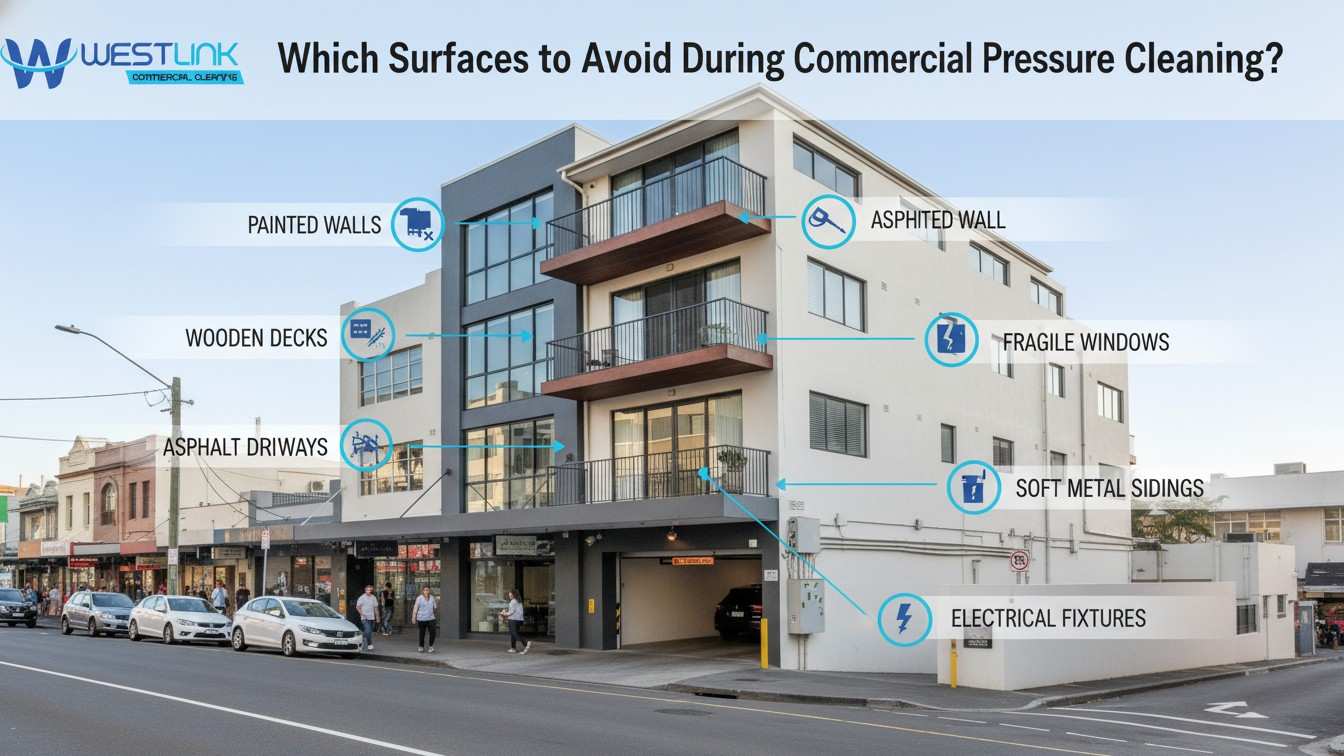
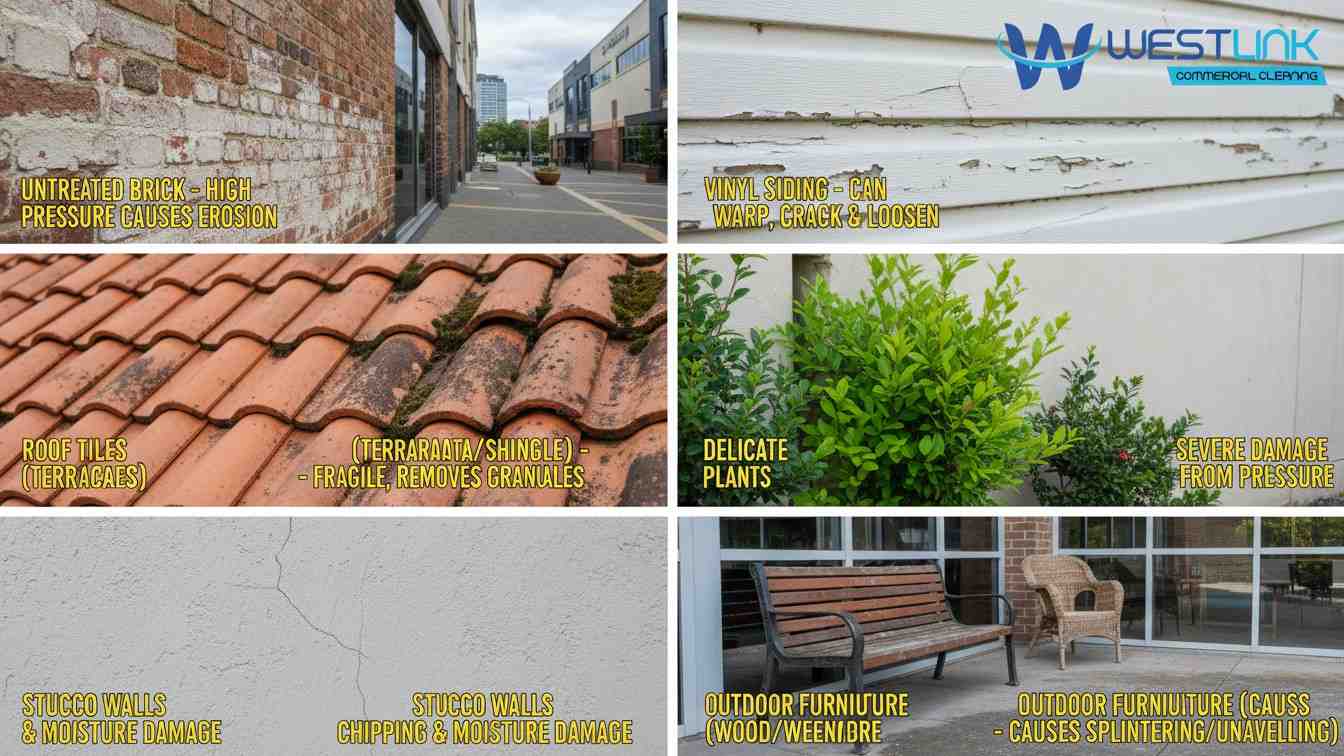
Pressure cleaning can quickly remove dirt, mould, grease and stains, but using it on the wrong surfaces can cause long-term and often irreversible damage that is expensive and difficult to repair. Certain materials are simply not designed to handle high-pressure water, including surfaces that are soft, porous, sealed, aged or structurally delicate. According to the U.S. General Services Administration (GSA), high-pressure cleaning is not recommended for porous masonry because it can drive water deep into cracks and cause erosion or structural damage over time.
When pressure cleaning is applied incorrectly, it can strip protective coatings, remove surface layers, force water deep into materials, weaken internal structures, and create serious safety hazards such as electrical faults and hidden moisture damage. Understanding exactly which surfaces to avoid during pressure cleaning is essential for preventing property deterioration, avoiding unnecessary repair costs, and extending the life of building materials, outdoor areas, and critical structural surfaces.
Painted Walls and Painted Surfaces
Painted surfaces are among the most common areas damaged by improper pressure cleaning. High-pressure water can strip away paint layers almost instantly, leaving walls with a blotchy, uneven appearance and exposing the underlying material to the elements. Once the protective paint layer is compromised, the surface becomes highly vulnerable to water penetration, mildew, mould, and long-term deterioration. Even a single improper cleaning session can start a chain of damage that may require costly repainting or wall repairs.
The risks of pressure cleaning on painted surfaces include:
- Peeling and blistering paint, caused by the force of water separating the paint from the wall surface.
- Uneven surface appearance, which often requires sanding or repainting to restore uniformity.
- Loss of protective coatings leaves walls susceptible to weather damage, UV fading, and moisture absorption.
- Moisture absorption into walls can lead to mould growth, dampness, and structural weakening over time.
- Long-term staining issues, as dirt and grime, penetrate the now-unprotected surface.
Using pressure cleaning incorrectly on painted walls not only affects appearance but also reduces the lifespan of the surface. For safety and durability, painted walls should be cleaned with low-pressure washing, soft-bristled brushes, or professionally applied surface-safe solutions that remove dirt without stripping protective coatings.
Timber Decking
Timber decking is highly susceptible to damage from improper pressure cleaning because wood is naturally porous and absorbs water quickly. High-pressure water can penetrate deep into the wood fibres, causing both visible and hidden structural damage. National Park Service (NPS) In its preservation guidance for historic buildings, the NPS notes that even water under pressure may count as an abrasive cleaning method on sensitive building materials, recommending only the gentlest methods to preserve structural integrity
Over time, this trapped moisture accelerates decay, weakens the decking, and can make it unsafe for use. Even well-maintained timber is vulnerable if exposed to excessive high-pressure washing without proper techniques. Using the wrong pressure or nozzle can also remove protective finishes, leaving the wood open to algae, rot, and mould.
Common issues caused by pressure cleaning timber decking include:
- Raised wood grain creates a rough surface and splinters.
- Splintering can damage the decking and cause injury.
- Softening of wood fibres, reducing load-bearing capacity.
- Structural weakening affects the stability of the deck over time.
- Rot development, especially in joints, fasteners, and hidden areas.
Using pressure washing incorrectly on timber decks not only reduces their lifespan but also increases maintenance costs. To protect timber surfaces, use low-pressure washing, timber-safe cleaners, or professional soft-wash techniques that remove dirt and grime without damaging the wood structure or protective coatings.
Timber Fences and Pergolas
Timber fences and pergolas may appear durable, but they are highly vulnerable to pressure cleaning due to the natural porosity of wood. High-pressure water can force moisture deep into the timber, weakening the structural fibres, accelerating rot, and reducing the lifespan of these outdoor features. Even treated or sealed timber can suffer damage if the wrong pressure or nozzle is used, and repeated exposure to high-pressure washing can compromise joints and protective coatings, leading to early deterioration and costly repairs.
Common damage caused by pressure cleaning timber fences and pergolas includes:
- Cracked timber boards from water force splitting fibres
- Dislodged joints that weaken the structural integrity
- Increased moisture intake, leading to mould, mildew, and rot
- Early ageing, reducing lifespan and aesthetic appeal
- Splitting wood, which cannot be fully restored even with resealing
Using improper pressure washing techniques on timber fences and pergolas not only damages the wood but also increases maintenance costs and reduces long-term durability. For safety and longevity, it is recommended to use low-pressure washing, timber-safe cleaning solutions, or professional soft-wash methods that clean effectively without harming the timber fibres or structural stability.
Roof Tiles
Roof tiles are designed to shed rainwater naturally and are not built to withstand high-pressure cleaning. Using pressure cleaning on tiles can cause serious and often hidden damage, compromising the roof’s protective function and potentially leading to costly repairs. Water forced under tiles can penetrate insulation, weaken supporting beams, and even damage ceilings over time. Improper pressure washing not only affects the appearance of the roof but also increases the risk of leaks and structural problems that may go unnoticed until severe.
Common damage caused by pressure cleaning roof tiles includes:
- Tile cracking, which weakens the roof’s durability and appearance
- Loosening of ridge caps, compromising roof stability
- Removal of surface coatings, exposing tiles to weather and UV damage
- Water penetration under tiles, leading to hidden structural damage
- Increased risk of leaks, causing interior water damage and mould growth
Using pressure cleaning on roof tiles without professional guidance can result in long-term deterioration. For safe maintenance, it is recommended to use low-pressure washing, soft-brush techniques, or professional roof cleaning services that remove dirt, moss, and algae without harming the tiles or underlying structures.
Roof Shingles and Metal Roofing
Roof shingles and metal roofing are particularly vulnerable to pressure cleaning because high-pressure water can strip away protective coatings and compromise the materials’ durability. Using pressure washing on these surfaces can accelerate rust formation, weaken fasteners, and create hidden points of water ingress, which can lead to long-term structural damage. Repeated exposure to improper pressure cleaning techniques reduces the lifespan of shingles and metal panels, making roofs more prone to leaks, corrosion, and costly repairs.
Common damage caused by pressure cleaning roof shingles and metal roofing includes:
- Seal failure, allowing water to penetrate under roofing layers
- Rust development, especially on metal sheets or fasteners
- Shortened lifespan, as repeated pressure removes protective coatings
- Internal leakage, causing damage to ceilings, insulation, and rafters
- Weakened fixings, reducing roof stability and durability
For safe maintenance of roof shingles and metal roofing, it is recommended to use low-pressure washing, soft-wash solutions, or professional roof cleaning services that effectively remove dirt, moss, and algae without stripping protective coatings or compromising structural integrity.
Old Brickwork
Old brickwork is fragile and can be damaged by pressure cleaning. High-pressure water erodes mortar, causing brick shifting and structural weakening. Water absorption increases internal dampness and mould growth. Repeated exposure accelerates masonry deterioration. Low-pressure washing or soft-brush techniques protect old bricks while removing grime.
Mortar Joints
Mortar joints are softer than brick and sensitive to pressure cleaning. High-pressure washing causes crumbling, cracks, and hidden moisture penetration. Compromised joints increase structural weakening and mould risk. Improper cleaning accelerates deterioration. Professional low-pressure or soft-wash methods maintain wall stability while cleaning effectively.
Windows and Glass Panels
Windows and glass panels are highly delicate under pressure cleaning. High-pressure water can cause cracks, seal failure, and frame warping. Leaks reduce energy efficiency and damage interiors. Continuous improper cleaning compromises both appearance and function. Safe maintenance uses low-pressure washing or glass-safe soft-wash techniques.
Skylights
Skylights are vulnerable to pressure cleaning, which can damage seals and glass. Water intrusion leads to condensation, mould, and interior damage. Improper washing reduces lifespan and causes costly ceiling repairs. High-pressure exposure compromises structural and waterproofing integrity. Professional low-pressure cleaning ensures safe and effective maintenance.
Electrical Boxes and Wiring
Electrical boxes and wiring are extremely sensitive to pressure cleaning. Water exposure causes short circuits, corrosion, and fire hazards. Improper cleaning damages connections and electrical equipment. High-pressure washing near electrical systems is unsafe. Only professional electrical-safe methods should be applied.
Outdoor Lighting
Outdoor lighting fixtures can be damaged by pressure cleaning. Water ingress causes rust, electrical failure, and reduced lifespan. Improper washing may short circuits or damage bulbs. Continuous exposure increases maintenance costs. Low-pressure or soft-brush cleaning ensures safe functionality.
CCTV Cameras and Security Systems
CCTV cameras and security systems are sensitive to pressure cleaning. Water penetration can cause lens damage, system failure, and corrosion. Improper cleaning reduces reliability and voids warranties. High-pressure exposure risks property security. Professional soft-wash or low-pressure cleaning is recommended.
Air Conditioning Units
Air conditioning units are vulnerable to pressure cleaning. High-pressure water bends fins, damages motors, and infiltrates electrical components. Improper washing reduces airflow, increases corrosion, and shortens lifespan. Repeated exposure raises energy costs. Professional low-pressure coil cleaning preserves efficiency and longevity.
Ventilation Outlets and Duct Areas
Ventilation outlets and ducts should not be subjected to pressure cleaning. Water intrusion causes mould growth, insulation damage, and reduced airflow efficiency. Improper washing compromises indoor air quality. Continuous exposure accelerates system deterioration. Professional soft-wash or duct-cleaning methods safely maintain functionality.
Vehicles and Engine Bays
Vehicles and engine bays are highly sensitive to pressure cleaning. Water can infiltrate seals, electronics, and mechanical components. Improper washing causes paint stripping, electrical faults, and corrosion. Repeated exposure reduces lifespan and vehicle performance. Safe cleaning uses low-pressure methods or professional automotive soft-wash techniques.
Outdoor Furniture and Fabric Surfaces
Outdoor furniture and fabrics are easily damaged by pressure cleaning. High-pressure water can warp frames, tear fabrics, and saturate cushions. Improper cleaning promotes mould, mildew, and material degradation. Continuous exposure reduces lifespan and aesthetics. Professional soft-wash cleaning preserves both durability and appearance.
Sealed Concrete and Polished Surfaces
Sealed concrete and polished surfaces lose protective coatings under pressure cleaning. High-pressure washing causes surface dulling, erosion, and increased porosity. Improper cleaning reduces durability and increases stain vulnerability. Continuous exposure accelerates wear and shortens lifespan. Low-pressure or professional surface-safe cleaning is recommended.
Natural Stone (Marble, Limestone, Travertine, Granite)
Natural stone surfaces are sensitive to pressure cleaning, especially porous stones like marble, limestone, and travertine. High-pressure water can cause chipping, surface erosion, and internal cracking. Improper washing promotes moisture absorption, staining, and reduced durability. Repeated exposure accelerates wear and shortens lifespan. Professional soft-wash or low-pressure techniques maintain appearance and structural integrity.
Asphalt Driveways and Pebblecrete
Asphalt driveways and pebblecrete deteriorate quickly under pressure cleaning. High-pressure water dislodges stones, erodes binder, and weakens surfaces. Improper washing reduces aesthetics and accelerates wear. Continuous exposure shortens lifespan and increases maintenance costs. Using low-pressure washing or soft-brush techniques preserves structural integrity and appearance.
Painted Metal and Powder-Coated Surfaces
Painted metal and powder-coated surfaces are vulnerable to pressure cleaning. High-pressure water can cause paint peeling, rust, and coating damage. Improper washing reduces durability and exposes metal to corrosion. Repeated exposure accelerates deterioration and maintenance needs. Low-pressure washing or professional surface-safe cleaning preserves coating and longevity.
Artificial Turf, Soft Plastics, and Rubber Surfaces
Artificial turf, soft plastics, and rubber surfaces are highly sensitive to pressure cleaning. Water can warp, tear, or separate backing layers, causing material failure. Improper washing reduces durability and appearance. Repeated exposure promotes colour fading, cracking, or shrinking. Professional soft-wash cleaning ensures safe maintenance without compromising structure.
Advantages of Using Pressure Cleaning the Right Way
When pressure cleaning is used only on safe and suitable surfaces, it becomes one of the most effective maintenance methods for both residential and commercial properties. Correct usage delivers powerful results without putting materials at risk. When used correctly, pressure cleaning is one of the most effective methods for maintaining and restoring surfaces. Proper pressure washing not only removes harmful contaminants but also extends surface lifespan and protects structural integrity. It eliminates mould, algae, and bacteria from external areas, improving hygiene while enhancing the overall appearance of outdoor and indoor surfaces. Pressure cleaning can restore original colour and texture, prepare surfaces for painting or sealing, and improve safety by removing slippery build-up.
Some of the key benefits include:
- Reduces long-term maintenance costs by preventing material degradation
- Improves appearance instantly without the overuse of chemicals
- Protects structural integrity when used on approved surfaces
- Restores original surface colour and texture
Pressure cleaning is safe and highly effective when applied to suitable surfaces with the correct pressure levels. Using it incorrectly, however, can lead to damage, which is why surface-specific knowledge or professional service is recommended.
Why Professional Pressure Cleaning Makes a Difference
Different surfaces require different pressure levels, detergents and techniques. Home equipment cannot offer the calibration or experience needed to prevent damage to delicate or high-risk areas. Professional pressure cleaning uses controlled equipment, surface-specific techniques and experienced operators to ensure effective cleaning without material failure.
Professional service ensures:
- Correct pressure selection for each surface
- Safe use around electrical fixtures
- No damage to paint, coatings or sealants
- No water intrusion into building structures
- Long-term surface protection
- Industry-grade equipment handling
- Surface-specific chemical treatment
- Correct water flow control
This professional approach prevents the common mistakes that lead to cracked tiles, ruined wood, stripped paint and costly waterproofing failures.
Trusted Pressure Cleaning Service
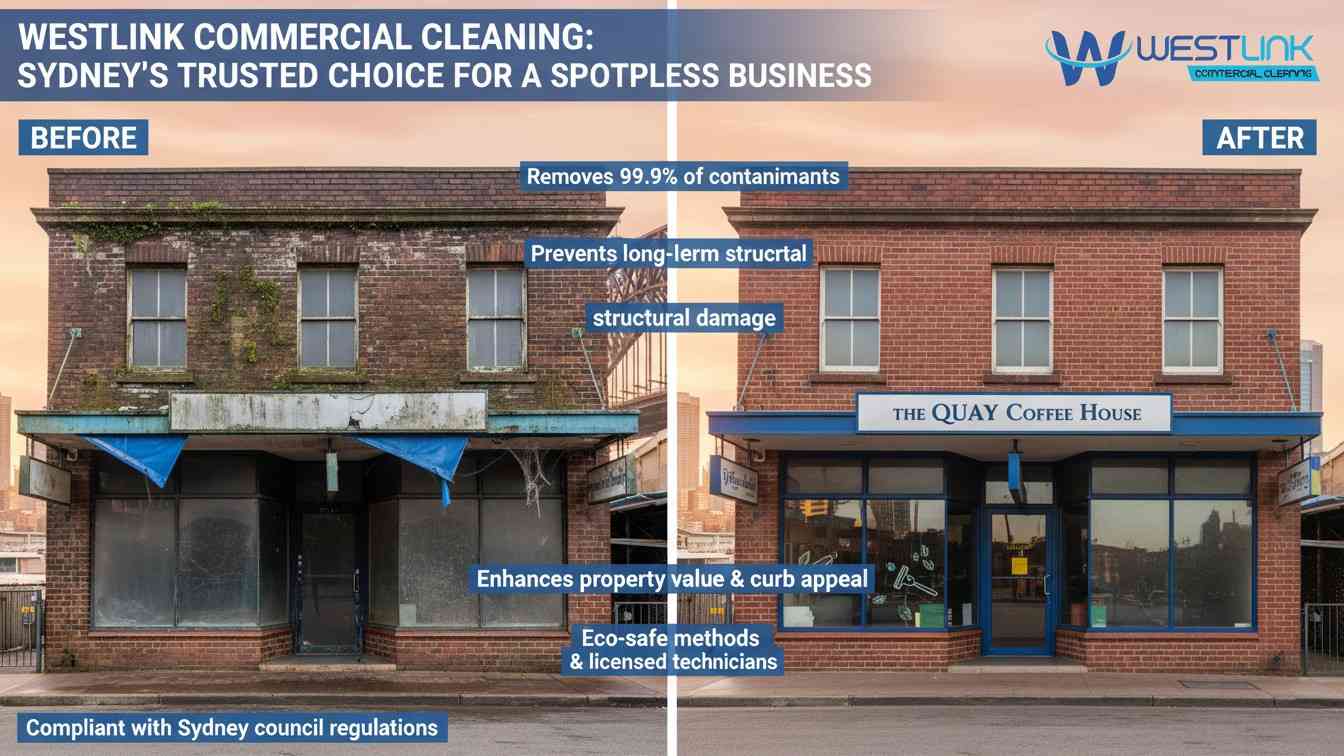
If you want professional pressure cleaning without the risk of surface damage, Westlink Commercial Cleaning offers expert-grade services designed to protect your property while delivering premium results. Our team provides a wide range of solutions, including commercial pressure cleaning, exterior building cleaning, roof cleaning using low-pressure treatments, driveway and hard surface restoration, and industrial cleaning solutions. We also specialise in soft washing for delicate surfaces and the removal of mould, algae, and grease, along with scheduled maintenance services to keep your property in top condition. Using surface-specific pressure levels, professional detergents, and damage-free cleaning methods, we ensure every surface is cleaned safely and thoroughly. To book professional pressure cleaning services, simply visit our website and request a service quote through our online form.
Conclusion
Pressure cleaning is a powerful and effective method for maintaining exterior surfaces, but using high-pressure water on the wrong materials can lead to irreversible damage, hidden moisture issues, safety hazards, and costly repairs. Avoiding pressure cleaning on vulnerable surfaces such as timber, painted or coated finishes, roof tiles and shingles, aged brick and mortar, glass, electrical equipment, HVAC units, vehicles, sealed or decorative surfaces, and other fragile or porous materials is essential to protect appearance, structural integrity, and long-term durability. Always apply surface-appropriate methods like soft washing, low-pressure rinses, chemical treatments, or careful manual cleaning when necessary. Understanding which surfaces to avoid ensures safe, effective pressure cleaning while extending the lifespan and performance of your property.
Frequently Asked Questions
What surfaces should never be pressure cleaned?
You should avoid timber, painted or coated surfaces, roof tiles and shingles, old brick and mortar, glass, electrical equipment, HVAC units, vehicles, sealed or decorative surfaces, and other fragile or porous materials, as high-pressure water can cause irreversible damage, moisture penetration, or structural weakening.
Why is pressure cleaning harmful to timber surfaces?
Timber decking, fences, and pergolas absorb water easily. High-pressure cleaning can cause splintering, raised grain, softening, and rot, reducing structural integrity and lifespan. Soft or old timber is particularly at risk.
Can painted walls survive pressure cleaning?
Painted walls and coatings are vulnerable to peeling, blistering, and uneven surfaces when exposed to high-pressure water. Improper cleaning can strip protective layers, expose the underlying material, and cause long-term moisture damage.
Is it safe to pressure clean roof tiles and shingles?
No. Roof tiles and shingles are designed to shed rainwater, not withstand concentrated water pressure. Pressure cleaning can cause cracking, loose ridge caps, coating removal, and water penetration under tiles, leading to hidden leaks and structural damage.
Why should electrical boxes and HVAC units be avoided during pressure cleaning?
Electrical equipment and HVAC units can be severely damaged by water ingress. High-pressure washing can cause short circuits, corrosion, and system failure, posing safety hazards and expensive repairs.
Can natural stone and decorative surfaces be pressure cleaned safely?
Porous natural stone like marble, limestone, travertine, and granite, as well as decorative surfaces, are prone to chipping, surface erosion, cracking, and moisture absorption under high-pressure cleaning. Low-pressure or professional soft-wash techniques are recommended.
Are vehicles safe to pressure clean?
Vehicles and engine bays are sensitive to high-pressure cleaning. Water can damage paint, electrical components, seals, and mechanical parts, causing corrosion, electrical faults, and reduced performance.
What happens if I pressure clean sealed concrete or polished surfaces?
Sealed concrete and polished surfaces can lose their protective coatings, become more porous, stained, and eroded, and appear dull over time. Low-pressure cleaning or professional surface-safe methods are recommended.
How do I safely clean delicate or high-risk surfaces?
Use surface-appropriate methods such as soft washing, low-pressure rinses, chemical treatments, or manual cleaning. Always adjust pressure levels according to material type to prevent damage and reduce maintenance costs.
Why is knowing which surfaces to avoid important for pressure cleaning?
Understanding vulnerable surfaces prevents irreversible damage, hidden moisture issues, safety risks, and expensive repairs. Proper surface-specific cleaning ensures long-term structural integrity, appearance, and durability while maximizing the benefits of pressure cleaning.