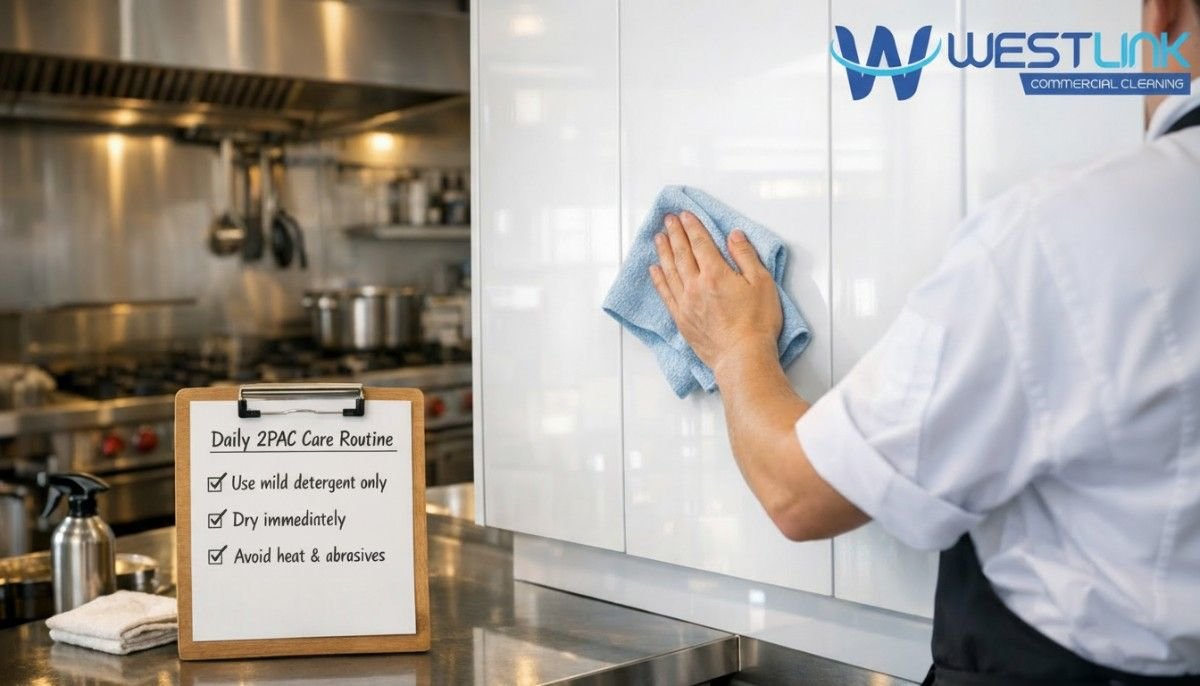
A clean commercial kitchen shows that a business cares about quality and hygiene. It also helps protect surfaces that are used every day, including 2PAC kitchen cupboards. 2PAC cupboards look smooth, modern, and professional, but they need proper care. In busy kitchens, they face grease, steam, fingerprints, spills, and daily use. If they are cleaned the wrong way, they can become dull, scratched, or damaged. For businesses that already focus on presentation with providers like Westlink Commercial Cleaning, keeping 2PAC cupboards in good condition should be part of that same standard.
The good news is that 2PAC cupboards are not difficult to maintain. They simply need the correct cleaning method. When cleaned properly, they can stay smooth, neat, and attractive for much longer. When cleaned the wrong way, they can become dull, scratched, streaky, or damaged around the edges.
Related Kitchen Cleaning Guides
For more practical advice on keeping your commercial kitchen spotless, explore these helpful guides:
What 2PAC kitchen cupboards are and why they need special care
2PAC is a painted finish that is applied to kitchen cupboard doors and fittings. It is a process where a polyurethane finish is applied, and as a result, the finish looks smooth, polished, and extremely durable because of the strong hygienic and aesthetically pleasing nature of 2PAC, it is often used in commercial kitchens where maintaining a neat appearance is essential.
2PAC kitchen cupboards are tough, but they will become damaged if they are cleaned with rough materials and a cleaning solution that is aggressive. In a domestic kitchen, it may take longer for the cupboards to become damaged. However, in a commercial kitchen, the cupboards will become damaged much quicker because there is grease and steam, and they are touched more and cleaned more often.
Based on this, the cleaning of 2PAC cupboards should be done using a cleaning technique that is safe, easy and that removes the grease and other marks without damaging the surface. When a business utilizes this technique, cleaning and maintaining the cupboards will be an easy task.
Common Problems with 2PAC Kitchen Cupboards
Different businesses that use 2PAC cupboards face different challenges. For example, in a busy cafe, grease build up occurs, making the surface look dirty and unsightly. For other businesses, such as restaurants, the oil from finger tips, builds up on all the touch points of the serving area. This is also the case for hotel kitchens, where the oil and sauce build up in the prep area. Once a gap is created in the seams, that place becomes the perfect hiding place for the grease. All the areas mentioned above are areas where the NSW Food Authority inspectors look for evidence of grease buildup due to the risk of cross contamination. From the experience of other professionals in the field, the most painful thing about these areas is that the small issues turn into the biggest and most expensive problems. Left ignored, routine maintenance of these areas of a kitchen will cause it to not be operational during an audit. Once the operative grease build up in a significant area is done, it will save large amounts of time that would be required for the cleaning and maintenance.
How to Clean 2PAC Cupboards Safely Step by Step
Keeping 2PAC cupboards clean is important if you want them to stay neat, smooth, and attractive for a long time. The good news is that cleaning them safely is not difficult. You do not need strong chemicals or rough cleaning tools. In fact, the best method is a simple one. When you use the right items and follow the right steps, you can clean the cupboards well without damaging the finish.
Step 1: Get everything ready before you start
If a stronger workplace cleaning product is ever used for a stubborn mark, make sure the product’s Safety Data Sheet (SDS) is available and followed before use.. You will need a soft microfibre cloth, warm water, and a small amount of mild detergent. It is also important to keep a second clean, soft cloth ready for drying. Having everything prepared first makes the job easier and faster. It also helps you clean the cupboards in one smooth process without stopping again and again.
Using the right materials is the first step because 2PAC cupboards need gentle care. A soft cloth is safe for the surface, while mild detergent helps remove dirt and grease without being too harsh. This simple start helps protect the finish from damage.
Step 2: Make the cloth damp, not soaking wet
Once your cleaning items are ready, dip the soft cloth into the warm water mixed with a small amount of mild detergent. After that, squeeze the cloth well. The cloth should be damp, not dripping wet. This is very important because too much water can leave marks on the cupboard surface and may collect around the edges.
A damp cloth is enough to lift dust, light grease, and fresh marks from the cupboards. It cleans the surface without putting too much moisture on it. This makes the process safer and helps keep the cupboards in better condition.
Step 3: Start cleaning from the top and move down
When you begin wiping the cupboards, always start at the top and work your way down. This is a smart and simple method because dust and dirt usually move downward while cleaning. If you start from the bottom, you may end up cleaning the same area again. Starting from the top helps make the work cleaner and more organised.
As you wipe, move the cloth gently across the surface. This method helps remove dust, grease, and marks in a careful way. It also makes sure every part of the cupboard gets proper attention without missing any areas.
Step 4: Use a gentle touch while wiping
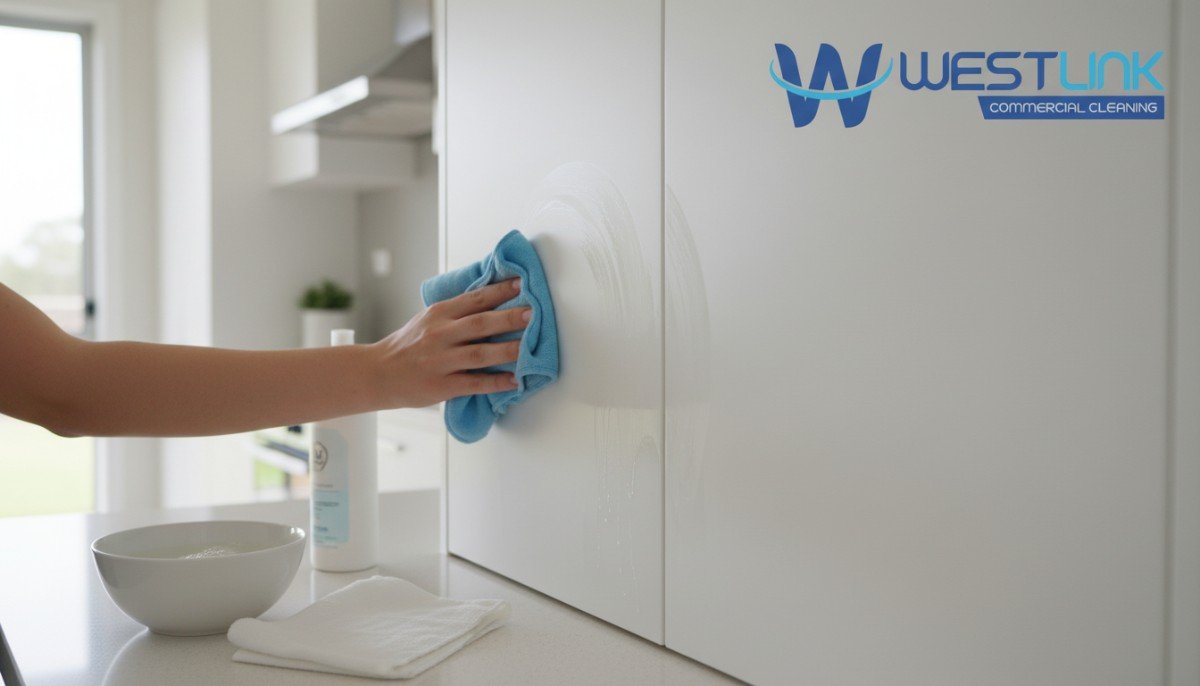
2PAC cupboards have a smooth and attractive finish, so they should always be cleaned with care. While wiping the surface, use a soft and gentle touch. There is no need to scrub hard or press too much. Hard scrubbing can put stress on the finish and may reduce the neat look of the cupboards over time.
Gentle wiping is enough for regular cleaning. It helps protect the surface while still removing the dirt you can see. This step is vital because gentle treatment keeps the finish intact.
Step 5: Dry the cupboards straight away
After you finish wiping the surface, use the second clean, soft cloth to dry the cupboards right away. Do not leave the surface wet. Drying is a very important step because it helps stop streaks, watermarks, and moisture from staying on the cupboards.
This step is especially helpful for glossy or dark-coloured cupboards. These surfaces often show marks more easily, so drying them well makes a big difference. A dry surface not only looks cleaner but also helps protect the edges and corners from moisture.
Step 6: Check the cupboards after cleaning
Once the cupboards are clean and dry, take a quick look at them. Check if there are any marks left behind or any places that still look dusty. This final check helps make sure the cleaning has been done properly. It also gives the cupboards a neat and polished look.
This step may seem small, but it is useful because it helps keep a good standard of cleaning. A quick check at the end can help you notice areas that may need a little more care.
Step 7: Follow the same routine every day in busy areas
In places like commercial kitchens, some cupboard areas are touched many times every day. These high touch areas can collect grease, dust, and marks more quickly. That is why it is best to follow this same cleaning method every day. A regular routine keeps the cupboards clean and helps stop dirt from building up.
This simple daily method is easy for staff to follow and easy to teach to others. When everyone uses the same safe process, the cupboards stay in better condition and the cleaning work becomes more consistent. A good routine saves time and helps protect the joinery over the long term.
What products are suitable for tougher marks
Marks and stains found on kitchen cabinets can sometimes resist quick cleaning with warm water and dish soap. Some of these stains can include grease, dried sauce, coffee stains, finger marks and other similar stains that are found in high traffic areas. In these cases, the surface should still be cleaned, but the stains should be treated with extra care.
You may use a non-abrasive cleaner that is safe for painted cupboards, as long as it is safe for 2PAC finishes. Please test it on a less visible area first, and if it leaves the color unchanged and the area looks good, you may gently apply it to the marked area. Then, use a clean damp cloth to wipe the area and dry it well.
This step is really important, as strong cleaning products can damage the surface. A strong cleaning solution may remove the mark, but it may also dull the surface finish. A cleaner that leaves a residue can also causes the cupboard to get dirty again sooner. That is why it is often best to first use the gentlest method.
What Should Never Be Used on 2PAC Cupboard Doors
Some items, as well as tools, should never touch 2PAC cupboard doors. For example, abrasive pads, steel wool, scouring cream, hard brushes, and rough cloths can damage the surface. They can remove finish, create dull patches, and make permanent blemishes. Scratches on the surface can make the cabinet look old and worn much quicker.
Also, strong cleaning products should never touch 2PAC cupboard doors. Heavy degreasers, bleach-based sprays, bathroom cleaners, and any solvents can harm the finish. Even products that work well for cleaning stainless steel and tiles may be harmful to a painted cupboard door.
That is why it is important to follow the right cleaning method every time. When staff know what to use and what to avoid, the chance of damage becomes much lower. This helps the finish stay smooth, clean, and in good condition for longer.
How to Remove Grease from 2PAC Kitchen Cupboards
Grease is one of the biggest problems on 2PAC kitchen cupboards. It does not always show up as a thick layer. Most of the time, it builds up little by little. A small amount lands on the cupboards while cooking. Then more grease settles the next day. After some time, the cupboard doors start to feel sticky, look dull, and show fingerprints very easily.
The best way to remove grease is to clean it early and clean it often. Use a soft cloth with warm water and mild detergent to wipe away fresh grease before it becomes harder to clean. If the grease has been sitting for a longer time, do not scrub hard. Wipe the surface gently more than once. This helps remove the grease without damaging the 2PAC finish.
Pay extra attention to cupboards near cooking areas and busy work spaces. These spots collect more grease than other areas. Check them often and clean them first. When you clean these areas on a regular basis, the cupboards stay cleaner and keep their smooth finish for a longer time.
How to remove dried food and stubborn marks
Food stains and marks can be dried sauce, spilt food, dripping coffee, fingerprints, and even pen marks! They can be challenging to remove, but you have to be cautious and describe the marks you have found all over the kitchen cupboards. Wipe the stain and dampen a clean, soft cloth. This will help loosen the dried food, and once it softens, gently remove it using the damp cloth. This is not as unsafe as rubbing hard and leaving unwanted stains.
For even more stubborn marks, allow a surface-safe 2PAC cleaner to loosen it. Please test it first on a small area that is not easily visible. Make sure to use it for that stubborn stain only.
When washing kitchen cupboards, avoid wetting an entire door for just a small stain. Also, avoid pouring harsh cleaners over stains that have not been cleaned. Cleaning only the stained area helps the cupboard surface remain smooth.
Why Steam and Water Can Harm 2PAC Kitchen Cupboards
People often assume that the biggest problem is grease, but it is the steam and water that can be even more problematic. They often damage cupboards slowly and quietly over time. Daily kitchen work creates a lot of moisture. Steam from ovens, water from sinks, and heat from wash areas can all reach nearby cupboards. Water left on edges, corners, and joins can slowly damage the surface and the material underneath.
Poor air circulation in confined spaces can lead to cupboard doors becoming damaged, even doors that look clean. Doors often accumulate water around handles and seams, which begin to cause damage to the door over time. Eventually, visible damage such as bubbling or swelling around the edges will occur. Once these symptoms appear, it becomes more serious than just cleaning the door.
So remember that cleaning and drying go hand in hand. After cleaning the cabinets, though, it is important to dry the edges. For signs of damage, it is important to inspect things beforehand. It is possible to reduce or cover up an issue.
How often should 2Pac’s cupboards be cleaned
Daily and Weekly Step by Step 2PAC Cleaning Routine
Keeping 2PAC kitchen cupboards clean does not have to be hard. A simple daily wipe and a weekly deep clean can help the cupboards stay bright, smooth, and easy to maintain. This routine is easy to follow and works well in a busy kitchen.
- Start by removing dust and loose dirt from the top, sides, and edges of the cupboards.
- Mix a few drops of mild dish soap into a bucket of warm water.
- Wipe the cupboard surfaces with a damp microfibre cloth using gentle circular motions.
- Use a clean damp cloth to wipe away any soap left on the surface.
- Dry the cupboards right away with a fresh, dry microfibre cloth.
- Clean handles and edges carefully because these areas are touched the most.
- Once a week, do a deeper clean by giving extra attention to greasy spots.
- Empty nearby shelves first if needed so you can clean more easily.
This step by step routine helps keep 2PAC cupboards clean without taking too much time. The daily cleaning removes dust, light grease, and marks before they build up. Drying the surface right away also helps stop water marks from forming. That same principle appears in many commercial maintenance systems, including those followed by Westlink Commercial Cleaning, where routine work is usually more effective than leaving surfaces until build-up becomes obvious.
The weekly clean gives you more time to deal with grease and dirt that daily wiping may miss. When you follow this routine regularly, the cupboards stay neat, smooth, and fresh-looking. It also makes the whole cleaning process easier and faster over time.
Deep Cleaning Heavy Grease and Stubborn Stains Without Damaging the Finish
Sometimes grease and tough marks do not come off with a normal wipe. In that case, you need a deeper cleaning method that is strong on dirt but gentle on the surface. The goal is to remove the mess without harming the smooth 2PAC finish.
- Spray a safe degreaser or sugar soap on the greasy area.
- Leave it there for a few minutes so the grease can loosen.
- Wipe the surface gently with a soft microfibre cloth or soft sponge.
- For tough marks like dried sauce or label ink, use a small amount of mentholated spirits on a clean cloth.
- Test the product on a small hidden spot first.
- Wipe in one direction for better control and a cleaner result.
- Rinse the area straight away with a clean damp cloth.
- Dry the surface fully after cleaning.
- Do not soak the cupboard surface.
- Do not let liquid sit in corners, edges, or joints.
This method works well when grease has built up over time and normal cleaning is not enough. Letting the cleaner sit for a short time helps break down the grease, so you do not need to scrub hard. Gentle wiping is important because rough cleaning can dull or damage the finish.
For stubborn stains, always be careful and test first before cleaning the full area. This helps you make sure the product is safe for the surface. When you clean this way, you can remove heavy dirt and marks while keeping the cupboards smooth, clean, and shiny for a long time.
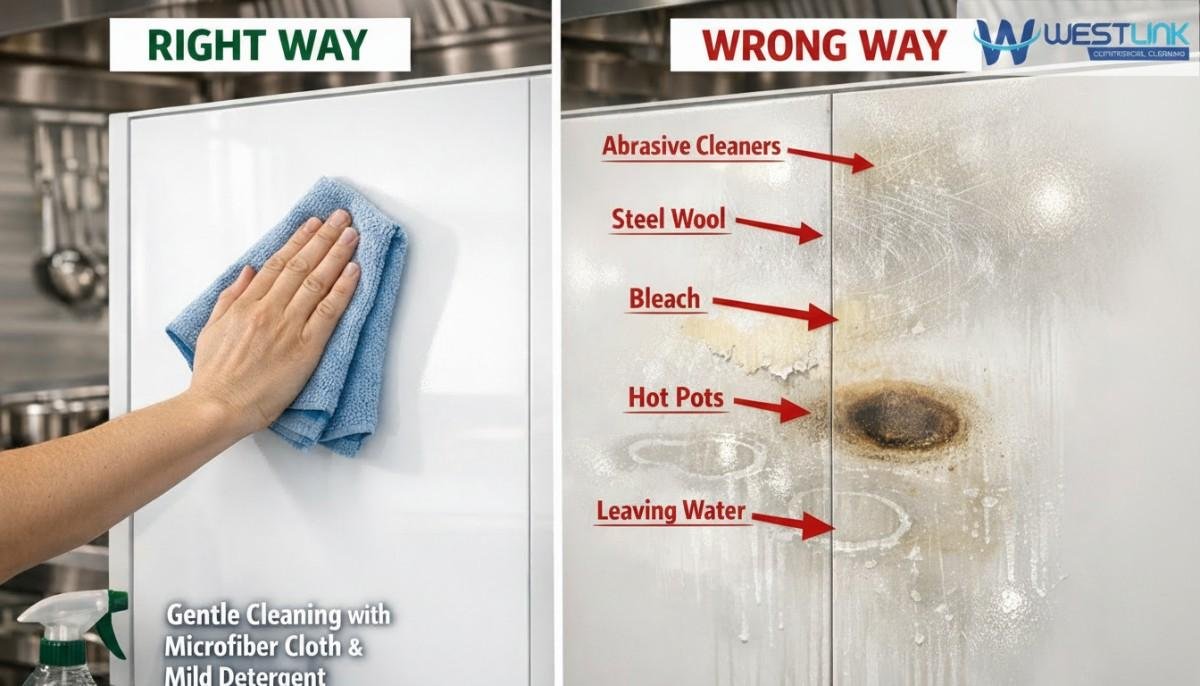
Critical Mistakes That Can Damage 2PAC Kitchen Cupboards
2PAC kitchen cupboards can stay smooth and shiny for a long time, but only if they are cleaned the right way. Small cleaning mistakes can cause dull marks, scratches, yellowing, or peeling. That is why it is important to know what not to do before you start cleaning.
- Do not use abrasive cleaners like Gumption or Jif on 2PAC cupboards.
- Do not scrub with steel wool or rough scouring pads.
- Do not spray bleach or strong solvents on the surface.
- Do not leave hot pots or hot items touching cupboard doors.
- Do not let water or cleaning liquid sit on the surface for too long.
Note: Always use soft cloths and mild cleaning solutions, and dry the surface right away. Make sure anyone cleaning the cupboards knows which products are safe to use.
These mistakes can damage the cupboard finish very quickly. Abrasive cleaners can remove the shine and leave dull spots that do not go away. Rough pads can make tiny scratches on the surface, and those scratches can hold more dirt over time. Strong chemicals can also harm the painted coating and make it turn yellow, chip, or weaken. Heat is another problem because it can soften the finish and spoil the look of the cupboard doors. When safe cleaning methods are followed every time, 2PAC kitchen cupboards stay clean, neat, and in good condition for much longer.
When in-house staff can manage the cleaning
Your team can clean 2PAC kitchen cupboards if the cleaning method is simple and the right products are used. Daily wiping, quick grease removal, and fast cleaning of spills are all easy tasks for a kitchen or cleaning team. These small daily steps help protect the cupboard surface because dirt, grease, and moisture do not stay on it for too long.
The main problem is not who does the cleaning. The main problem is whether the team knows the right way to do it. When staff know which cloth to use, how much water is safe, and which products are suitable, they can clean the cupboards well. When they do not know the right method, the results can be different every time. That is why a clear cleaning system matters. Everyone should follow the same steps and use the same safe products. Training should be simple and easy to remember. When the process is clear, the cupboards stay cleaner and last longer.
When You Need Expert Cleaning Help For 2pac Kitchen Cupboards
Sometimes, regular cleaning is not enough. If your 2PAC kitchen cupboards have chips, peeling edges, swelling, yellow marks, a very dull look, or damage to the surface, it is a sign of a bigger problem. At that point, cleaning alone will not fix it; you will need a professional cleaner like Westlink Commercial Cleaning to help.
You may need expert help if the surface is damaged, if water has reached the edges, or if the cupboards still look bad after normal cleaning. In these cases, repair work, a small touch-up, or a fresh spray coat may be a better choice than cleaning again. Fixing the problem early is often easier and costs less.This is important because damage can get worse very fast. A small repair done at the right time can stop bigger problems later. That is why expert help is a smart part of cupboard care.
When Cleaning Will Not Fix the Problem
Not every cupboard problem can be fixed by cleaning. Some small marks and light surface dirt may come off with proper cleaning. This helps the cupboards look neat again and keeps the surface in better condition.
But cleaning will not solve every issue. If the surface has deep chips, wide yellowing, peeling edges, or swelling from water, cleaning will not be enough. These problems mean the cupboard has damage that goes beyond normal dirt or grease.
In this case, the next step may be a touch-up, respray, or replacement. The right choice depends on how bad the damage is and how much of the surface has been affected. This helps avoid wasting time on more cleaning when the real problem needs a different fix.
How commercial operators can protect cupboard life
The best way to protect 2PAC cupboards is to build a simple maintenance habit into daily operations. Staff should wipe fresh grease before it hardens. They should dry wet edges after cleaning. They should avoid rough tools and harsh chemicals. They should also report chips or lifting early so the issue can be checked before it spreads.
These small habits make a big difference over time. They help keep the cupboards looking cleaner, reduce the risk of repairs, and support a more professional kitchen appearance. For businesses with more than one site, they also create consistency. When every team follows the same process, the results are easier to manage and easier to maintain.
This is one reason commercial operators should treat cupboard care as part of normal kitchen presentation, not as an afterthought. Clean and well-kept cupboards support the overall look of the site. They also show that the business pays attention to detail.
Conclusion
2PAC kitchen cupboards can be a strong feature in a commercial kitchen, but only when they are cared for properly. They are built to look smooth, neat, and premium, yet they still need the right cleaning method to stay that way. In busy kitchens, grease, steam, spills, and rushed cleaning can wear them down faster than expected. The safest approach is simple. Use a soft microfibre cloth, warm water, and mild detergent for daily cleaning. Dry the surface after wiping. Treat tougher marks carefully. Avoid abrasives and harsh chemicals. Watch wet zones closely. Deal with damage early. When the problem moves beyond routine cleaning, bring in the right specialist before the issue gets worse.
That approach keeps the cupboards looking cleaner for longer and reduces unnecessary wear. It is a practical method, and it aligns with the kind of steady maintenance approach often associated with Westlink Commercial Cleaning rather than one-off heavy cleaning.
Frequently Asked Questions About Cleaning 2PAC Kitchen Cupboards
How do you clean 2PAC kitchen cupboards without damaging the finish?
For normal day-to-day cleaning, use a soft microfibre cloth, warm water, and a small amount of mild detergent. Wipe gently, then go over the surface with a clean damp cloth and dry it straight away. Most damage happens when people scrub too hard, use rough tools, or leave water sitting on edges and joins.
What is the best cleaner for 2PAC cupboard doors?
Start with mild detergent and warm water first. That is still the safest option for regular cleaning. If greasy fingerprints or cooking residue do not come off easily, use a non-abrasive cleaner that is suitable for painted joinery and always test it on a hidden area first. Stronger products should only be used when the gentlest method is not enough.
Can you use sugar soap on 2PAC cupboards?
Yes, but it is better for heavier oily build-up than for daily cleaning. Use it carefully, test it first on a hidden spot, then wipe the surface properly afterwards and dry it well. It can be helpful in commercial kitchens where grease builds up faster near cooking zones.
Can you use Spray and Wipe on 2PAC cupboard doors?
In many cases, yes, but only if it is a non-abrasive product and used lightly. Do not soak the surface. Spray a small amount, wipe gently with a soft cloth, then remove any residue with a clean damp cloth and dry the area. The key is controlled use, not over-wetting the door.
What should never be used on 2PAC kitchen cupboards?
Avoid steel wool, scouring pads, abrasive cleaners, bleach-based sprays, harsh solvents, and rough cloths. These can scratch the coating, reduce the shine, or leave dull patches that are hard to fix. If a product feels harsh or gritty, it is usually the wrong choice for 2PAC.
How do you remove grease from 2PAC kitchen cupboards?
The best approach is to remove grease early, before it hardens. Fresh grease usually comes off with warm water, mild detergent, and a soft cloth. If the build-up is heavier, wipe the area gently more than once instead of scrubbing hard. Regular cleaning in greasy zones is the easiest way to keep the surface smooth and clean.
Can steam and water damage 2PAC cupboard doors?
Yes, they can. 2PAC cupboards handle normal kitchen use well, but constant steam, splashing, and trapped moisture can slowly affect edges, corners, and joins. Over time this can lead to swelling, bubbling, or peeling. That is why drying after cleaning is just as important as wiping.
Why do 2PAC cupboards go dull or streaky after cleaning?
This usually happens when too much cleaner is used, the surface is not dried properly, or someone uses the wrong product. Gloss and dark-coloured cupboards show streaks more easily than lighter finishes. A light clean followed by a dry microfibre wipe usually gives the best result.
How often should 2PAC cupboards be cleaned in a commercial kitchen?
High-touch and high-grease areas should be wiped daily. Cupboards farther away from cooking areas can be cleaned on a weekly schedule, with extra attention when needed. In a commercial kitchen, the best rule is simple: clean before grease and marks have time to build up.
Can chipped, swollen, or peeling 2PAC cupboards be cleaned back to normal?
No. Cleaning can remove dirt, grease, and marks, but it cannot repair physical damage. If the surface is chipped, swollen, peeling, or badly worn, the cupboard may need a touch-up, repair, or respray. It is best to deal with this early before the damage gets worse.
Is 2PAC more expensive than laminate cupboards?
Yes, 2PAC is usually more expensive than laminate cupboards. The higher cost comes from the spray-painting process, curing time, extra labour, and the fact that 2PAC is often chosen for more custom or detailed door styles. Laminate is generally the more budget-friendly option, while 2PAC is usually seen as the more premium finish.
What is a 2PAC kitchen cabinet finish?
A 2PAC kitchen cabinet finish is a sprayed two-pack coating used on cabinet doors and panels to create a smooth, durable painted surface. In simple terms, it is made by combining two parts, usually the paint component and a hardener, before application. Once cured, it gives cupboards a sleek, seamless look that is popular in modern and high-end kitchens.
Is polyurethane the same as 2PAC?
Not exactly, but in kitchen cabinetry they are very closely related. 2PAC usually refers to a two-part polyurethane paint system, so many cabinetmakers use the terms almost interchangeably when talking about painted kitchen doors. A more precise way to explain it is this: polyurethane is the coating type, while 2PAC refers to the two-part application system used to create that finish.