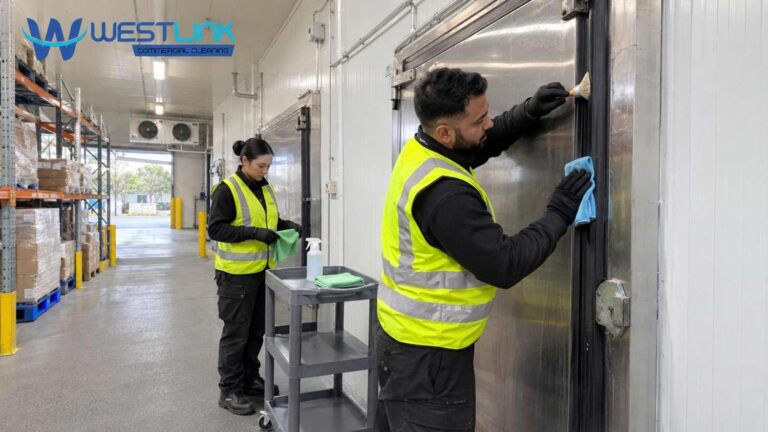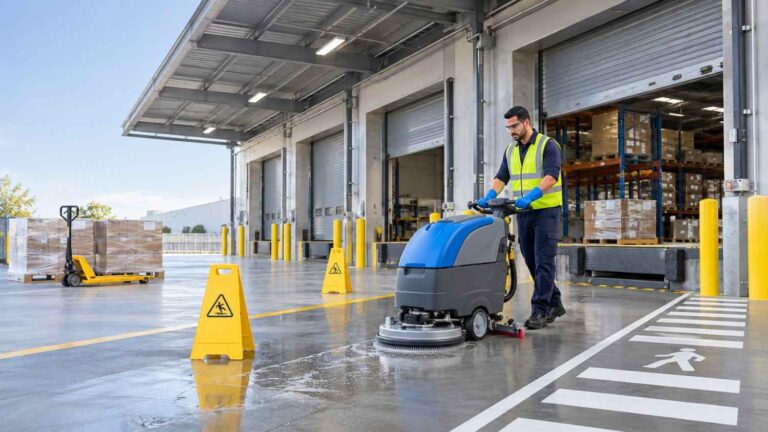
Cold storage warehouse cleaning removes soil, debris and residues from chillers and freezers with methods matched to each room’s operating temperature. As part of commercial warehouse cleaning, these procedures help maintain hygiene and prevent contamination in temperature-controlled storage facilities. Chillers running at 33–41°F (0.5–5°C) allow controlled wet cleaning with immediate water recovery. Freezers running at 0°F (−18°C) or colder require dry or low-moisture cleaning because water can refreeze on cold surfaces.
A safe cold storage cleaning cycle follows six steps: room assessment, hazard isolation, dry debris removal, temperature-matched cleaning, label-compliant sanitising and documented release. Industrial freezer cleaning relies on dry vacuuming, controlled scraping, low-moisture spot treatment and planned defrost shutdowns. Chiller and walk-in cooler cleaning uses low-volume detergent washing followed by wet extraction and drying.
A cleaning chemical qualifies for cold storage only when its label covers the actual surface temperature, surface type, dilution and contact time. Cleaning frequency follows risk, with per-shift inspections, SSOP-scheduled cleaning, periodic deep cleans and event-driven cleaning after spills. Sanitation verification combines visual inspection, ATP swab testing and environmental sampling against written acceptance criteria. Recurring ice and condensation signal door, gasket, drain or defrost failures that cleaning alone cannot correct. Cold-room cleaning crews need cold-stress controls, insulated slip-resistant PPE and separation from forklift traffic.
What Is Cold Storage Warehouse Cleaning?
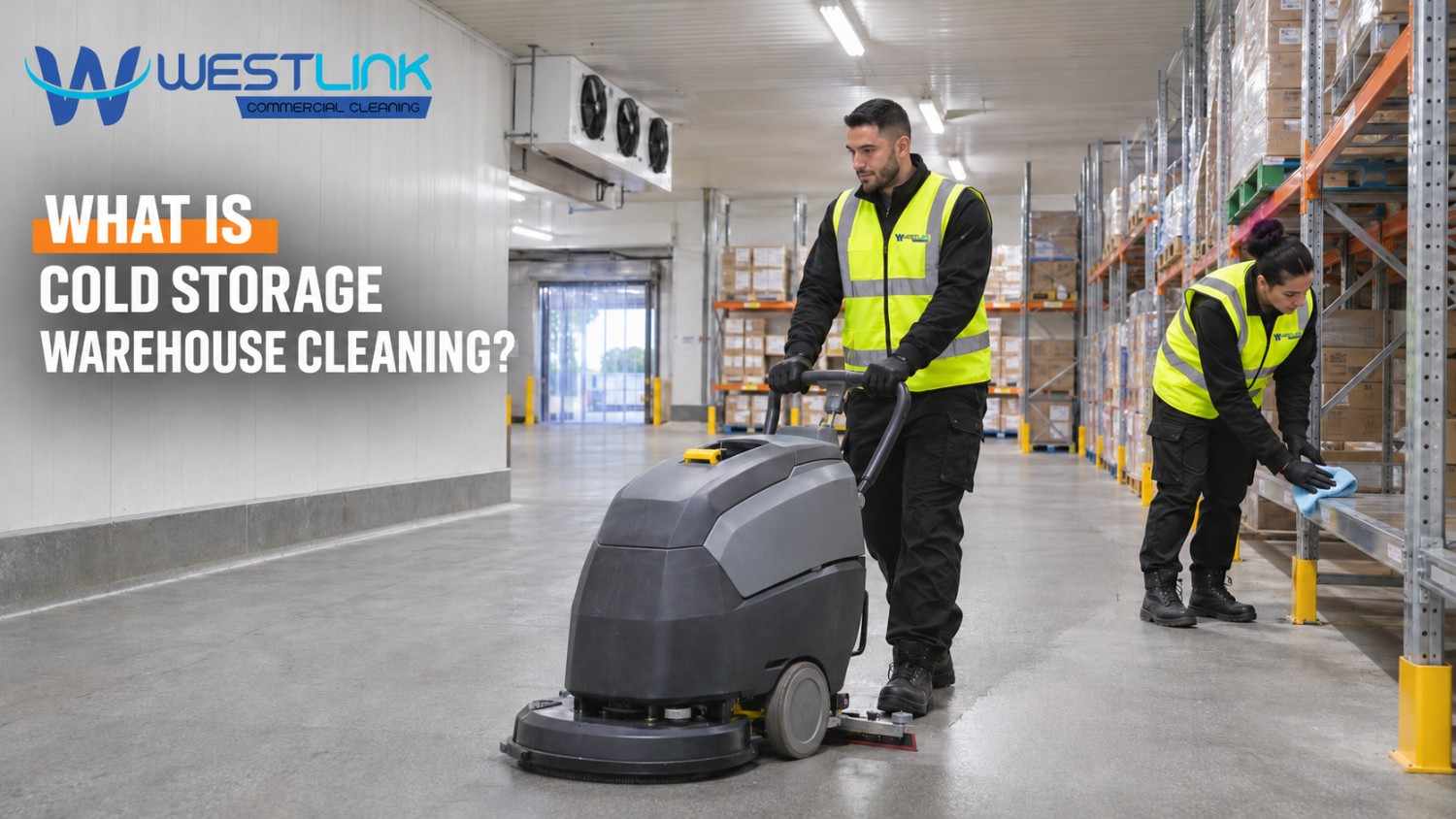
Cold storage warehouse cleaning is the controlled removal of dust, packaging debris, spilt product, grease and residues from temperature-controlled storage rooms. A cold storage cleaning programme covers floors, drains, racking, doors, dock seals, food-contact equipment and accessible refrigeration components.
Cold storage sanitation separates three distinct activities, and each activity has its own purpose and requirement.
| Activity | What it does | When a cold storage warehouse requires it |
| Cleaning | Physically removes soil and residues with tools and detergents | Always, before any sanitising or disinfecting |
| Sanitising | Reduces microorganisms on a surface to the level stated on an EPA-registered product label | On food-contact surfaces and zones named in the facility SSOP |
| Disinfecting | Kills the specific microorganisms listed on the product label | Only where the food safety plan or an incident calls for it |
Surface cleaning removes soil but does not establish microbiological control. A sanitizer controls microorganisms only at the surface temperature, dilution and contact time its label supports. No-rinse food-contact sanitisers in the United States must meet the residue tolerances in 40 CFR 180.940.
How Do Cleaning Methods Differ Between Chillers and Freezers?
Chiller and freezer cleaning methods differ because water stays liquid above 32°F (0°C) and freezes below it. A chiller tolerates limited washing and extraction, while a freezer turns any introduced water into ice that creates slip hazards, blocks drains and traps residues.
| Cleaning factor | Chillers and coolers | Subzero freezers |
| Typical operating range | 33–41°F (0.5–5°C) | 0°F (−18°C) and colder; blast freezers −20 to −40°F (−29 to −40°C) |
| Cleaning method | Damp wiping, low-volume washing, wet extraction, drying | Dry scraping, vacuuming, brushing, approved low-moisture spot treatment |
| Primary hazard | Condensation, standing water, moisture migration | Instant refreezing, ice on floors, frozen drains |
| Chemical selection | Label-approved for the actual surface temperature | Label-verified for subzero performance and surface compatibility |
| Release condition | Clean, dry surfaces with sanitation completed | No residual liquid, no loose ice, clear drains and exits |
A chiller running at 34°F (1°C) can still hold surfaces cold enough to freeze a cleaning solution locally. The room’s sanitation standard operating procedure (SSOP) sets the final method for each zone.
How Do You Clean a Cold Storage Warehouse Safely?
A safe cold storage cleaning cycle runs in six steps: room assessment, hazard isolation, dry debris removal, temperature-matched cleaning, sanitising and documented release.
Step 1: Assess the Cold Room and Protect Stored Product
A cold room assessment records air and surface temperatures, existing ice and condensation, traffic routes, drain locations and contamination risks. The cleaning supervisor identifies damaged packaging, allergen spills, chemical storage points and equipment that needs isolation. Cleaning crews relocate or cover exposed food and packaging so debris, aerosols and chemicals cannot reach it, while product stays within its temperature limits.
Step 2: Isolate Hazards and Set Up the Cleaning Zone
Hazard isolation closes the cleaning zone to forklift and pedestrian traffic, marks wet or icy floors and confirms emergency door releases work. Cleaning near conveyors, fans and evaporators requires a site-specific lockout/tagout procedure under OSHA 29 CFR 1910.147 in US facilities. Crews never reach into moving equipment or remove guards from equipment that can start unexpectedly.
Step 3: Remove Dry Debris Before Applying Chemicals
Dry debris removal collects damaged cartons, stretch wrap, pallet splinters and loose product with dedicated brushes and cold-rated industrial vacuums. Removing debris first lowers detergent demand and stops debris from freezing into the floor. Crews avoid dry sweeping that blows dust or microorganisms onto stored goods.
Step 4: Clean Surfaces With a Temperature-Matched Method
Temperature-matched cleaning works from higher, cleaner surfaces down towards drains and collection points. Chiller crews apply measured amounts of detergent solution and recover it immediately with wet extraction equipment. Freezer crews use dry or low-moisture techniques and never flood an operating subzero floor unless an approved shutdown-and-defrost procedure allows wet cleaning.
Step 5: Sanitise Only Where the SSOP and Label Require It
Sanitising follows visible soil removal and uses only a product labelled for that surface, use, temperature, dilution and contact time. Many sanitizers lose efficacy as temperature drops, so a sanitizer validated at room temperature is not proven effective on a frozen surface. Food-contact and non-food-contact applications stay separate, with rinse and drying directions followed exactly.
Step 6: Dry, Inspect and Release the Area
Area release requires removing residual liquid and loosened ice, confirming clear drains and exit routes, and inspecting under adequate lighting. The supervisor confirms guards and covers are back in place, then records the cleaning activity, deviations, verification results and release authorisation. A product exposed to a temperature or contamination breach goes through the facility’s product-disposition procedure before release.
What Are the Safest Methods for Cleaning Industrial Freezers?
Dry cleaning is the safest first-choice method for an operating industrial freezer because it introduces no water that can refreeze. Freezer cleaning crews choose among four methods based on soil type, equipment design, food safety risk and the equipment manufacturer’s instructions.
Dry Vacuuming and Brushing
Dry vacuuming and brushing remove loose packaging debris, frost fragments and dry soil from freezer floors and racking. Freezer vacuums need a cold-temperature rating and filtration matched to the collected material. A vacuum built for ambient indoor use can fail at subzero temperatures or create electrical hazards when condensation forms on it.
Controlled Scraping and Ice Removal
Controlled scraping removes localised ice from approved floor and door surfaces with non-damaging plastic or blunt-edged scrapers. Crews never chip near insulated panels, door seals, evaporator coils, sensor wiring or refrigerant lines. Ice that returns after scraping signals air infiltration, failed door gaskets, humidity entry, drain faults or defrost control problems.
Low-Moisture Spot Cleaning
Low-moisture spot cleaning treats small, contained spills with an approved solution followed by immediate recovery. Freezer spot cleaning is acceptable only when the chemical label, measured surface temperature and facility SSOP all permit it. A low freezing point does not prove a solution is food-safe, effective as a sanitizer or compatible with the floor coating.
Planned Shutdown and Defrost Cleaning
Planned shutdown and defrost cleaning removes heavy residue, extensive ice and contamination that dry methods cannot reach. A defrost shutdown requires relocating temperature-sensitive inventory, isolating refrigeration equipment and controlling meltwater and humidity. Qualified refrigeration technicians oversee work on the refrigeration system and the room’s return to operating temperature.
How Should Chiller Rooms and Walk-In Coolers Be Cleaned?
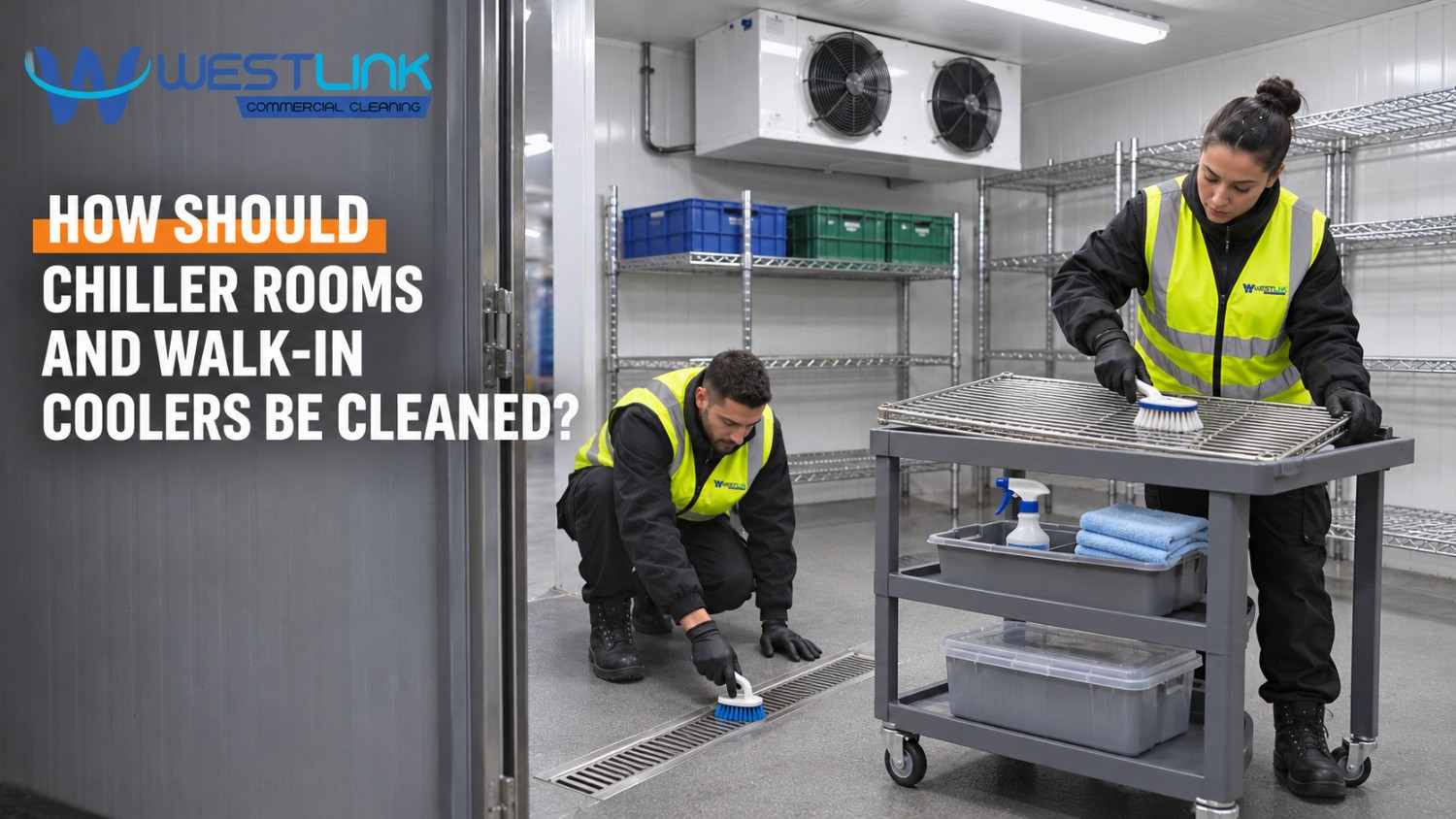
Chiller rooms and walk-in coolers are cleaned with controlled wet methods that keep all liquid recoverable and leave surfaces dry before operations resume. The chiller cleaning sequence runs dry debris removal, compatible detergent application, mechanical scrubbing and wet extraction. Crews keep wash water away from door thresholds, electrical equipment and stored goods.
Walk-in cooler cleaning targets door gaskets, handles, shelving joints, drain covers and floor-wall junctions because these points retain food residue and moisture. Drain cleaning follows its own dedicated procedure, and drain brushes never return to food-contact or high-hygiene surfaces. Condensation monitoring continues after doors reopen and the refrigeration cycle resumes.
Walk-in cooler sanitation starts by classifying each surface as food-contact or general building surface. Food-contact and non-food-contact sanitizers carry different label directions for pre-cleaning, dilution, contact time and rinsing. A “food grade” marketing claim does not qualify a chemical for a specific surface or use.

Which Cleaning Chemicals Are Suitable for Cold Storage?
A cleaning chemical is suitable for cold storage only when its label documents approval for the actual surface, application method and operating temperature. A generic “freezer-safe” claim does not meet that standard. Cold storage chemical selection confirms six label attributes:
- Approved surface type and food-contact status
- Application method (wipe, spray, mop, foam)
- Operating temperature range
- Material compatibility with floors, panels and seals
- Use concentration and contact time
- Rinse requirement
The safety data sheet (SDS) defines handling hazards, and the product label defines permitted antimicrobial use. Cleaning crews train on dilution and chemical segregation and never mix products unless the manufacturer directs it. In US facilities, EPA registration under FIFRA and FDA food safety rules govern antimicrobial use; facilities elsewhere follow their national regulator.
Fogging or spraying inside a freezer is acceptable only when the label lists that application method. A supplier’s cold-compatibility claim does not authorise an unlisted method, and fogging also requires ventilation and worker exposure controls.
How Often Should Cold Storage Warehouses Be Cleaned?
Cold storage cleaning frequency follows risk and observed conditions rather than one fixed interval for every room. High-traffic floors and spill points need more frequent cleaning than protected structural surfaces. Frequency planning weighs product exposure, allergen handling, traffic volume, condensation, past inspection findings and the facility’s hazard analysis.
| Frequency tier | Cleaning tasks |
| Every shift | Inspect high-traffic routes, remove debris and spills, and check for ice and blocked exits. |
| Scheduled (per SSOP) | Clean floors, handles, doors, accessible racking and equipment exteriors |
| Periodic deep clean | Clean panel joints, drain systems, high surfaces and approved equipment components during controlled access |
| Event-driven | Clean after package rupture, allergen spill, contamination incident, flooding or abnormal icing, and assess affected product. |
A cold storage cleaning schedule names the responsible person, method, inspection criteria and escalation step for each task. More frequent wet cleaning makes a freezer less safe, not more, because each wet clean adds moisture.
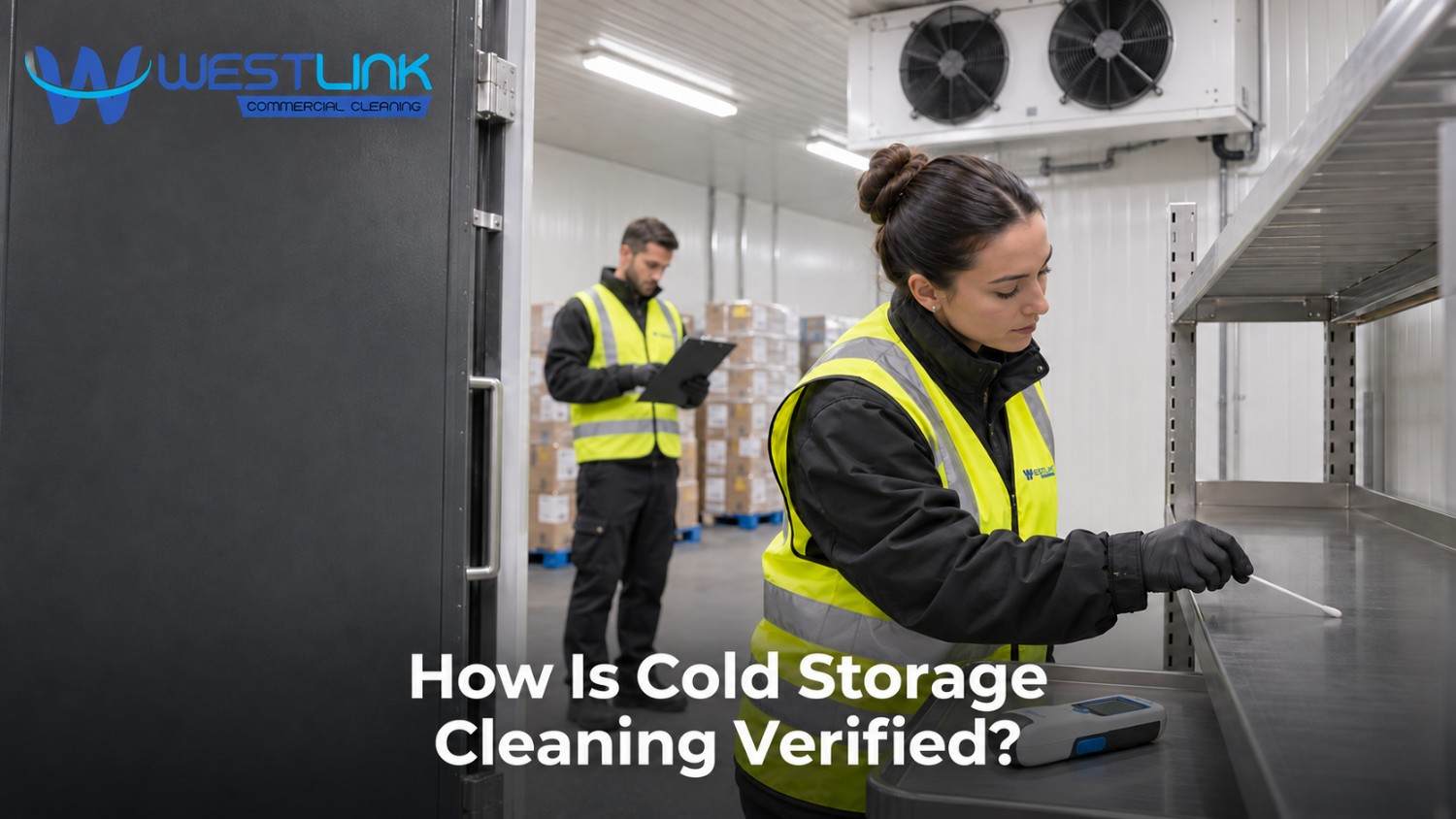
How Is Cold Storage Cleaning Verified?
Cold storage sanitation verification confirms that the cleaning procedure was completed and that its written acceptance criteria were met. A supervisor inspects for visible soil, residue, ice, odour, drainage and equipment condition and checks completed cleaning logs. The food safety programme adds ATP swab testing or environmental microbial sampling where risk justifies it.
ATP testing measures organic residue in relative light units (RLU) under a specific test method, and an ATP pass does not prove pathogens are absent. Environmental monitoring requires a designed sampling plan with defined sites, methods, result interpretation and corrective actions. Verification also checks sanitizer concentration and contact time when the SSOP requires them. A failed check triggers recleaning or investigation, and the zone stays closed until it passes.
How Do Cold Storage Facilities Prevent Ice Buildup and Condensation?
Cold storage ice and condensation form when warm, humid air meets cold surfaces through doors, drains, damaged panels or a faulty refrigeration cycle. Cleaning removes the immediate ice hazard, and recurring ice triggers a root-cause check of five sources:
- Door traffic: Limit door-open time, inspect strip curtains and high-speed doors, and replace failing door seals.
- Drainage: Keep drain paths clear, and investigate frozen or blocked drains instead of pouring uncontrolled hot water into them.
- Defrost cycles: Qualified refrigeration technicians check defrost operation and condensate removal when ice keeps returning.
- Moisture migration: Separate wet-cleaning zones from operating freezers, and keep warm, humid air out of cold rooms.
- Panel integrity: Report damaged insulation, vapour barriers and panel joints that collect moisture.
Visible mould, unexplained odours or persistent wet areas require a moisture root-cause investigation. Wiping away mould or applying disinfectant without fixing the moisture source does not provide lasting control.
How Do Cleaning Crews Stay Safe in Freezers and Chillers?
Cold room cleaning crews face cold stress, frostbite, reduced hand dexterity, icy floors, limited visibility, forklift traffic and entrapment risk. Supervisors set exposure time limits, warm-up breaks, buddy check-ins, emergency communication and a cold-room rescue plan before work starts. [add: your crew’s warm-up break schedule for freezer work, e.g., minutes inside vs. minutes in a warm area]
Freezer cleaning PPE includes insulated layered clothing, insulated gloves suited to the task, insulated slip-resistant boots, and any chemical or eye protection named in the risk assessment. Crews replace wet clothing immediately because wet fabric accelerates heat loss. OSHA lists cold stress as a recognised warehousing hazard and recommends protective clothing, training and controlled work practices.
Cold Storage Warehouse Cleaning Checklist
A cold storage cleaning checklist confirms each control point from room assessment to release.
- Record room temperature, cleaning scope and the governing SSOP.
- Relocate or cover exposed product and packaging.
- Close the zone to forklifts and pedestrians, and test emergency exits.
- Apply lockout/tagout to fans, conveyors and evaporators where required.
- Remove loose debris with dedicated brushes and cold-rated vacuums.
- Select dry, low-moisture or controlled wet cleaning for the zone’s temperature.
- Apply chemicals only on their labelled surfaces, temperatures and contact times.
- Recover all water and residue, and check for refreezing and drain blockage.
- Inspect doors, gaskets, panel joints and recurring ice sources.
- Complete visual, ATP or environmental verification and any corrective action.
- Record results and authorise release for normal operations.
Frequently Asked Questions
Can you clean a freezer without turning it off?
Yes, routine freezer cleaning runs in an operating freezer using dry or approved low-moisture methods. Extensive icing, heavy soil or work on powered refrigeration equipment requires a controlled shutdown, inventory relocation and a qualified refrigeration technician.
Can you use water to clean a freezer floor?
Uncontrolled water on an operating freezer floor is unsafe because water below 32°F (0°C) refreezes into slippery ice. Freezer floors are cleaned with dry methods or a validated low-moisture process, and full wet cleaning waits for a controlled defrost procedure.
What is the best way to clean cold room floors?
The best cold room floor cleaning method depends on floor temperature, soil type, drainage and floor finish. Chiller floors allow low-volume detergent washing with wet extraction, while freezer floors require vacuuming, brushing, scraping or approved spot treatment.
Are ordinary disinfectants effective below freezing?
Ordinary disinfectants are not proven effective below freezing unless the product label supports that surface temperature, dilution and contact time. A solution’s low freezing point does not establish its antimicrobial performance at subzero temperatures.
Does cold storage eliminate bacterial contamination?
Cold storage does not eliminate bacterial contamination. Refrigeration and freezing slow microbial growth, and pathogens such as Listeria monocytogenes can still grow at refrigeration temperatures. Soil removal, sanitising, hygienic handling and verification remain necessary in every cold room.
Should warehouse sanitation staff clean evaporator coils?
Warehouse sanitation staff clean evaporator coils only when the task falls within their training, authorisation, the manufacturer’s instructions and the facility’s lockout/tagout procedure. Coil, fan, drain-pan and refrigeration-system maintenance usually requires qualified refrigeration technicians and a coordinated shutdown.
Key Takeaways: Matching Cold Storage Cleaning to Temperature and Moisture Risk
Cold storage warehouse cleaning succeeds when each room’s cleaning method follows its operating temperature and moisture risk. Routine freezer cleaning stays as dry as practicable, and chiller cleaning keeps every liquid measured and recovered.
Antimicrobial products work only within their labelled surface, temperature, dilution and contact time. Every cleaned zone passes verification before it returns to service.
A documented, risk-based SSOP protects food, workers, refrigeration equipment and cold chain continuity more reliably than one cleaning method applied to every room. [add: one line on your company’s cold storage cleaning service, e.g., Westlik commercial cleaning cold storage facilities across [region] using this SSOP-based method.