Warehouse loading dock cleaning removes dirt, oil, grease, packaging debris, and moisture from the shipping and receiving areas of commercial and industrial facilities. Warehouse loading dock cleaning protects commercial operations by reducing slip hazards, limiting contamination transfer, and preserving dock surfaces and equipment. Warehouse loading docks collect physical, chemical, and biological contaminants through daily truck, forklift, and freight activity. A commercial loading dock cleaning service covers dock floors, dock levellers, dock doors and seals, dock aprons, and shipping and receiving staging areas. Professional cleaners clean a warehouse loading dock through a seven-step sequence that runs from site inspection to documented handover. Industrial loading dock cleaning requires sweepers, scrubbers, wet/dry vacuums, pressure washers, and wastewater recovery equipment matched to the dock’s surface and contamination level. Warehouse managers should clean loading docks daily, weekly, and monthly, with deep cleaning scheduled according to dock condition. Deep loading dock cleaning becomes necessary when routine housekeeping no longer removes embedded dirt, grease, tyre marks, or persistent residues. Loading dock cleaning supports warehouse safety by removing surface hazards and keeping access routes around freight-handling areas clear. Loading dock cleaning prevents warehouse contamination by combining routine sanitation with waste control, traffic management, pest prevention, and moisture control. Commercial cleaners can pressure wash a warehouse loading dock when the surface is suitable, vulnerable equipment is protected, and wastewater is collected. Choosing a loading dock cleaning contractor requires evaluating industrial experience, equipment, safety procedures, and the written service scope.
What Is Warehouse Loading Dock Cleaning?
Warehouse loading dock cleaning removes dirt, oil, grease, packaging debris, and moisture from the shipping and receiving areas of commercial and industrial facilities. Loading docks connect outdoor transportation areas with indoor storage areas, so loading docks concentrate contaminants that trucks, forklifts, and workers carry between the two environments.
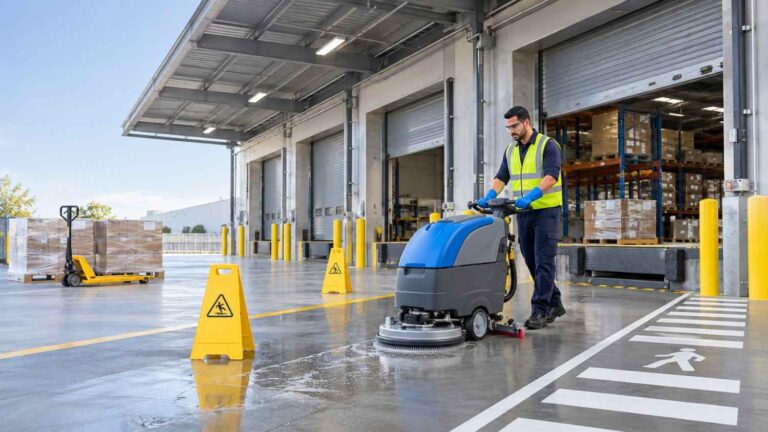
Commercial cleaning teams clean dock floors, loading platforms, dock levellers, receiving areas, and exterior loading zones. Cleaning teams use industrial equipment, compatible degreasers, controlled washing methods, and scheduled maintenance procedures matched to each facility’s conditions.
This guide covers contamination risks, professional cleaning procedures, cleaning frequency, equipment, safety requirements, pricing factors, and contractor selection for warehouse managers and logistics operators.
Why Does Warehouse Loading Dock Cleaning Matter for Commercial Facilities?
Warehouse loading dock cleaning protects commercial operations by reducing slip hazards, limiting contamination transfer, and preserving dock surfaces and equipment. Forklifts, pallet jacks, delivery vehicles, and warehouse personnel move continuously between loading platforms and storage areas, and each movement can spread dirt, moisture, and grease across warehouse floors.
Loading Dock Cleaning Reduces Slip, Trip, and Fall Hazards
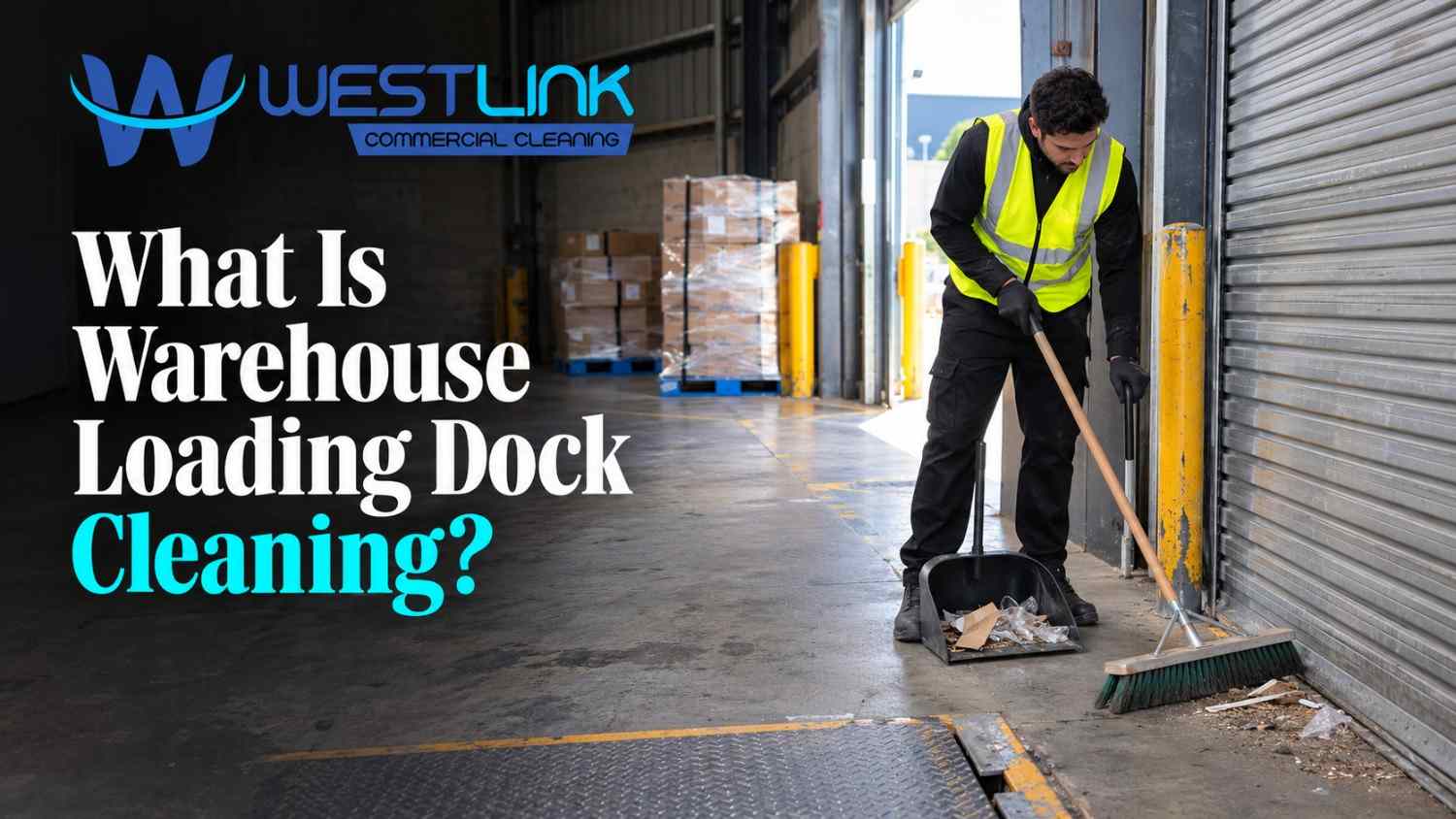
Loading dock cleaning removes oil, hydraulic fluid, standing water, loose packaging, and dust that create hazardous walking and driving surfaces. These contaminants become most dangerous near dock edges, ramps, pedestrian walkways, and areas shared by forklifts and employees.
Cleaning crews also identify damaged flooring, drainage problems, and other hazards that require maintenance instead of cleaning.
Loading Dock Sanitation Prevents Contamination Transfer
Loading dock sanitation limits the movement of contaminants from transportation vehicles into receiving and storage areas. Truck tyres, trailer floors, pallets, footwear, and material-handling equipment each carry residues across the dock threshold.
Common contamination pathways include:
Forklift tyres carrying dirt and residues indoors.
Damaged pallets releasing wood splinters and packaging debris.
Delivery vehicles introducing oil, fuel, and road sediment.
Standing water spreading contaminants across dock surfaces.
Pest activity introducing biological contamination.
Improper waste handling attracts insects and rodents.
Facilities that handle food, pharmaceuticals, or other sensitive products may require additional documented hygiene controls.
Regular Cleaning Protects Dock Surfaces and Equipment
Regular cleaning protects dock surfaces and components from the deterioration that grease, chemical residues, sediment, and moisture cause. Accumulated debris can interfere with dock leveller movement, drainage channels, and door tracks.
Commercial dock cleaning also supports preventive maintenance because clean surfaces make damaged components easier to identify during inspections. Cleaning does not replace mechanical servicing, structural repairs, or manufacturer-required maintenance.
What Contaminants Accumulate on Warehouse Loading Docks?
Warehouse loading docks collect physical, chemical, and biological contaminants through daily truck, forklift, and freight activity. Operations type, cargo characteristics, vehicle traffic, and weather exposure determine the type and amount of contamination at each facility.
Oil, Grease, and Hydraulic Fluid
Oil, grease, and hydraulic fluid collect around truck parking positions, dock approaches, forklifts, and dock machinery. These substances create slippery surfaces and can penetrate porous concrete when left untreated.
Professional degreasing uses compatible cleaning products and controlled removal methods to break down oily residues and collect the resulting waste. Significant or unidentified chemical spills require a separate spill-response procedure.
Packaging Waste and Pallet Debris
Loading and unloading generate cardboard fragments, plastic wrap, pallet splinters, strapping, and broken packaging. Loose debris obstructs pedestrian routes, collects around dock equipment, and interferes with normal operations.
Industrial sweeping, vacuuming, and waste collection remove packaging debris before the debris spreads into adjacent warehouse areas.
Dirt, Dust, and Tyre Residue
Trucks and forklifts transfer road dust, soil, tyre residue, and sediment onto loading dock surfaces. High-traffic bays accumulate compacted dirt and tyre marks that ordinary sweeping cannot fully remove.
Industrial floor scrubbers and suitable mechanical equipment remove embedded dirt from compatible concrete and coated floors.
Standing Water and Organic Contamination
Rainwater, condensation, leaking containers, and poor drainage create persistent moisture around loading areas. Standing water increases slip risk and can support microbial growth under suitable conditions. Food residues and pest droppings add further sanitation concerns.
Cleaning teams remove accumulated water, address removable residues, and report moisture sources that need drainage or building repairs.
Which Areas Does Commercial Loading Dock Cleaning Cover?
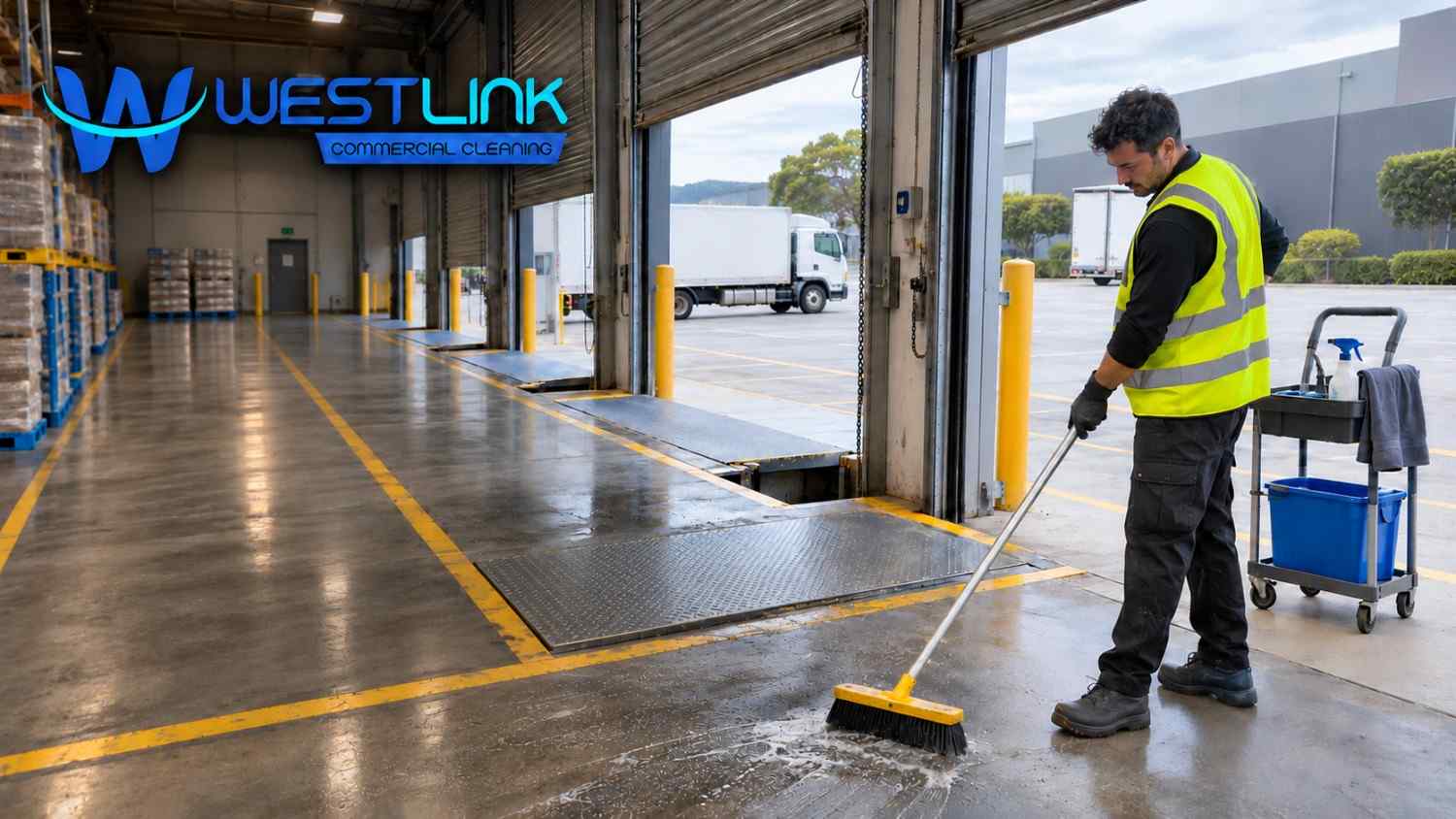
A commercial loading dock cleaning service covers dock floors, dock levellers, dock doors and seals, dock aprons, and shipping and receiving staging areas. Facility layout, equipment, loading activity, and sanitation requirements determine the exact scope.
Loading Dock Floors and Concrete Platforms
Loading dock floors receive continuous pedestrian traffic, forklift movement, and material handling. Professional floor cleaning may include:
- Industrial sweeping and debris removal.
- Mechanical floor scrubbing.
- Oil and grease spot treatment.
- Tyre-mark removal.
- Controlled wet cleaning.
- Moisture extraction and surface drying.
Cleaning methods must match the floor coating, concrete condition, and manufacturer recommendations.
Dock Levellers and Dock Plates
Dock levellers and dock plates bridge the gap between warehouse platforms and transportation vehicles. Dirt and packaging fragments collect around hinges, edges, pits, and accessible equipment surfaces.
Cleaning crews remove visible debris only when the equipment is secured and the facility’s safety procedures authorise the work. Leveller pits, moving mechanisms, and hydraulic components require trained maintenance personnel, equipment isolation, and manufacturer-specific procedures.
Dock Doors, Seals, and Shelters
Dock doors, seals, and shelters collect dust, moisture, road grime, and surface contamination. Commercial cleaners remove accessible residues from compatible door surfaces, frames, and surrounding areas.
Damaged weather seals, door tracks, and protective materials need repair because deteriorated components let dirt, water, and pests enter the building.
Dock Aprons and Exterior Loading Areas
Dock aprons are the exterior surfaces where trucks approach or park at loading bays. Aprons accumulate oil stains, fuel residues, tyre marks, road sediment, packaging waste, mud, standing water, and leaves.
Exterior cleaning may involve industrial sweeping, targeted degreasing, and controlled pressure washing. Cleaning contractors must also plan for wastewater collection and local discharge requirements.
Shipping and Receiving Staging Areas
Shipping and receiving staging areas temporarily hold pallets, packages, raw materials, and finished goods. Routine debris removal and floor cleaning keep contaminants away from stored inventory.
Cleaning schedules must fit warehouse workflows so crews work without blocking active forklift routes or freight movement.
How Do Professionals Clean a Warehouse Loading Dock?
Professional cleaners clean a warehouse loading dock through a seven-step sequence that runs from site inspection to documented handover. A structured procedure lets contractors select equipment, manage safety risks, and remove contaminants without unnecessary interruption to warehouse operations.
Step 1: Inspect the Loading Dock and Assess Risks
A loading dock inspection identifies contamination types, floor conditions, drainage points, traffic patterns, and equipment that needs protection. Cleaning supervisors assess:
- Oil and grease accumulation.
- Damaged or deteriorating floor surfaces.
- Standing water and drainage problems.
- Forklift and pedestrian traffic.
- Dock edges and elevated surfaces.
- Electrical equipment near cleaning areas.
- Chemical storage and spill hazards.
- Food-handling or other hygiene-sensitive areas.
The inspection determines which areas need routine cleaning, specialised treatment, or separate maintenance.
Step 2: Secure the Cleaning Area
Cleaning crews work in designated zones separated from active loading operations. Warehouse personnel and contractors coordinate traffic restrictions, pedestrian access, dock status, and equipment isolation before cleaning begins.
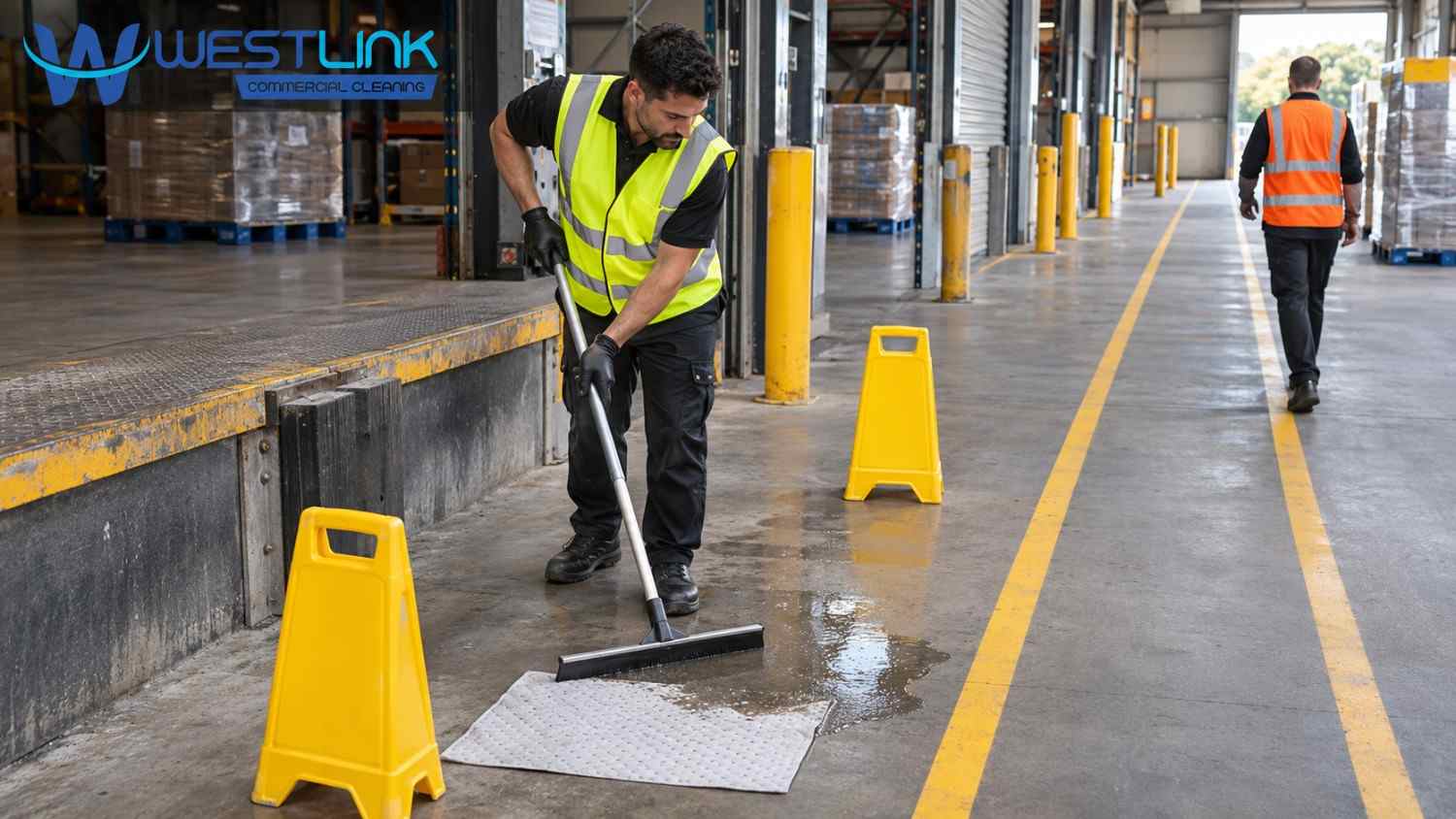
Suitable precautions include warning signs, barriers, approved equipment shutdown procedures, and alternative routes. Crews do not enter exposed dock edges, confined equipment spaces, or moving machinery areas without the appropriate controls.
Step 3: Remove Loose Debris and Packaging Waste
Industrial sweepers, vacuums, and manual tools remove dry contaminants before wet cleaning starts. Dry removal collects dust, sediment, cardboard, plastic, wood splinters, pallet fragments, strapping, and general waste.
Removing debris first prevents loose material from spreading during scrubbing or washing. Crews segregate and dispose of waste according to facility requirements and applicable regulations.
Step 4: Treat Oil, Grease, and Stubborn Residues
Loading dock degreasing targets oily residues and embedded grime that sweeping cannot remove. Cleaning professionals select products based on the contaminant, surface compatibility, product safety information, and wastewater handling requirements.
A typical treatment applies a suitable degreaser, waits for the manufacturer-specified contact time, agitates the surface mechanically, and recovers the residue. Crews keep contaminated liquids out of pedestrian routes and drainage systems.
Step 5: Scrub or Wash the Loading Dock Surfaces
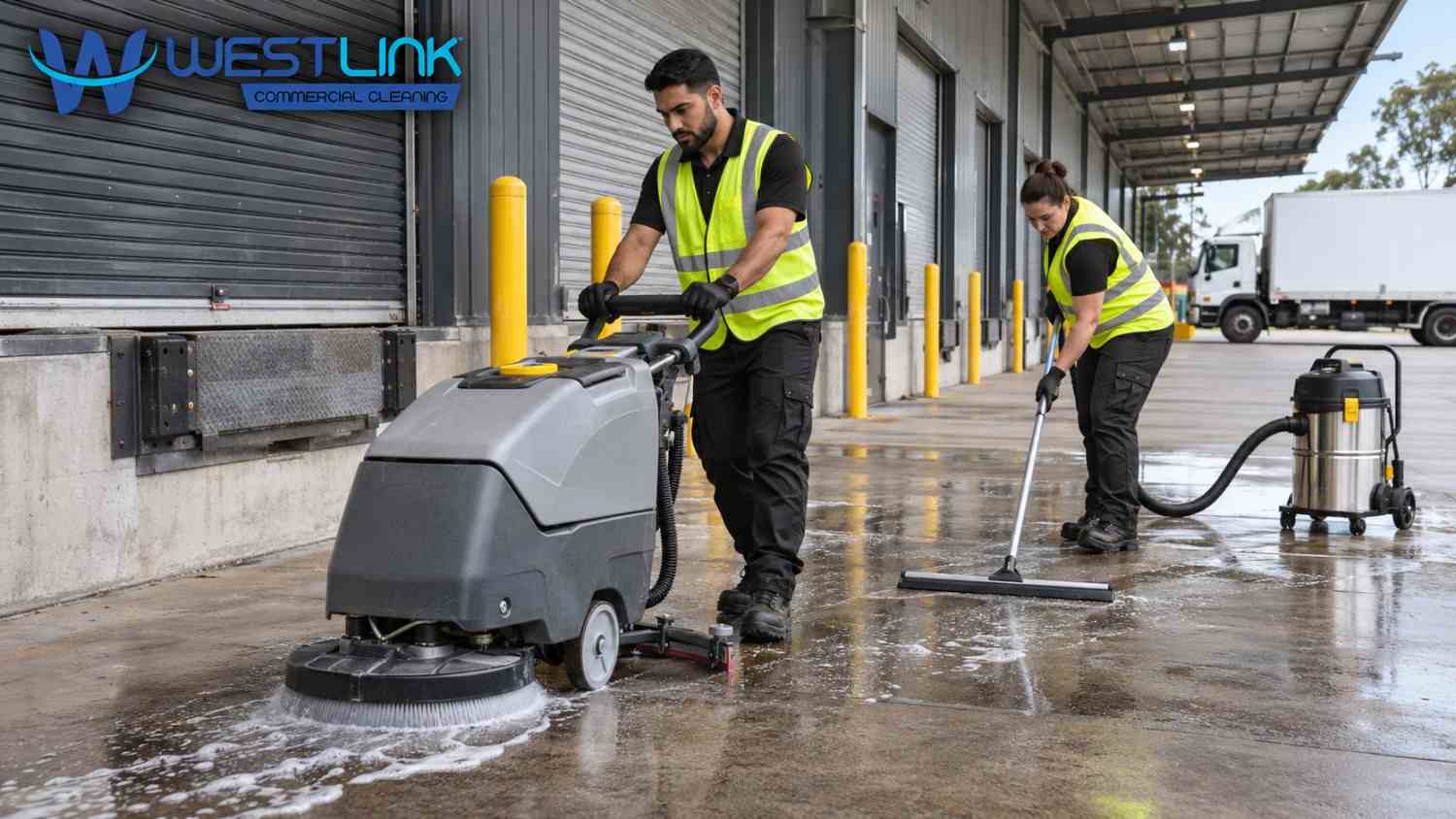
Industrial floor scrubbers remove dirt and loosened residues from suitable indoor dock surfaces. Walk-behind or ride-on scrubbers are selected according to floor size, manoeuvring space, and operational restrictions.
Exterior platforms may need controlled pressure washing when surface condition, surrounding equipment, and wastewater collection allow. Crews never direct high-pressure water at sensitive electrical components, dock mechanisms, damaged concrete, or equipment vulnerable to water intrusion.
Step 6: Collect Wastewater and Dry the Surface
Wet cleaning produces wastewater that contains suspended dirt, grease, and potentially other contaminants. Professional cleaners use recovery equipment and approved disposal procedures instead of allowing uncontrolled runoff into outdoor drains.
After cleaning, crews remove standing water and let surfaces dry sufficiently before pedestrian or forklift traffic resumes.
Step 7: Inspect and Document the Completed Work
A final inspection confirms that the agreed cleaning scope is complete and the area is ready for operational handover. Cleaning documentation may include:
- Areas cleaned.
- Cleaning methods used.
- Chemicals and equipment applied.
- Identified defects or remaining hazards.
- Wastewater or waste-handling records.
- Cleaning dates and completion confirmation.
Documented inspections help warehouse managers track recurring contamination and adjust future cleaning schedules.
What Equipment Does Industrial Loading Dock Cleaning Require?
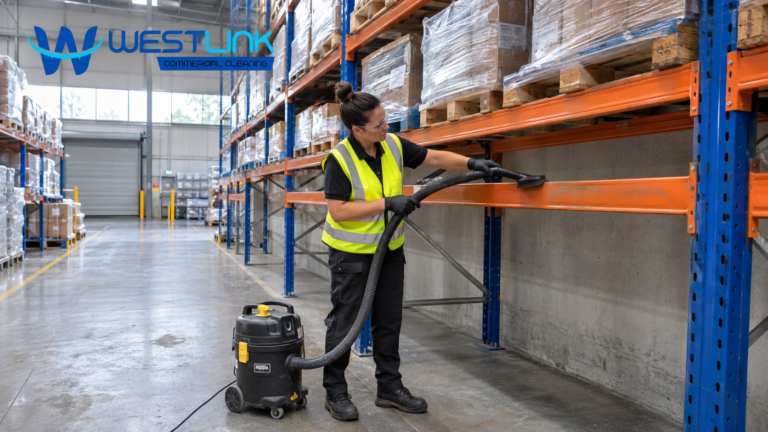
Industrial loading dock cleaning requires sweepers, scrubbers, wet/dry vacuums, pressure washers, and wastewater recovery equipment matched to the dock’s surface and contamination level.
| Cleaning equipment | Primary application |
| Industrial floor sweeper | Removes dry dust, packaging debris, and loose dirt |
| Walk-behind floor scrubber | Scrubs smaller or restricted loading areas |
| Ride-on floor scrubber | Cleans large, accessible warehouse floor areas |
| Industrial wet/dry vacuum | Collects suitable debris and liquids |
| Pressure washer | Cleans compatible exterior concrete surfaces. |
| Surface-cleaning attachment | Washes flat surfaces with controlled spray patterns |
| Degreasing equipment | Treats oil and grease contamination |
| Wet vacuum or recovery system | Collects washwater and liquid residues |
| Absorbent spill materials | Contains and collects appropriate minor spills |
| Barriers and warning signs | Restricts access to active cleaning zones |
Dock size, floor material, contamination type, and operational requirements determine equipment selection. Facilities with chemical, biological, or hazardous-material contamination may need specialist contractors and additional protective equipment.
How Often Should a Warehouse Loading Dock Be Cleaned?
Warehouse managers should clean loading docks daily, weekly, and monthly, with deep cleaning scheduled according to dock condition. Freight volume, contaminant exposure, surface conditions, and hygiene requirements determine the right frequency. A high-volume distribution centre with continuous forklift and truck traffic needs more frequent cleaning than a warehouse that operates a few bays per day.
The schedule below is a practical starting point, not a universal requirement.
| Cleaning frequency | Recommended activities |
| After spills or unsafe conditions | Isolate the affected area and arrange appropriate cleanup. |
| Daily | Remove loose waste, inspect for leaks, and address visible debris. |
| Weekly | Perform detailed sweeping, floor scrubbing, and targeted spot cleaning. |
| Monthly | Inspect buildup around accessible dock components, edges, and drains. |
| Periodically, based on condition | Schedule deep cleaning, degreasing, and exterior surface washing. |
Warehouse managers adjust the schedule based on observed contamination, site risk assessments, inspection findings, and product-handling requirements.
When Does a Warehouse Loading Dock Need Deep Cleaning?
Deep loading dock cleaning becomes necessary when routine housekeeping no longer removes embedded dirt, grease, tyre marks, or persistent residues. Facilities benefit from deep cleaning after:
Extended periods of heavy freight activity.
Equipment leaks or non-hazardous residue buildup.
Construction or renovation work.
Seasonal mud and sediment accumulation.
Repeated sanitation inspection findings.
Changes in warehouse operations or cargo types.
Deep cleaning uses more intensive mechanical treatment and needs additional coordination with warehouse operations.
How Does Loading Dock Cleaning Support Warehouse Safety?
Loading dock cleaning supports warehouse safety by removing surface hazards and keeping access routes around freight-handling areas clear. In the United States, OSHA’s general industry walking-working surfaces requirements address housekeeping and floor conditions under 29 CFR 1910.22. Facilities coordinate dock cleaning with their broader workplace safety procedures.
Slip and Trip Prevention
Cleaning crews remove grease, liquid spills, loose packaging, and other substances that create slip or trip hazards. Wet cleaning areas stay controlled until the floor is suitable for normal use.
Forklift and Pedestrian Traffic Control
Forklifts operate close to dock edges, trailer openings, and pedestrian work areas. Cleaning contractors coordinate with warehouse supervisors to separate cleaning personnel from active vehicle movement. Temporary cleaning zones never obstruct emergency exits or force workers into unprotected traffic routes.
Chemical Handling Safety
Industrial cleaning products require specific handling, dilution, ventilation, storage, and protective equipment. Cleaning personnel follow product labels, applicable safety data sheets, and their employer’s chemical safety procedures. Crews never mix chemical products unless the manufacturer expressly permits the combination.
Spill Response and Hazardous Materials
An unidentified substance, significant fuel leak, or hazardous chemical release is not an ordinary floor-cleaning task. Warehouse personnel isolate the area and follow the facility’s spill-response plan. Only trained and equipped personnel perform cleanup that needs specialised hazardous-material controls.
How Does Loading Dock Cleaning Prevent Warehouse Contamination?
Loading dock cleaning prevents warehouse contamination by combining routine sanitation with waste control, traffic management, pest prevention, and moisture control. Cleaning alone cannot eliminate every contamination source, but cleaning reduces the residues and conditions that let contamination spread.
Preventing Cross-Contamination Between Dock and Storage Areas
Warehouse operators reduce contamination transfer by keeping dock approaches clean, removing packaging debris promptly, and controlling movement between dirty and clean areas. Separate cleaning tools may be necessary where incompatible materials or different hygiene requirements apply.
Controlling Pests Around Loading Bays
Food residues, unmanaged waste, standing water, and damaged dock seals attract pests or give pests access to the building. Routine cleaning removes food sources and reveals signs of rodent or insect activity. Pest prevention also depends on waste-container management, building maintenance, and a suitable pest-control programme.
Managing Drainage and Moisture
Drainage channels and dock approaches collect sediment, packaging debris, and standing water. Routine inspection and accessible debris removal reveal drainage restrictions. Persistent standing water may need drainage maintenance, grading improvements, or repairs beyond the cleaning contractor’s scope.
Cleaning Food Distribution and Cold Storage Loading Docks
Food distribution and refrigerated facilities need additional sanitation controls to protect products during receiving, staging, and transportation. Cleaning programmes account for food-contact exposure, packaging integrity, temperature-sensitive operations, and contaminant transfer from transportation equipment.
FDA sanitary transportation requirements may apply to certain covered food transportation activities in the United States. Facilities build cleaning procedures from their products, operations, and regulatory obligations instead of assuming every dock needs the same disinfection process.
Can a Warehouse Loading Dock Be Pressure-Washed?
Commercial cleaners can pressure wash a warehouse loading dock when the surface is suitable, vulnerable equipment is protected, and wastewater is collected. Pressure washing removes accumulated dirt, mud, and certain surface residues from exterior concrete aprons and loading platforms.
Pressure washing does not suit every surface or contaminant. Before washing, a commercial contractor evaluates:
Concrete condition and surface coatings.
Electrical equipment and exposed connections.
Dock levellers, seals, and door mechanisms.
Oil, chemical, or biological contamination.
Nearby inventory and loading operations.
Drainage systems and wastewater disposal options.
Pressure washing contaminated surfaces without wastewater control moves pollutants into nearby drains and other areas. A qualified contractor selects the pressure, equipment, and recovery method for the specific site.
What Does a Commercial Loading Dock Cleaning Service Include?
A professional warehouse loading dock cleaning service delivers housekeeping, floor scrubbing, degreasing, exterior washdown, and documented inspections tailored to the facility. [Company Name] structures each service around the facility’s operating schedule, contamination level, and required cleaning outcomes.
Depending on the contractor’s capabilities and the agreed scope, commercial loading dock cleaning includes:
- Routine loading dock housekeeping.
- Industrial sweeping and floor scrubbing.
- Concrete floor degreasing.
- Tyre-mark and embedded-dirt removal.
- Dock apron and exterior surface cleaning.
- Accessible dock door and loading platform cleaning.
- Packaging waste and debris removal.
- Controlled pressure washing.
- Wash water recovery.
- Scheduled loading dock deep cleaning.
- Cleaning inspections and service documentation.
Not every contractor provides hazardous-spill cleanup, specialised disinfection, mechanical dock maintenance, or regulated waste disposal. Warehouse managers confirm these services separately before work begins.
How Much Does Warehouse Loading Dock Cleaning Cost?
Warehouse loading dock cleaning costs depend on dock size, contamination severity, cleaning method, wastewater management, service frequency, operational restrictions, and specialised requirements. Commercial cleaning companies assess the work scope before issuing a site-specific quotation.
The main pricing factors are:
- Loading dock size: Larger platforms, multiple bays, and extensive aprons need more cleaning coverage.
- Contamination severity: Heavy grease, embedded tyre residue, and persistent dirt may need targeted treatments or repeated passes.
- Cleaning method: Routine sweeping, mechanical scrubbing, controlled pressure washing, and deep degreasing differ in cost and complexity.
- Wastewater management: Containment, recovery, transport, or approved disposal adds equipment and labour.
- Service frequency: A recurring maintenance contract is priced differently from a single intensive project.
- Operational restrictions: Night shifts, restricted access, shutdown coordination, and special safety controls affect cost.
- Specialised requirements: Food distribution, chemical storage, and other regulated operations may need extra documentation, procedures, or specialist capabilities.
For accurate pricing, warehouse managers request a commercial cleaning assessment that defines the work area, contamination concerns, cleaning methods, and desired schedule.
How to Choose a Commercial Loading Dock Cleaning Service
Choosing a loading dock cleaning contractor requires evaluating industrial experience, equipment, safety procedures, and the written service scope. A qualified contractor, such as Westlink Commercial Cleaning, explains how the crew will complete cleaning safely around warehouse operations.
Check Experience With Industrial Facilities
Ask whether the contractor has cleaned distribution centres, logistics warehouses, manufacturing facilities, or similar loading environments. Industrial experience matters because loading docks contain operational hazards that ordinary commercial buildings lack. Westlink Commercial Cleaning works with distribution centres, logistics warehouses, and industrial facilities, so the crew understands how active loading docks operate.
Review Cleaning Methods and Equipment
A suitable contractor recommends equipment based on surface conditions and contamination types. Ask how the company handles grease, floor coatings, sensitive dock equipment, and wastewater.
Confirm Safety and Chemical Procedures
A qualified contractor maintains training records, chemical safety information, protective equipment, and work-area control procedures. Confirm which party handles traffic coordination, equipment isolation, and site-specific safety requirements.
Request a Detailed Cleaning Scope
A written quotation identifies:
- Loading bays and surface areas included.
- Cleaning methods and treatments.
- Service frequency and working hours.
- Waste collection and wastewater responsibilities.
- Areas or services excluded.
- Inspection and completion procedures.
- Pricing and additional-charge conditions.
Warehouse Loading Dock Cleaning Checklist
Warehouse managers use this checklist to evaluate loading dock housekeeping and plan professional cleaning.
Before Cleaning
- Inspect floors for grease, moisture, and loose debris.
- Identify active forklift and pedestrian routes.
- Check for chemical spills or unidentified substances.
- Inspect drainage points and nearby equipment.
- Confirm work-area restrictions with warehouse supervisors.
- Select appropriate cleaning equipment and products.
- Establish wastewater handling requirements.
During Cleaning
- Remove packaging debris and loose waste.
- Sweep or vacuum accessible loading surfaces.
- Treat suitable oil and grease residues.
- Scrub compatible floor surfaces.
- Clean accessible dock edges and surrounding areas.
- Protect electrical and mechanical dock equipment.
- Collect wastewater and cleaning residues.
- Maintain barriers around active cleaning zones.
After Cleaning
- Inspect floors for remaining contamination.
- Check for standing water and slippery surfaces.
- Remove cleaning equipment and collected waste.
- Report visible damage or maintenance concerns.
- Confirm the area is ready for operational use.
- Complete the cleaning service record.
- Schedule follow-up cleaning where necessary.
Frequently Asked Questions
What is the best way to clean a warehouse loading dock?
The best loading dock cleaning method depends on the surface material and contamination type. Industrial sweeping removes loose debris, mechanical scrubbing removes embedded dirt, and suitable degreasers treat oil residues. Pressure washing suits compatible exterior surfaces when wash water is controlled.
How often should commercial loading docks be cleaned?
Commercial loading docks need regular inspection and cleaning based on traffic volume, contamination exposure, and hygiene requirements. Daily debris removal suits most active docks, while mechanical scrubbing and deep cleaning follow observed conditions.
Can warehouse loading docks be cleaned during business hours?
Warehouse loading docks can be cleaned during operating hours when cleaning zones are isolated from forklifts, vehicles, and pedestrians. Larger projects are easier to complete during scheduled downtime or low-traffic shifts.
Does loading dock cleaning require disinfection?
Not every loading dock needs routine disinfection. Many facilities primarily need debris removal, floor cleaning, and contamination control. Specific biological hazards, operational standards, or sanitation requirements justify disinfection, and surfaces need cleaning first so the disinfectant works effectively.
How do professionals remove grease from loading dock concrete?
Professional cleaners remove grease from concrete docks with a surface-compatible degreaser, mechanical agitation, and recovery equipment. Contamination depth, concrete condition, and wastewater disposal requirements shape the treatment.
What causes persistent contamination on warehouse loading docks?
Vehicle leaks, damaged packaging, repeated forklift traffic, inadequate waste collection, poor drainage, and insufficient cleaning frequency cause persistent dock contamination. Identifying the source prevents repeated buildup.
Are professional loading dock cleaning services suitable for food warehouses?
Professional dock cleaning supports food warehouse sanitation when the contractor follows the facility’s hygiene procedures and applicable requirements. Food distribution facilities may need documented cleaning, appropriate chemical selection, contamination controls, and coordination with food safety personnel.
What is included in a loading dock deep cleaning service?
Loading dock deep cleaning may include industrial sweeping, mechanical scrubbing, targeted degreasing, tyre-mark treatment, accessible component cleaning, and exterior washdown. A site inspection and written service agreement establish the exact scope.
What should I ask before hiring a loading dock cleaning contractor?
Ask about industrial warehouse experience, equipment, cleaning chemicals, traffic safety procedures, wastewater handling, insurance, scheduling, and documented outcomes. Request a detailed quotation that lists included surfaces and excluded specialised work.