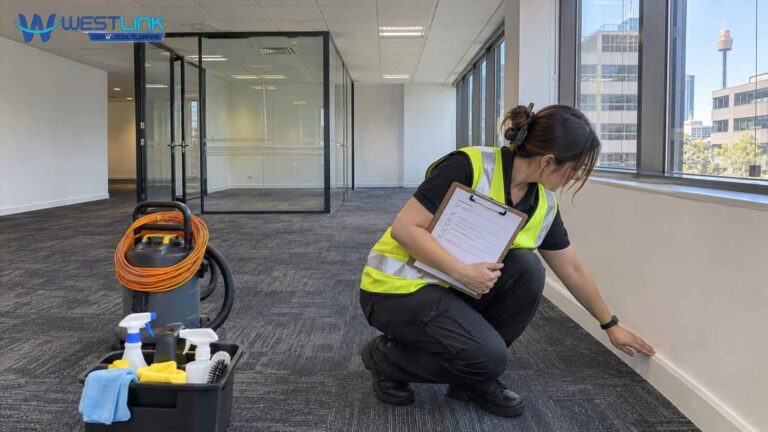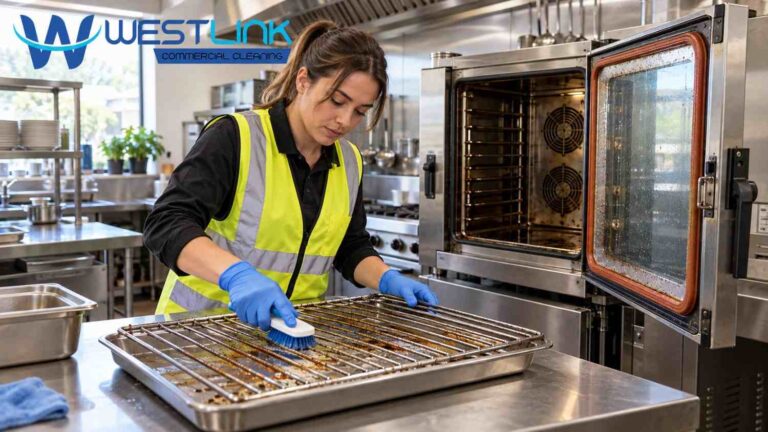
Commercial end of lease cleaning restores leased business premises to the clean condition the lease requires before the tenant returns the keys. The service covers floors, walls, windows, kitchens, bathrooms, fixtures, and waste removal across offices, retail units, warehouses, and medical suites. It differs from regular office cleaning and make-good works because it targets handover standards rather than daily upkeep or structural reinstatement. The process runs through lease review, site inspection, a written scope, deep cleaning, and a final quality check. Tenants book the clean after removals and make-good trades finish and before the landlord’s final inspection. Premises size, floor type, condition, access hours, and lease requirements set the price. Commercial walls need paint-safe, low-moisture methods that remove marks without burnishing or stripping the finish. Failed inspections trace back to missed lease clauses, cleaning before removals finish, and undocumented work. A tenant selects a provider by checking insurance, lease-specific experience, written scope, and re-clean terms. A final inspection confirms every area against the lease checklist with dated photographs.
What Is Commercial End of Lease Cleaning?
Commercial end of lease cleaning is a one-time deep cleaning that returns leased business premises to the condition the lease requires at handover. It applies to offices, retail shops, warehouses, medical suites, restaurants, and industrial units. The lease defines the standard, and commercial leases commonly require the tenant to return the premises clean, with fair wear and tear allowed.
Three parties hold distinct roles. The tenant pays for and arranges the clean. The landlord or agent inspects the result. The cleaning contractor performs the work against a written scope.
What Does Commercial End of Lease Cleaning Cover?
A commercial end of lease clean covers every surface and fixture the tenant occupied, from floors to ceiling fittings. The exact scope follows the lease and the premises type.
| Area | Typical tasks | Common inspection failure |
| Floors | Carpet extraction, hard-floor scrubbing, edge and corner detailing | Stains, odour, residue along skirting |
| Walls and skirting | Dusting, paint-safe spot cleaning, adhesive and tape residue removal | Scuffs, burnished patches, missed marks |
| Windows and glass partitions | Interior glass, frames, sills, and tracks | Streaks, fingerprints, dirty tracks |
| Ceilings, lights, and vents | Dusting ceiling tiles, light diffusers, and air vents | Dust build-up, cobwebs |
| Kitchens and break rooms | Degreasing benches, cupboards, sinks, and appliances | Grease, food residue, inside-cupboard dirt |
| Bathrooms | Descaling and sanitising fixtures, floors, and partitions | Limescale, mould, odour |
| Doors, blinds, and fixtures | Wiping doors, handles, blinds, and switches | Dust on blinds, marked door surfaces |
| Waste | Removing remaining rubbish and bins | Items left behind |
Repainting, patching, carpet replacement, and cabling removal fall outside a standard clean. Those tasks belong to make-good and need separate trades.
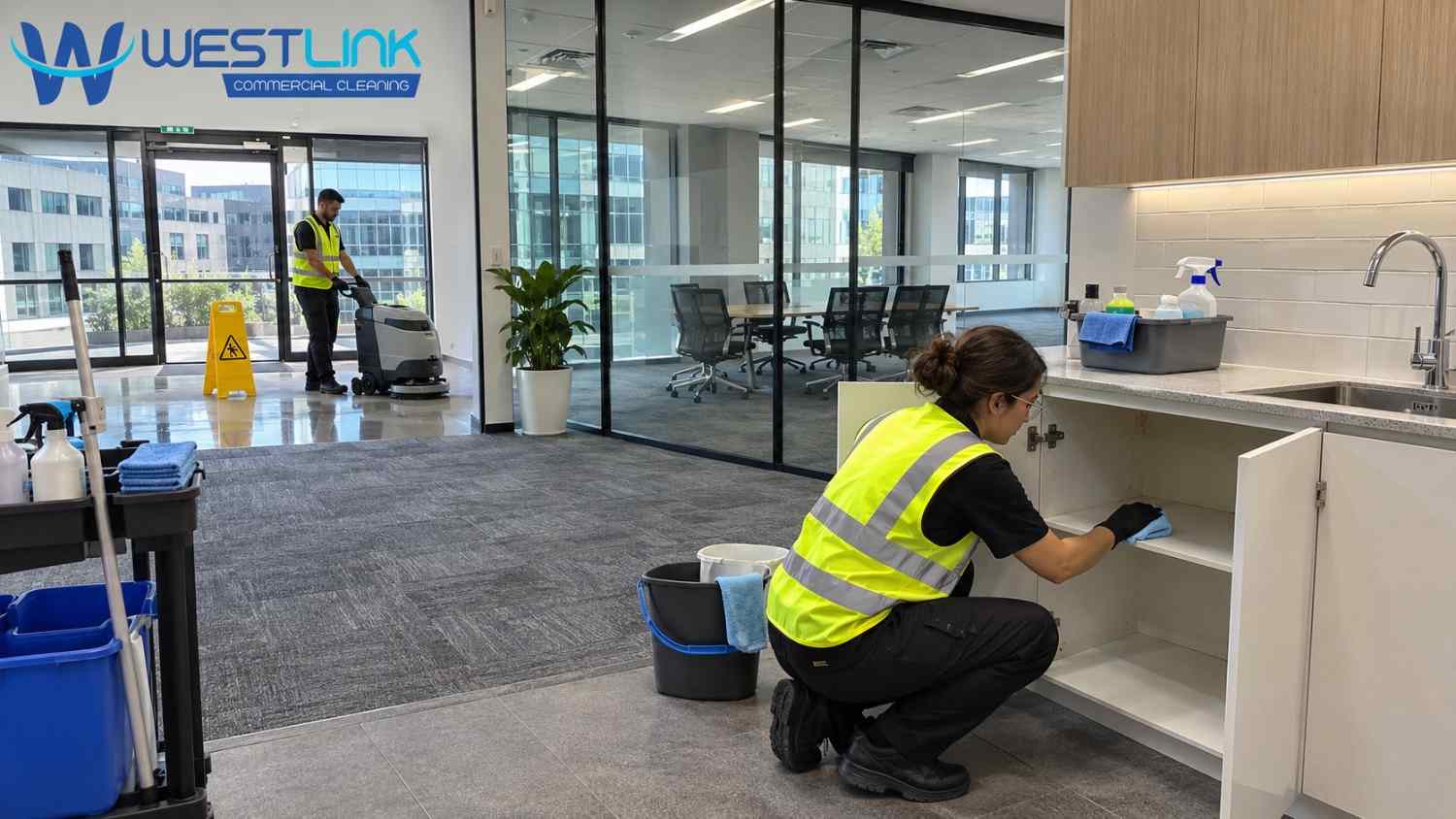
How Does Commercial End of Lease Cleaning Differ From Make-Good and Regular Cleaning?
Commercial end of lease cleaning differs from regular office cleaning and make-good works in purpose, depth, and timing.
| Service | Purpose | When it happens |
| Regular commercial cleaning | Daily or weekly upkeep | During the tenancy |
| Make-good | Reinstates the premises to the lease condition through repairs and removals | After move-out, before the final clean |
| End of lease cleaning | Returns clean premises at handover | After make-good, before the landlord’s inspection |
A tenant completes make-good works first, because trades generate dust and debris that the final clean must remove.
How Does the Commercial End of Lease Cleaning Process Work?
Commercial end of lease cleaning follows six stages, from lease review to a final quality check.
- Review the lease. The contractor reads the cleaning and handover clauses and any landlord checklist.
- Inspect the site. The contractor walks the premises, records floor types, condition, access, and hazards, and photographs problem areas.
- Agree a written scope and quote. The scope itemises areas, tasks, equipment, access hours, and re-clean terms.
- Prepare the premises. The tenant confirms that furniture, fit-out, and rubbish are gone, and the contractor protects fixtures and electrical points.
- Deep clean from top to bottom. The crew cleans ceilings and vents first, then walls and glass, then fixtures, and finishes with floors so falling dust lands on floors not yet cleaned.
- Run a quality check. The contractor walks the premises against the scope, photographs the result, and corrects missed areas before the landlord inspects.
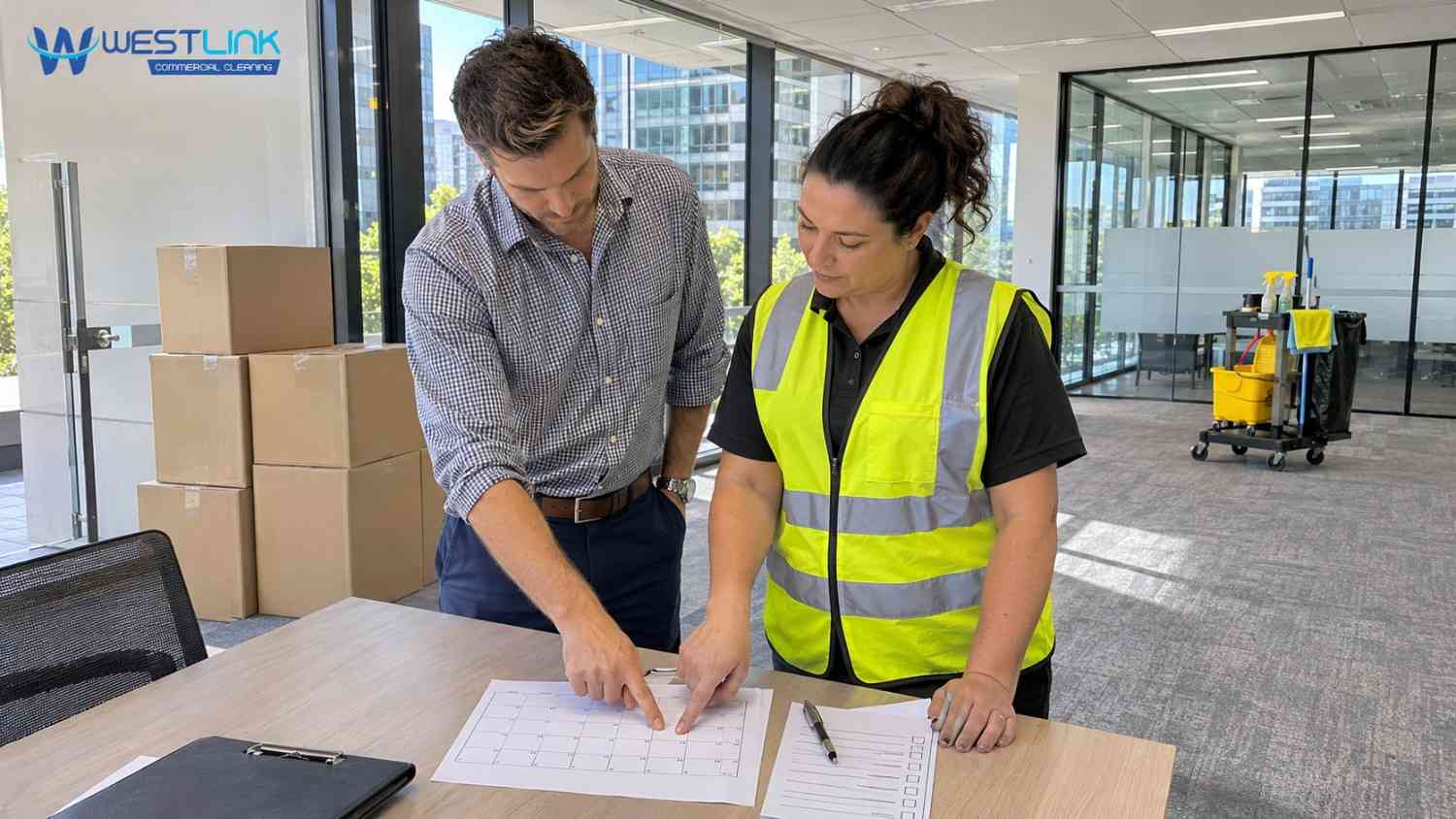
When Should a Tenant Book Commercial End of Lease Cleaning?
A tenant should book commercial end of lease cleaning once furniture, fit-out, and make-good trades finish and before the landlord’s final inspection. Booking as soon as the exit date is confirmed secures access dates, because lease-end periods fill quickly and after-hours slots disappear first. A clean scheduled before removals end forces a second visit, since fresh dust and debris undo the finished work.
What Factors Determine the Cost of Commercial End of Lease Cleaning?
Premises size, floor type, condition, access, and lease requirements determine the price of commercial end of lease cleaning. Six factors move a quote the most:
- Floor area. Larger premises need more labour hours and equipment time.
- Floor types. Carpet extraction, vinyl scrubbing, and polished concrete each need different machines and methods.
- Condition. Grease, mould, builders’ dust, and heavy staining add hours.
- Fixtures. Each kitchen, bathroom, and glass partition adds detailed work.
- Height and access. High windows, tall ceilings, and vents need access equipment.
- Timing. After-hours work and short deadlines raise the rate.
A quote tied to a written scope compares accurately across providers. A per-square-metre figure without a scope hides what the clean leaves out.
How Do You Clean Commercial Walls Without Damaging Paint?
Commercial wall cleaning removes marks while preserving the existing paint, because repainting counts as make-good and falls outside a standard clean. Moisture and friction cause most paint damage, so the method limits both.
- Identify the finish. Flat and matte paint burnishes when rubbed. Satin, semi-gloss, and gloss tolerate gentle wiping better.
- Dust dry first. A microfiber duster or vacuum brush removes loose dust before any water touches the wall.
- Patch-test a hidden area. A barely damp microfiber cloth wiped once or twice shows whether the paint changes color or sheen after drying.
- Spot-clean in small sections. Plain water comes first. A few drops of mild dish soap in lukewarm water follow only when water fails and the test passed.
- Remove residue and dry. A separate damp cloth lifts soap, and a soft dry cloth finishes the section.
- Check in side lighting. Shiny patches, streaks, and paint loss show up once the wall dries.
Melamine erasers, abrasive pads, bleach, and solvents strip or polish paint and need written approval from the paint manufacturer or landlord. A contractor photographs pre-existing damage, peeling paint, and suspected moisture problems and reports them instead of scrubbing them. The U.S. Environmental Protection Agency publishes guidance on mold cleanup for suspected mold.
Which Mistakes Cause Commercial End of Lease Cleaning to Fail Inspection?
Most failed inspections trace back to eight preventable mistakes:
- Skipping the lease clauses. The landlord’s checklist, not the cleaner’s habits, sets the standard.
- Cleaning before removals finish. Remaining furniture, cabling work, and trades re-soil cleaned areas.
- Missing high-level dust. Light diffusers, air vents, and the tops of partitions draw inspectors’ attention.
- Scrubbing painted walls. Friction leaves shiny patches that wiping cannot remove.
- Using harsh chemicals without approval. Bleach and solvents discolor paint and damage fixtures.
- Leaving rubbish or items behind. Leftover items count against the clean even when every surface shines.
- Skipping documentation. Undated or missing photographs weaken any dispute over deductions.
- Booking too late. A rushed clean leaves no time to correct missed areas before inspection.
How Do You Choose a Commercial End of Lease Cleaning Provider?
A tenant selects a commercial end of lease cleaning provider by checking insurance, lease-specific experience, written scope, and re-clean terms. Five checks separate reliable contractors from risky ones:
- Public liability insurance. Cover protects the tenant if the crew damages the premises.
- Commercial lease experience. A contractor who knows landlord checklists avoids missed items.
- Itemised written scope. Every area and task appears in the quote.
- Re-clean terms. The contract states the period in which the contractor corrects missed areas at no extra charge.
- Inspection support. The contractor offers a pre-inspection walkthrough and dated photographs.
What Should a Tenant Check in the Final Inspection?
A final inspection confirms every area against the lease checklist and records the result with dated photographs. The inspection happens after the premises dry and after all removals finish. This checklist covers each room:
- Floors free of stains, residue, and debris, including edges and corners
- Walls free of dust, scuffs, tape, and adhesive residue, with no new shiny patches
- Windows, glass partitions, frames, and tracks clean
- Ceilings, light fittings, and air vents dust-free
- Kitchens and break rooms degreased, including inside cupboards and appliances
- Bathrooms descaled and sanitised
- Doors, handles, blinds, and switches wiped
- All rubbish and tenant property removed
- Existing damage photographed and reported, not concealed
- Final room photographs, written re-clean terms, and key-handover instructions on file
A tenant who attends the landlord’s inspection can correct small issues on the spot and confirm any agreed re-clean in writing.
Frequently Asked Questions
What Is Included in Commercial End of Lease Cleaning?
Commercial end of lease cleaning includes floors, walls, windows, ceilings, vents, kitchens, bathrooms, doors, blinds, fixtures, and rubbish removal. The lease and the written scope define the exact list.
Is Commercial End of Lease Cleaning Compulsory?
Most commercial leases contain a clause requiring the tenant to return the premises clean, so cleaning is a lease obligation in practice. The lease wording and local law set the exact requirement, and a tenant reads the handover clause before booking.
What Is the Difference Between End of Lease Cleaning and Make-Good?
End of lease cleaning removes dirt, while make-good reinstates the premises through repairs, removals, and repainting. A tenant completes make-good first and cleans second.
How Long Does Commercial End of Lease Cleaning Take?
Duration depends on premises size, floor types, condition, and crew size. A written site inspection produces a realistic time estimate for the specific premises.
Do Tenants Need to Repaint Walls at the End of a Commercial Lease?
Repainting depends on the lease and the condition of the paint. Cleaning removes marks, and repainting addresses damage or wear that cleaning cannot remove. A tenant confirms the requirement with the landlord in writing before painting.
What Happens if the Landlord Rejects the Clean?
A rejected clean triggers the contractor’s re-clean terms. The tenant sends the landlord’s list of missed items to the contractor, who corrects them within the agreed period. Dated photographs and written correspondence support the tenant in any dispute over deductions.
Final Takeaway: Commercial End of Lease Cleaning
Commercial end of lease cleaning succeeds when the tenant reads the lease, completes make-good first, books a provider with a written scope, and documents the result with photographs. Paint-safe methods protect walls, and top-to-bottom cleaning prevents re-soiled floors. A tenant who inspects the premises against the lease checklist before the landlord does avoids most deductions.