

Deep cleaning a commercial deep fryer is a core task in commercial kitchen cleaning and means shutting down the appliance, draining the cooking oil, removing grease and carbon deposits, completing a manufacturer-approved boil-out when needed, and drying the frypot completely before refilling. A deep clean requires protective equipment, manufacturer-approved cleaning chemicals, non-abrasive tools, and dedicated oil-draining equipment, and it follows nine steps from shutdown to reassembly. The best commercial fryer cleaner is a manufacturer-approved product that removes carbonised oil without damaging the frypot, heating components, or seals. Commercial fryer oil disposal means cooling spent oil, sealing it in a dedicated container, and handing it to an authorised used cooking oil collector, never pouring it down a drain. Cleaning frequency depends on frying volume, food type, oil condition, and the manufacturer’s maintenance schedule. Safe cleaning requires control of thermal, chemical, electrical, gas, and slip hazards, and eight common mistakes damage equipment and endanger kitchen staff.
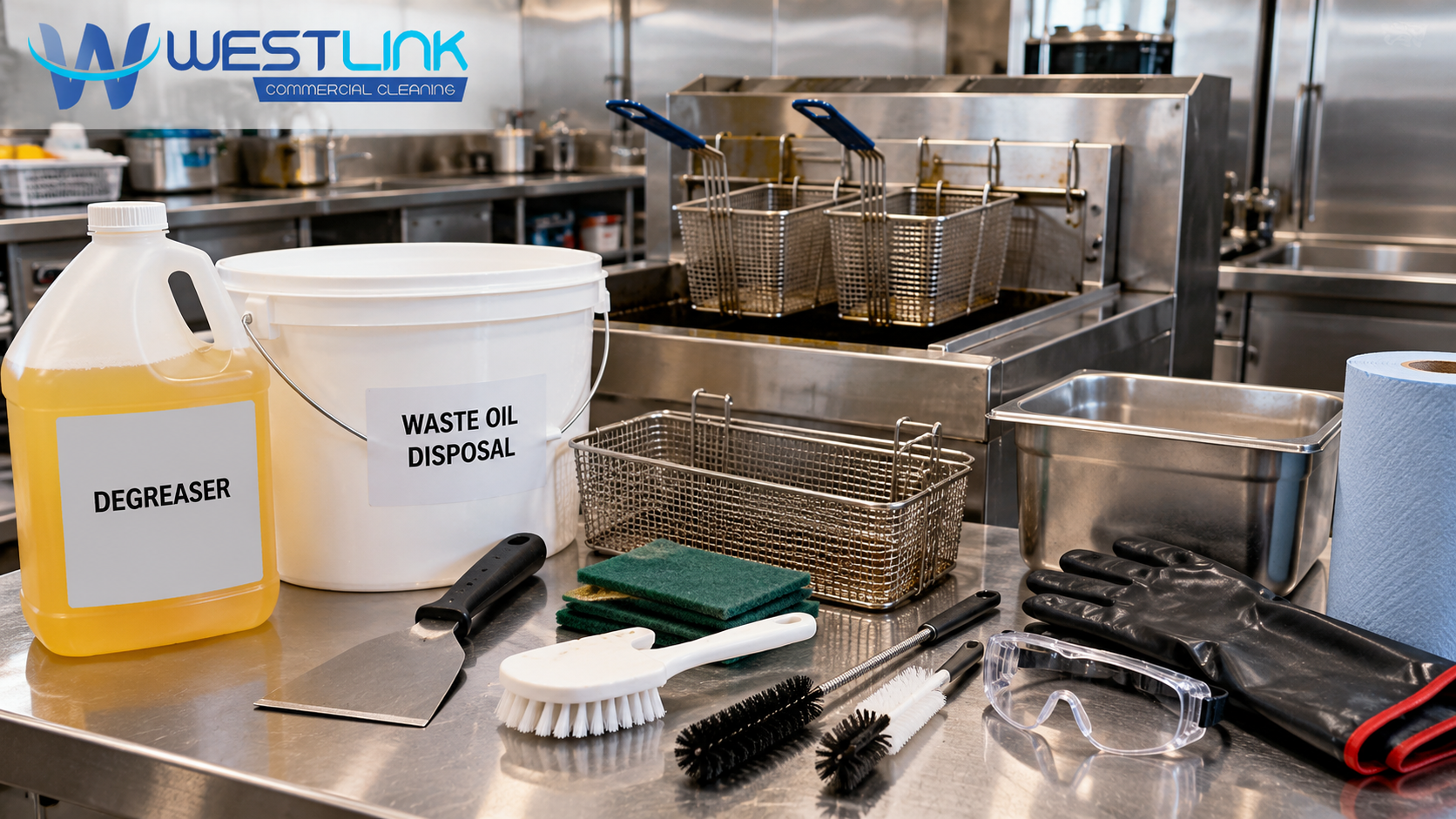
What Do You Need to Deep Clean a Commercial Deep Fryer?
| Equipment or supply | Purpose |
| Heat-resistant gloves and apron | Protect against hot surfaces and oil splashes |
| Chemical-resistant gloves and splash goggles | Protect against cleaning solution exposure |
| Slip-resistant footwear | Reduces slip hazards around the fryer |
| Commercial fryer boil-out cleaner | Breaks down grease and carbonised deposits |
| Long-handled fryer brush | Scrubs the frying vat and accessible surfaces. |
| Non-abrasive cleaning pads | Remove stubborn residue without scratching surfaces |
| Fryer drain cleaning tool | Clears accessible debris from the drain opening |
| Heat-rated oil disposal caddy | Collects and transfers used cooking oil |
| Clean water and absorbent cloths | Rinse and dry the frypot |
| Oil spill kit | Contains accidental spills |
Deep cleaning a commercial fryer requires protective equipment, manufacturer-approved cleaning chemicals, non-abrasive tools, and dedicated oil-draining equipment. The exact supplies depend on whether the appliance is a gas fryer, electric fryer, open-pot fryer, or tube-type fryer. A commercial fryer cleaner must be compatible with the frypot material and approved by the equipment manufacturer. Commercial alkaline degreasers and boil-out detergents remove stubborn oil deposits, but their concentration and application method vary by product.
The Safety Data Sheet (SDS) of every cleaning chemical must be read before use. Mixing different cleaning chemicals is prohibited, and a household detergent cannot safely replace a commercial fryer cleaning solution.
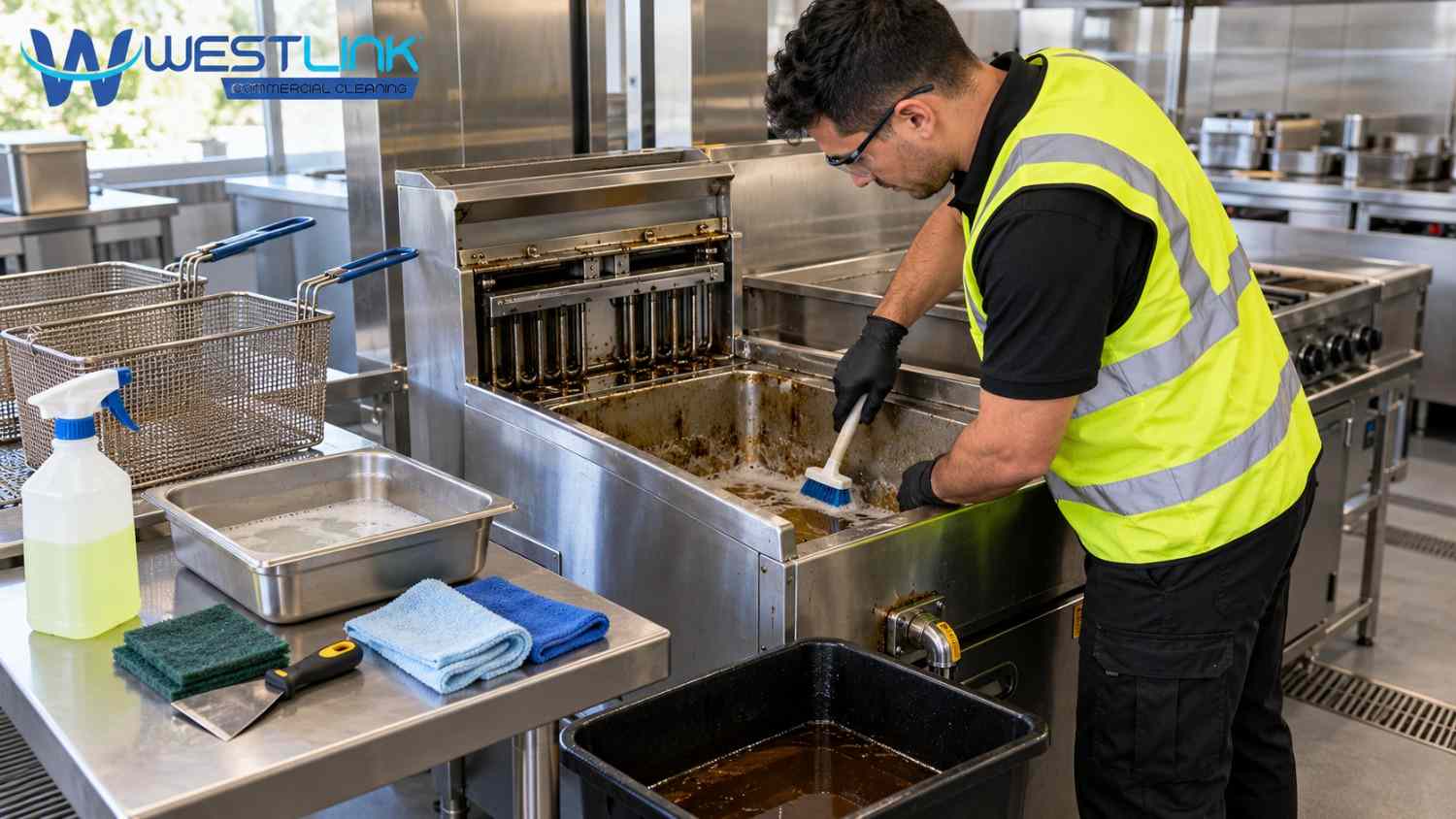
How to Deep Clean a Commercial Deep Fryer: Step-by-Step Procedure
Deep cleaning a commercial deep fryer follows nine steps: shutdown, oil draining, accessory removal, carbon removal, boil-out, drain and filtration cleaning, rinsing, drying, and reassembly. The procedure applies to commercial gas and electric fryers, and the manufacturer’s operating manual takes precedence wherever the instructions differ.
Step 1: Shut Down the Commercial Fryer and Let the Oil Cool
Shutting down a commercial deep fryer stops unintended heating while staff handle the cooking oil and internal components. Staff turn off the fryer with its operating controls and follow the manufacturer’s procedure for isolating the gas or electrical supply. Lockout/tagout procedures apply wherever the workplace risk assessment or local regulations require them.
Cooking oil must cool to the temperature specified in the equipment manual. Oil stays dangerously hot after the burners or heating elements stop, so a switched-off fryer is not a safe fryer.
Staff wear thermal and splash-protection equipment, keep unnecessary personnel away from the fryer, and clear the oil transfer route. Water must never enter a frypot that still contains hot oil, because contact between water and hot oil causes violent splattering.
Step 2: Drain the Used Cooking Oil Safely
Safe fryer oil draining transfers cooking oil from the frypot into a compatible collection container without splashing, overflowing, or spilling. A manufacturer-approved oil disposal caddy or heat-rated vessel sits beneath the drain outlet, and its capacity and temperature rating must match the actual volume and temperature of the oil.
The drain valve opens slowly, following the manufacturer’s instructions, and staff avoid reaching across exposed hot surfaces. The valve closes once the frypot has emptied.
A fryer with an integrated filtration system uses its prescribed oil-draining or disposal function. Cleaning chemicals and boil-out water must not pass through the oil filtration system unless the manufacturer explicitly permits it.
Oil that remains suitable for reuse goes through the established filtration procedure and oil-quality criteria. Degraded or spent oil is collected separately for recycling.
Important: Hot frying oil must never go into an ordinary plastic bucket, a glass container, or any vessel not rated for its temperature.
Step 3: Remove Fryer Baskets, Crumb Screens, and Accessories
Removing detachable fryer components exposes grease-coated surfaces and food debris that staff cannot clean while the fryer stays assembled. Once the equipment has cooled sufficiently, staff remove the fryer baskets, basket support rack, crumb screen, and every other manufacturer-designated removable part.
Loosened food particles go into a solid-waste container. Washable accessories soak in a compatible detergent solution, following both the equipment and chemical instructions, and a non-abrasive brush scrubs the basket mesh, handles, and support racks. Staff rinse the accessories thoroughly and let them dry.
Electrical controls, non-removable sensors, and other electrical components must never be immersed in water.
Step 4: Remove Burnt-On Grease and Carbon Deposits From the Frypot
Frypot cleaning removes carbonised cooking oil, food sediment, and grease deposits from the interior of a commercial deep fryer. A manufacturer-approved fryer brush or non-scratch pad clears loose residue from the bottom and sidewalls of the frypot, with extra attention to the drain opening, heating tubes, and other accessible interior surfaces.
An electric fryer follows the manufacturer’s instructions for cleaning around heating elements, because some elements rise or reposition for cleaning while others stay fixed. A gas tube fryer needs cleaning of the accessible areas around the burner tubes without damage to internal components.
Steel wool, sharp metal scrapers, and other abrasive tools are off limits unless the manufacturer specifically permits them. Excessive scraping damages protective surfaces, temperature probes, seals, and heating components.
Heavy carbon deposits that resist ordinary brushing call for a commercial fryer blow-out.
Step 5: Perform a Commercial Fryer Boil-Out
A commercial fryer boil-out uses heated water and an approved cleaning compound to loosen grease, hardened fat, and carbon deposits inside the frypot. A boil-out is a periodic deep-cleaning procedure, and it never replaces daily crumb removal, oil filtration, or routine surface cleaning.
To perform a manufacturer-approved boil-out:
Confirm that the cooking oil has drained completely.
Remove loose debris and close the fryer drain valve.
Fill the frypot with clean water to the level the manufacturer specifies.
Add the approved boil-out cleaner at the product’s specified concentration and stage of heating.
Activate the fryer’s dedicated boil-out mode or the approved temperature-controlled procedure.
Maintain the required heating and soaking cycle without letting the solution overflow.
Brush the accessible interior surfaces with a suitable long-handled brush.
Switch off the heating cycle and let the solution cool as instructed.
Drain the spent solution into a suitable container using the approved method.
Boil-out temperature and duration are model-specific. Some commercial fryers operate at a controlled simmer, while others run a programmed cleaning cycle, so no universal boiling time or temperature applies across fryer models.
A staff member monitors the full cycle and keeps the solution at the prescribed fill level. A fryer is never left unattended during boil-out, never runs without sufficient liquid coverage, and never receives cleaning solution while it still contains cooking oil.
Step 6: Clean the Drain Valve and Filtration Components
Cleaning the commercial fryer drain valve removes trapped food debris and grease that obstruct controlled oil discharge. Once the fryer has shut down and cooled, staff inspect the accessible drain opening for food particles and hardened residue.
Only a manufacturer-approved drain cleaning rod or brush enters the drain. Staff never force a tool into a blocked valve and never dismantle its internal mechanism without authorisation.
A fryer with an integrated filtration system needs inspection of the removable filter pan, crumb tray, filter screen, and filter medium. Staff remove accumulated sediment, clean the approved components, and replace disposable filter paper or pads when necessary. Water and cleaning chemicals stay out of filter motors, pumps, and oil circulation lines unless the manufacturer explicitly authorises that method.
A blocked drain, damaged gasket, leaking valve, or malfunctioning filter pump requires qualified maintenance before the fryer returns to service.
Step 7: Rinse the Frypot and Remove Cleaning Chemical Residue
Rinsing a commercial fryer removes residual degreaser, loosened carbon particles, and spent cleaning solution from food-contact surfaces. After the boil-out, the fryer cools as the manufacturer requires, and staff rinse the frypot with clean water until the cleaning compound is gone.
Some manufacturers prescribe extra neutralisation steps for particular boil-out products, and staff apply them only when the fryer manual and chemical instructions require them. Staff then inspect the frypot corners, drain opening, heating surfaces, and other accessible areas for remaining residue.
A fryer must not return to service while detergent deposits remain on food-contact surfaces.
Step 8: Dry the Commercial Fryer Completely
Complete frypot drying removes residual water that would splatter when fresh cooking oil heats. Clean, absorbent, lint-free cloths dry the interior surfaces and accessible drain areas, and staff check for moisture around heating elements, burner tubes, seams, and the bottom of the frying vat.
Baskets, racks, and other detachable components dry completely before reinstallation. An empty fryer must not be energised to evaporate leftover water unless the manufacturer provides an approved drying procedure.
Water droplets left in the frypot splash dangerously during reheating, so thorough drying is an essential safety step and not an optional finishing task.
Step 9: Reassemble, Refill, and Inspect the Fryer
Reassembly restores the cleaned fryer to its correct operating configuration before fresh cooking oil enters the frypot. Staff close the drain valve and reinstall the clean, dry baskets, racks, and filtration components as instructed, then inspect the accessible seals, drain connections, heating components, and temperature controls for visible damage.
The frypot fills with suitable cooking oil to the manufacturer’s specified operating level. Overfilling raises overflow risk, because food displacement and oil expansion push the level higher during frying.
Staff restart the fryer with its prescribed startup procedure and verify that it heats and controls temperature normally. A fryer that shows an error, leaks oil, or behaves unexpectedly stops operating until qualified maintenance inspects it.
What Is the Best Cleaning Solution for a Commercial Deep Fryer?
The best commercial deep fryer cleaner is a manufacturer-approved product that removes carbonised oil and grease without damaging the frypot, heating components, or seals. Commercial boil-out compounds, alkaline degreasers, and foodservice detergents each serve a different cleaning requirement.
| Cleaner type | Main application | Important consideration |
| Commercial blow-dry detergent | Carbon and heavy grease deposits | Follow the exact temperature, dosage, and soaking instructions. |
| Alkaline detergent | Stubborn oil residues | Check material compatibility and chemical PPE requirements. |
| Non-caustic detergent | Compatible grease-cleaning applications | May not remove every heavy carbon deposit |
| Low-foaming fryer cleaner | Approved cleaning cycles | Use the formulation specified for the equipment. |
| Foodservice detergent | Removable baskets and accessories | Rinse thoroughly before reuse |
A product labelled food-safe still needs rinsing and drying before it is safe on food-contact equipment. Oven cleaners, drain cleaners, bleach, and mixed household chemicals have no place in fryer cleaning, so staff use only a cleaner approved for the particular equipment and application.
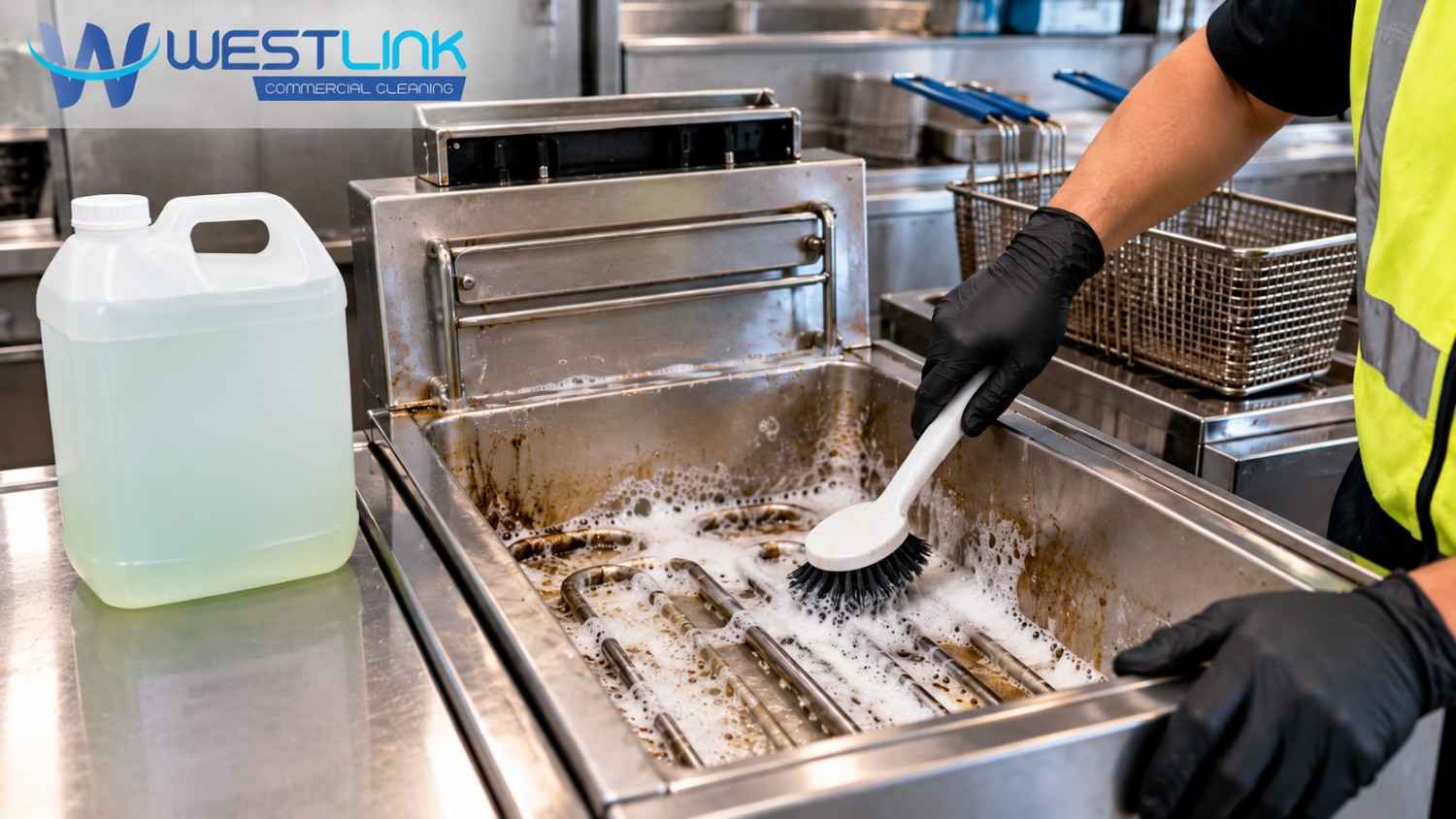
How Do You Dispose of Used Commercial Fryer Oil Safely?
Commercial fryer oil disposal means cooling spent cooking oil, sealing it in a dedicated container, and arranging collection through an authorised waste cooking oil service. Used cooking oil (UCO), also called yellow grease, is a recoverable waste stream from commercial frying operations. Restaurants keep it separate from chemical cleaning solutions, grease trap waste, and other contaminants so that it stays suitable for recycling.
Step 1: Cool and Collect Used Fryer Oil
Spent fryer oil must cool to the temperature that both the fryer manufacturer and the transfer equipment permit. Staff move the oil through an approved drain system, disposal caddy, or closed-loop oil handling system into a container with sufficient capacity and compatible seals. No collection vessel is overfilled, and no unsecured container travels through a busy kitchen.
Step 2: Store Waste Cooking Oil in a Dedicated Container
Used commercial fryer oil belongs in a clearly identified, leak-resistant container or bulk grease storage tank. The storage area sits away from uncontrolled heat sources, pedestrian routes, and drainage openings, and lids, spill containment, and access controls reduce the risk of leaks, contamination, and unauthorised handling.
The container stays closed except during transfers. Staff inspect the tank or drum for leaks, damage, and excessive fill levels.
Step 3: Arrange Collection Through an Authorised Oil Recycler
An authorised used cooking oil collector transports recoverable fryer oil from restaurant storage to a suitable processing facility. Depending on the service and the oil quality, the recovered oil enters biodiesel, renewable diesel, rendering, or other approved resource-recovery processes.
Before booking a collection, restaurants verify that the contractor meets the licensing, registration, or authorisation requirements of their jurisdiction. They keep collection receipts, contractor details, and waste transfer documentation where local rules require them.
Step 4: Never Pour Fryer Oil Down the Drain
Used cooking oil must never go into kitchen sinks, floor drains, toilets, or grease interceptors. Fats, oils, and grease (FOG) accumulate inside drainage infrastructure and cause pipe blockages, sewer overflows, and wastewater maintenance problems.
A grease interceptor separates grease from wastewater, but it is not a disposal system for bulk fryer oil. Restaurants collect waste cooking oil separately and send it through an authorised recycling or disposal route.
Step 5: Dispose of Spent Fryer Cleaning Solution Separately
Spent boil-out solution is a different waste stream from used cooking oil because it contains detergent, dissolved grease, and loosened carbon deposits. Used fryer cleaning chemicals never go into a waste oil recycling tank.
Staff follow the chemical manufacturer’s disposal instructions, the Safety Data Sheet, and local wastewater discharge requirements. Where discharge is permitted, the solution must meet any temperature, pH, treatment, and trade-waste conditions. Where it is not permitted, the restaurant arranges an appropriate waste collection service.
How Often Should a Commercial Deep Fryer Be Deep Cleaned?
Commercial deep fryer cleaning frequency depends on frying volume, food type, oil condition, carbon accumulation, and the equipment manufacturer’s maintenance schedule. Daily cleaning removes loose food particles and surface grease, while periodic deep cleaning removes the more persistent deposits inside the frypot.
| Cleaning frequency | Recommended maintenance activity |
| During operation | Skim food debris and monitor frying oil condition |
| Daily or each shift, as required | Filter oil, clean baskets, inspect the drain area, and wipe accessible exterior surfaces. |
| Weekly review | Inspect accessible grease buildup, filtration components, and signs of leakage. |
| Periodic deep cleaning | Perform a manufacturer-approved boil-out based on the model and operating conditions. |
| At oil replacement | Inspect the frypot and complete any cleaning the manufacturer specifies. |
| Scheduled maintenance | Arrange qualified checks of temperature controls, safety devices, and other critical components. |
These intervals are planning categories and not universal manufacturer requirements. A restaurant frying heavily battered foods accumulates sediment faster than an operation preparing smaller quantities of relatively clean products. Visible carbon deposits, recurring grease residue, or persistent contamination in the frypot signal that the cleaning frequency needs to increase.
What Safety Precautions Should You Follow When Cleaning a Commercial Fryer?
Commercial fryer cleaning safety requires control of thermal hazards, chemical exposure, electrical and gas risks, slip hazards, and unexpected equipment operation.
| Hazard | Required precaution |
| Hot cooking oil | Follow approved cooling and draining procedures. |
| Oil splashes | Use suitable splash protection and controlled transfer equipment. |
| Hot cleaning solution | Monitor fill levels and prevent overflow. |
| Caustic chemicals | Follow SDS instructions and wear compatible chemical-resistant PPE. |
| Electrical equipment | Isolate power as required before manual cleaning. |
| Gas equipment | Follow the manufacturer’s shutdown and gas-isolation procedure. |
| Wet or greasy floors | Contain spills promptly and wear slip-resistant footwear. |
| Water inside a fryer | Dry the frypot completely before adding and heating oil |
| Damaged equipment | Stop use and obtain qualified maintenance. |
Staff receive practical training before they drain oil, filter oil, run a boil-out, or transfer waste oil. Written standard operating procedures name the fryer model, approved cleaning products, oil transfer equipment, required PPE, and emergency response actions.
The workplace fire safety arrangements include commercial cooking fire suppression equipment and staff training for cooking oil emergencies.
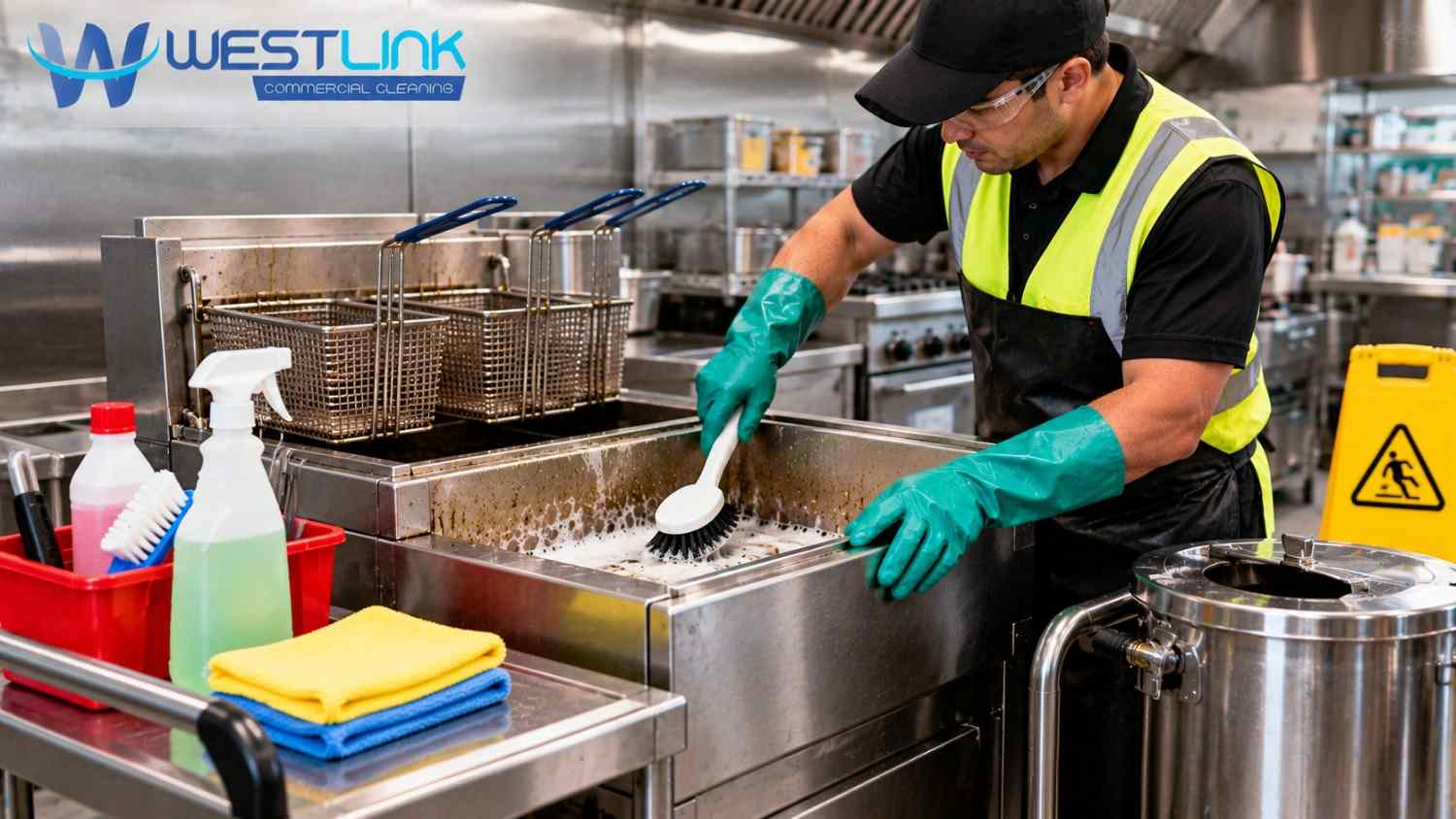
What Common Mistakes Should You Avoid When Cleaning a Deep Fryer?
Eight common mistakes damage commercial fryers, contaminate fresh cooking oil, and expose kitchen workers to avoidable hazards.
Cleaning while the oil is excessively hot. Cooking oil retains dangerous heat after the fryer switches off, so staff should follow the specified safe draining procedure.
Using an unsuitable cleaning chemical. Unapproved degreasers damage fryer materials or leave harmful residues.
Overfilling during boil-out. Excess cleaning solution overflows during heating and creates splash hazards.
Scraping heating components aggressively. Metal tools and excessive force damage probes, protective surfaces, and heating assemblies.
Leaving moisture inside the frypot. Remaining water causes violent oil splattering during reheating.
Discharging waste oil into plumbing. Bulk cooking oil obstructs drains and breaches local wastewater requirements.
Ignoring a defective drain valve. Leakage or restricted drainage raises the risk of oil spills during future cleaning.
Skipping cleaning records. Undocumented cleaning prevents maintenance verification and makes recurring problems harder to investigate.
Commercial Deep Fryer Cleaning and Maintenance Checklist
This checklist verifies that a commercial fryer has been cleaned, dried, and prepared for safe operation.
Before cleaning
- Confirm staff have received cleaning and chemical safety training.
- Review the fryer’s operating manual and the cleaning chemical instructions.
- Shut down and isolate the equipment as required.
- Confirm the oil temperature suits the approved draining process.
- Prepare protective equipment and a compatible oil collection container.
During cleaning
- Drain the cooking oil through the approved method.
- Remove food debris and washable accessories.
- Brush off accessible grease and carbon deposits.
- Complete an approved boil-out when required.
- Clean the permitted drain and filtration components.
- Rinse away cleaning chemical residue.
- Dry the frypot and all removable parts completely.
After cleaning
- Inspect the drain valve and accessible components.
- Reassemble the fryer correctly.
- Refill with suitable cooking oil to the specified level.
- Check normal operation before resuming cooking.
- Transfer waste oil to the designated storage system.
- Record the cleaning, any maintenance concerns, and the oil disposal details.
Key Takeaways: Deep Cleaning a Commercial Fryer Safely
A complete commercial fryer deep clean covers safe shutdown, controlled oil drainage, frypot degreasing, manufacturer-approved boil-out, thorough rinsing, complete drying, and equipment inspection.
The equipment manual sets the temperatures, durations, and cleaning products for each fryer model, and it overrides any general guidance. Used cooking oil goes to an authorised recycler, and spent cleaning solution follows its own disposal route. Kitchens that train staff, keep cleaning records, and build waste oil management into routine maintenance reduce both safety incidents and drainage problems.
Conclusion
Deep cleaning a commercial deep fryer involves more than removing visible grease. A complete procedure includes safe shutdown, controlled oil drainage, frypot degreasing, manufacturer-approved boil-out cleaning, thorough rinsing, complete drying, and equipment inspection.
Responsible waste oil disposal is equally important. Collecting used cooking oil in dedicated containers and arranging authorised recycling prevents unnecessary grease contamination and reduces the risk of drainage problems.
Commercial kitchens should follow equipment-specific cleaning instructions, train employees in fryer safety, maintain appropriate cleaning records, and integrate waste oil management into routine kitchen maintenance procedures.
Frequently Asked Questions
Can you clean a commercial deep fryer while the oil is hot?
Commercial deep fryers must not undergo manual deep cleaning while they contain dangerously hot cooking oil. Some fryers have manufacturer-approved warm-oil filtration and draining procedures, and staff follow the specified temperature limits and protective measures before handling that equipment.
What temperature should fryer oil be before draining?
The safe draining temperature depends on the fryer model, oil handling system, collection container, and the manufacturer’s instructions. No universal temperature suits every commercial fryer, so staff use the equipment’s specified draining procedure and not a general estimate.
How long does a commercial fryer boil-out take?
Boil-out duration varies by manufacturer, fryer model, cleaning compound, and operating procedure. Some processes use a short heating period followed by soaking, while others require a longer controlled simmer, so staff follow the prescribed cycle and not a fixed time.
How do you remove burnt grease from a commercial deep fryer?
Burnt grease comes off with a compatible fryer degreaser, an approved boil-out procedure, and a non-abrasive cleaning brush. Heavy carbonised deposits often need controlled soaking before brushing, and sharp scrapers or chemical mixtures can damage fryer components.
Can you use dish soap to clean a commercial deep fryer?
Dish detergent suits certain removable fryer accessories when the manufacturer permits it. Ordinary dish soap is not automatically suitable for the frypot or a heated boil-out, so internal deep cleaning uses the specified commercial cleaning chemical.
Can restaurants recycle used fryer oil?
Yes, restaurants can recycle used fryer oil. Many commercial waste oil collectors recover used cooking oil for processing into biodiesel, renewable diesel feedstock, and other industrial materials, and eligibility depends on the oil’s condition, contamination level, collection service, and local requirements.
What is the difference between fryer filtration and fryer deep cleaning?
Fryer filtration removes suspended food particles and sediment from cooking oil, while deep cleaning removes accumulated grease, carbon deposits, and oily residues from the frypot and other equipment surfaces. The two procedures serve different maintenance functions and run at different intervals.
Should a commercial fryer be deep cleaned every week?
Not every commercial fryer needs a weekly boil-out. Cleaning frequency depends on the equipment manual, oil replacement cycle, usage intensity, and deposit buildup, and daily maintenance with periodic inspections shows when extra deep cleaning is necessary.
Can used cooking oil go into a grease trap?
Used cooking oil must not go into a grease trap. Grease traps and interceptors separate fats, oils, and grease from wastewater and are not built to receive bulk used cooking oil, so restaurants collect spent fryer oil in a dedicated container for recycling or disposal.
How do you clean commercial fryer heating elements safely?
Staff clean commercial fryer heating elements only after the fryer has shut down, been isolated as required, drained, and cooled sufficiently. Manufacturer-approved brushes and methods apply, and staff avoid bending elements, disturbing sensors, or immersing electrical components.