A supermarket cleaning checklist helps store managers assign, complete and verify cleaning tasks across customer areas, food departments and back-of-house facilities. Australian supermarkets need retail store cleaning programmes that account for customer traffic, food handling, contamination risk, surface materials, and food safety and workplace safety requirements.
This guide sets out what to clean, how often, and who does it, from entrances to cold rooms. The suggested frequencies are operational starting points. Each store should adapt them to its layout, equipment, food safety procedures and inspection results.
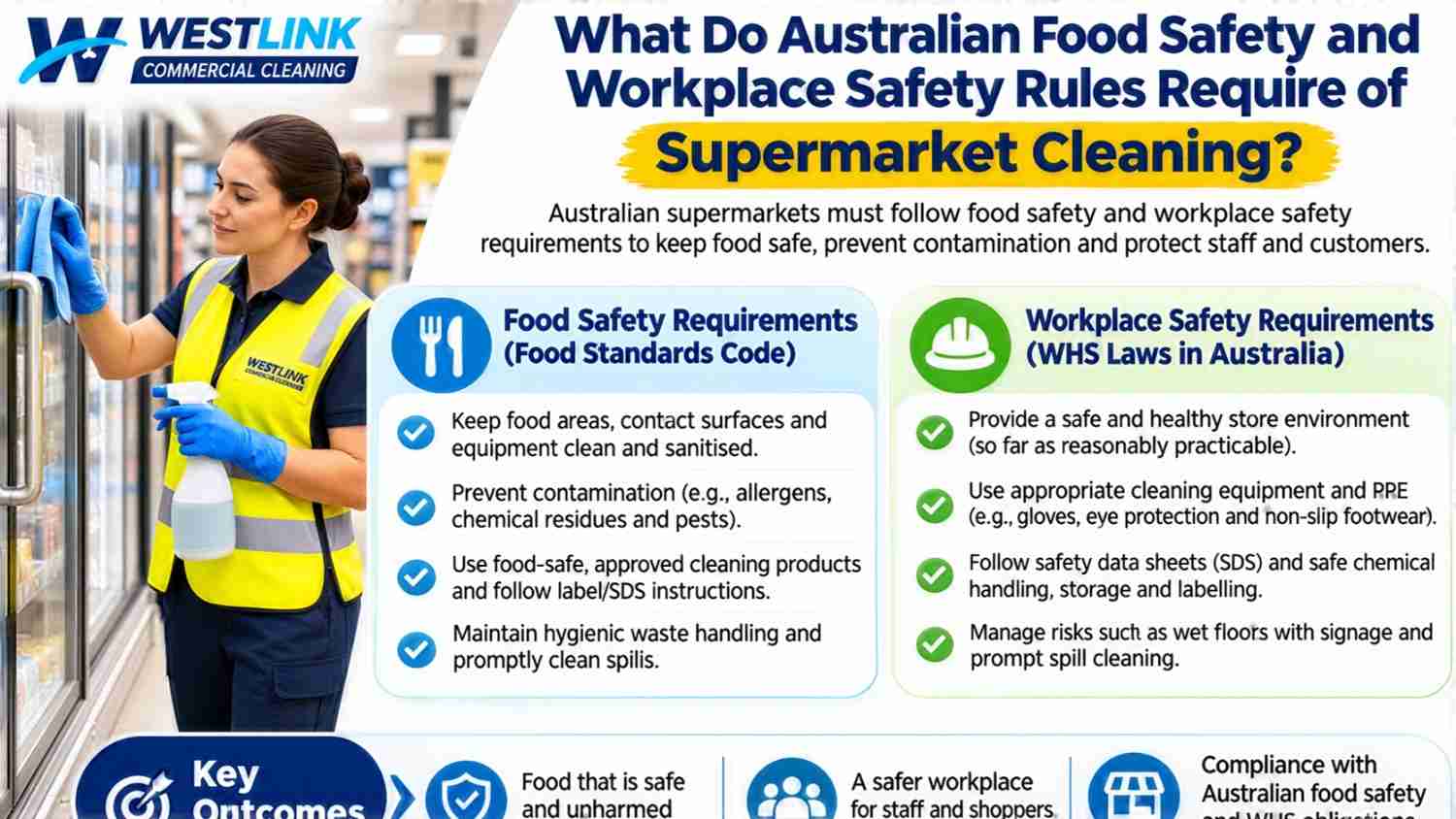
What do Australian food safety and workplace safety rules require of supermarket cleaning?
Australian supermarkets must keep premises, equipment and food contact surfaces clean and sanitary under Standard 3.2.2 of the Food Standards Code and must manage hazardous chemical risks under work health and safety (WHS) law. Standard 3.2.2 covers cleanliness in clause 19 and the cleaning and sanitising of specific equipment in clause 20, and Standard 3.2.3 sets requirements for food premises and equipment. The Code does not prescribe which cleaning procedures or frequencies a business must use, so each store chooses its own methods and schedules.
Cleaning and sanitising are two separate steps. Cleaning removes dirt, grease and food waste, and sanitising destroys microorganisms. Staff clean a surface before they sanitise it. This guide uses “sanitise” for food contact surfaces and “disinfect” for touchpoints such as toilet fixtures and handrails.
Standard 3.2.2A adds food safety management tools for supermarkets that handle unpackaged, potentially hazardous, ready-to-eat food. A supermarket that cooks or makes such food on site, such as roast chickens, sushi or custard tarts, is a category one business. A category one business needs a food safety supervisor, food handler training and evidence that its critical food safety controls work. A supermarket deli that only portions, slices or reheats bought-in food is a category two business, which needs a Food Safety Supervisor and food handler training. The NSW Food Authority explains both categories.
Potentially hazardous food must stay at 5°C or below, or at 60°C or above. The NSW Food Authority sets out these temperature limits, so staff clean refrigerated and hot-holding equipment in a way that keeps food within them.
Under WHS law, a business must manage the risks of hazardous chemicals, including cleaning chemicals. SafeWork NSW requires a hazardous chemical register that holds the current safety data sheet (SDS) for each listed chemical. Staff follow the SDS and the product label when they dilute, apply, store and dispose of each product.
A checklist supports compliance but does not guarantee it. The store’s food safety procedures and the requirements of its local council or the NSW Food Authority remain the reference for legal obligations.
How should supermarket cleaning be organised across the trading day?
Supermarket cleaning works best when it is divided into before opening, during trading, department changeover, after closing, weekly, monthly and periodic work. The table below shows typical tasks and who usually performs them. Extensive machine scrubbing suits after-closing hours because wet floors raise the risk of slips during trading.
| Period | Typical tasks | Typical responsibility |
| Before opening | Inspect entrances and floors, check checkouts are ready, and inspect trolleys. | Opening staff or cleaners |
| During trading | Respond to spills, inspect toilets, remove waste, and clean touchpoints. | Store staff or day porter |
| Department changeover | Clean food equipment, remove allergen residues, sanitise surfaces | Trained food department staff |
| After closing | Machine-scrub floors, clean surfaces in detail, remove waste | Contract cleaners or closing staff |
| Weekly | Clean shelving, floor edges and accessible refrigeration surfaces | Designated cleaning team |
| Monthly | Deep clean and run the management hygiene audit. | Supervisor and specialist cleaners |
| Periodic | Restore floors, clean at height, service drains and grease traps. | Specialist contractors |
How do you clean the customer areas of a supermarket?
Customer area cleaning covers entrances, trolley bays, checkouts, trolleys, service desks and customer toilets. These areas carry the highest foot traffic in the store, so staff clean them often to remove dirt, reduce surface contamination and keep the store presentable.
- Entrances and trolley bays: staff remove litter, clean glass doors, wipe door handles, vacuum entrance mats and clear outdoor debris daily and as needed. They also check that mat edges lie flat to avoid trips.
- Trolleys and baskets: staff clean handles, baskets and child seats daily and as needed.
- Checkouts: staff clean conveyor belts, counters and bagging areas each shift. They clean self-service touchscreens, scanners and payment terminals at set intervals through the trading day, using manufacturer-approved products and avoiding excess moisture.
- Service desks, handrails and lift buttons: staff wipe worktops and disinfect frequently touched surfaces daily.
- Bottle return areas, where present: staff remove broken containers, clean leaks and empty waste daily and as needed.
- Customer toilets, including accessible toilets: staff clean fixtures and disinfect touchpoints, check handwashing supplies and replenish toiletries at set intervals through the trading day.
How do you clean supermarket aisles?
Aisle cleaning removes floor contamination, cleans shelving units and keeps walkways clear. Shopping aisles collect dust, packaging debris, food particles and liquid spills throughout trading hours.
Staff sweep floors, then mop or machine-scrub hard flooring with a cleaning solution suited to the floor type. They dust shelving units, shelf edges and product displays, remove sticky residues from promotional stands, and clean underneath shelving and accessible kick plates. They also wipe skirting boards, remove damaged packaging, report leaking products and inspect walkways for slip and trip hazards.
SafeWork NSW lists regular floor cleaning with suitable products among its slip, trip and fall controls. Wet floors, spills and trailing cables are common causes of slips and trips in retail, so managers schedule extensive floor cleaning for quieter trading periods or for hours after closing.
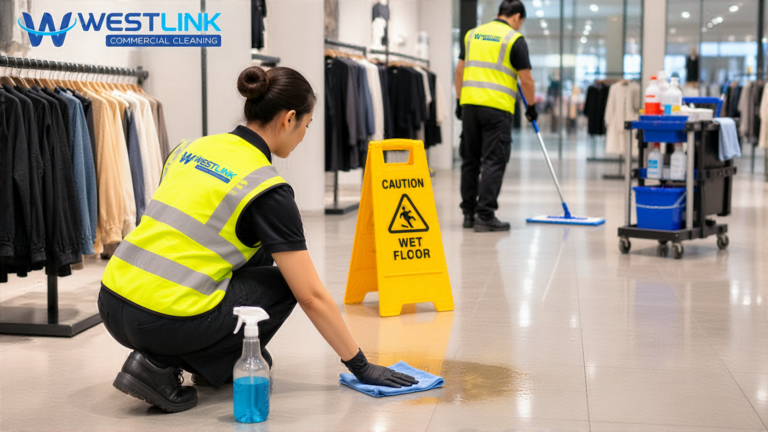
How should staff respond to a liquid spill?
Staff respond to a liquid spill in six steps:
- Place a barrier or wet floor sign at the spill so customers and staff keep clear.
- Collect the spill kit and put on suitable gloves.
- Absorb or remove the spill, then clean the area with a suitable cleaning solution.
- Dry the floor completely.
- Check that the floor is no longer slippery before removing the barrier.
- Record the spill, its location and the time, and report any leaking stock.
How do you clean the food departments of a supermarket?
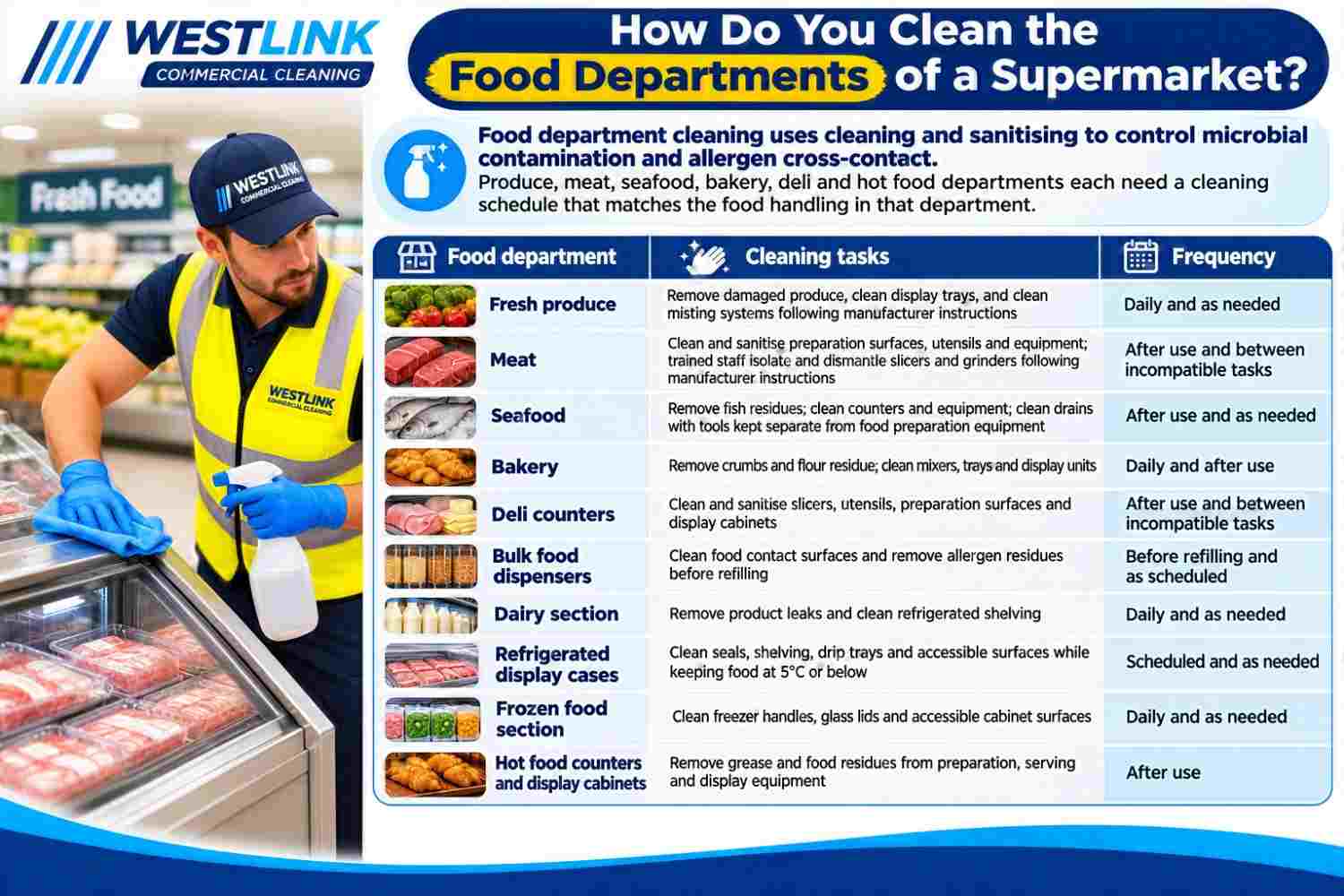
Food department cleaning uses cleaning and sanitising to control microbial contamination and allergen cross-contact. Produce, meat, seafood, bakery, deli and hot food departments each need a cleaning schedule that matches the food handling in that department.
| Food department | Cleaning tasks | Frequency |
| Fresh produce | Remove damaged produce, clean display trays, and clean misting systems following manufacturer instructions. | Daily and as needed |
| Meat | Clean and sanitise preparation surfaces, utensils and equipment; trained staff isolate and dismantle slicers and grinders following manufacturer instructions | After use and between incompatible tasks |
| Seafood | Remove fish residues, clean counters and equipment, and clean drains with tools kept separate from food preparation equipment. | After use and as needed |
| Bakery | Remove crumbs and flour residue; clean mixers, trays and display units. | Daily and after use |
| Deli counters | Clean and sanitise slicers, utensils, preparation surfaces and display cabinets | After use and between incompatible tasks |
| Bulk food dispensers | Clean food contact surfaces and remove allergen residues before refilling. | Before refilling and as scheduled |
| Dairy section | Remove product leaks and clean refrigerated shelving. | Daily and as needed |
| Refrigerated display cases | Clean seals, shelving, drip trays and accessible surfaces while keeping food at 5°C or below | Scheduled and as needed |
| Frozen food section | Clean freezer handles, glass lids and accessible cabinet surfaces | Daily and as needed |
| Hot food counters and display cabinets | Remove grease and food residues from preparation, serving and display equipment. | After use |
Food contact surfaces need cleaning before sanitising. Staff observe the sanitiser’s dilution, contact time and rinsing requirements on the product label, and they use a sanitiser that is suitable for food contact surfaces. Between incompatible food handling tasks, such as nut-containing and nut-free products, staff remove allergen residues with effective cleaning and not with sanitiser alone.
How do you clean the back-of-house areas of a supermarket?
Back-of-house cleaning covers stockrooms, loading bays, cold storage rooms, staff facilities and waste storage areas. Routine back-of-house cleaning removes packaging debris, keeps storage accessible and reduces conditions that encourage pest activity.
In stockrooms, goods receiving areas and loading bays, staff sweep floors, remove pallet debris, cardboard and damaged packaging daily, and wipe grime from dock doors and seals. Walk-in refrigerators and freezers need their shelving, door seals, accessible drainage points and interior surfaces cleaned on a set schedule, following the manufacturer’s instructions. Trained refrigeration technicians handle drainage faults.
Staff facilities need daily cleaning: breakroom tables, worktops, sinks and appliances, changing room floors and lockers, and management offices. Handwashing stations need clean basins and taps and a steady supply of soap and hand-drying materials.
Waste areas need rubbish removal, container cleaning and a daily check for pest activity, and staff isolate compactors before cleaning them. Floor drains need debris cleared and covers cleaned, with blockages escalated to maintenance, and grease traps need specialist servicing. Cleaning chemical storage gets a weekly check of labels, SDS access and segregation.
How often should supermarket cleaning tasks happen?
Cleaning frequency in a supermarket depends on foot traffic, contamination risk, food handling activity and equipment needs. Four frequencies cover most tasks.
Daily cleaning covers aisle floors, entrances, trolleys, checkouts, food contact surfaces, toilets, bins, stockrooms and breakrooms, and staff record what they complete. Weekly cleaning reaches underneath shelving, floor edges, elevated fixtures, refrigerated cabinet shelves and seals, internal glass and stockroom racks, and includes a thorough wash of trolleys and baskets and a check of cleaning equipment.
Monthly cleaning deep cleans suitable hard flooring and waste areas, reaches behind retail fixtures and dusts overhead fixtures and ventilation grilles. It also includes a review of the cleaning chemical inventory against the hazardous chemical register, a hygiene audit and a review of corrective actions. Periodic work, such as floor restoration, cleaning at height, drain and grease trap servicing, and exterior cleaning, goes to specialist contractors.
Risk adjusts these frequencies. Raw meat preparation areas, ready-to-eat food surfaces, active spills and customer toilets carry higher contamination risk and need cleaning after each use or incident, with the result checked before reuse. Checkouts, trolleys and entrances carry medium risk and need cleaning each shift. Management offices and overhead fixtures carry lower risk and fit a daily or weekly rhythm. This is a suggested operational framework and not an official risk matrix, and statutory requirements and contamination incidents always override it.
What equipment does supermarket cleaning require?
Supermarket cleaning requires manual tools, commercial floor machines, cleaning chemicals and personal protective equipment (PPE).
- Manual tools: microfibre cloths for surfaces and dust, colour-coded mops to reduce contamination transfer between zones, and scrubbing brushes for stubborn residues.
- Machines: commercial vacuum cleaners for dry debris, scrubber dryers for large hard floors and squeegees for excess water.
- Chemicals: neutral detergents for routine dirt, degreasers for grease and food contact surface sanitisers for cleaned food contact surfaces.
- Safety items: spill kits, barriers, wet floor signs and gloves.
Managers choose PPE from each product’s SDS and the risk assessment for the task. Surface material determines the cleaning method, so staff follow the manufacturer’s instructions for floors, point-of-sale equipment and food preparation equipment. Staff clean, dry and store equipment after use, including emptying scrubber dryer tanks and cleaning pads, brushes and squeegees. Separate equipment for toilets, raw food areas and ready-to-eat food areas helps reduce the risk of cross-contamination.
How do you prevent contamination during supermarket cleaning?
Supermarkets prevent contamination during cleaning by separating tasks, controlling chemicals and documenting procedures. Staff apply these practices:
- Two-stage cleaning: remove dirt and organic matter, then apply a suitable sanitiser.
- Colour-coded equipment: allocate cleaning tools to designated hygiene zones.
- Chemical management: follow each product’s dilution, contact time and storage instructions, and keep the SDS accessible.
- Food protection: remove or cover exposed food before cleaning nearby surfaces.
- Allergen control: remove allergen residues between incompatible food handling tasks.
- Temperature control: keep potentially hazardous food at 5°C or below, or at 60°C or above, while cleaning refrigerated and hot-holding equipment.
- Hazard analysis (HACCP) principles: build cleaning controls into the store’s food safety procedures where its food handling activities call for them.
- Hazardous chemical risk management: assess and control staff exposure to cleaning chemicals under WHS law.
How do you create a supermarket cleaning schedule?
A supermarket cleaning schedule specifies what needs cleaning, how, when and by whom. For each task, the schedule records the area, the method and equipment, the frequency, the responsible employee, a completion record with date, time and initials, a supervisor verification and a corrective action if the check fails. A checkout conveyor belt, for example, is cleaned each shift and when contaminated by the checkout assistant with a designated microfibre cloth, and the supervisor inspects it and orders a repeat clean if it fails.
Store managers adjust the schedule to seasonal demand, customer footfall, departmental activity and hygiene inspection results.
How do you monitor supermarket cleaning standards?
Supervisors monitor supermarket cleaning standards through cleaning logs, hygiene inspections, sign-off and scheduled audits. Monitoring identifies incomplete tasks, recurring contamination and weaknesses in procedures.
Cleaning supervisors verify task completion, inspect frequently contaminated surfaces, record deficiencies and assign corrective actions. Store managers review recurring issues and change cleaning frequencies, equipment or staff training where the issues persist.
When should a supermarket hire a professional cleaning contractor?
A supermarket hires a professional cleaning contractor when it needs after-closing floor cleaning, periodic deep cleaning or specialist tasks that store staff cannot cover. The contract scope lists the areas, tasks, frequencies, equipment, chemicals, sign-off method and corrective actions. Trained store staff usually keep responsibility for food contact surfaces in food departments during trading.
Westlink Commercial Cleaning provides scheduled retail cleaning across Sydney, including supermarket floors, customer areas, toilets and back-of-house facilities. Request a site assessment to receive a site-specific scope of work based on your store layout, trading hours and surface types.
Frequently asked questions about supermarket cleaning
How often should supermarket floors be cleaned?
Staff inspect supermarket floors throughout trading hours and address contamination promptly. Full cleaning frequency depends on customer traffic, floor material and operating conditions. Busy supermarkets commonly schedule daily floor cleaning alongside ongoing spill management.
What are the supermarket cleaning requirements in Australia?
Australian supermarkets must comply with Standards 3.2.2 and 3.2.3 of the Food Standards Code, and Standard 3.2.2A applies where they handle unpackaged, potentially hazardous, ready-to-eat food. WHS law governs cleaning chemical risks and slip hazards. The Code does not set cleaning frequencies, so each store sets its own schedule.
What is the difference between cleaning and sanitising food contact surfaces?
Cleaning removes dirt, grease and food waste, and sanitising destroys microorganisms. Staff clean first and sanitise second, following the sanitiser’s label for dilution and contact time.
Who is responsible for cleaning a supermarket food preparation area?
Trained food department staff clean and sanitise food preparation areas, and supervisors verify the result. Contract cleaners typically handle floors and general surfaces outside trading hours. The cleaning schedule names the responsible person for each task.
Can a supermarket be cleaned during trading hours?
Staff can perform inspections, spill response, waste removal and selected cleaning tasks during trading when barriers and signs control the risks. Extensive machine scrubbing is usually better scheduled outside peak trading periods.
How do supermarkets prevent allergen cross-contact during cleaning?
Supermarkets remove allergen residues with effective cleaning between incompatible food handling tasks, use dedicated equipment for each department and keep exposed food covered or removed during cleaning.
Sources
- Cleaning and sanitising, Food Standards Australia New Zealand
- Overview of Standard 3.2.2A, Food Standards Australia New Zealand
- Standard 3.2.2A and supermarket examples, NSW Food Authority
- Standard 3.2.2A overview, NSW Food Authority
- Temperature control for potentially hazardous food, NSW Food Authority
- Hazardous chemicals: general requirements, SafeWork NSW
- Slips, trips and falls on the same level, SafeWork NSW
- Cleaning and sanitising food premises and food equipment, WA Department of Health