End of Lease Carpet Cleaning for Commercial Premises in Sydney
Whether your business has to have the carpet professionally cleaned before handover depends on your lease, not on general practice. Some commercial leases name professional carpet cleaning as a specific obligation; others simply require the premises to be returned in a defined condition, which the carpet forms part of. Read the yield-up and make-good clauses first, because that single check decides whether this is a requirement you must evidence or a judgement call about condition.
This guide covers how to read that obligation, which cleaning method suits the carpet you actually have, carpet tile and broadloom behave differently, what property managers flag at handover, which marks can realistically be removed and which cannot, and when to book the work so the carpet is dry and settled before the final inspection. It is written for commercial premises in Sydney: offices, retail tenancies, hospitality venues and warehouse office areas.
Carpet is usually one line item inside a larger handover clean. If you are scoping the whole tenancy rather than just the floor, start with commercial end-of-lease cleaning Sydney and treat this page as the carpet detail.
Commercial end-of-lease carpet cleaning at a glance
| Item | Detail |
|---|---|
| Who books the service | Commercial tenants: office, retail, hospitality, medical and industrial tenancies |
| Standard method | Hot water extraction (steam cleaning) aligned to AS/NZS 3733 and IICRC S100 |
| Booking window | 2–3 business days before the final property inspection |
| Dry time | 4–8 hours with HVAC and air movement; 30–60 minutes for encapsulation cleans |
| Indicative cost (2026) | $3–$7 per sqm for hot water extraction; $250–$600 for a small office; ex-GST |
| Documents that protect the bond | Tax invoice, certificate of completion, before-and-after photos |
| Safety net | Re-clean guarantee within 48–72 hours if the property manager flags the carpet |
What End of Lease Carpet Cleaning Means for Commercial Premises
End of lease carpet cleaning is a one-off deep clean of the carpet in business premises, carried out after the tenancy is vacated and before handover, so that the carpet’s condition meets what the lease requires. In the trade, it is also called a restorative clean, which is a useful term because it separates this job from the interim cleaning a building receives during occupancy.
That distinction matters commercially. Routine carpet maintenance is designed to keep an occupied floor looking acceptable between deep cleans. A handover clean is the deep clean, the one measured against a benchmark by someone looking for reasons to withhold acceptance. Booking the former when the lease requires the latter is a common and expensive mistake.
Carpet cleaning is also usually priced and scheduled separately from the general handover clean, even when one contractor does both. If you want the full picture of what the whole clean covers, see what end-of-lease cleaning includes for commercial premises.
Does Your Commercial Lease Require Professional Carpet Cleaning?
Often, but not always — and the answer is in the document rather than in industry custom. Three wordings turn up repeatedly in commercial leases, and they place very different obligations on a tenant.
| What the lease says | What it usually means in practice | What you should do |
| “Professionally clean the carpet” or “have the carpets steam cleaned by a professional contractor” | An explicit obligation. Cleaning it in-house will generally not discharge it, even if the result looks identical, because the obligation is about the process as much as the outcome. | Engage a contractor and keep the invoice and any report. Ask whether the building requires an approved or inducted contractor. |
| “Return the premises in the same condition as at commencement, fair wear and tear excepted” | A condition obligation. The carpet is judged against the schedule of condition, not against a cleaning receipt. Professional cleaning is usually the practical way to meet it, but the test is the condition. | Find the schedule of condition or entry photographs. That document is your benchmark and your defence. |
| Nothing specific about carpet | The carpet still falls under the general obligation to return the premises clean. The standard is less defined, which cuts both ways. | Agree the expected standard with the property manager in writing before the clean, rather than after the inspection. |
Two further conditions are worth checking before you book anything. First, whether the building requires contractors to be inducted or drawn from an approved list; this is common in managed buildings, and it can rule out a contractor you have already quoted. Second, whether the landlord or the building manager holds a maintenance specification for the floor covering. Where one exists, it may dictate the method, and following it protects you.
This page describes how commercial lease obligations generally work in New South Wales and is not legal advice. For retail premises, the NSW Small Business Commissioner’s Retail Tenancy Guide is the plain-language starting point; general commercial leases sit outside that regime and are governed largely by the lease itself.
Carpet Tiles, Broadloom and Traffic Zones in Commercial Premises
Commercial carpet is not domestic carpet with a different pattern. Construction, installation and soiling behaviour all differ, and each of those affects what a handover clean can achieve.
Carpet tiles
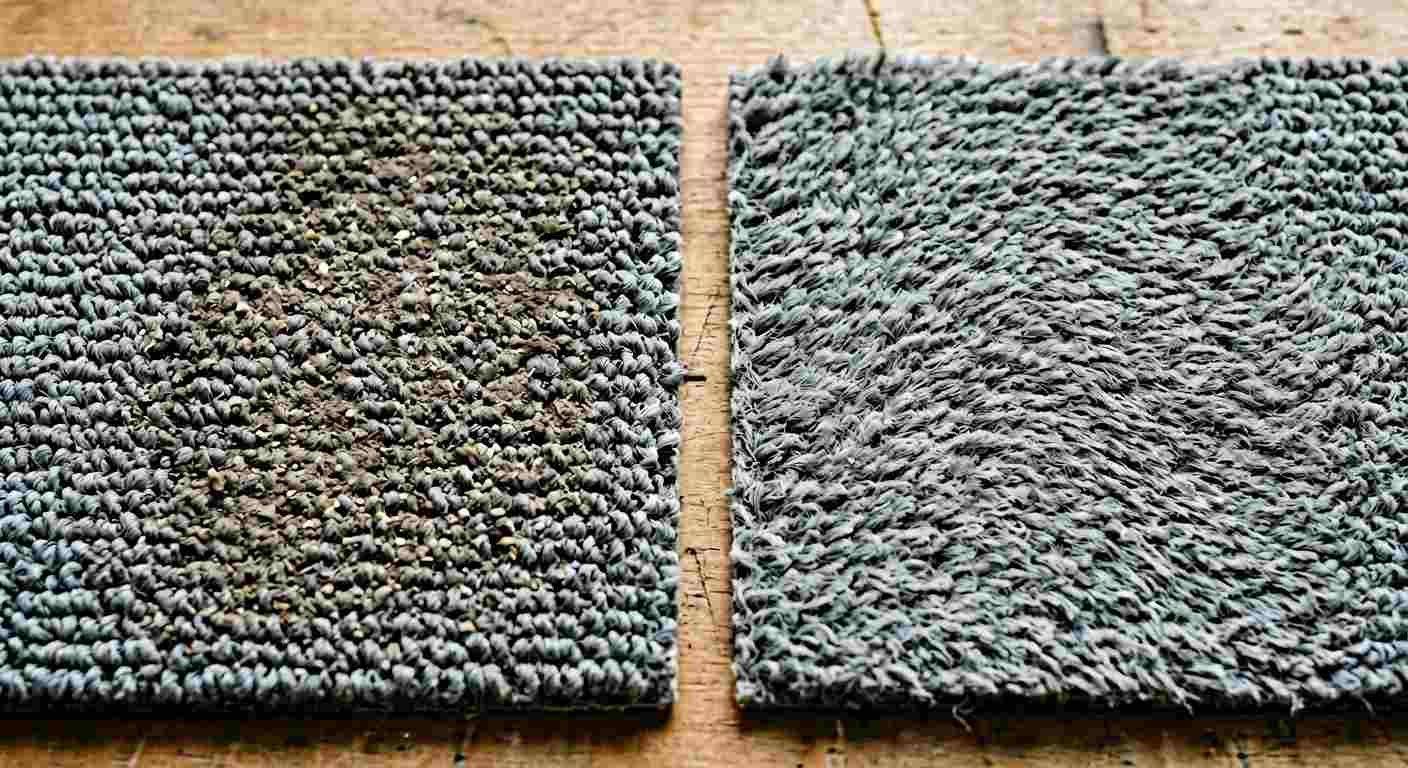
Most Sydney office floors are laid with carpet tiles, modular squares, usually with a heavy bitumen or PVC backing, laid loose or tackified rather than stretched over underlay. Three consequences follow at handover.
- Individual replacement is possible. A damaged or permanently stained tile can be swapped out individually, which is often cheaper and faster than attempting repeated stain treatment. Many fitouts leave attic stock in a storeroom for exactly this purpose; check before you assume a mark is a write-off.
- Dye lots and wear do not match. Replacement tiles from a different production run can differ visibly in shade, and tiles that have been down for years will have faded. A brand-new tile in the middle of a five-year-old floor can look worse than the mark it replaced.
- Backing changes drying behaviour. The dense backing means moisture sits in the pile rather than draining into the underlay. Over-wetting a tiled floor is therefore both easier and slower to recover from.
Broadloom
Wall-to-wall broadloom appears in hospitality venues, boardrooms, some retail and older office fitouts. It is stretched over underlay, which means moisture can pass into the underlay and the subfloor beneath. Drying takes longer, over-wetting carries a real mould and odour risk, and seams and doorways are the points where poor cleaning shows first.
Where commercial carpet actually fails
Soiling in a workplace is not evenly distributed, and neither is the inspector’s attention. Shaw Contract’s carpet maintenance checklist recommends more frequent cleaning for entrances, lifts, main corridors and food service areas than for private offices.
- The entry zone. The first few metres inside the entry, where the majority of tracked-in soil is deposited. This is the area most likely to look poor even after a competent clean.
- Primary traffic lanes. The funnel between the entry, the lifts and the main corridor. Soiling here is ground in by repeated footfall rather than sitting on the surface.
- Chair-castor zones. Under and around desks, where castors abrade the pile in a distinct arc and grind soil into it.
- Spill concentrations. Coffee points, printer areas and around vending machines: concentrated, specific staining rather than general soil.
- Perimeter and covered areas. Where cable covers, floor boxes and temporary matting have been taped down, leaving adhesive residue and often a colour difference where the carpet beneath has not faded with the rest.
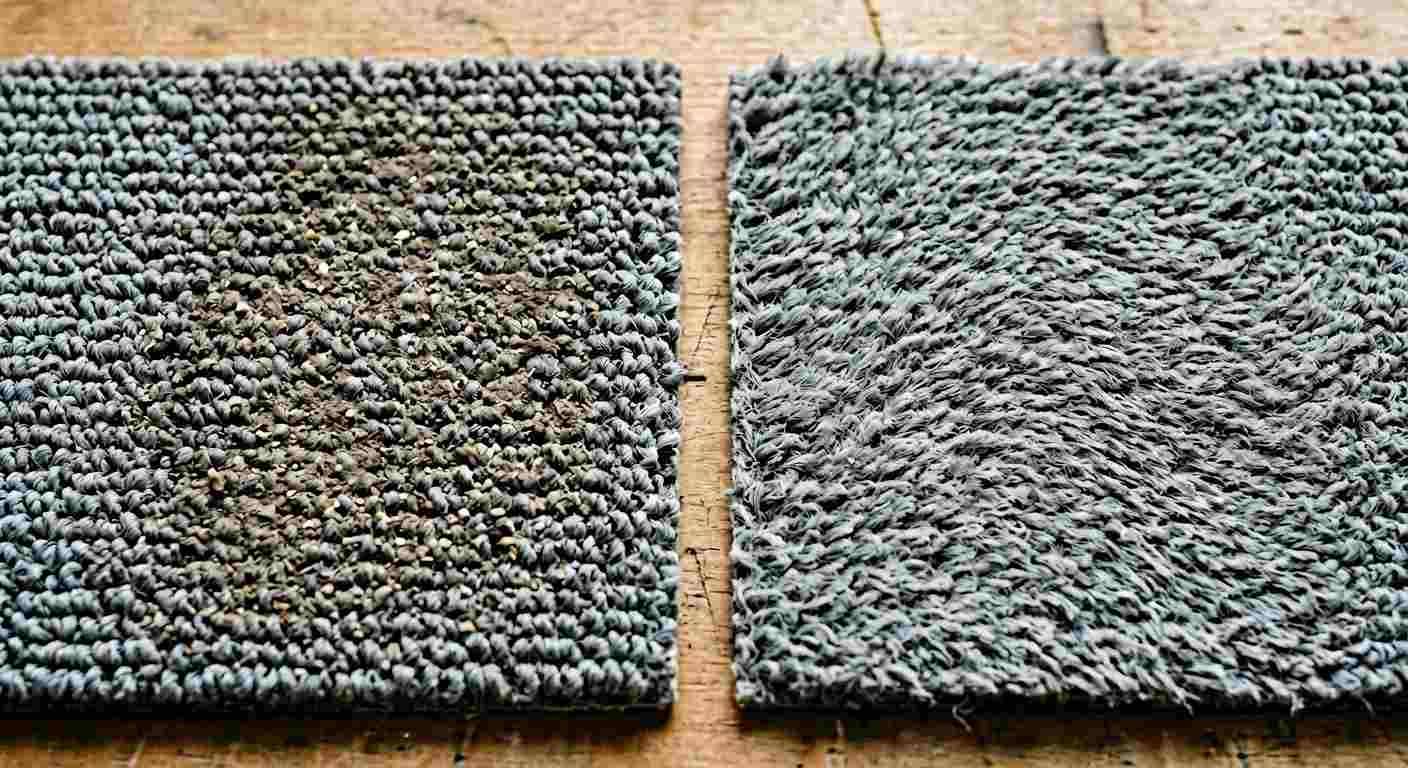
That last one causes genuine disputes. A clean, unfaded rectangle where a cable cover sat is not dirt, and cleaning will not remove it; the surrounding carpet has changed, not the patch. Recognising the difference before the inspection lets you raise it as fair wear and tear rather than have it raised against you as a cleaning failure.
Which Carpet Cleaning Method Is Right for Commercial Carpet?
There is no single best method for all situations, and the industry standard does not claim one. The ANSI/IICRC S100 standard for the professional cleaning of textile floor coverings separates routine, interim and restorative cleaning and sets out how to match a method to the installation rather than prescribing a universal answer. Interface’s Asia-Pacific carpet tile maintenance guidelines classify dry extraction and encapsulation as interim methods and describe hot water extraction for periodic and restorative cleaning.
| Method | How it works | Return to service | Where it fits at handover |
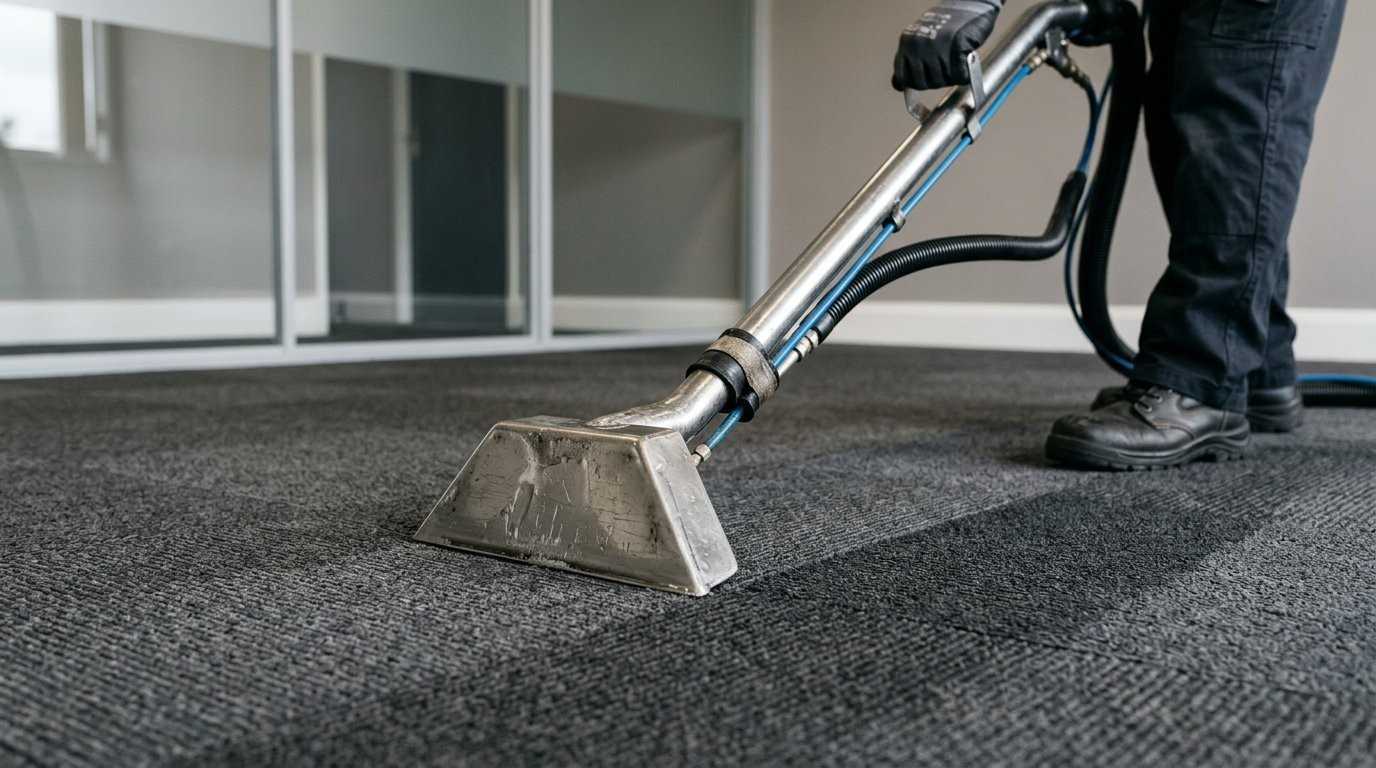
| Hot water extraction (commonly called steam cleaning, though no steam is produced) | A detergent pre-spray is applied and agitated, then the carpet is rinsed, and the solution is vacuumed back out under suction, carrying suspended soil with it. | Slowest. Hours, and longer on broadloom over underlay. | The method to specify for a handover clean. Interface names hot water extraction as the most effective method and the only restorative method it recommends for its carpet tile; Shaw recommends only high-performance hot water extraction as the primary scheduled cleaning method. |
| Encapsulation (crystallising polymer, low moisture) | A polymer solution is sprayed and brushed in. As it dries, it crystallises around the soil, which is then removed by vacuuming. | Fast. Interface’s guidance puts drying at roughly 30 to 60 minutes depending on humidity, airflow and temperature. | An interim method, not a restorative one. Genuinely useful when the handover window is tight, but it is not the equivalent of an extraction clean and should not be presented to a property manager as one. |
| Dry compound extraction | A moist absorbent compound is spread and brushed into the pile, left to dry, then vacuumed out with the soil it has captured. | Fast. Interface’s procedure allows about 30 minutes before vacuuming. | Interim. Useful where moisture must be kept to a minimum. Interface recommends hot water extraction roughly annually alongside this system, which tells you what it is and is not. |
| Bonnet / rotary pad | An absorbent pad on a rotary machine is worked across a dampened surface, lifting soil from the top of the pile only. | Fast. | Avoid for a handover clean. Interface states that rotary bonnet and brush methods are not recommended for its products and that using a bonnet or other rotary machine may void all warranties. Shaw does not recommend the method either, on the basis that it absorbs at the surface and does not extract deep soil. |
What this means when you brief a contractor
If the lease requires the carpet returned to a condition, ask for hot water extraction and allow the drying time it needs. If a contractor proposes a low-moisture method because the handover is in two days, understand what you are accepting: a faster, lighter clean that manufacturers classify as interim maintenance. That may be the right commercial trade-off, but make it knowingly rather than by default.
The bonnet point deserves emphasis, because the carpet is not yours. You are cleaning an asset that belongs to the landlord, and a method the manufacturer says may void the warranty is a poor choice on someone else’s floor in the week you hand it back.
Two technical details worth asking about, both from Interface’s Asia-Pacific carpet tile guidance: water temperature at the wand should not exceed 45°C, and tiles should be left with no more than 30 grams of residual moisture. A contractor who can discuss residual moisture is telling you something useful about how they work.
Why Carpet Gets Flagged at Commercial Handover
Carpet is the most frequently disputed single element of a commercial handover, for a structural reason: soiling and wear look similar to a non-specialist, and only one of them is usually the tenant’s responsibility.
Soiling versus wear
Soiling is material that has been deposited on or in the carpet and can be removed. Wear is physical change to the fibre, flattening, abrasion, fading, loss of texture, and cleaning does not reverse it. Commercial leases commonly exclude fair wear and tear from the tenant’s obligations, so the distinction is not academic. A traffic lane that looks darker because soil is ground into it is your problem. The same lane looking duller because five years of footfall has crushed the pile generally is not.
The practical move is to identify wear before the inspection and raise it, with reference to the schedule of condition, rather than discovering it in a list of defects afterwards.
Your security is what is at stake
A commercial landlord typically holds a bank guarantee, a security deposit or a cash bond against the tenant’s obligations. Carpet is an attractive item to claim against because the remedy has a clear invoice, a clean, or, in the worst case, a replacement. Evidence that the work was done to a defined standard is the most effective response available to a tenant.
Appearance carries weight; it should not
An inspection is a human judgement made in a few minutes. A floor that reads as cared-for shifts the tone of the whole inspection, and a floor that does not invites closer attention everywhere else.
Common Stains on Commercial Carpet and What Can Realistically Be Removed
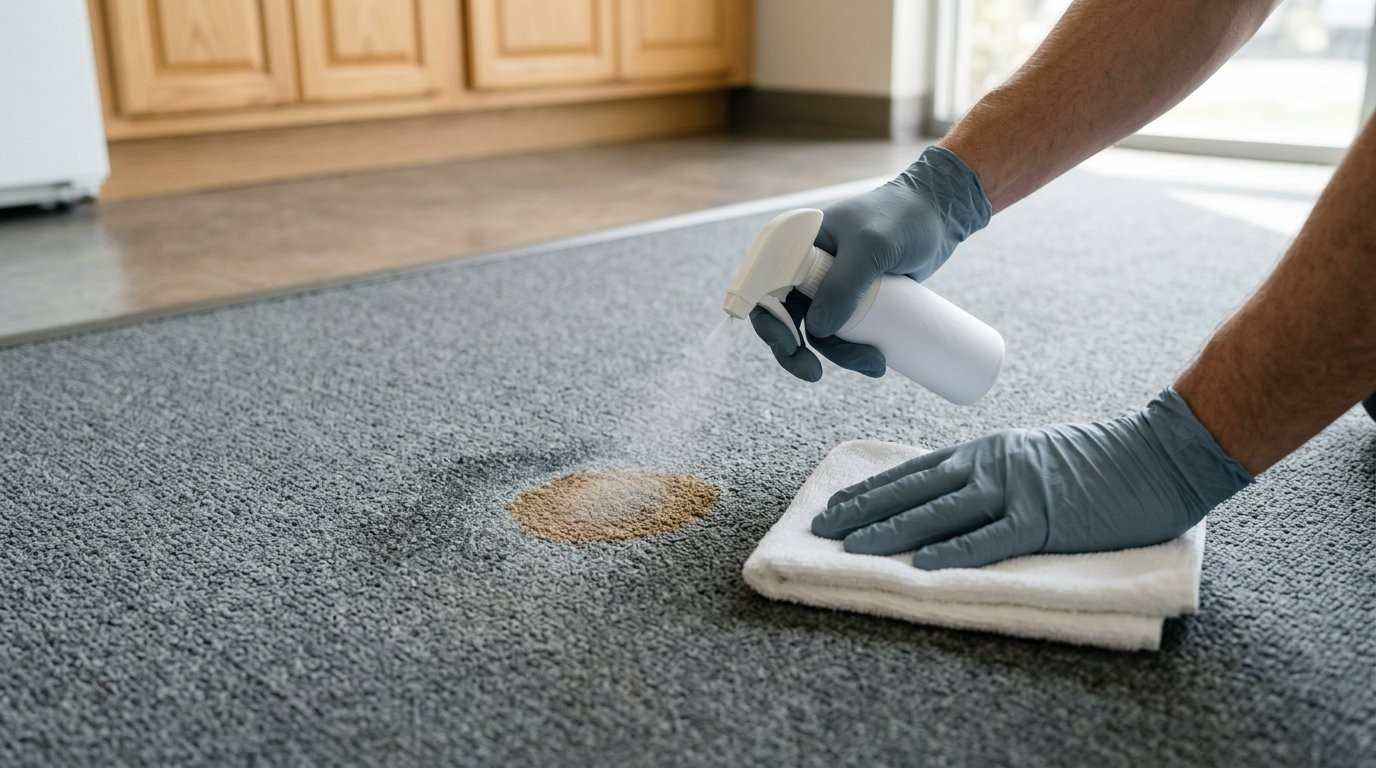
Contractors are often reluctant to say which marks will not come out. Setting expectations honestly before the clean is more useful, because it tells you which items need a different solution: tile replacement, or an early conversation with the property manager.
| What it is | Typical treatment | Realistic outcome |
| Coffee and tea | Tannin-specific treatment then extraction. Age matters more than size. | Usually resolves. Older spills on light carpet may leave a shadow. |
| Beverage and food spills in retail or hospitality | Pre-treatment, agitation and extraction; sugars need thorough rinsing or they re-soil quickly. | Usually resolves, but under-rinsed residue attracts soil and the mark returns within weeks. |
| Grease and oil from kitchens or plant areas | Solvent-based pre-treatment followed by extraction. | Often resolves. Heavy, long-standing contamination may not. |
| Printer and photocopier toner | Dry removal first; never wet it initially, as water spreads and sets the pigment. | Frequently partial. Ask the contractor to attempt dry removal before any wet treatment. |
| Ink and marker | Solvent treatment, applied cautiously to avoid damaging backing or dye. | Unpredictable. Sometimes lifts completely; sometimes permanent. Carpet tile makes replacement a realistic alternative. |
| Adhesive and tape residue from cable covers and matting | Solvent softening then mechanical removal. | Residue usually comes off. Any colour difference underneath will not be fading of the surrounding carpet, not a stain. |
| Rust from furniture feet and filing cabinets | Rust-specific treatment; general detergents will not shift it and can set it. | Often improves substantially. Deep rust in the backing can be permanent. |
| Chewing gum | Freeze and lift mechanically. | Usually resolves fully. |
| Odour without a visible mark | Source must be located first. Treating the surface does nothing if the source is in the backing or subfloor. | Depends entirely on the source. If it returns after drying, it was not a surface problem. |
| Wicking marks appearing after cleaning | Not a new stain; a deeper deposit drawn up as the carpet dries. Needs re-treatment of the affected spot. | Usually resolves on a second pass, which is a reason to clean several days before the inspection rather than the day before. |
Two carpet problems are outside the scope of a handover clean and need different work: mould, and persistent odour with a source in the backing or subfloor. See carpet mould and carpet odours. Raise either with the property manager early, because both can indicate a building issue rather than a tenant one.
When to Book the Carpet Clean Before Handover
Timing is the part tenants most often get wrong, and it is free to get right. Work back from the inspection, not forward from the day the furniture leaves.
Seven to ten days before handover — the safe option
Book this far out when the premises are large, the carpet is heavily trafficked, there are stains that may need a second attempt, or a defit is running. It leaves room for re-treatment, full drying, and for other trades to finish without walking over clean carpet. On broadloom over underlay, the extra margin is worth having.
Three to five days before handover — the standard plan
Suitable for most office tenancies in reasonable condition. It allows full drying, and importantly it lets you see any wicking marks that reappear as the carpet dries, while there is still time to have them re-treated before the inspection.
Within 24 hours of handover — only when you have no choice
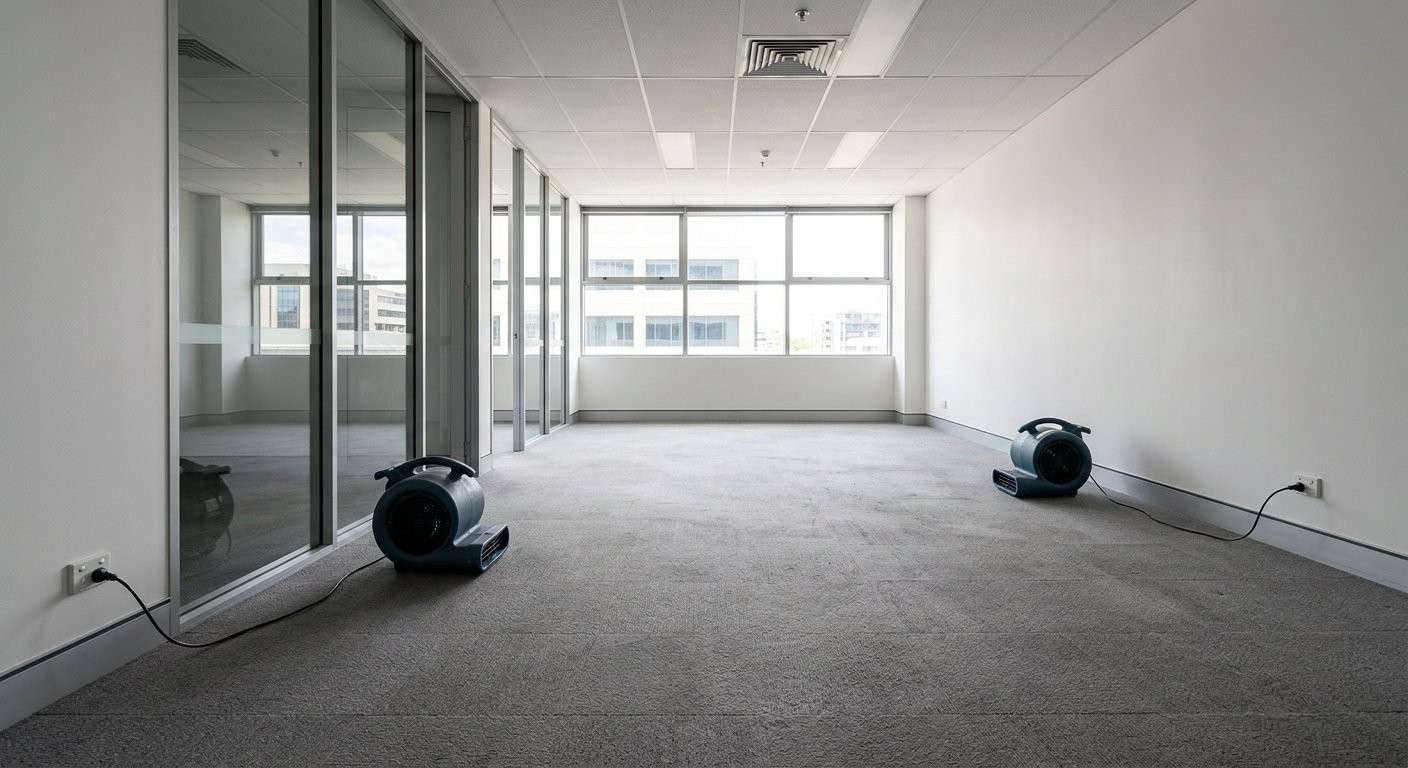
This can present well, but it carries real risk: slow drying in humid weather, damp-smelling carpet at the inspection, and no opportunity to fix anything that reappears. If the schedule forces it, keep people off the floor, run ventilation or air movers, and do not move anything back onto damp carpet.
Sequence matters as much as timing. Carpet cleaning should come after the defit, after any patching or painting, and after the general clean, not before, or you will pay for it twice.
What Goes Wrong, and How to Avoid It
- Scoping from a walkthrough instead of the lease. A contractor quoting on what they can see will not know the lease specifies a method or requires evidence. Read the clause first, then brief the scope from it.
- Cleaning before the tenancy is finished. Dirt, dust, patching and removalist traffic will undo the work. Sequence carpet last.
- Treating the entry zone and traffic lanes as ordinary floor. These areas hold ground-in soil and often need pre-treatment or pile lifting before extraction. A single pass at standard settings will leave them visibly different.
- Accepting a low-moisture method by default because the date is tight. It may be the right call, but know that manufacturers classify it as interim rather than restorative cleaning.
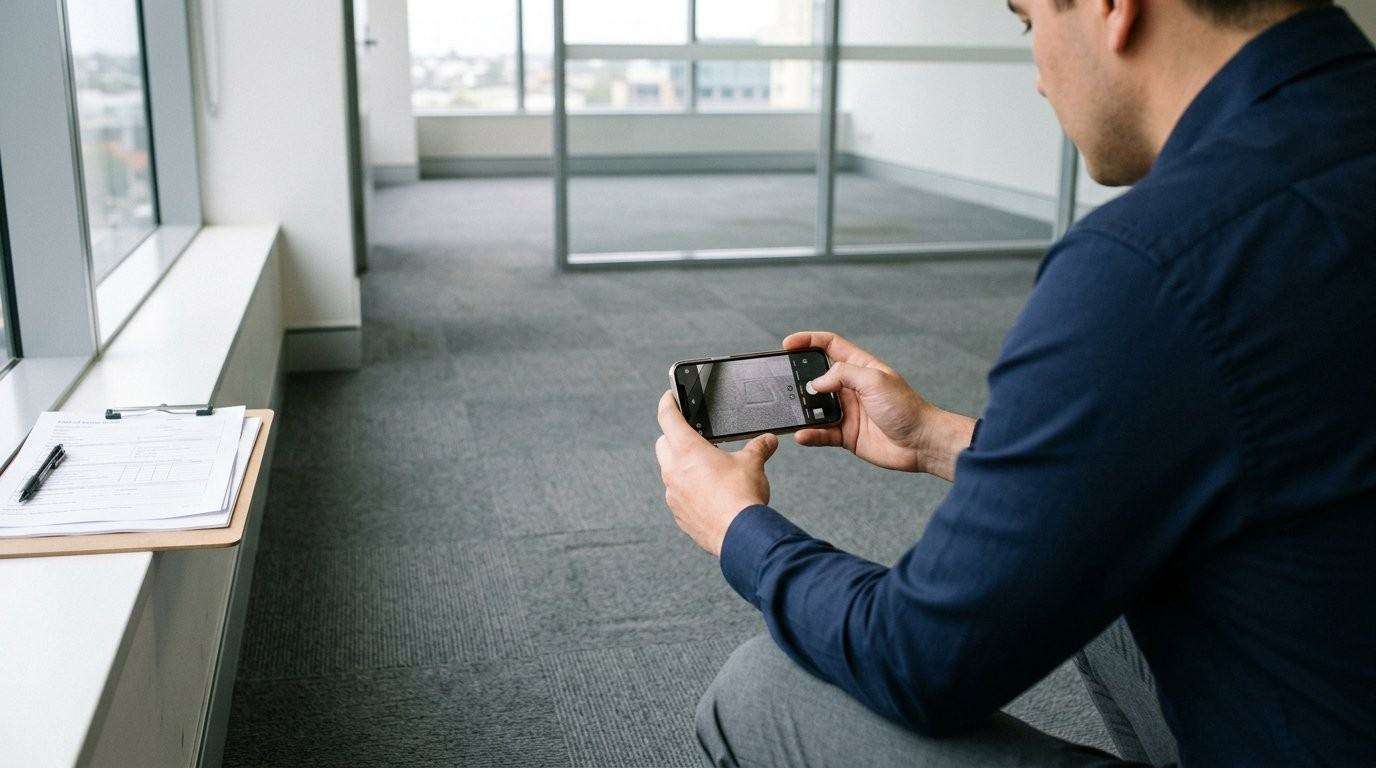
- Keeping no evidence. Photographs of each zone before and after, plus the contractor’s invoice and any report, are the whole of your position if the condition is questioned later.
Whether to use your own staff or a contractor is a broader question that applies to the entire handover clean, not just the carpet. We work through the access, insurance, equipment and induction considerations in what end-of-lease cleaning includes. For carpet specifically, the deciding factor is usually simple: if the lease says professional, in-house will not satisfy it.
What Commercial Carpet Cleaning Costs at Handover
Commercial carpet is quoted on floor area and condition rather than on room count, so residential rules of thumb based on the number of rooms do not transfer. Six factors drive a quote:
- Area and layout. Total carpeted area, and how much of it is open floor versus cellular offices and corridors.
- Construction. Carpet tile or broadloom, and the fibre. This affects method, time and achievable outcome.
- Soiling level. Traffic lanes and entry zones may need pre-treatment or pile lifting, which is additional labour.
- Access. After-hours or weekend work, lift bookings and induction requirements all add cost.
- Add-ons. Spot and stain treatment, deodorising and protector are usually priced separately.
- Timing. A compressed window limits scheduling and can require a larger crew.
Before comparing quotes, fix the scope: area, method, whether spot treatment is included, and what evidence you receive at the end. Two quotes for “a carpet clean” are not comparable.
Pre-Handover Carpet Checklist
- Check the lease. Read the yield-up, condition and make-good clauses, and note any wording that names carpet, a method, or evidence.
- Find the benchmark. Locate the schedule of condition or entry photographs. This is your benchmark for what counts as wear rather than soiling.
- Check building rules. Ask whether the building requires inducted or approved contractors, and whether a floor-covering maintenance specification exists.
- Book with a buffer. Book to finish three to five days before the inspection at minimum, and after the defit and general clean.
- Clear the floor. Remove furniture, floor box covers, matting and cable covers so the full floor is accessible.
- Walk it together. Walk the floor with the contractor and point out stains, adhesive residue, and any area you believe is wear rather than soiling.
- Confirm the method. Specify the method, and if it is not hot water extraction, understand why.
- Photograph zones. Photograph each zone before and after, with the entry zone, traffic lanes and any disputed area shot specifically.
- Let it dry. Allow full drying before anything is moved back, and check for wicking once dry.
- Keep the evidence. Keep the invoice and any cleaning report with your handover documentation.
Frequently Asked Questions
Do carpets need to be professionally cleaned at the end of a commercial lease?
Often, but it depends on the lease. Some commercial leases require professional carpet cleaning explicitly, in which case an in-house clean will not discharge the obligation and evidence may be expected. Others require the premises to be returned in a specified condition, with the carpet judged against a schedule of condition rather than against a receipt. Check the yield-up and make-good clauses before deciding.
What is the best carpet cleaning method for a commercial property?
For a handover clean, hot water extraction is the method to specify. Interface names it as the most effective method and the only restorative method it recommends for carpet tile, and Shaw recommends high-performance hot water extraction as the primary scheduled cleaning method for commercial carpet. Low-moisture methods such as encapsulation dry far faster and are useful when the window is tight, but manufacturers classify them as interim rather than restorative cleaning.
Can the landlord or building manager require us to use a particular carpet cleaner?
In commercial premises, this is common. Managed buildings frequently require contractors to be inducted or drawn from an approved list, and some leases or floor-covering maintenance specifications go further and dictate the method. Check both the lease and the building rules before engaging anyone, because discovering the requirement after the quote is accepted wastes time you may not have.
What counts as fair wear and tear on commercial carpet?
Generally, physical change to the fibre caused by ordinary use over the term: flattened pile in traffic lanes, abrasion under chair castors, fading, loss of texture. Commercial leases commonly exclude fair wear and tear from the tenant’s obligations. Soiling, staining and damage are treated differently. Cleaning removes soiling; it does not reverse wear, which is why identifying the difference before the inspection is worth doing.
Our floor is carpet tiles. Is replacing a stained tile better than cleaning it?
Sometimes, it is worth checking whether the fitout left attic stock. Replacement is a realistic option for a permanently marked tile. The caution is appearance: a new tile may differ in shade from tiles that have been down for years, so a replacement in an open area can be more conspicuous than the mark. Discuss it with the property manager rather than deciding unilaterally.
How long does commercial carpet take to dry after cleaning?
It varies with method, carpet construction, airflow, humidity and temperature. Low-moisture methods are quick. Interface puts encapsulation drying at roughly 30 to 60 minutes and dry compound at about 30 minutes before vacuuming. Hot water extraction takes substantially longer, and longer again on broadloom over underlay. Plan for the carpet to be dry and settled well before the inspection rather than assume it will be.
Your Next Step: Confirm the Carpet Obligation Before You Book
- Read the yield-up and make-good clauses and note exactly what they say about carpet method, standard, evidence.
- Find the schedule of condition, and walk the floor identifying which areas are soiling and which are wear.
- Ask the property manager two questions in writing: does the building require an approved contractor, and is there a floor-covering maintenance specification we should follow.
- Then quote the work against that scope, booked to finish at least three days before the inspection.
If you would like commercial carpet cleaning scoped for a Sydney handover, our commercial end-of-lease carpet cleaning service page covers what we do, and the commercial end-of-lease cleaning Sydney page covers the full handover clean. Having the lease clause to hand it to shortens the conversation considerably.